You’ve decided on biryani for dinner. Not the mild, saffron-tinted kind you want the one where the rice glows orange-red from Guntur chilli paste, the meat falls off the bone, and every grain carries enough heat to wake you up mid-bite. You want Andhra biryani.
Finding it in Bangalore isn’t the problem. The city has dozens of Andhra restaurants, delivery apps stacked with options, and at least three different biryani styles fighting for your attention on any given Friday night. The real question is where to go, what to order when you get there, and whether your spice tolerance is ready for what’s coming.
This guide covers all of it a quick primer on what makes andhra biryani in Bangalore different from everything else on the menu, a section-by-section ordering breakdown, area-specific tips for finding it near you, and honest spice advice from a kitchen that’s been making it since 1989.
What Makes Andhra Biryani Different (The 60-Second Version)
Andhra biryani is not Hyderabadi biryani with extra chilli thrown in. The two start from fundamentally different cooking philosophies.
The method matters most. Andhra biryani uses the pakki technique – the meat is fully cooked in a spice-heavy masala before it’s layered with par-cooked rice and finished together. Hyderabadi biryani uses dum, sealing raw marinated meat under rice and slow-cooking everything in one pot. The result: Andhra biryani has drier, more separate grains with masala flavour baked into each one. Hyderabadi biryani is softer, more fragrant, and wetter.
Then there’s the heat. Andhra cooking leans on Guntur Sannam chillies rated 30,000–100,000 on the Scoville scale. That’s 15–50 times hotter than a jalapeño. The colour comes from chilli paste, not saffron. The heat is direct and front-palate, not a slow creep.
For the full side-by-side breakdown of andhra style biryani versus Hyderabadi, read how Andhra biryani differs from Hyderabadi. For now, here’s the short version: bolder spice, drier rice, more direct heat. That’s Andhra.

Why Andhra Biryani Thrives in Bangalore
Bangalore’s Andhra food scene didn’t appear overnight. It followed the people.
Through the 1970s and 1980s, thousands of families from Andhra Pradesh – particularly from the Rayalaseema and coastal regions – moved to Bangalore for work. They brought their food with them. The first Andhra restaurants opened around Majestic and Shivajinagar, serving the kind of spice-forward, rice-heavy meals that the diaspora missed. Biryani was always on the menu.
Nandhini was founded in 1989 by N. Ananda, becoming one of the first Andhra restaurant chains in the city. The idea was straightforward: serve authentic Andhra Pradesh’s spice-forward cuisine at prices that made sense for a working lunch. Thirty-seven years later, that model hasn’t changed – but the city around it has.
Bangalore’s tech-workforce culture created the perfect conditions for andhra chicken biryani to become a staple. Engineers and project managers needed something filling, flavourful, and fast enough for a 45-minute lunch break. A single plate of Andhra biryani – generous enough for two, ready in minutes, packed with enough spice to cut through an afternoon of back-to-back meetings – fit the brief exactly.
Today, you’ll find Andhra biryani in every major Bangalore neighbourhood, from Koramangala to Whitefield to Yelahanka. It’s on Swiggy and Zomato. It’s in food courts and standalone restaurants. The demand hasn’t slowed down.
What to Expect When You Order Andhra Biryani
If you’re coming from Hyderabadi or Kolkata biryani, recalibrate your expectations. Andhra biryani looks different, tastes different, and hits different.
Spice. The heat arrives immediately – front-palate, sharp, unmistakable. It’s not the slow-building warmth of a Hyderabadi dum biryani. Guntur chilli delivers direct heat that you feel in the first bite, peaks mid-plate, and fades within a few minutes of finishing. The burn is real but it’s honest – no delayed surprises twenty minutes later.
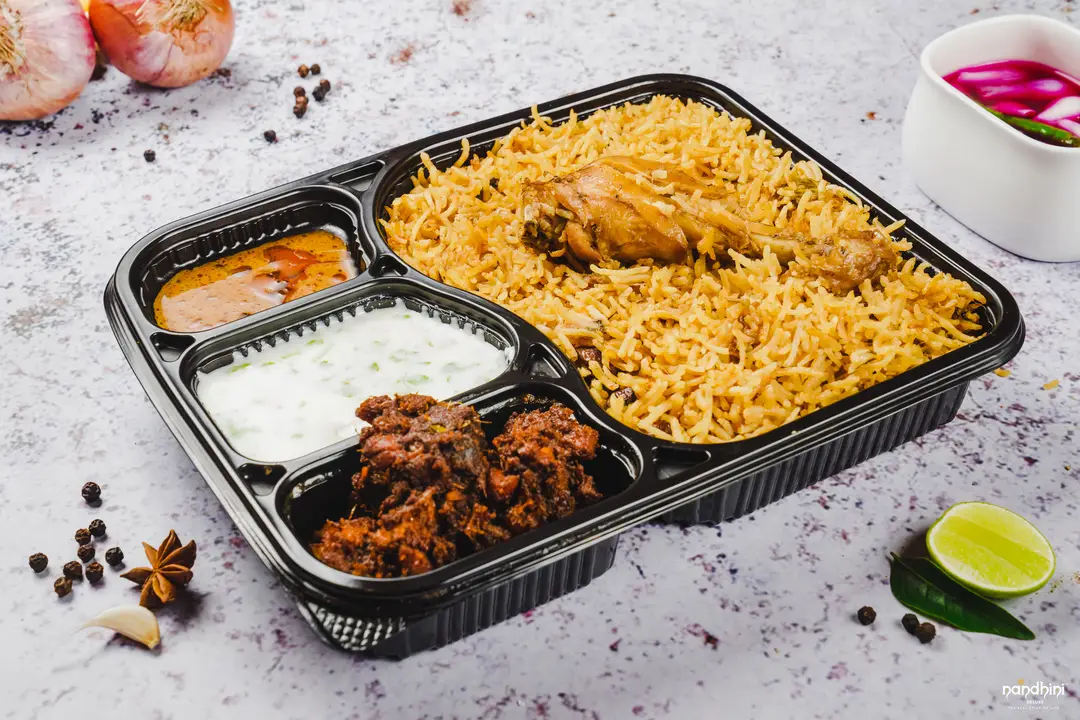
Rice. Drier and more separate than dum-style biryani. Each grain absorbs the masala during the pakki layering process, so the flavour is distributed evenly rather than concentrated in pockets. The colour runs from turmeric-yellow to deep chilli-red, depending on the kitchen’s spice ratio. No saffron strands, no rose water.
Meat. Bone-in chicken is the standard. The marrow enriches the gravy during cooking, adding a depth that boneless pieces can’t replicate. Mutton is the premium option – richer, fattier, with a longer cook time that concentrates the spice into the meat. Most restaurants offer boneless chicken for easier eating, especially for work lunches and delivery orders.
Portions. Generous. A single serving typically feeds 1.5–2 people comfortably. One biryani plus a starter is a full meal for two. For solo dining, you’ll likely have leftovers – and Andhra biryani reheats well because the drier rice doesn’t turn to mush overnight.
Sides. Expect boondi raita and a raw onion-chilli mix on the side. Some restaurants include a small cup of salan. Pickle is usually available on request – and if you’re already handling the biryani’s heat comfortably, a dab of avakaya (mango pickle) takes it up another level.
Your Ordering Guide: Chicken, Mutton, or Something Bolder
Chicken vs Mutton
Chicken biryani is the faster, lighter option. The meat cooks quickly, absorbs spice without getting tough, and works well for delivery because it reheats cleanly. If you’re ordering Andhra biryani for the first time, start here.
Mutton biryani is richer and demands more from both the kitchen and the diner. The fat renders down during cooking, creating a deeper, more layered flavour. It’s better suited to dine-in – the longer cook time means it’s best eaten fresh. For a deeper look at the mutton option, read about Andhra-style mutton biryani specifically.
Bone-in vs Boneless
Bone-in is the traditional choice and the one most Andhra kitchens recommend. The marrow enriches the surrounding rice and gravy during cooking – it’s not just about the meat. Boneless is practical for office lunches and messier delivery situations. If you’re eating at the restaurant, go bone-in. Across the wider landscape of types of chicken biryani in Bangalore, Andhra bone-in remains the most flavour-dense option.
Biryani Variants You Might Not Know
Beyond the standard chicken and mutton, Andhra kitchens serve regional variants that most diners never discover. Ulavacharu biryani uses a tangy horse gram broth as its base – earthy, slightly sour, and unlike any biryani you’ve had. Avakaya biryani folds mango pickle into the masala for a sharp, fermented heat. Gongura biryani (sorrel leaf) adds a tart, leafy edge that cuts through the richness of the rice. These aren’t menu gimmicks – they’re regional Andhra preparations that rarely show up outside dedicated Andhra restaurants.
Family Pack vs Single
A single biryani serves 1.5–2 people. A family pack serves 4–5 and is better value per portion. For group orders: one family pack biryani for groups plus individual starters across the table is the most efficient way to feed everyone without over-ordering.
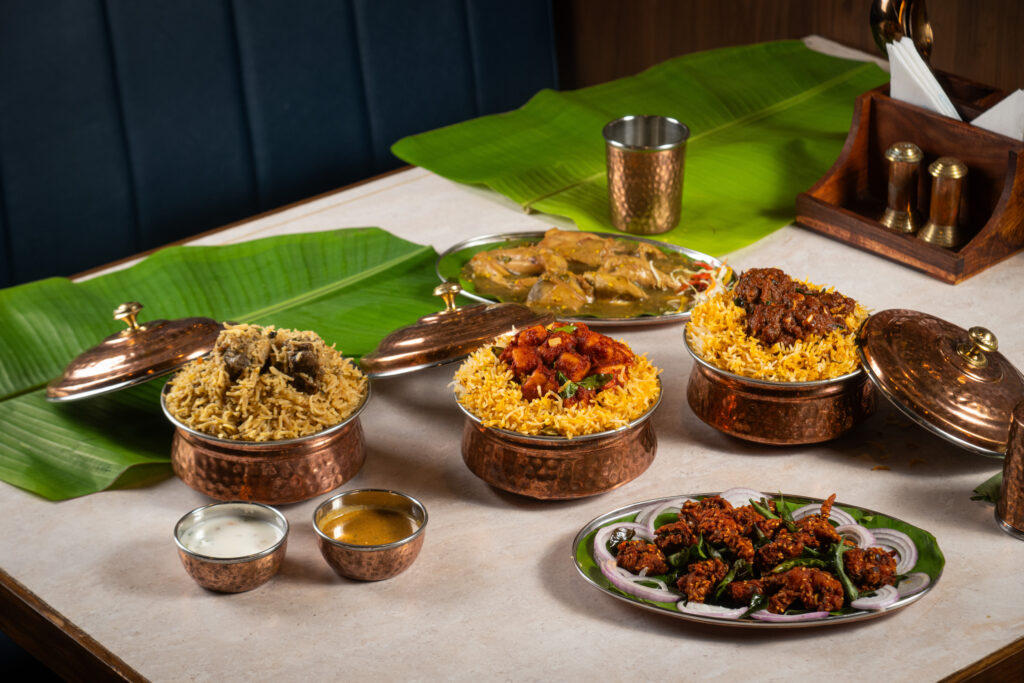
For a solo lunch: one guntur chicken biryani plus boondi raita. For two: one biryani, one Chicken 65, one raita. That’s the formula.
What to Order Alongside (The Pairing Guide)
The biryani is the main event, but the supporting cast matters more than most people realise.
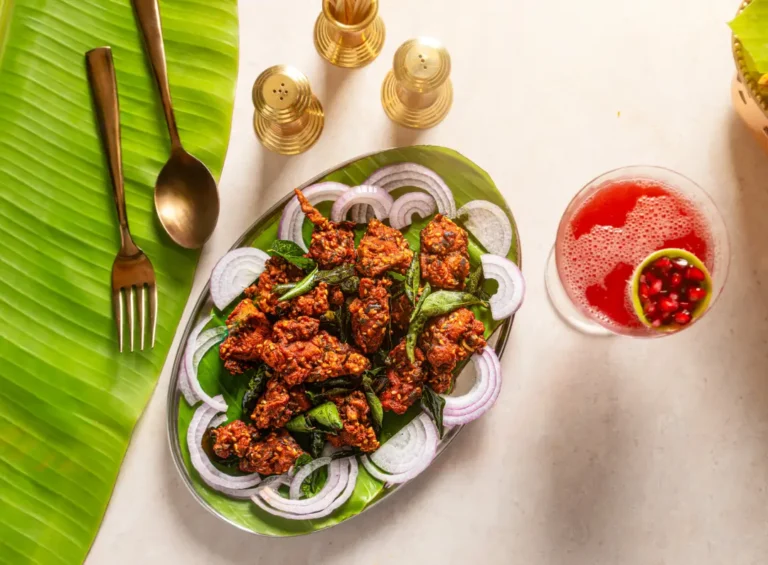
Starters. Chicken 65 is the default pairing for a reason – the crispy exterior, the yoghurt-chilli marinade, and the smaller portion size make it a palate primer rather than a competing main course. Sholay Kebab is the less obvious pick: smoky, moderately spiced, and substantial enough to share without overwhelming the biryani. Pepper Chicken Dry sits in the middle – medium heat, dry preparation, good for anyone who wants protein variety without more gravy.
Cooling. Boondi raita over plain raita, every time. The tiny chickpea flour balls absorb spice from your palate between bites – it’s a textural and thermal reset, not just a flavour contrast. The boondi needs to be cold. The temperature difference against piping-hot rice is half the experience. Buttermilk is the traditional Andhra cooler: thin, salted, lightly spiced with cumin. It works better than water for managing sustained heat.
What to skip. Don’t order a heavy curry alongside biryani. The biryani IS the main course – adding a butter chicken or paneer gravy next to it creates a plate that’s fighting itself. Keep the sides light and functional.
For the full pairing deep dive – which starters match which biryani style, portion math for groups, and the drinks that actually help – read what to order alongside your biryani.
Where to Find Andhra Biryani in Bangalore
Bangalore’s Andhra restaurant coverage is wide enough that you’re rarely more than a 20-minute drive from a solid plate of biryani. Here’s how it breaks down by area.
Central Bangalore. St. Marks Road is home to the Nandhini flagship – the newest outlet, designed for dine-in with a full menu. Residency Road and surrounding MG Road stretch have multiple Andhra restaurants within walking distance. If you’re central, you have options.
South Bangalore. Koramangala, JP Nagar, and the Bannerghatta Road corridor have the highest concentration of Andhra restaurants in the city. This is where best andhra biryani in bangalore searches are most competitive – and where you’re most likely to find the full variant range (ulavacharu, gongura, avakaya) on a single menu.
East Bangalore. Whitefield and Marathahalli – the tech corridor – run on Andhra biryani during weekday lunches. Delivery demand here peaks sharply between 12 and 2 PM. Order by 11:30 if you want it before the rush.
North Bangalore. Yelahanka and Hebbal have solid outlet coverage. Less crowded than the south, which means faster dine-in service on weekends.
Delivery tips. Andhra biryani travels better than most styles because the drier rice doesn’t compress or turn soggy in delivery containers. Order via Swiggy or Zomato. Peak delivery windows are 12–2 PM for lunch and 7–9 PM for dinner – placing your order 30 minutes before peak avoids the worst delays. If you’re ordering andhra biryani near me for the first time via delivery, start with chicken and check current menus on Swiggy or Zomato for pricing.
Dine-in tip. Weekday lunches are faster and less crowded than weekend dinners. If you want the full experience – bone-in mutton, fresh raita, hot from the kitchen – a Tuesday lunch beats a Saturday 8 PM visit every time.
Can You Handle the Spice? (Honest Answer)
Yes, Andhra biryani is spicier than Hyderabadi. That’s not a warning – it’s the point.
The heat comes from Guntur chillies and it’s front-palate: you feel it immediately, it peaks within a couple of minutes, and it fades. It’s not the lingering gut-burn that catches you an hour later. Most people who think they can’t handle spicy biryani are actually fine with Andhra-style heat because it’s predictable and short-lived.
Built-in coolers help. Boondi raita resets your palate between bites. Buttermilk works better than water – the fat content absorbs capsaicin more effectively than plain water does. Curd rice, if the restaurant offers it, is the nuclear option for spice recovery.
If you’re genuinely concerned, ask for “less spice” when ordering. Most Andhra restaurants will adjust without judgement. Start with chicken biryani – it’s milder than mutton. And if the heat still catches you off guard, read what to do if the spice is too much for practical rescue strategies.
New to Andhra food entirely? Our our first-timer’s ordering guide walks you through the full menu, not just biryani.
Frequently Asked Questions
What makes Andhra biryani different from Hyderabadi?
Andhra biryani uses Guntur chillies and the pakki method where meat is cooked first then layered with rice, producing a spicier, drier result. Hyderabadi biryani uses milder spices, saffron, and the dum technique with raw marinated meat.
Is Andhra biryani very spicy?
Yes, Andhra biryani is spicier than most biryani styles because it uses Guntur chillies rated 30,000–100,000 SHU. Pairing it with boondi raita, curd, or buttermilk controls the heat effectively.
Can I get Andhra biryani delivered in Bangalore?
Yes. Andhra restaurants across Bangalore offer delivery via Swiggy and Zomato. Nandhini Deluxe has over 15 outlets across the city, and Andhra biryani travels well for delivery because of its drier rice texture.
What should I order with Andhra biryani?
Pair Andhra biryani with boondi raita for cooling, Chicken 65 or Sholay Kebab as a starter, and buttermilk to manage spice. For groups, add a family pack biryani and share starters across the table.
Is Andhra chicken biryani bone-in or boneless?
Most traditional Andhra restaurants serve bone-in chicken biryani, which retains more flavour during cooking. Many restaurants including Nandhini also offer boneless options for those who prefer easier eating.
The Short Version
Andhra biryani isn’t just biryani with more chilli. It’s a different approach to rice, meat, and spice – bolder, drier, more direct. The pakki method produces something that Hyderabadi dum can’t replicate, and the Guntur chilli heat is a feature, not a flaw.
Bangalore has the infrastructure to support every kind of Andhra biryani order dine-in at a flagship, delivery to your desk, a family pack for Saturday dinner. The variant menu alone (ulavacharu, avakaya, gongura) gives you reasons to come back before you’ve finished the first plate.
At Nandhini, we’ve been serving this exact biryani since 1989. The recipe hasn’t changed. The demand hasn’t slowed. For the full our full Andhra biryani style breakdown, we’ve written that too.
The rice is ready. Your only job is to show up hungry.