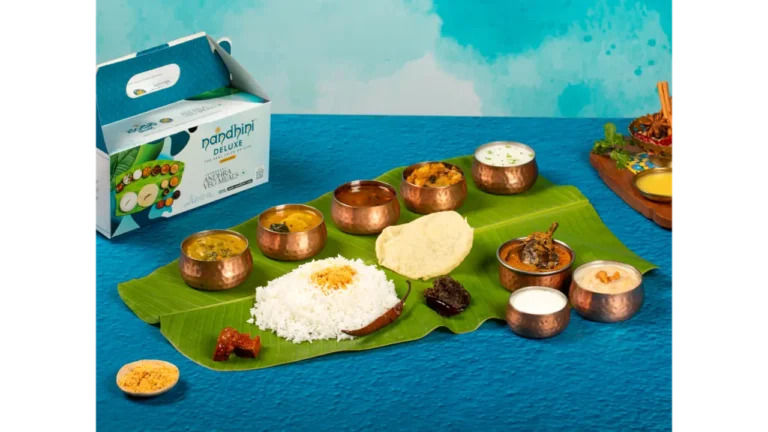
Your friends swear by the Mutton Biryani. You’re vegetarian. You’re scanning the menu wondering if curd rice and a plain dosa are your only options. They’re not. Not even close. An Andhra veg meal a proper one has 12 or more components on a single plate: two dals, two vegetable curries, rasam, sambar, three chutneys, pickle, appalam, ghee, and a sweet. That’s not a backup plan. That’s a tradition.
Andhra vegetarian cooking doesn’t borrow from non-veg recipes or swap paneer where chicken used to be. It’s a parallel cuisine one with centuries of history, its own hero dishes, and a spice philosophy that makes generic South Indian meals look restrained. This is your first-time ordering guide for andhra veg meals: what’s on the plate, which dishes to order first, how to manage the heat, and why vegetarians at Nandhini order with the same confidence as everyone else.
Is Andhra Food Good for Vegetarians?
Short answer: Andhra cuisine’s deep vegetarian tradition is older than most of its famous meat dishes. The traditional Andhra bhojanam — the full-course meal served on a banana leaf was originally an entirely vegetarian affair. Brahmin households across the Godavari and Krishna districts built a repertoire of hundreds of veg dishes long before biryani arrived in the region.
Pappu (dal) is the protein backbone of every Andhra household. Not as a side dish, but as the centrepiece mixed with rice and ghee before anything else touches the plate. Gutti vankaya (stuffed brinjal) isn’t a vegetarian alternative to something else. It is the dish. Gongura pachadi (sorrel leaf chutney) doesn’t exist in non-veg form because it was never meant to.
The variety runs deep. Pesarattu for breakfast, pulihora for festivals, bendakaya vepudu on the daily thali, boorelu for sweets. If you’ve only ever eaten “South Indian veg” as idli-dosa-vada, you’re about to discover what goes into a complete Andhra meal and most of it has always been vegetarian.
10 Must-Try Andhra Veg Dishes (and What Makes Each One Special)
Every Andhra veg meal has its stars. These are the 10 dishes that regulars order by name not because they’re listed first on the menu, but because each one earns its spot.
1. Gutti Vankaya Koora (Stuffed Brinjal Curry)
Small brinjals slit and stuffed with a peanut-sesame-chilli paste, then slow-cooked in a tamarind gravy. The stuffing caramelises against the soft brinjal. It’s the veg dish that non-veg diners order seconds of.
2. Gongura Pappu (Sorrel Leaf Dal)
Toor dal cooked with gongura (sorrel leaves) until the tang is sharp enough to cut through a plate of ghee rice. Gongura is Andhra Pradesh’s signature leaf sour, earthy, and impossible to replicate with any substitute.
3. Bendakaya Vepudu (Okra Fry)
Okra sliced thin, tossed with rice flour and spices, fried until every piece cracks when you bite it. The crunch on a banana leaf meal matters it’s the textural contrast against soft rice and dal.
4. Tomato Pappu
Toor dal simmered with ripe tomatoes, turmeric, and a tempering of mustard seeds and dry chillies. Comfort in its simplest form. The tomatoes dissolve into the dal, leaving behind a warm acidity that makes plain rice feel like a complete meal.
5. Mudda Pappu with Ghee
Thick, unseasoned toor dal just lentils and water, mashed by hand. Mixed with hot rice and a spoonful of ghee, it’s traditionally the first bite of an Andhra meal. The plainness is the point: it resets your palate for everything that follows.
6. Dondakaya Vepudu (Ivy Gourd Fry)
The underrated crispy side. Sliced ivy gourd with mustard seeds, curry leaves, and a dusting of chilli powder. Most diners overlook it on the thali until they taste it with a mouthful of sambar rice.
7. Pesarattu (Green Moong Dosa)
A dosa made entirely from green moong dal batter, not rice. Higher in protein than a regular dosa, with a rougher texture and an earthy flavour. Served with ginger chutney (allam pachadi). It’s an Andhra breakfast staple, and a good starting point to see how veg biryani compares with non-veg in the Andhra kitchen.
8. Gongura Pachadi (Sorrel Chutney)
A coarse-ground chutney of gongura leaves with garlic and dry chillies. It’s one of the hottest things on the thali and meant to be eaten in small amounts a thumbnail-sized portion mixed into a mouthful of rice. The definition of flavour density.
9. Pulihora (Tamarind Rice)
Cooked rice tossed with a tamarind-spice paste, peanuts, and curry leaves. Tangy, slightly sweet, and portable which is why it’s the default temple offering and travel food across Andhra Pradesh. Every household has a slightly different ratio.
10. Boorelu (Sweet Lentil Dumplings)
Chana dal and jaggery filling wrapped in a rice flour shell and deep-fried. Crispy outside, molten-sweet inside. It’s the traditional Andhra sweet that ends a full meal, and the one most people outside the state haven’t tried yet.
What’s Actually on an Andhra Veg Thali?
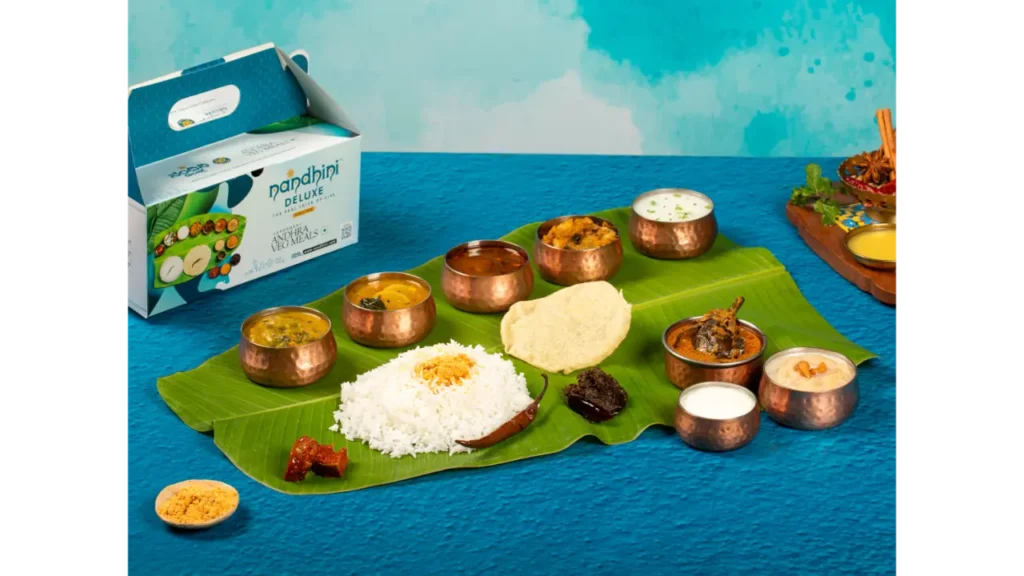
A proper Andhra veg thali isn’t a sampler platter. It’s a structured meal with an eating sequence that locals follow instinctively. Here’s what lands on the banana leaf and in what order you should eat it — the full breakdown of the full veg Andhra thali experience.
| Component | Telugu Name | What It Tastes Like | Spice Level (1–5) |
| Lentil powder | Kandi podi | Nutty, savoury, earthy — mixed with rice and ghee | 2 |
| Thick dal | Mudda pappu | Plain, creamy, mild — the palate reset | 1 |
| Seasoned dal | Pappu (tomato / palakura) | Tangy or earthy depending on the green used | 2 |
| Vegetable curry | Koora | Varies — brinjal is rich, beans are fresh | 3 |
| Dry fry | Vepudu | Crispy, spiced, crunchy | 3 |
| Lentil stew | Sambar | Warm, slightly sweet, tamarind-based | 2 |
| Pepper broth | Rasam | Hot, peppery, sour — the digestive | 3 |
| Pickle | Avakaya / Gongura | Intensely salty, sour, and hot | 5 |
| Chutney | Pachadi | Ranges from mild (coconut) to fiery (gongura) | 2–5 |
| Curd | Perugu | Cool, thick, unsweetened | 0 |
| Papad | Appalam | Crispy, salty | 1 |
| Ghee | Neyyi | Rich, aromatic, clarified butter | 0 |
| Sweet | Payasam / Boorelu | Jaggery-sweet, warm or fried | 0 |
The eating sequence matters. Start with kandi podi mixed into hot rice with ghee — that’s your first bite. Then move to mudda pappu. Koora and vepudu come next, eaten with plain rice. Sambar rice follows, then rasam rice (sipped, not gulped). Finish with curd rice mixed with a sliver of avakaya pickle. The meal is designed to move from mild to intense and back to cool.
Ask for extra kandi podi on the side. Mix it with rice and ghee. That’s your first bite — and the one regulars never skip.
Managing Spice as a Vegetarian Diner
The fear is almost always worse than the reality. Andhra spice isn’t uniform — it’s layered. Pappu is mild. Rasam is warm but not aggressive. Koora varies by vegetable. The things that actually burn — avakaya pickle, gongura pachadi — are condiments you control. You decide how much hits your rice. To understand why Andhra food carries its signature heat, look at the Guntur Sannam chilli: 30,000–50,000 on the Scoville scale. But most veg curries use it sparingly compared to the meat starters.
The meal has built-in heat regulators. Ghee coats the tongue and softens chilli burn. Curd rice at the end is your reset button. Buttermilk between courses cools the palate without dulling flavour. The sweet — payasam or boorelu — isn’t just dessert. It’s a thermal break.
Practical approach: start with pappu rice and ghee (the mildest combination). Add koora gradually. Try a tiny amount of pickle before committing. Save gongura pachadi for last, if at all. At Nandhini, spice levels can be adjusted on request — just ask. And read more about the spices that make Andhra veg food flavourful if you want the full picture.
Pure Veg Assurance: What to Look For
This matters to a lot of veg diners, and it should be addressed directly. Most Andhra restaurants in Bangalore including Nandhini serve both veg and non-veg. The kitchen isn’t segregated into two sealed rooms. But preparation areas are separate: veg meals have dedicated cooking stations, utensils, and serving sequences. Banana leaf serving is inherently individual your meal doesn’t share a surface with anyone else’s.
What to ask at any Andhra restaurant: Is the veg meal prepared on separate cooking stations? Is the oil shared? Are the same tawas used for veg and non-veg? Good restaurants will answer clearly. At Nandhini, the veg thali follows the same traditional structure and spice care as the non-veg one. It’s not an afterthought menu. For a deeper comparison, see how veg and non-veg thalis compare.
Millet and Health-Conscious Options
Andhra Pradesh has a millet heritage that predates the rice-centric meal most people associate with the state. Jowar (sorghum), ragi (finger millet), and korralu (foxtail millet) were everyday grains long before polished rice took over. Jonna rotte (sorghum roti) is still a staple in rural Telangana and Rayalaseema districts thick, slightly coarse, and eaten with a pulusu (tangy curry) instead of rice.
For health-conscious veg diners, this opens up options beyond rice: ragi mudda (finger millet dumpling), millet upma, and roti made from jowar or bajra. These pair with the same curries and pappu that sit on a regular thali. The protein density of an Andhra veg meal is already high toor dal, chana dal, green moong in pesarattu and millet adds fibre without displacing flavour. Explore more about millet-based dishes in Andhra cuisine for the full range.
Where to Find Andhra Veg Meals in Bangalore
Nandhini has outlets across Bangalore Koramangala, JP Nagar, Whitefield, Marathahalli, Indiranagar, Yelahanka, and more. For veg Andhra meals, lunch between 12 and 3 PM is when the full thali setup is at its freshest: rice is steaming, pappu is just off the stove, and the vepudu still has its crunch. Weekday lunch is peak thali time for office crowds. Weekends draw families for the full banana leaf experience. Try the veg Andhra meals at our Yelahanka outlet if you’re in North Bangalore.
When ordering, ask for “full veg meals” rather than just “thali” some outlets distinguish between the quick-service plate and the full unlimited meal. Refills on rice, dal, sambar, and rasam are standard at most traditional Andhra restaurants. Carrier meals for office delivery are also available: the Andhra Mini Veg Meal Box and Full Carrier Meal cover individual and group orders. Prices typically fall in the ₹150–₹220 range for dine-in; check the current menu for exact pricing.
Delivery considerations: the thali experience is best in-house. Banana leaf, unlimited refills, and the eating sequence all work better at the table. But if you’re ordering for the office, the carrier meal versions hold up well the pappu and koora travel better than rasam, which loses its heat quickly.
Frequently Asked Questions
What is included in an Andhra veg thali?
An Andhra veg thali typically includes steamed rice with ghee, pappu (dal), sambar, rasam, one or two koora (vegetable curries), vepudu (dry fry), pachadi (chutney), avakaya pickle, podi, appalam, curd, and a sweet.
Is Andhra vegetarian food only rice-based?
No. While rice is the centrepiece, Andhra vegetarian cuisine includes pesarattu (moong dosa), punugulu (dal fritters), various pulihorae (flavoured rice), roti with pulusu (tangy curry), and millet-based dishes like jonna rotte.
Can vegetarians eat at Andhra non-veg restaurants?
Yes. Most Andhra restaurants in Bangalore, including Nandhini, serve full vegetarian thalis with dedicated preparation. The veg meal follows the same traditional structure as the non-veg meal, with equal attention to spice and variety.
Are Andhra veg meals unlimited?
At most traditional Andhra restaurants, veg meals are served unlimited — rice, dal, sambar, rasam, and sides are refilled as many times as you want. This is a core part of the Andhra bhojanam tradition.
What is the price of veg Andhra meals in Bangalore?
Veg Andhra meals in Bangalore typically cost between ₹150 and ₹220 for a full thali. Prices vary by restaurant, with carrier meals for delivery priced higher due to packaging and portion size.
The Takeaway
Andhra veg food isn’t a compromise. It’s a cuisine that treats vegetables, lentils, and spices as the main event not as substitutes for something else. Gutti vankaya has held its place on the Andhra thali for generations. Gongura pappu doesn’t need a non-veg counterpart to justify its existence. The podi-rice-ghee first bite is a ritual that doesn’t ask whether you eat meat.
We’ve been serving this meal since 1989. The recipe hasn’t changed. The vegetarians who come back every week haven’t changed their order either. Some things just work.
Your only job is to show up hungry. We’ll handle the rest.