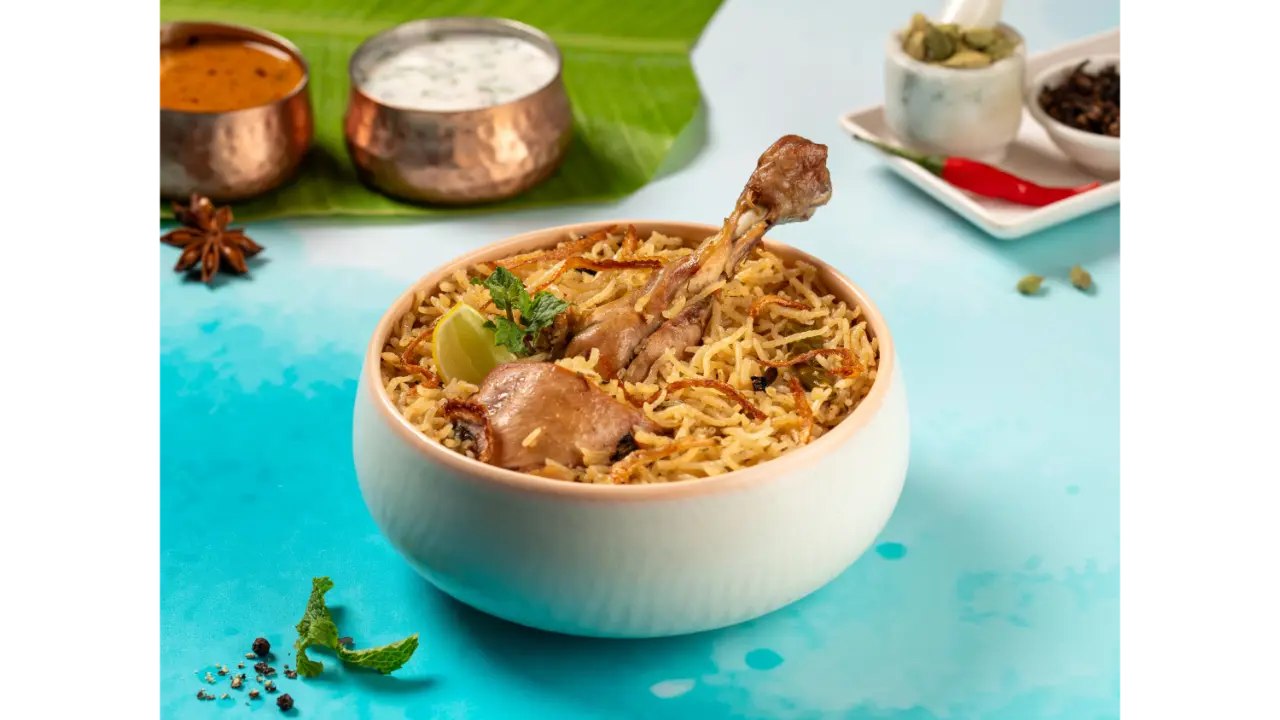
Chicken biryani is one of those meals where small choices can change the whole experience. One of the biggest choices is also the simplest: bone-in or boneless. Both can be delicious, and both have loyal fans. The right one depends on what you care about most: deeper flavor, easy eating, cleaner bites, or a more traditional biryani feel.
This guide compares bone-in vs boneless chicken biryani across taste, texture, and convenience, then gives quick recommendations for office lunch, family dinner, kids, and group orders.
If you already know you want to order, you can explore Chicken Biryani in Bangalore on Nandhini.com.
Table of Contents
Boneless vs bone biryani: the core difference
Let’s define it clearly.
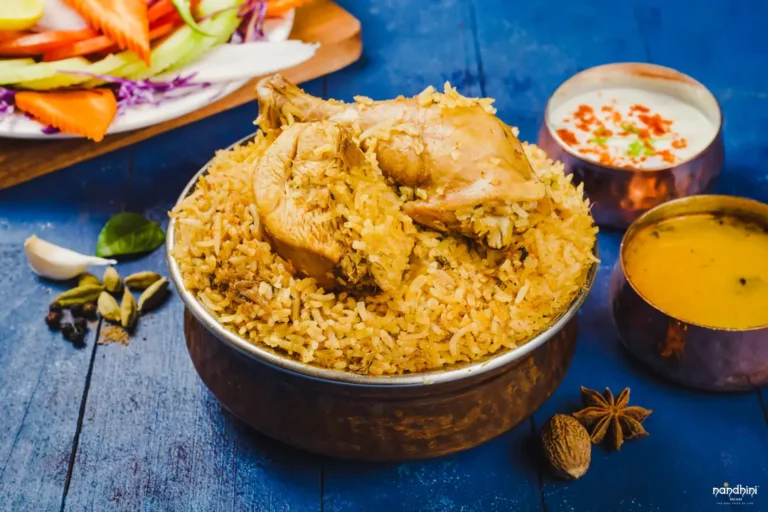
Bone-in biryani uses chicken pieces cooked on the bone. The meat, bone, and surrounding connective tissue cook together with masala, and that influences flavor and texture.
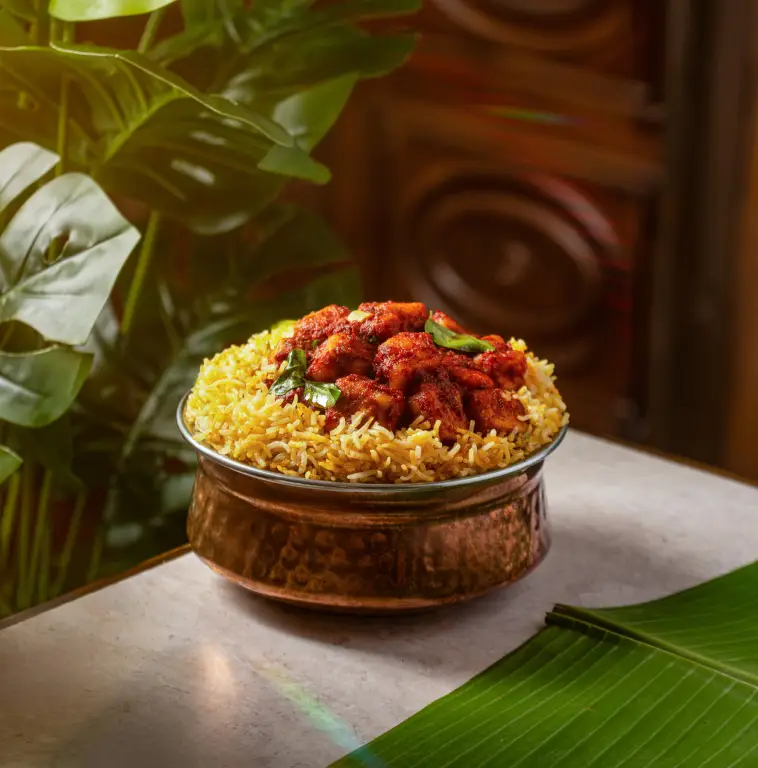
Boneless biryani uses chicken pieces without bones, usually cut into cubes or bite-sized chunks, cooked with masala and layered with rice.
So the real difference in boneless vs bone biryani comes down to two things:
- How flavor develops during cooking
- How easy it is to eat once it is served
Everything else, like spice level, rice fragrance, and aroma, depends on the recipe and method, but bones and cuts change the final feel more than people expect.
Taste and aroma: which feels more “classic biryani”?
Taste is the main reason people choose one over the other. Here is what usually changes.
Bone-in biryani: deeper chicken flavor
Bone-in pieces often give biryani a more “rounded” chicken taste. As the biryani cooks, the juices from the chicken and the flavor around the bone mingle with the masala and steam. This often creates:
- a stronger chicken-forward note
- richer aroma when you open the pack
- pockets of flavor that feel slow-cooked
If you love biryani for that traditional, hearty feel, bone-in tends to match that expectation.
Boneless biryani: cleaner bites, masala-forward balance
Boneless biryani often feels more consistent. Every bite can have a similar ratio of chicken, masala, and rice. Because boneless pieces are easy to coat, you may notice:
- masala flavor that feels even across the chicken pieces
- a clean bite that is easy to chew
- fewer interruptions while eating
Boneless is often preferred by people who want biryani to be convenient and predictable.
What about dum biryani?
If the biryani is finished using dum style cooking, the aroma and layered flavor come from sealed steam cooking and infusion. Both bone-in and boneless can benefit from dum method. The difference is that bone-in can feel more “chicken-deep,” while boneless can feel more “masala-even.”
Texture and juiciness: what changes bite to bite
Texture is where the difference becomes obvious, especially during delivery or leftovers.
Bone-in biryani: variety in texture
Bone-in pieces often have more variation:
- some bites are softer near the bone
- some pieces have a satisfying chew
- meat can feel more tender in a slow-cooked way
This variety is enjoyable for many biryani lovers because every piece feels slightly different.
Boneless biryani: uniform and fork-friendly
Boneless pieces are usually more uniform. That means:
- bites feel consistent
- it is easier to eat quickly
- there is less work separating meat from bone
Boneless is great when you want biryani that behaves like a neat meal, especially for lunch breaks.
Delivery factor: what happens after travel time
Delivery changes texture. A few common patterns:
- Bone-in pieces often hold moisture well because the meat is attached to the bone.
- Boneless pieces are easier to eat right away, but they can feel less juicy if they sit longer, depending on cooking and packing.
This does not mean boneless is dry. It means boneless benefits from being eaten a little sooner after opening, and it helps to fluff the rice gently so steam does not get trapped and soften everything.
Convenience and mess factor: office, travel, kids
Convenience is not a small issue. Many people order biryani because it is the perfect one-box meal. The bone choice can make that one-box meal either smooth or slightly messy.
Boneless biryani wins for speed and clean eating
Boneless is ideal when:
- you are eating at your desk
- you have a short lunch break
- you prefer using a spoon and fork only
- you do not want to deal with bones and napkins
If you want biryani that feels like a quick, clean meal, boneless is the easy choice.
Bone-in biryani wins for leisurely, classic biryani enjoyment
Bone-in is ideal when:
- you are eating at home
- you enjoy the traditional feel of biryani pieces
- you like the experience of eating biryani slowly
- you want that richer chicken flavor
Bone-in can feel more satisfying for people who want the full biryani experience, not just a fast lunch.
For kids and older family members
This is where boneless often becomes the safer option.
- Boneless is easier to chew and portion.
- Bone-in can be enjoyed too, but it often needs more attention, especially for younger kids.
For travel and eating in the car
Boneless is usually better because it reduces mess and distraction. Bone-in is better saved for a relaxed setting.
Which should you order? Quick decision guide
Here is the practical part. Use this simple rule: decide what matters most today.
Choose bone-in biryani if you want:
- deeper chicken-forward flavor
- more traditional biryani feel
- varied texture bite to bite
- a slower, more relaxed eating experience
Choose boneless biryani if you want:
- clean, quick eating
- consistent chicken pieces
- office-friendly convenience
- easy sharing for kids and elders
Now let’s turn that into ready-to-order templates.
Template 1: Office lunch order
Best choice: Boneless
Why: easy to eat quickly, minimal mess
Add-ons that help:
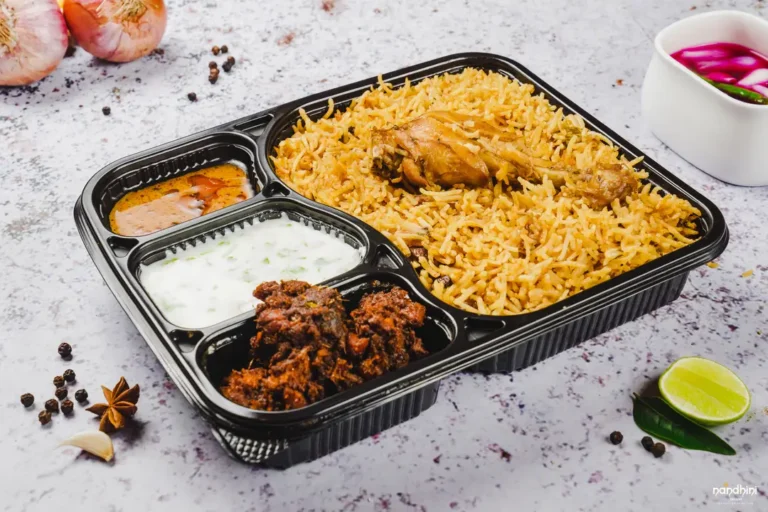
- raita or curd to balance spice
- a simple crunchy side if you like texture (if offered)
Template 2: Family dinner order
Best choice: Bone-in, or mix both
Why: bone-in feels classic and richer, and dinner is usually less rushed
Smart family strategy:
- order one bone-in for biryani lovers
- order one boneless for kids or convenience eaters
- add enough raita for the table
Template 3: Kids-friendly order
Best choice: Boneless
Why: easy to chew, easy to portion, less fuss
Keep it comfortable:
- add raita
- keep extra spicy add-ons minimal
Template 4: Group order for parties
Best choice: mix bone-in and boneless
Why: groups have mixed preferences
Group logic:
- boneless disappears fast because it is easy to eat
- bone-in satisfies the biryani traditionalists
- raita is a must-have for balance
If someone in your group wants a full thali-style meal instead of biryani, you can also explore Andhra Meals in Bangalore on Nandhini.com.
Add-ons that pair well with each type
Add-ons can improve the experience, but only when they support the biryani rather than compete with it.
Best add-ons for boneless biryani
Boneless biryani benefits from balance and texture.
- Raita or curd for cooling
- A crunchy side if you enjoy contrast
- A light gravy side if offered, but keep it minimal so rice stays separate
A simple rule:
- keep boneless clean and easy, do not overload it with too many extra gravies
Best add-ons for bone-in biryani
Bone-in biryani already has a rich feel, so add-ons should be supportive:
- raita or curd to balance spice
- onion and lemon style sides if available
- extra rice only if you love extended mixing, but not always necessary
Leftovers and reheating tips
Reheating matters, especially for boneless.
- Reheat gently and keep it covered to retain moisture.
- Do not overheat at high heat, which can dry rice and chicken.
Bone-in often reheats nicely because pieces retain moisture. Boneless reheats well too, but gentle heat makes a difference.
FAQs: Bone-in vs boneless chicken biryani
Which is tastier: bone-in or boneless biryani?
Taste is personal, but bone-in often feels more chicken-forward and traditional, while boneless feels cleaner and more consistent.
Is boneless biryani less flavorful?
Not necessarily. Boneless can be very flavorful because masala coats pieces evenly. The difference is that bone-in can add deeper chicken notes during cooking.
Which is better for delivery?
Boneless is easier to eat and convenient for delivery. Bone-in can hold a rich feel and moisture well, especially if you enjoy classic pieces. Choose based on whether you value convenience or traditional eating.
Which is better for kids?
Boneless is usually better for kids because it is easy to chew and portion, and there are no bones to manage.
Does bone-in biryani come with more chicken?
Not always. Portioning depends on the restaurant and menu. Bone-in pieces can feel larger because of the bone, while boneless pieces feel more directly edible. The best approach is to choose based on preference, not assumptions.
Closing: pick the biryani that matches your moment
Bone-in and boneless biryani are both great choices, but they deliver different experiences.
Choose bone-in when you want classic biryani flavor, richer chicken notes, and a slow, satisfying meal. Choose boneless when you want quick, clean bites and easy eating, especially for office lunch or kids.
Ready to order? Explore Chicken Biryani in Bangalore on Nandhini.com and choose the style that fits your day. And if you want a full meal plate option alongside biryani, check Andhra Meals in Bangalore as well.