You can learn a lot about chicken biryani in the first 30 seconds. Not by overthinking. Not by judging it like a food critic. Just by noticing a few simple sensory signals that consistently show up in well-made biryani.
This guide is for anyone who wants practical good biryani signs you can use at a restaurant table or at home when a delivery box arrives. We will start with aroma, then confirm it with rice texture and chicken cues, and end with a quick table, mini-scenarios, mistakes to avoid, and FAQs.
If you want to explore options while reading, start with Browse Nandhini’s menu.
Table of Contents
Quick Answer: 5 good biryani signs you can trust
- Aroma comes in layers, not one sharp note. You smell rice, spices, and onion warmth, not just chilli oil.
- Steam smells fragrant, not burnt or overly oily.
- Rice aroma leads the experience, and spice supports it. Heat should not drown the fragrance.
- Chicken smells integrated with masala, not like separate “plain chicken” added later.
- After two bites, the aroma still lingers. A good biryani does not fade into flat heat.
Keep these five in mind, then use the sections below to verify them with proof.
What “good biryani signs” really means
A well-made chicken biryani is not just “spicy and heavy.” It is a structured dish where multiple elements agree with each other:
- Aroma: the first signal, and the one that makes biryani feel irresistible
- Rice texture: the proof that cooking and steam control were handled well
- Masala balance: spice that tastes round, not harsh
- Chicken tenderness: meat that feels cooked with the biryani, not next to it
- Moisture control: especially important for delivery
This post teaches you how to spot those signals fast. If you also want a simple map of Bangalore chicken biryani styles (including aroma-led styles vs heat-led styles), see Chicken biryani types in Bangalore.
Aroma signals you can trust (the lid test)
Aroma is the easiest place to get fooled, because strong smell does not always mean good smell. Here is how to judge it properly.
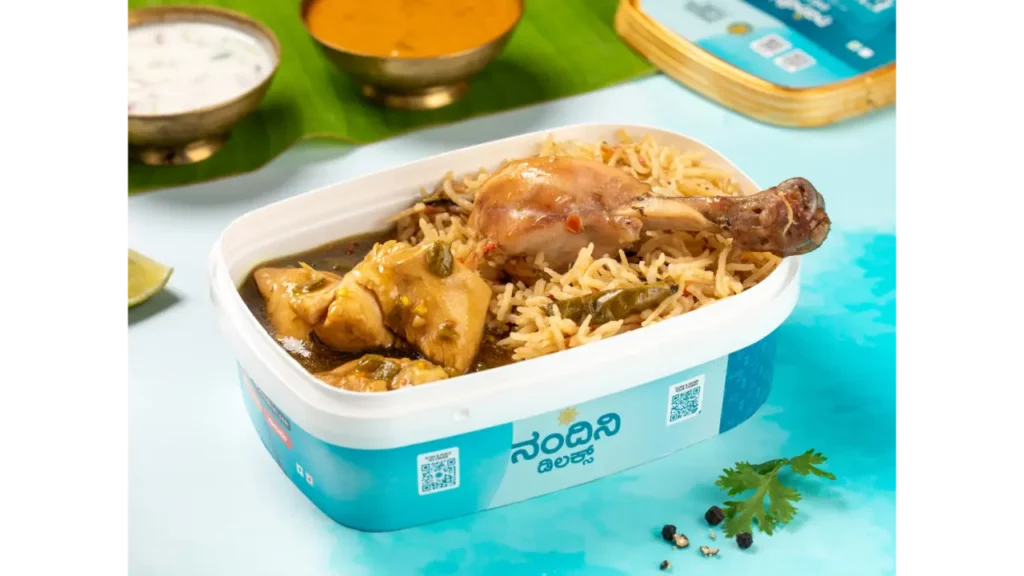
The “lid moment” aroma release
Open the lid and notice what happens.
- Good sign: you get an aroma rush, then it settles into a clear, steady fragrance.
- Less reliable sign: a single aggressive smell that hits hard and disappears quickly.
One simple trick: after opening, wait about 60 seconds before you decide. The first blast is mostly steam. The real aroma shows itself once steam calms down.
This is also why sealed, slow-cooking methods tend to hold aroma better. If you want the clearest explanation of why dum-style cooking preserves fragrance, see Dum biryani meaning and the taste checklist.
Layered aroma vs sharp aroma
Use this simple interpretation:
- Layered aroma feels like a stack
You can identify rice fragrance, whole spices, onion sweetness, and a gentle fat note (ghee or oil) working together. - Sharp aroma feels like a spike
It is mostly chilli oil, raw masala, harsh smoke, or a strong sour note that dominates everything.
If the smell feels sharp, do not reject the biryani instantly. Move to texture proof. Aroma can distort in closed boxes.
Onion warmth is a quiet hero
In many well-made biryanis, you can sense a mild sweetness underneath the spice. Often that comes from onions cooked down properly (and sometimes fried onions used strategically). It is not sugary. It is warm and rounded.
Good sign: you smell warmth and depth, not just heat.
Bad sign: you smell raw spice powder or a harsh acidic punch with no softness.
Rice aroma should be present, not hidden
Aroma-led biryani is not about perfume. It is about fragrant rice carrying spice. Scientists commonly point to 2-acetyl-1-pyrroline (2-AP) as a key aroma compound in fragrant rice varieties, which is one reason aromatic rice smells so distinct.
If your biryani smells only like masala and oil with no rice fragrance at all, that is usually not a great sign.
Texture signals that confirm the aroma
Aroma makes promises. Texture tells you if the promises are real.
Rice separation and fragrance
Open the box and look at the grains.
- Good sign: most grains are separate, soft but not mushy, and they smell like aromatic rice even before you mix.
- Warning sign: clumpy rice that looks wet and heavy, or very dry rice that feels powdery and broken.
You do not need perfect “each grain separate” aesthetics. Real biryani has variation. But you should not feel like you are eating sticky rice paste.
If you want an easy reference for how different Bangalore chicken biryani types vary by rice feel and aroma lead, check Chicken biryani types in Bangalore.
Masala coating should look intentional
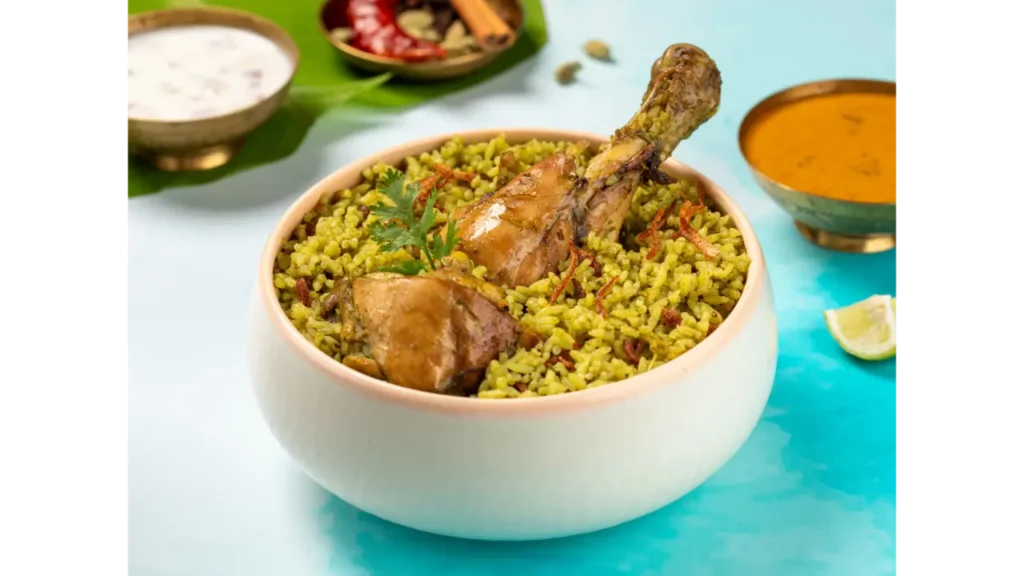
Look at how masala sits in the rice.
- Good sign: masala is distributed with purpose, clinging lightly to grains without turning the entire box into a wet mash.
- Bad sign: a wet masala pool at the bottom, or dry, pale rice on top with all masala trapped below.
A quick evaluation method:
- take one spoon from the top
- take one spoon from the middle
- take one spoon from the bottom
If the biryani tastes like three different dishes, mixing and layering were not handled well.
Chicken signals (the bite test)
Chicken is where quality becomes obvious fast.
Tenderness and integration
The best chicken biryani bites feel like the chicken and rice belong together.
- Good sign: chicken tastes infused, tender, and seasoned through the bite.
- Warning sign: chicken tastes like plain cooked meat sitting inside spicy rice.
If chicken tastes separate, it often means the cook path was split, or the marination and cooking timing did not integrate.
Bone-in vs boneless: quick aroma cues
This is not a “which is better” debate. It is a signal guide.
- Bone-in often smells more chicken-forward, because bones and connective tissue can contribute deeper savoury notes during cooking.
- Boneless often tastes more consistent bite to bite, and many people find it easier to evaluate quickly.
If you want a deeper decision guide focused on taste, texture, and convenience, see Bone-in vs boneless chicken biryani comparison.
Delivery changes aroma (how to judge fairly)
Some people judge delivery biryani too harshly. A closed box changes everything:
- steam condenses, making the top feel softer
- aroma can flatten inside the container
- the first bites may feel spicier if masala has concentrated in one zone
Here is the fair delivery method:
- Open the box immediately
- Let it rest briefly so steam releases
- Fluff gently with a spoon, do not mash
- Take a top bite and a middle bite before you decide
- If heat feels sharp, add a cooling side rather than water-only “fixes”
For a delivery-focused ordering framework that explains steam control and texture protection in simple steps, see Best chicken biryani for delivery in Bangalore.
The Good Biryani Signs table (fast decision table)
| Signal | What you notice | What it usually means | What to do next |
| Aroma comes in layers | rice, spice, onion warmth | balanced cooking and spice structure | confirm with rice texture |
| Steam smells clean | fragrant, not burnt or harsh | good heat control | rest 60 seconds, then taste |
| Rice grains mostly separate | soft, not clumpy | rice cooked correctly | check masala distribution |
| Masala looks even | not pooled, not powdery | intentional layering | taste top, middle, bottom |
| Chicken tastes integrated | seasoned through the bite | good marination and timing | decide bone-in vs boneless next time |
| Heat does not mask aroma | spice supports fragrance | balanced spice handling | pair with raita if needed |
| Aroma lingers after 2 bites | not a quick fade | depth, not surface perfume | enjoy, and note what worked |
Two mini-scenarios (so you can apply it today)
Scenario 1: Dine-in, first spoon test at the table
You lift the lid, and aroma hits fast. Before you declare it amazing, you follow the method:
- wait a short moment for steam to settle
- smell again and look for layered aroma
- take one spoon from the top and one from the middle
- confirm grains are not clumpy
- take a chicken bite and check if it tastes integrated
If the biryani passes these checks, it is very likely well-made.
Scenario 2: Delivery at home, aroma feels weak
You open the box and feel disappointed. The smell seems muted.
Instead of judging instantly, you do this:
- open fully and let steam escape
- fluff gently to release trapped aroma pockets
- take a top bite and a middle bite
- if spice feels sharp, add a cooling side and slow the first few bites
Many “weak aroma” delivery boxes improve noticeably after steam release and gentle fluffing. This is also why delivery-focused ordering matters. Best chicken biryani for delivery in Bangalore explains how travel time changes texture and aroma.
Common mistakes when judging biryani quality
These mistakes create false negatives and false positives.
- Confusing chilli punch with aroma
Strong heat is not the same as fragrance. Aroma is layered. Heat is a sensation. - Judging instantly while steam is blasting
Steam can hide the real smell. Rest briefly, then evaluate. - Mixing aggressively and ruining grain texture
Over-mixing turns your “test” into a mash. Fluff gently. - Expecting dum-style aroma from every style
Some styles are heat-led, some are aroma-led. Know what you ordered. Dum biryani meaning and the taste checklist helps set expectations. - Thinking more oil equals more flavour
Oil can carry aroma, but too much can dominate and mute subtle fragrance. - Ignoring rice proof and judging only by smell
Rice texture is the evidence. Smell is the first clue.
FAQs: Good biryani signs
1) What are the top good biryani signs to check first?
Check layered aroma, clean steam smell, and rice grain separation. Then confirm chicken tenderness.
2) Why does my biryani smell good but taste flat?
Sometimes aroma is surface-level but spice balance is off. Confirm masala distribution by tasting from different levels (top, middle, bottom).
3) Why is dum biryani usually more aromatic?
Dum is a sealed slow-cooking method that traps steam and helps aroma infuse into rice. See Dum biryani meaning and the taste checklist.
4) How do I tell if biryani rice is overcooked?
If grains are clumpy, sticky, and break easily into a paste-like texture, it is likely overcooked or heavily steamed without control.
5) Bone-in vs boneless: which has a richer aroma?
Bone-in often feels more chicken-forward, boneless often feels more consistent. Cooking quality matters more than bone presence. See Bone-in vs boneless chicken biryani comparison.
6) What should good biryani smell like after delivery?
It should still smell fragrant after steam release and gentle fluffing. If it smells only oily or only sharp chilli, aroma may be out of balance.
What to order at Nandhini (soft CTA)
If your goal is to experience a biryani where aroma and rice texture are the star, start by exploring options on Browse Nandhini’s menu , then use the “good biryani signs” method above the moment your biryani arrives. It takes less than a minute, and it makes your next order smarter