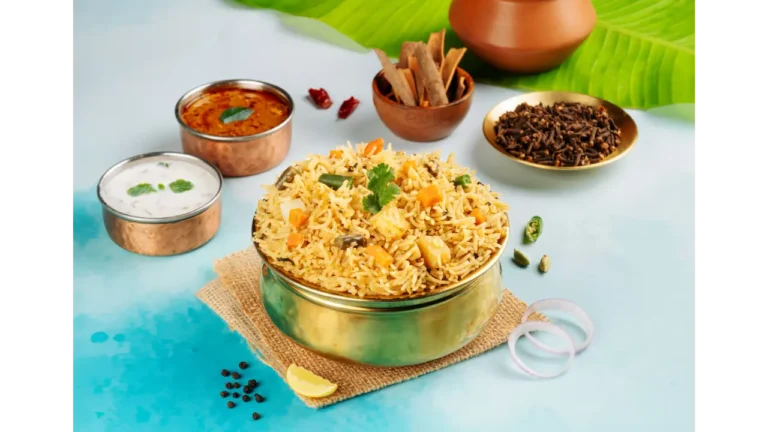
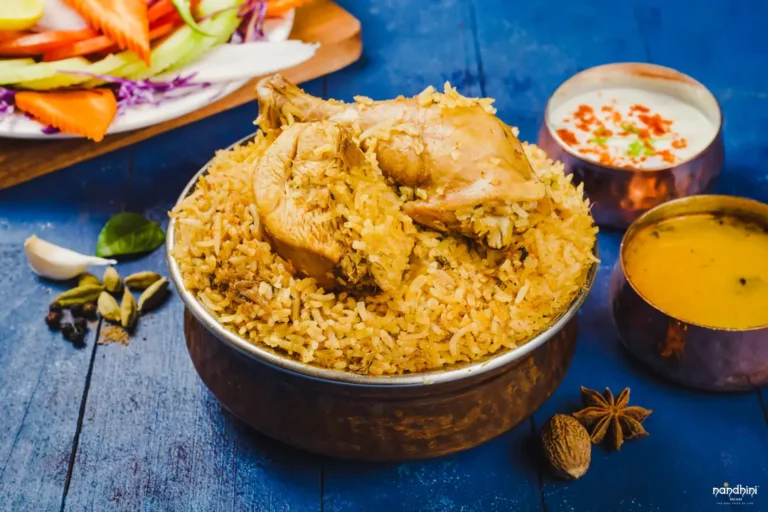
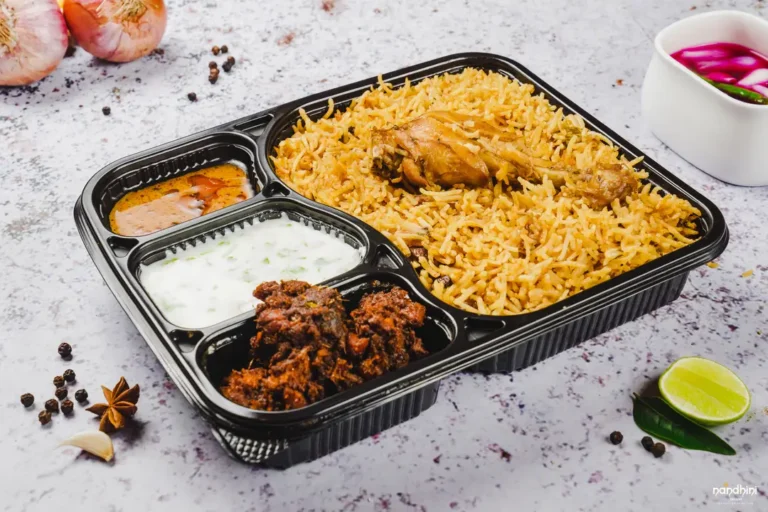
If you have ever ordered a spicy chicken biryani and felt that the first few bites were amazing but the heat quickly took over, raita is the simplest way to bring the meal back into balance. It is not just a side dish. It is a heat-control tool that helps you enjoy the aroma and depth of biryani without the burn becoming the main event.
This guide explains why raita with biryani works in plain language, what is actually happening in your mouth, why water often fails, and the best way to eat raita with spicy biryani so it does its job properly.
If you want to pair this with an actual order, start by browsing the menu and choose your biryani style first.
Table of Contents
Quick Answer
The burning sensation from spicy biryani is mainly caused by capsaicin, which does not dissolve well in water. That is why water often spreads the burn instead of reducing it. Yogurt helps because dairy proteins like casein can interact with capsaicin and reduce the intensity of the burn, and cold yogurt gives quick relief by calming the sensation. The easiest method is to take a spoon of raita between bites, like a reset button, instead of mixing the entire bowl into the biryani at the start.
What people mean by “cooling” in raita
Raita does not “cool” biryani the way ice cools water. The cooling you feel is mostly a perception reset:
- the burn sensation drops
- your mouth feels calmer
- the aroma and flavor of biryani becomes clearer again
Think of it like lowering the volume on heat so you can hear the rest of the dish.
The science in plain language: why raita helps
Capsaicin is the burn driver
Chilli heat is not a flavor in the usual sense. Capsaicin triggers the receptors that make your mouth feel burning or hot.
If you want the deeper mechanism, capsaicin activates TRPV1 channels, which is why the sensation feels like heat even when the food is not literally hotter.
Why water usually does not work
A very common mistake is chasing spicy biryani with water after every bite. The issue is that capsaicin is not water-friendly. Water can rinse your mouth, but it does not reliably reduce the capsaicin burn, and it can even spread it around. Cleveland Clinic explains why milk is more effective than water for this exact reason.
Why yogurt works better than water
Yogurt has two advantages:
- Casein effect
Milk and yogurt contain casein, a protein that can help break down capsaicin and reduce the burn sensation. - Texture and temperature effect
Raita is thick, coats your mouth, and is usually served cool. That combination makes the relief feel immediate and lasting compared to water, which is thin and passes quickly.
There is also research testing common beverages for reducing oral burn from capsaicin. In a controlled test, milk performed among the best options for reducing burn, and whole milk was not significantly better than skim milk, which supports the idea that components beyond fat, like proteins, matter.

Raita’s second job: palate reset, not just burn relief
Even if you can tolerate spice, raita still improves biryani because it resets your palate between bites:
- it cuts through richness
- it gives contrast to warm spices
- it prevents heat from masking aroma
That is why raita shows up again and again as the top side with biryani. Nandhini’s biryani sides guide directly positions raita as the number one choice because yogurt cools spice and refreshes your palate between bites.
How to eat raita with biryani (the method that works)
1) The between-bites method
This is the best method for spicy biryani.
- Take one bite of biryani.
- Take a small spoon of raita.
- Pause for a second.
- Go back to biryani.
You are using raita like a heat reset, not like a sauce. Nandhini’s “too spicy” fix guide includes raita and curd as a primary tool to manage heat after ordering.
2) When mixing raita into biryani makes sense
Mixing raita into the whole portion can be useful in a few cases:
- leftovers where you want the entire bowl milder
- when the biryani is simply too hot for your current tolerance
- when you want a softer, creamier bite for kids or elders
If you are eating fresh biryani and you like the original aroma, do not mix everything at the start. Mixing can mute aroma and change the biryani’s texture faster than you expect.
Raita, salan, and onions: what each one actually does
Many people order these together but expect them to do the same job. They do not.
- Raita: reduces burn and resets your palate
- Salan: adds moisture and tang, and changes the flavor balance, but it does not “cool” heat like yogurt does
- Onions: adds crunch and a clean break between spicy bites
If you want a full pairing map, the sides guide covers raita, salan, crunchy sides, and drinks with clear “what each one does” logic.
Quick table: what helps with burn and what does not
| What you try | Works for burn? | Why |
| Cold raita or yogurt | Yes | casein and cooling texture help reduce capsaicin burn |
| Milk | Yes | casein can break down capsaicin and reduce burn |
| Water | Usually no | water is not effective against capsaicin burn in the same way |
| Extra rice | Helps per bite | dilutes masala intensity in that bite |
| Sweet drink | Sometimes | can shift perception, but not as reliable as dairy options |
Two mini-scenarios
Scenario 1: Dine-in with mixed spice tolerance
You are at the table with friends. One person loves spicy biryani. Another person is spice sensitive. The easiest solution is not ordering two separate meals. It is making raita a shared tool.
What works:
- keep raita in the center
- tell spice-sensitive diners to use the between-bites method
- let spice lovers go without raita if they want
This is exactly why raita is treated as a primary side in biryani pairing.
Scenario 2: Delivery biryani arrives hotter than expected
Delivery can make biryani feel sharper because aroma impact drops and masala pockets can hit hard early. Nandhini’s delivery guide even calls out that biryani can feel spicier when delivered and recommends simple steps like opening the box, releasing steam, and fluffing gently.
What to do:
- open the box, release steam, fluff gently
- start with raita between bites
- slow your pace for the first few minutes
- do not mix the whole biryani container aggressively
If the biryani is still too hot, follow the full rescue checklist in the “too spicy” guide.
Common mistakes (and fixes)
- Mixing raita into the entire biryani immediately
Fix: use between-bites first. Mix only if you want to mellow the whole portion. - Using water as the main strategy
Fix: use raita or milk-based options. Cleveland Clinic explains why milk is more effective for capsaicin burn. - Using too little raita
Fix: take a proper spoon as a reset, not a tiny smear. - Skipping raita on delivery orders
Fix: if you are spice sensitive, treat raita as essential, especially for delivery heat behavior. - Chasing heat with pickles or extra spicy sides
Fix: keep extra heat add-ons separate until you know your tolerance for that biryani.
FAQs: Why raita with biryani?
1) Why is raita served with biryani so often?
Because it reduces the burn sensation from chilli heat and resets your palate so biryani tastes balanced instead of overwhelming.
2) Does raita actually reduce spice, or does it only feel cool?
It reduces the perceived burn by interacting with capsaicin and calming the sensation. The cool temperature and thick texture also help.
3) Why does water not help spicy biryani much?
Water is not as effective against capsaicin burn as dairy options, so it often does not reduce the sensation in a meaningful way.
4) Should I mix raita into biryani?
Only if you want to mellow the entire bowl. For most people, between-bites works better because it keeps aroma intact and gives a clean reset.
5) Is curd the same as raita for cooling?
Curd works similarly because yogurt is doing the key job. Raita adds texture and extra refresh from ingredients, but the cooling effect comes mainly from the yogurt base.
What to explore at Nandhini
If you are deciding what to order, start with the menu, pick your chicken biryani style, and add raita if you want to protect the experience from becoming too hot.
If you want a quick decision flow that includes spice tolerance and cooling sides, the chicken biryani types guide is a strong companion read.