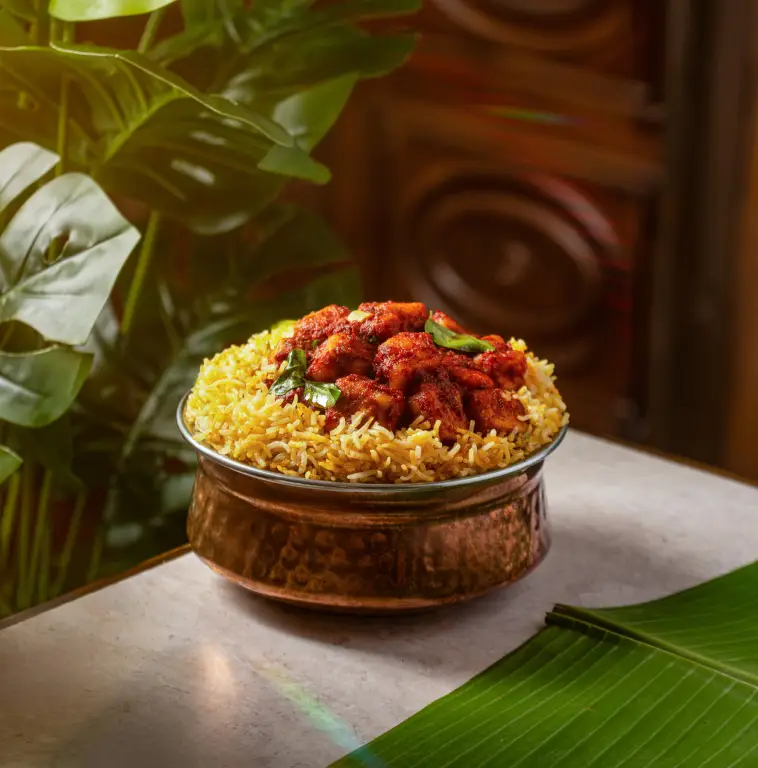
If you have ever wondered whether “dum” is a spice mix, a special rice, or a particular style of masala, you are not alone. The truth is simple: dum is a cooking method. Once you understand it, you will also understand why dum biryani tastes more aromatic, more layered, and more “together” than many quick-cooked biryanis.
In this guide, we will break down the dum biryani meaning, explain what actually happens during dum cooking, how dum biryani differs from regular biryani, and how to order the right dum biryani in Bangalore so you get exactly what you expect.
If you are ready to order right away, you can explore Chicken Biryani in Bangalore on Nandhini.com .
Table of Contents
Dum biryani meaning in one line
The dum biryani meaning is this: “Dum” means slow cooking food in a sealed pot so it cooks in its own steam and trapped aroma.
That is it. Dum is not a garnish, not a type of rice, and not a label for “extra spicy.” Dum is about sealing the pot, keeping steam inside, and letting flavors infuse gradually.
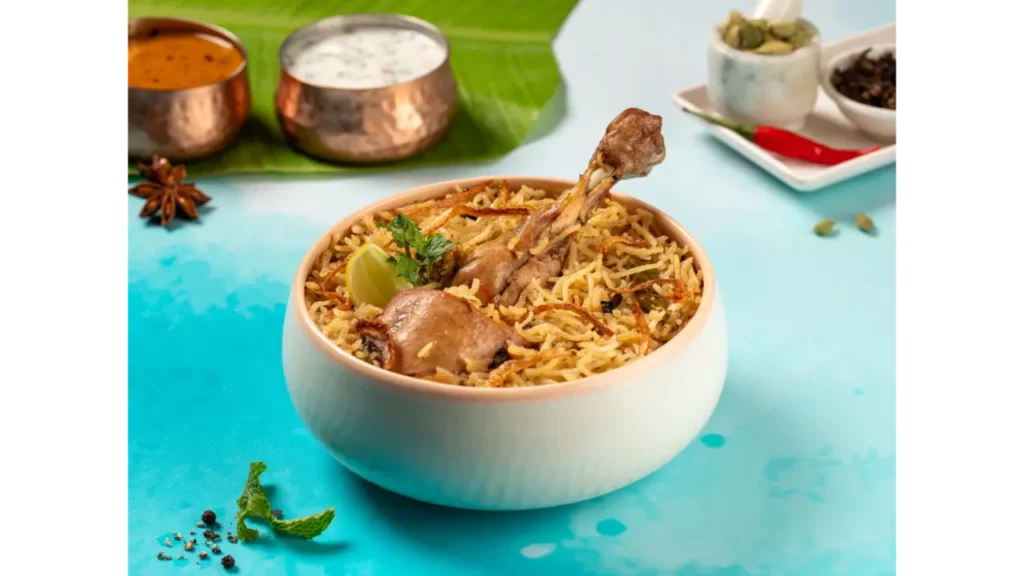
What happens during “dum” (the simple science of flavor)
Dum cooking looks traditional, but it is also practical. When you trap steam inside the pot, a few important things happen that change the final biryani in a big way.
1) Layering is the foundation
Dum biryani is usually built in layers. The layers can vary by style, but the logic is similar:
- a layer of partially cooked rice
- a layer of masala and protein (like chicken)
- herbs, whole spices, and aroma elements in between (depending on the recipe)
- another layer of rice on top
Layering matters because it sets up the “two-way exchange” of flavor. The masala perfumes the rice, and the rice absorbs aroma without turning into a single mixed curry-rice texture.
2) Sealing is the signature move
The pot is sealed, traditionally with dough around the lid, or with a tight-fitting lid and weight. The goal is the same: trap steam inside.
Why sealing matters:
- steam cannot escape easily
- aroma stays inside the pot instead of evaporating
- heat becomes gentle and even
3) Steam circulates and infuses
Once sealed, gentle heat creates steam. That steam moves around the pot and carries aroma through the rice and protein.
This is why dum biryani often feels:
- more aromatic when you open the pack
- more layered in taste, not just spicy
- more cohesive, like all parts were cooked “together”
4) The finishing effect: a unified biryani
Dum helps the rice and protein finish cooking in a controlled way. The rice can stay more separate, and the masala can cling to grains without turning the whole biryani into mush.
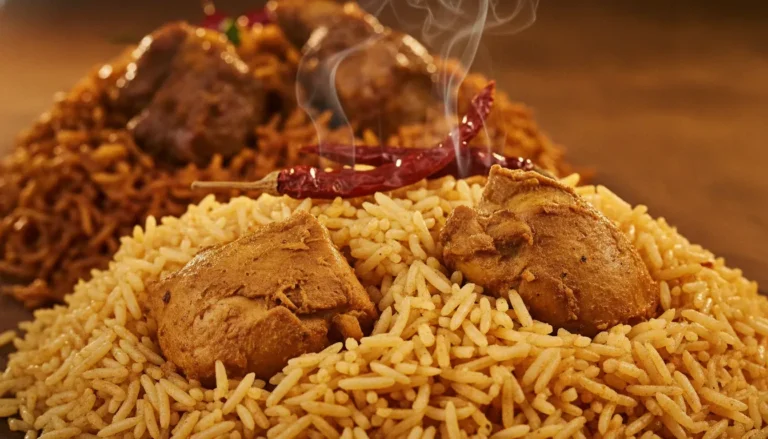
A good dum biryani often has:
- distinct rice grains with a gentle coating of flavor
- pockets of masala and spice notes
- a deep aroma that shows up even before the first bite
Dum biryani vs regular biryani: what you can taste
People often ask, “Is dum biryani different from biryani?” The answer is yes, and you can usually tell by taste, aroma, and texture.
Here are the differences in everyday language.
Aroma
Dum biryani: aroma feels trapped and released at the moment you open it.
Regular quick biryani: aroma can be present, but often feels flatter because flavors were cooked fast or mixed late.
Flavor structure
Dum biryani: layered flavor. You taste rice, masala, herbs, spice notes, and protein in stages.
Regular quick biryani: sometimes tastes like one combined flavor throughout, especially if it is heavily mixed.
Rice texture
Dum biryani: rice is often more separate and fragrant, with masala infusion rather than full mixing.
Regular quick biryani: rice can be softer or more mixed depending on method.
Moisture and feel
Dum biryani: often feels moist without being wet, because steam finishes the cook.
Regular quick biryani: can feel either dry (if cooked fast and reheated) or overly wet (if too much gravy is used).
What to choose based on your preference
- If you love aroma and layered taste: dum biryani usually suits you.
- If you like heavy masala in every bite: some non-dum styles might feel more intense, but dum can still deliver bold flavor when done well.
- If you are spice-sensitive: dum does not automatically mean extra spice. Pair with raita or curd and keep spicy add-ons minimal.
Types of dum biryani you may hear about (kept simple)
You might see terms like kacchi, pakki, or handi dum. You do not need to memorize them, but it helps to know what they generally mean.
Kacchi dum biryani (high-level meaning)
“Kacchi” often refers to raw or less-cooked protein going into the pot with rice, then finishing together on dum. This method is more demanding because timing and heat control matter a lot.
What it typically aims for:
- deeper infusion of meat flavor into rice
- a strong “cooked together” feel
Pakki dum biryani (high-level meaning)
“Pakki” often refers to protein being cooked more before layering, then finishing on dum. This can be more consistent in many kitchens.
What it typically aims for:
- reliable tenderness and masala coating
- balanced infusion during the dum finishing
Handi dum biryani
“Handi” refers to a pot style, often a deep vessel used for dum cooking. The point is still the same: sealed cooking and steam infusion.
Important note: Restaurants may use different workflows based on scale and service. The label “dum” is still about the end effect: a sealed, steam-finished biryani with layered aroma and flavor.
Common myths about dum biryani (quick debunks)
A lot of confusion around dum biryani comes from myths. Let’s clear them up.
Myth 1: Dum means extra spicy
No. Dum is a method, not a spice level. A dum biryani can be mild, medium, or bold depending on recipe.
Myth 2: Dum means extra oily
No. Oil level depends on cooking style and recipe. Dum is about steam and sealing, not adding oil.
Myth 3: Dum biryani is only one regional style
Dum cooking is strongly associated with certain famous biryani traditions, but “dum” as a method exists across multiple styles and kitchens. The defining feature is the sealed steam finish.
Myth 4: Dum biryani takes longer to deliver
Delivery time depends on restaurant operations and distance, not the word “dum.” Dum describes how it is cooked, not how fast it arrives.
Myth 5: Dum biryani is always mixed
Actually, dum biryani is often less mixed during cooking because layering is part of the point. Mixing usually happens at serving time, and even then, it should be gentle.
How to order dum biryani in Bangalore and get what you expect
Now for the practical part. Ordering dum biryani is easy, but you get a better experience when you order with a plan.
For ordering options, check Chicken Biryani in Bangalore on Nandhini.com.
1) Decide the experience you want
Ask yourself one question: do you want aroma-forward and layered, or masala-heavy and intense?
Dum biryani usually delivers:
- aroma-forward rice
- layered flavors
- a balanced mix of masala and fragrance
If that sounds like what you want, dum biryani is a great choice.
2) Pair it with the right side
Dum biryani becomes even better when paired with a cooling or balancing side. Depending on your menu options, good pairings include:
- raita
- curd
- a simple salad-onion style side (if offered)
If you are spice-sensitive, a cooling side is not optional. It changes the whole experience.
3) Ordering for one person vs a group
For one person
- One biryani portion plus a cooling side is usually perfect.
- If you like extra texture, add a small side that complements, not competes.
For two people
- Two biryani portions are straightforward.
- Or one larger share plus sides, if your menu supports it.
- Add one cooling side per person if possible.
For family or group
- Biryani is a crowd-pleaser.
- Add at least one cooling side for the table.
- Consider adding a meal-set option for people who prefer a full plate format.
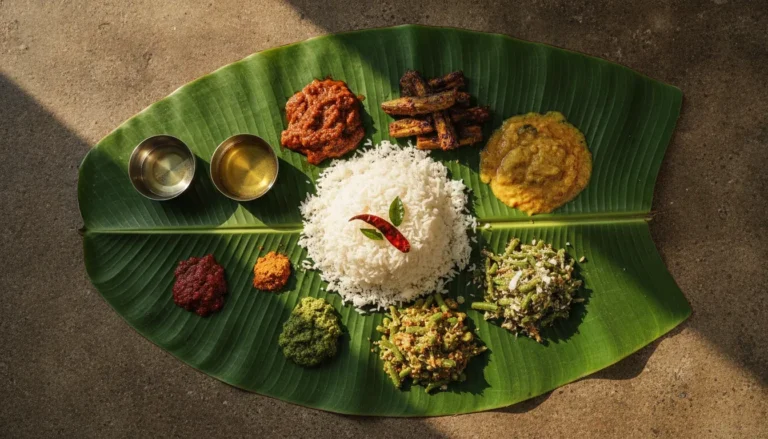
If some people in your group prefer a full meals experience rather than biryani, you can also explore Andhra Meals in Bangalore on Nandhini.com.
4) Small delivery tips that improve dum biryani
These take 30 seconds and make a real difference.
- Rest it briefly: Once you open the pack, let it sit for a minute so steam settles.
- Fluff gently: Use a spoon or fork to lift and loosen rice lightly. Do not mash.
- Mix with care: If you like mixing, mix gently from the side so rice stays separate.
- Keep sides ready: Take a cooling bite between spicy bites.
What “dum” means for your plate (the taste checklist)
If you want to know whether you are getting the dum experience, here is a simple checklist. A good dum biryani often has:
- Aroma that hits when you open the lid
- Rice that feels fragrant and mostly separate
- Flavor that changes slightly bite to bite, not one flat taste
- Pockets of masala rather than total uniform mixing
- A satisfying finish that does not feel harsh if paired with a cooling side
FAQs: Dum biryani meaning and dum biryani basics
1) What is dum biryani meaning?
The dum biryani meaning refers to the dum cooking method: biryani is finished by slow cooking in a sealed pot so it cooks in trapped steam and aroma.
2) Is dum biryani spicy?
Dum does not decide spice level. Dum is a cooking method. Spice level depends on recipe and preparation.
3) Why is dum biryani more aromatic?
Because the pot is sealed, aroma compounds stay trapped inside and infuse the rice and protein during slow steam cooking.
4) What is the difference between dum and normal biryani?
Dum biryani is finished in a sealed pot with steam infusion and layered cooking. Some “normal” biryanis are cooked faster, mixed earlier, or rely on different methods to combine rice and masala.
5) Is dum biryani cooked in a sealed pot?
Traditionally, yes. The core idea is sealing the pot so steam stays inside. Some kitchens achieve the same effect with modern sealing methods.
Closing: Dum is a method, and that is why it matters
The next time you see “dum biryani” on a menu, you will know exactly what it means. Dum is not a secret ingredient. It is the sealed steam cooking method that creates that signature aroma, layered flavor, and cohesive texture.
If you want to experience it, explore Chicken Biryani in Bangalore on Nandhini.com. And if you are ordering for a mixed group where some prefer a full meal plate, you can add Andhra Meals in Bangalore to round out the order.