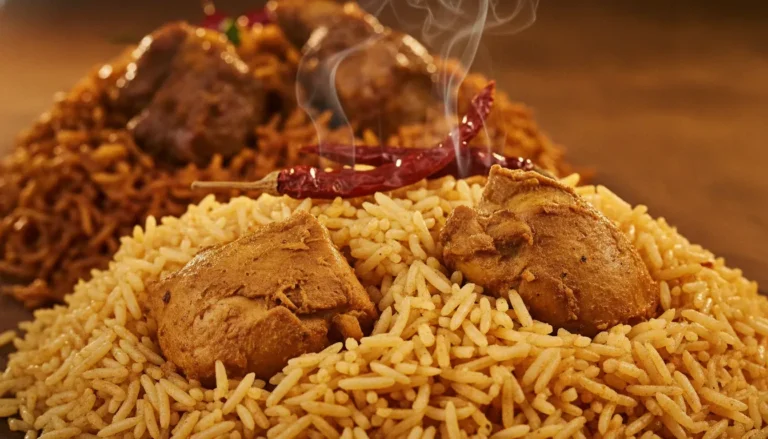
Your chicken biryani from last night is sitting in the fridge, calling your name. The good news? Leftover biryani can taste almost as good as fresh. Sometimes better, because the spices have had time to settle deeper into the rice overnight.
The bad news? Reheat it wrong, and you’ll end up with dry, crunchy rice grains and chicken that chews like rubber.
Let’s not let that happen.
Whether you’ve got two minutes or twenty, here’s how to bring your biryani back to life, starting with the fastest method and working up to the most rewarding.
Table of Contents
The Quick Answer (If You’re in a Hurry)
Best overall method: Pan/skillet with a splash of water, covered, on medium-low heat for 5–6 minutes. Stir once halfway through.
Why this wins: The steam trapped under the lid rehydrates the rice. The gentle heat warms the chicken through without drying it. And the slight contact with the hot pan gives the bottom layer a subtle toast, which honestly makes the reheated version almost better than the original.
Now, the details.
Before You Start: The 60-Second Setup
Whatever method you choose, do these things first:
Transfer out of the delivery container. If your biryani came in an aluminium foil tray, don’t microwave it (metal + microwave = sparks and regret). If it’s in a thin plastic takeaway container, don’t heat it in that either. Most delivery containers aren’t designed for reheating and can warp or leach chemicals at high temperatures. Move the biryani to a plate, bowl, or pan.
Break up any clumps. Fridge-cold biryani sticks together. Use a fork to gently separate the rice before reheating. This helps heat distribute evenly instead of leaving you with hot edges and a cold centre.
Let it sit for 5 minutes. Take the biryani out of the fridge while you get your pan or plate ready. Even five minutes at room temperature reduces the temperature gap your heat source needs to bridge, which means more even reheating.
Always add moisture. This is the golden rule. Refrigeration pulls moisture out of rice. If you reheat without adding any liquid back, the rice dries out further. Every method below includes a moisture step. Don’t skip it.

Method 1: Microwave (The 2-Minute Fix)
Best when: You’re in a rush. You need food in your hands immediately. You’re reheating a single serving.
Step by step:
- Transfer biryani to a microwave-safe plate or bowl
- Sprinkle 1–2 tablespoons of water over the rice (per serving)
- Cover with a damp paper towel or a microwave-safe lid to trap steam and prevent the surface from drying out
- Set microwave to medium power (50–70%), not full blast
- Heat for 2 minutes
- Remove, stir gently to redistribute heat
- Heat for 1 more minute if the centre is still cold
- Check that chicken pieces are hot all the way through, especially thick bone-in pieces
Why medium power matters: Full power heats unevenly. The edges of the rice get scorched while the middle stays cold. Medium power gives the heat time to distribute through the food. One extra minute, noticeable difference in quality.
The result: Warm, soft rice. Flavour won’t be quite as vivid as the pan method (microwaves don’t develop the same toasted notes), but perfectly good for a solo lunch or a late-night hunger emergency.
Pro tip: If you’re reheating biryani that was already on the drier side (Andhra-style biryani tends to be less moist than Hyderabadi), bump the water up to a full 2 tablespoons per serving.
Method 2: Pan/Skillet (The One That Makes Leftovers Taste Better Than Fresh)
Best when: You have 6 minutes. You care about taste and texture. You want the biryani to feel like a meal, not reheated leftovers.
Step by step:
- Place a heavy-bottomed pan (non-stick or cast iron both work) on medium-low heat
- Add 1–2 tablespoons of water or chicken stock, just enough to create a thin layer on the bottom
- Add the biryani, spread it evenly across the pan
- Cover with a tight-fitting lid immediately to trap the steam
- Let it heat for 3 minutes without lifting the lid
- Remove lid, gently stir from the edges toward the centre to distribute heat
- Replace lid, heat for another 2–3 minutes
- Check that the chicken is hot throughout, then serve
Why this works so well for Andhra biryani: Andhra-style biryani is cooked with less moisture than Hyderabadi dum biryani. The rice grains are drier and more separate when fresh, and that’s actually an advantage during reheating. The drier rice doesn’t turn mushy when you add a splash of water. Instead, the grains rehydrate perfectly, the spices release their aroma again from the heat, and the bottom layer picks up a gentle toast from the pan that adds a new texture dimension.
Many Nandhini regulars have told us they prefer their biryani the next day, reheated in a pan. The overnight rest lets the masala soak deeper into each grain.
The raita hack: Instead of adding plain water to the pan, stir in half a tablespoon of raita (or plain yogurt) before covering. The yogurt adds moisture and a subtle creaminess that enriches the rice. The tanginess mellows out during heating. If the original biryani was on the spicier side, the dairy tempers the heat just enough to take the edge off. Go through our menu for more varieties.
Method 3: Oven (The Batch Reheat for Two or More)
Best when: You’re reheating a large quantity (family pack leftovers, meal prep for two). You don’t mind waiting 15–20 minutes.
Step by step:
- Preheat oven to 150°C (300°F). Low and slow is key.
- Transfer biryani to an oven-safe dish (glass or ceramic)
- Sprinkle 2–3 tablespoons of water or stock over the top
- Cover the dish tightly with aluminium foil, sealing the edges so no steam escapes
- Place in the oven for 15–20 minutes
- Remove, take off the foil carefully (steam will rush out, watch your hands)
- Fluff with a fork, serve immediately
Why this suits larger portions: The oven heats from all sides, so there are no hot spots or cold centres. For a single serving, it’s overkill (the pan is faster). But for two or more portions, the oven gives you the most consistent results. You prep it, set a timer, and come back to perfectly warmed biryani without having to stir or babysit.
What NOT to Do
A few common mistakes that turn good leftover biryani into sad, disappointing rice:
Don’t microwave on full power. We’ve covered this, but it bears repeating. Full power means scorched edges, cold middle, dry top layer. Medium power, always.
Don’t reheat without adding moisture. The single biggest mistake. Fridge air pulls moisture out of rice over 24–48 hours. Without adding water, stock, or yogurt back, the rice will be crunchy in a bad way.
Don’t reheat biryani more than once. Every reheating cycle breaks down the rice texture a little more and increases bacterial risk, especially with chicken. Reheat only the portion you’re going to eat right now. Keep the rest in the fridge.
Don’t reheat from frozen on high heat. If your biryani was in the freezer, move it to the fridge the night before and let it thaw slowly. Trying to reheat frozen biryani directly results in the outside getting scalding hot while the inside stays icy. Thaw first, then use any of the methods above.
Don’t leave biryani on the counter for hours “to warm up.” Five to ten minutes at room temperature is fine. Two hours on the kitchen counter in Bangalore weather is a food safety risk. Bacteria multiply rapidly between 25°C and 60°C, which is exactly the range a countertop in this city sits at.
How Long Is Your Leftover Biryani Safe to Eat?
A quick food safety check before you reheat:
Fridge (4°C or below): Chicken biryani stays safe for 3–4 days in an airtight container. After day 4, discard it, even if it looks fine.
Freezer (-18°C or below): Properly stored, biryani lasts up to 2 months. Taste and texture are best within the first month.
Room temperature: Maximum 2 hours. In Bangalore’s typical warmth (25–33°C), reduce that to 1 hour to be safe. Cooked rice is particularly prone to bacterial growth at room temperature. This isn’t optional caution; it’s food science.
If it smells sour, looks slimy, or has any discolouration, don’t taste-test it. Throw it out. A fresh order is always cheaper than a food-related illness.
For the complete storage guide, including how to freeze biryani properly, how to thaw it, and how to tell if it’s gone bad, we’ve put together a detailed Biryani Storage Guide that covers everything.
The Nandhini Leftover Strategy
A tip from our regulars: if you know you want biryani tonight and tomorrow, order a family pack instead of a single serve. The family pack gives you a generous portion, enough for tonight’s dinner and tomorrow’s lunch, at a better per-serving price than ordering twice.
The rice-to-chicken ratio in our family packs is calibrated for sharing, which also means each serving has enough masala-coated rice to reheat beautifully. A single-serve biryani reheats fine, but a family pack gives you the best of both worlds: fresh biryani tonight, and a ready-made meal tomorrow that takes 6 minutes on a pan.
Leftover Nandhini biryani, reheated right, might just be the best weekday lunch in Bangalore. We’re not saying that lightly. Our customers have told us the same thing for years.
FAQs
What is the best way to reheat chicken biryani without drying it out?
The best method is reheating in a covered pan on medium-low heat with 1–2 tablespoons of water or stock. The trapped steam rehydrates the rice and warms the chicken evenly
Can I reheat biryani in the microwave?
Yes. Use medium power, sprinkle water over the rice, and cover with a damp paper towel or lid to trap steam and prevent dryness.
Why does leftover biryani become dry when reheated?
Refrigeration removes moisture from rice. Reheating without adding liquid causes the grains to dry out and harden.
How much water should I add when reheating biryani?
Generally, add 1–2 tablespoons per serving. For drier styles of biryani, you may need slightly more.
How long does leftover chicken biryani last in the fridge?
Stored in an airtight container at 4°C or below, it’s safe for 3–4 days.
Can I reheat frozen biryani directly?
It’s best to thaw it in the fridge overnight first. Reheating from frozen often leads to uneven heating.
What’s the best method for reheating a large quantity of biryani?
Use an oven at about 150°C, covered tightly with foil, for 15–20 minutes. This heats evenly without hot spots.