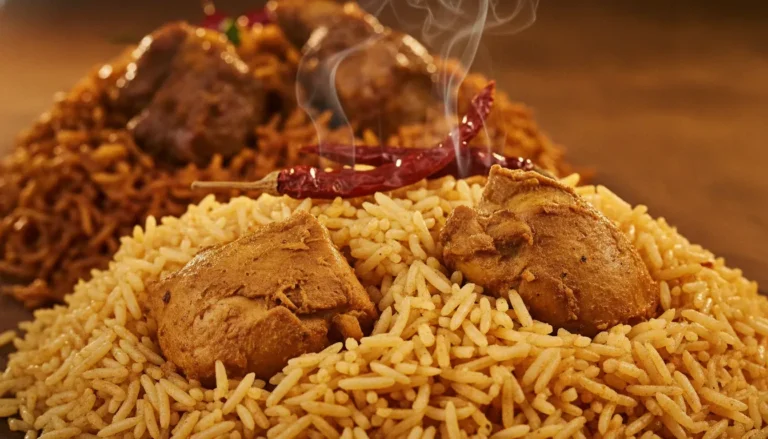
So you ordered Andhra chicken biryani, took three confident bites, and now your eyes are watering, your nose is running, and you’re silently wondering if this was a mistake.
It wasn’t. You just need a strategy.
Andhra biryani is supposed to be spicy. The Guntur chillies, the bold masala, the unapologetic heat. That’s the whole point. It’s what separates Andhra-style biryani from milder Lucknowi or creamier Hyderabadi versions. But “spicy by design” and “too spicy for me right now” are two different situations, and the second one has solutions.
No judgement here. Even people who eat Andhra food daily sometimes get a batch that’s hotter than expected. The chilli harvest varies, the cook’s hand might be generous, or maybe you just weren’t prepared today.
What follows is everything that actually works, ranked from most effective to least, and a few things that definitely don’t.
Table of Contents
Why Andhra Biryani Hits Harder Than You Expected
A quick bit of context, because understanding the heat source helps you manage it.
Most Andhra cooking, including our biryani at Nandhini, uses Guntur chillies. These sit around 30,000–50,000 Scoville Heat Units (SHU). For comparison, the Kashmiri chillies used in Hyderabadi or North Indian biryani are around 1,000–2,000 SHU. That’s a 15–25x difference in raw heat.
Guntur chillies deliver a sharp, front-of-mouth burn that hits fast. Kashmiri chillies are milder and contribute more colour than heat. So when you switch from a Hyderabadi biryani to an Andhra one, the jump isn’t gradual. It’s significant.
Add the whole green chillies that often get layered into Andhra biryani’s masala, and you’ve got a dish that earns its reputation honestly.
None of this means you can’t enjoy it. You just need the right tools.

Immediate Relief: What to Eat and Drink Right Now
Your biryani is on the plate. Your mouth is burning. Here’s what to reach for, ordered by how effectively it neutralises the heat.
Tier 1: Most Effective (Fat and Dairy)
1. Raita or plain yogurt, the undisputed champion
Not just folk wisdom. Casein, a protein found in dairy, physically binds to capsaicin molecules (the compound that causes the burning sensation) and pulls them away from your pain receptors. Water can’t do this. Sugar can’t do this. Only casein can.
Take a spoonful of raita between bites of biryani. Don’t mix it in. Mixing dilutes the biryani’s flavour without giving you the concentrated cooling effect. A full spoon of cold raita, held in your mouth for a second before swallowing, is the fastest reset available.
Didn’t order raita? (Always order raita with Andhra biryani.) Plain yogurt from the fridge works identically.
2. A spoon of ghee or butter
Capsaicin is fat-soluble. It dissolves in fat the way salt dissolves in water. A small amount of ghee or butter in your mouth literally dissolves the burning compound and carries it to your stomach where you can’t feel it.
If there’s ghee on the table (common at Nandhini), take a small spoonful directly. It sounds odd, but it works within seconds.
3. Buttermilk or lassi
Liquid dairy combines the casein effect with fat content in an easy-to-drink format. Salted buttermilk works better than sweet lassi for this purpose. The salt enhances the cooling effect, while sweetness adds a competing flavour signal that’s less effective at neutralising heat.
Buttermilk is thinner than lassi, so you can sip it continuously throughout the meal. A maintenance drip for spice tolerance rather than an emergency rescue.
Tier 2: Effective (Absorption and Distraction)
4. Plain steamed rice
Plain rice won’t neutralise capsaicin (no fat, no casein). But it does two useful things: absorbs some of the spicy oil coating the biryani rice, and dilutes the heat per bite. Mix half a plate of plain rice with half a plate of spicy biryani, and each spoonful becomes half as intense.
Ask the restaurant for a side of plain rice. Cheap, always available, and buys you time while the dairy does the real work.
5. Something sweet: jaggery, gulab jamun, a spoon of sugar
Sugar doesn’t neutralise capsaicin chemically. What it does is trigger a competing taste signal in your brain. Your tongue perceives sweetness and heat simultaneously, and the sweetness partially overrides the pain response. A distraction, not a cure, but distractions work.
A piece of jaggery held in your mouth, or a bite of gulab jamun between biryani courses, takes the perceived edge off. This is why many traditional Andhra meals include a sweet element alongside the spiciest dishes.
6. Bread or papad
Starchy foods absorb capsaicin-laden oil from your mouth. Papad, naan, or roti all work. The effect is mild compared to dairy, but every bit helps. Plus, the crunch of a papad gives your mouth something else to focus on besides the burning.
Tier 3: Limited Help
7. Lime or lemon juice
A squeeze of lime over your biryani can slightly reduce the perceived heat. The citric acid doesn’t neutralise capsaicin, but it activates different taste receptors, creating a competing sensation. Turning up the volume on a different channel, essentially.
8. Cold (non-dairy) drinks
A very cold drink creates a temporary numbing effect. You’ll feel relief for about 10 seconds, long enough to take another bite. But the cold fades and the heat returns unchanged. Better than nothing, worse than dairy.
What Does NOT Work
Water. The biggest myth. Capsaicin is not water-soluble. Drinking water after eating spicy biryani is like trying to wash oil off your hands with just water. It spreads the compound across more surface area in your mouth, making the burning worse. Every sip extends the pain.
Carbonated soda. Same problem as water, plus the carbonation can irritate already-inflamed mouth tissue. The fizz doesn’t help. The sugar in cola offers a tiny distraction effect, but it’s offset by the water base spreading the capsaicin.
Beer (sorry). Beer is 90–95% water with relatively low fat content. It won’t help much. The exception is very thick, creamy stouts, but nobody orders a stout to cool down from biryani heat. Stick with buttermilk.
At-Home Fixes for Leftover Spicy Biryani
The biryani was too hot to finish tonight. It’s in the fridge now, and you want to enjoy it tomorrow, but milder.
Mix with extra plain rice. Cook a cup of basmati rice (plain, no spices). Mix it 50/50 with the leftover biryani before reheating. The spice distributes across double the rice. Each bite becomes half as intense. Simple, effective, and doesn’t change the character of the dish.
Stir in yogurt or raita. Add 2–3 tablespoons of plain yogurt directly into the biryani before reheating. During heating, the dairy melts into the rice and mellows the heat throughout. The flavour profile shifts slightly, becomes creamier, but many people prefer the result.
Add a dollop of fresh cream or coconut milk. Same principle as yogurt, but richer. If you’re reheating in a pan, stir in cream during the last 2 minutes of heating. The fat coats each rice grain and reduces the chilli intensity noticeably.
Top with a fried egg. An egg fried in butter, placed on top of reheated biryani, adds a layer of rich fat that tempers the heat with every bite. It also adds protein and makes the leftover meal feel like something new. A life hack that deserves more attention than it gets.
How to Order Milder Next Time
Now that you’ve survived the heat, here’s how to enjoy Andhra biryani on your own terms going forward.
Talk to the staff. At Nandhini, our team is used to this request. If you let us know you prefer milder food, we can adjust the spice level when preparing your biryani. We do it regularly for families with kids, for people new to Andhra food, and for regulars who simply want a gentler meal that day. Just mention it when ordering.
Always add raita to your order. Whether you go mild, medium, or full heat, raita is your insurance policy. Costs very little, takes up no space on the table, and guarantees you have an escape route if the biryani surprises you. Treat it as a mandatory add-on, not an optional extra.
Try boneless chicken biryani first. If you’re new to Andhra biryani, boneless versions tend to carry the masala slightly differently. Less marrow-infused richness, which can feel less intensely spicy even at the same chilli levels. A gentler introduction.
Start with a single portion. If it’s your first time, order a regular serve rather than a family pack. Get a feel for the heat level. If you love it, you can always order again. If it’s too much, you haven’t committed to leftovers you can’t eat.
The Heat Is the Point, But It Should Be Your Choice
Andhra biryani’s spice isn’t an accident. It’s a centuries-old tradition of bold cooking that values intensity and depth. The Guntur chilli doesn’t just add heat. It adds a complexity of flavour that milder chillies simply can’t replicate.
But intensity should be on your terms. Knowing how to manage the heat, with the right sides, the right drinks, and a quick word with the kitchen, means you get to enjoy the full spectrum of Andhra flavour without suffering through it.
At Nandhini, we’ve been cooking Andhra food in Bangalore since 1989. We know our biryani runs hot. We also know that the customers who come back most often aren’t the ones who never flinched. They’re the ones who figured out their perfect raita-to-biryani ratio and made it their own. We’d love to help you find yours.