You’re at the restaurant. Menu’s open. Two options are staring at you, and you can only pick one.
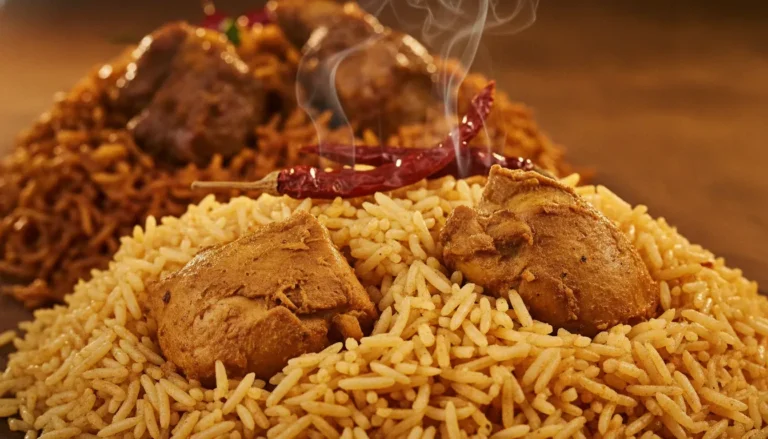
Chicken biryani. Fragrant, layered, the rice itself is the meal.
Or chicken 65 with steamed rice. Crispy, spicy, a plate of fire and crunch next to a bowl of calm white rice.
Both cost roughly the same. Both are delicious. Both will leave you satisfied. But which one actually fills you up more? And which one is the smarter order tonight?
This isn’t a “which is better” debate. That’s subjective and pointless. What follows is a practical breakdown of what you actually get with each option, so next time you’re stuck on that menu, you can decide in ten seconds flat.
What You Actually Get: A Side-by-Side Look
These two dishes look similar on a menu, but they’re structurally very different. Understanding the difference changes how you think about ordering.
Spiced basmati rice and chicken cooked together, either in layers (dum style) or mixed. Every grain of rice is infused with masala, ghee, and chicken juices. The flavour is distributed throughout. You don’t get a “bland bite.” Every spoonful carries the full spectrum of spice, aroma, and richness.
The chicken is usually bone-in. More flavour (bone-in chicken releases marrow and collagen during cooking), but also slower eating. You’re working around bones, which naturally paces your meal.
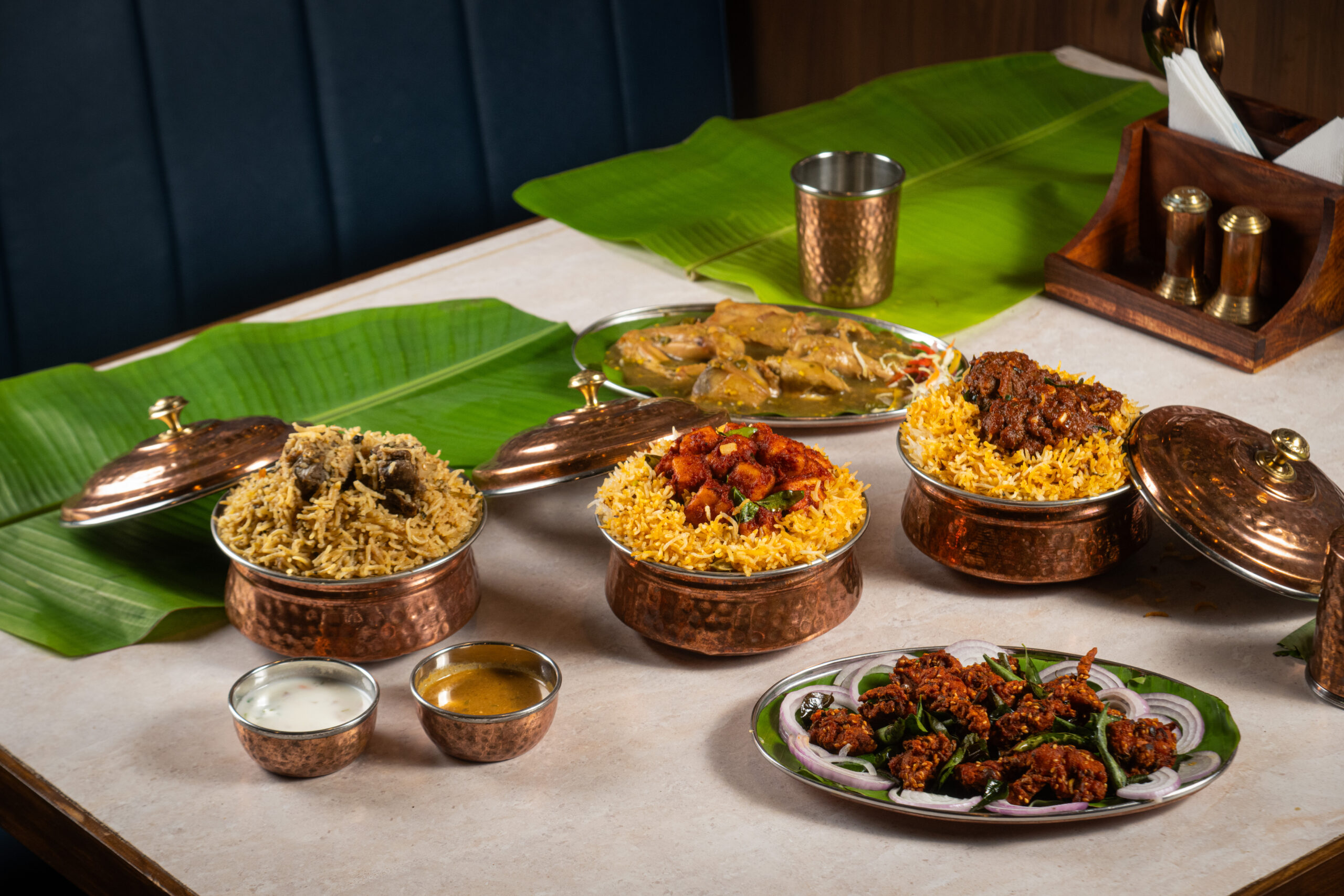
Biryani typically comes with raita on the side. That’s the complete meal. Nothing else required.
Chicken 65 + Rice
Two separate components that happen to share a plate. The chicken 65 is boneless pieces marinated in a fiery spice blend (red chilli, ginger, garlic, curry leaves), coated in rice flour, and deep-fried until crispy. It arrives either dry or tossed in a sauce.
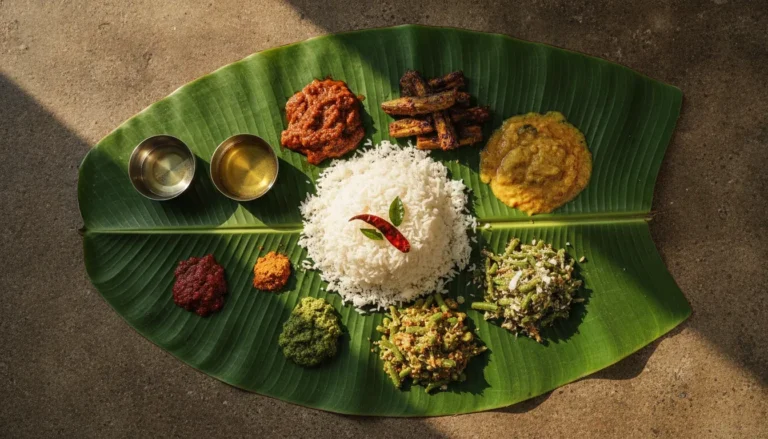
The rice, usually plain steamed or jeera rice, is neutral. No masala, no ghee infusion, no spice. It’s there to absorb flavour from the chicken and give your palate a rest between bites.
You control the ratio. More chicken per bite? Go for it. More rice? That’s fine too. You’re the DJ of your own plate.
The fundamental difference: In biryani, the chicken and rice are married. Every element is intertwined. In chicken 65 + rice, they’re on a first date. They show up together but maintain their independence.

The Fullness Factor: Which Keeps You Satisfied Longer?
This is what you actually want to know, so let’s get into it.
Biryani fills you more evenly and for longer.
Biryani has a higher rice-to-chicken ratio per plate. The rice is cooked in ghee and oil, which adds caloric density. Fat + carbs + protein together is the combination that keeps you feeling full the longest. Your body takes time to process all three macronutrients simultaneously.
The bone-in chicken also plays a role. Eating around bones slows you down. Your brain needs about 20 minutes to register fullness, and the slower pace of bone-in eating gives that signal time to arrive before you overeat. People tend to eat less biryani than they think they will, because the fullness catches up with them.
Flavour fatigue is low, too. Because every bite is layered with spice, saffron, and aromatics, you stay engaged throughout the plate. You don’t get bored and stop eating early.
Chicken 65 + rice fills you more sharply but fades faster.
Chicken 65 is protein-dense. Boneless chicken, even deep-fried, delivers more protein per bite than the mixed rice-and-chicken ratio of biryani. The initial feeling of satisfaction is strong. Protein triggers satiety hormones effectively.
But the rice alongside is plain. Without the ghee and spice of biryani rice, plain steamed rice is lower in calories per gram. You might eat less rice overall because it’s not as compelling on its own.
The result? A sharp hit of satisfaction (protein + fried fat), followed by a quicker return of hunger. If you eat chicken 65 + rice for lunch, you’re more likely to be hungry again by 4 PM than if you had biryani.
The deep-frying matters too. Fried food triggers a quick dopamine response, that “this is incredible” feeling in the first few bites. But the intensity fades. Biryani’s layered flavours build gradually and sustain interest throughout the meal.
The fullness verdict: Biryani provides more sustained fullness. You stay satisfied longer. Chicken 65 + rice provides more immediate satisfaction. That first bite is explosive. Which matters more depends on whether you’re eating dinner (sustained wins) or grabbing a quick lunch (immediate might be fine).
When Biryani Is the Right Call
Choose biryani when:
You want one dish, no assembly. Biryani is a complete meal from a single pot. Nothing to figure out, nothing to combine, no ratio to manage. Spoon to plate to mouth. Done.
You want layered flavour in every single bite. You will not get a boring spoonful of biryani. The spice, the ghee, the saffron, the chicken. It’s all in every grain. The dish’s superpower.
You’re sharing. Biryani shares better than chicken 65 + rice. Two people eating from one plate of biryani get the same experience. Two people splitting a plate of chicken 65 end up counting pieces. Biryani is inherently communal.
You want good leftovers. Biryani reheats brilliantly, especially in a pan. The spices deepen overnight. The rice regains texture when steamed. Day-two biryani is a treat. (Our full reheating guide has the method if you’re curious.)
You eat with a spoon. Biryani is entirely spoon-friendly. No messy hands, no sauce dripping, no fried coating crumbling onto your shirt. Important consideration for a work lunch or a meal at your desk.

When Chicken 65 + Rice Is the Right Call
Choose chicken 65 + rice when:
You want more protein per plate. Chicken 65 is boneless, concentrated chicken. No bone weight, no rice filler in the chicken portion. If you’re prioritising protein over carbs, this is the plate.
You love textural contrast. The defining feature of chicken 65 is the crunch. That shattering, spice-crusted exterior against soft steamed rice is a sensory experience biryani can’t replicate. Biryani is soft-on-soft. Chicken 65 + rice is crunch-on-soft. Different pleasures entirely.
You want to control the spice. Sneakily important, this one. With biryani, the spice is in the rice, in the chicken, in everything. No escape. With chicken 65 + rice, the rice is neutral. If the chicken 65 is too fiery, eat more rice. Want maximum heat? Eat the chicken alone. You have a volume knob.
You enjoy eating with your hands. Chicken 65 pieces are finger food. There’s something satisfying about picking up a crispy piece of chicken, biting through the crust, and following it with a spoon of rice. A more tactile, more playful way to eat.
Two people have different hunger levels. If one person is starving and the other just wants a light meal, chicken 65 + rice is more flexible. The hungry person eats more chicken; the lighter eater focuses on rice. Biryani doesn’t flex as easily.
The Value Comparison
Let’s talk money, without getting into specific prices since those change by outlet and platform.
At most Andhra restaurants in Bangalore, a chicken biryani and a chicken 65 + rice plate are priced within a narrow range of each other. The difference is usually less than the cost of a lime soda.
But value isn’t just price. It’s what you get per rupee.
Biryani gives you more total food volume. Rice is filling and economical to produce. A biryani plate is typically heavier (in grams) than a chicken 65 + rice plate. If “most food for the money” is your metric, biryani usually wins.
Chicken 65 gives you more chicken per rupee. Because the chicken is boneless and the portion is focused on protein rather than rice, you get more actual chicken for a similar price. If “most protein for the money” is your metric, chicken 65 edges ahead.
For groups: Family pack biryani is almost always the best value per person. There’s no equivalent “family pack” of chicken 65. It’s always individual portions. For two or more people, biryani scales better economically.
The Leftover Test
One more factor that doesn’t show up on the menu but matters in real life: which one is better the next day?
Biryani wins this, and it’s not close.
Biryani was literally designed for slow cooking and reheating. The rice rehydrates in a covered pan. The spices deepen overnight. Many people (including our own regulars) say leftover biryani reheated in a skillet is better than the fresh version.
Chicken 65, once refrigerated, loses its defining feature: the crunch. The fried coating absorbs moisture from the fridge and goes soft. You can revive it somewhat by reheating in a hot pan or air fryer, but it’ll never be as crispy as it was fresh.
The practical takeaway: If you’re ordering tonight with an eye on tomorrow’s lunch, biryani is the strategic choice.
So, Which One?
You already know the answer. It depends on you, tonight, in this specific moment.
The quickest way to decide:
Very hungry + want one dish? Biryani.
Want more protein + love crunch? Chicken 65 + rice.
Sharing with someone? Biryani. It shares more naturally.
Ordering with leftovers in mind? Biryani. Reheats better.
First time at an Andhra restaurant? Biryani. It’s the signature dish for a reason.
Can’t decide at all? Order both. Chicken 65 as a starter. Biryani as the main. This is the move that most Nandhini regulars eventually arrive at, and once you do it, you’ll wonder why you ever agonised over the choice.
Why Not Both?
We serve both chicken biryani and chicken 65 at Nandhini because they do different things brilliantly. One is a slow-built, layered masterpiece. The other is a fast, fiery punch of flavour. They’re not competing. They’re complementing.
The customers who’ve been coming to Nandhini for years? Most of them stopped choosing between the two a long time ago. Chicken 65 to start. Biryani to follow. Raita on the side. That’s the order. That’s the meal.
We’ve been serving it that way since 1989, and we’ll be serving it that way for years to come. Your only job is to show up hungry. We’ll handle the rest.