In 2007, a Bangalore Andhra restaurant opened in Dubai. It was early, maybe too early. The diaspora that would later fill such a room was still arriving, and the idea of carrying a banana-leaf meal across the Arabian Sea felt more like ambition than business plan. The venture ran a few years and then closed. But the idea behind it never left, and you can trace a straight line from that one outlet in Dubai to the way Nandhini thinks about growth today.
Eighteen years on, the count of Nandhini outlets sits at more than 19 across Bengaluru and Mysuru, with a roadmap that runs through the rest of India and out into the world. This is the story of how a single counter became a chain, why the chain grew slower than it could have, and what a map with London on it actually means for a kitchen that opened in 1989.
One Outlet at Minerva Circle
Every expansion story needs a first room, and ours was a single outlet that opened in January 1989 at Minerva Circle. There was no chain in the plan yet, only a conviction that Bangalore had space for a proper Andhra family restaurant and nobody serving it the way founder N. Ananda thought it should be served. The first outlet was the whole company. If it failed, there was nothing else.
It did not fail. The family recalls a second outlet following in 1993, and with it the first proof that the format could travel across the city rather than depend on one location and one crowd. From there the founder mapped the growing Bangalore he could see coming, with outlets planned at prime spots like Majestic, Sankey Road, Jayanagar and, much later, St. Marks Road. The single counter had become a chain in his head long before it became one on the ground.
The Dubai Experiment
Then came the leap that did not quite land. The family recalls a Dubai outlet opening in 2007 and running for roughly four years before it closed. On paper it was a failure, a branch that did not survive. In practice it was tuition. It taught the company what it would take to run Nandhini Deluxe outside India: the sourcing problem of getting the right chillies abroad, the cost of a foreign room, and the simple matter of timing a market before it is ready for you.
What is striking, looking back, is that the company did not read Dubai as a verdict against going global. It read it as a rehearsal. The instinct that sent an Andhra restaurant to the Gulf in 2007 is the same instinct shaping the plans on the table now. The difference is that the timing, the scale and the home base are all far stronger than they were the first time. A failed branch can still be the most useful thing a company ever builds, if it pays attention to why it failed.
2026: The Year of Expansion
The clearest sign that the growth engine is running again is the 2026 plan the company frames internally as a year of expansion. Six new outlets join the network, at Kadugodi, Nagarbhavi, Mysore in the Nazarbad area, Kalyan Nagar and Marathahalli. Each one extends the map a little further from that first Minerva Circle counter, and each one pushes the count of Nandhini outlets further past 19.
Beyond the six, the near-term Karnataka roadmap names announced outlets in Whitefield, Yelahanka and Nagarabhavi. The pattern is deliberate. Grow dense in the home market first, in the city and state that already know the name, before stretching the supply chain across the country. A chain that wins its own city has earned the right to think about the next one. A chain that skips that step usually pays for it later.
The Roadmap Across India
The next horizon is national. Dhanush Srinivas has spoken about taking Nandhini beyond Karnataka into the major metros, with Chennai, Pune, Mumbai and Delhi named as the cities he wants to reach. In his 2024 interview with Kitchen Herald, he put numbers on the ambition: growing towards 50 outlets and building the business into a far larger company than it is today. For a brand that started with one room and grew without franchising, that is a serious figure.
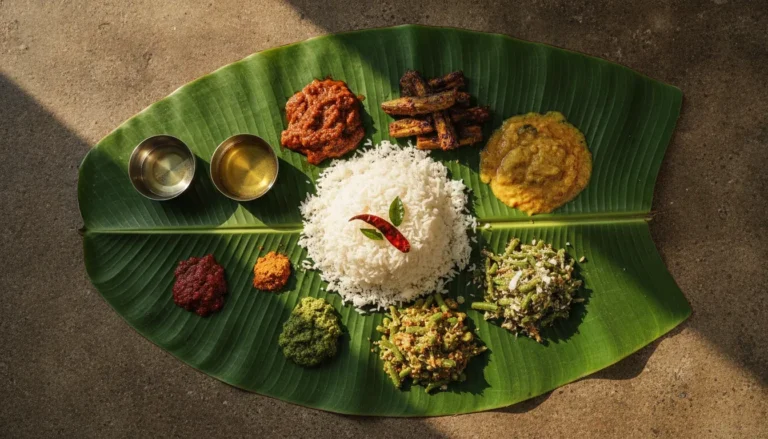
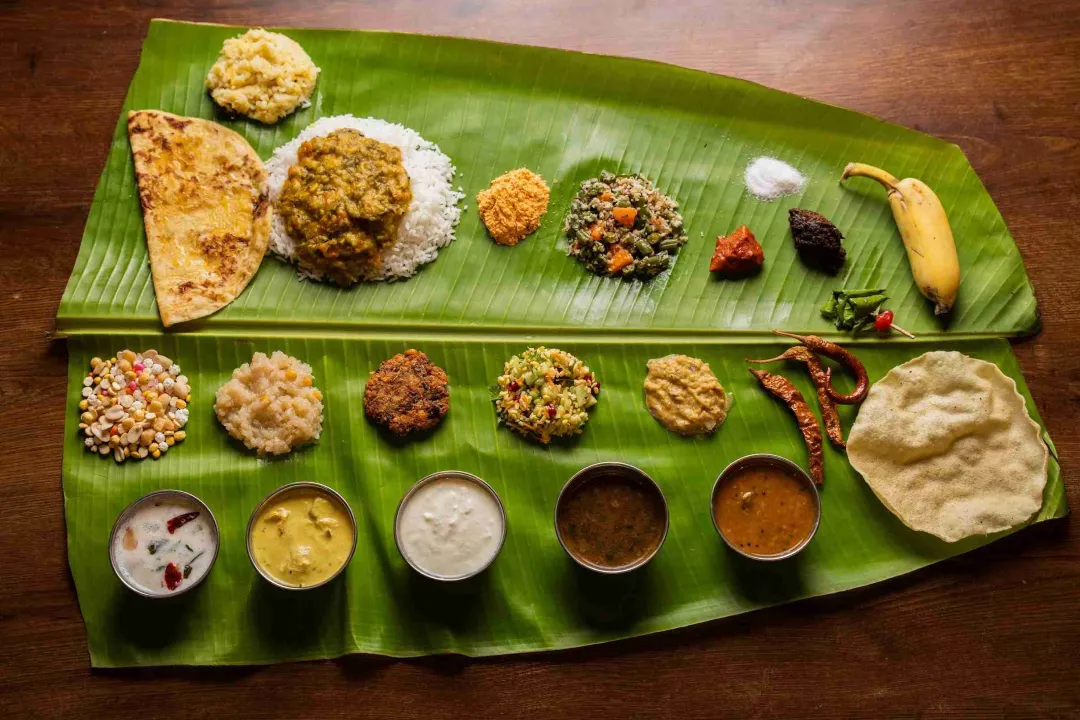
There is real logic to an Andhra restaurant chain in India. Andhra and Telugu communities sit in every one of those metros, and the food travels well beyond them, since heat and tamarind and a generous thali need no translation. The Nandhini Deluxe expansion plan is less about discovering new demand than about reaching demand that already exists, in cities where nobody is yet serving it at this scale.
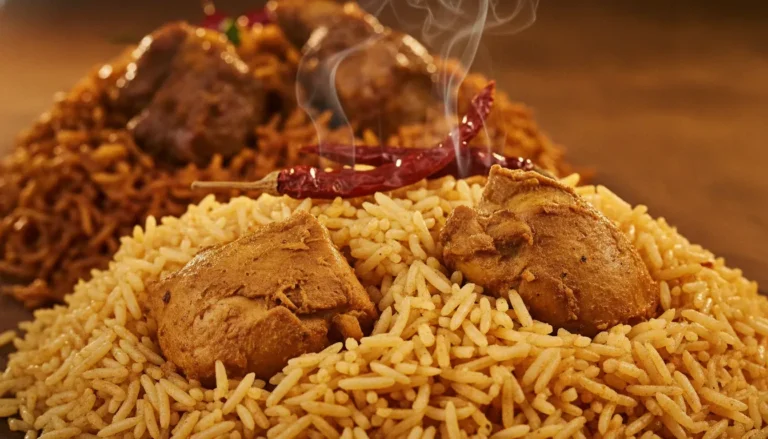
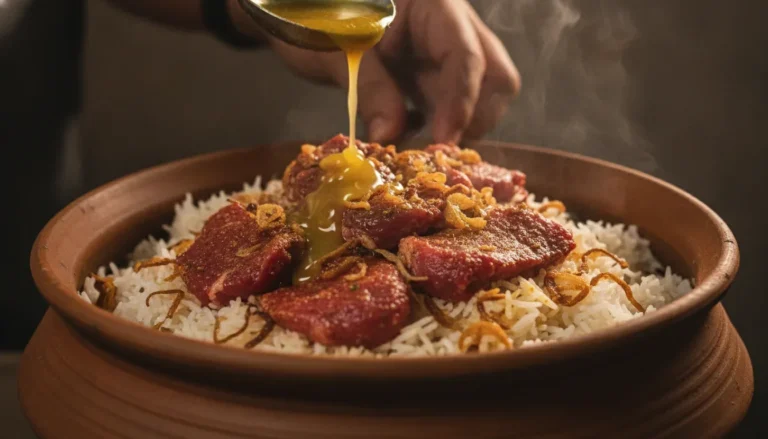
Each metro also carries its own version of the sourcing test the company first met in Dubai. Guntur chillies and the rest of the Andhra pantry are easy enough to move within India, but a kitchen in Mumbai or Delhi still has to reproduce a taste that regulars in Bengaluru can recognise instantly. That is the real constraint on the pace, not money or appetite. A new city does not count as a win until the biryani there tastes like the biryani here, and getting to that point is slower than signing a lease.
A Map With London On It
The furthest edge of the plan is global, and here the tense matters. There are announced plans to take the name to Dubai, Singapore, Malaysia, Sydney and London in the years ahead. None of these are open. None are operational. They are intentions on a map, the international chapter of a story that began with that early Dubai experiment and never closed the book on going abroad.
What makes the global plan more than a slide this time is the strength of the base behind it. A company sending one outlet to Dubai in 2007 was betting the house. A company doing it from a position of 19+ home outlets, a flagship that drew national press, and 37 years of an unbroken recipe is making a far more considered bet. The vision has not changed since 2007. The foundation under it has.
Why Company-Owned Growth Is Slower, and Stronger
There is one fact that explains why Nandhini has not simply blanketed the country already. Every outlet is company-owned. There is no franchising, not a single franchised branch in the network, which means every new room is opened, staffed and run by the company itself rather than sold to an operator. You can read the full ownership picture on our about-us page.
Franchising would have made the map fill faster. It would also have handed the recipe, the sourcing and the standard to people the founder never trained. The trade the company made is plain: slower growth in exchange for control over the one thing it refuses to compromise, which is what reaches the plate. A franchise can sell the name. It cannot guarantee the biryani. For a brand whose whole value is consistency, that is not a small distinction. It is the reason the chain is the size it is, and the reason it can be trusted at every outlet it does open.
Bigger Than the First Kitchen Could Hold
Stand at the start of the story and the scale of the plan is almost comic. From one counter at Minerva Circle to a map with London on it. From a single 1989 outlet that was the entire company to a network of 19+ Nandhini outlets with a national roadmap and a global chapter still being written. You can see how far the brand has come, and where it is headed next, across our 37-year story
The early Dubai outlet was not a wrong turn. It was the first sign that the vision was always bigger than the first kitchen could hold. Everything since has been the company slowly building a foundation wide enough to carry it. One outlet became a chain. The chain is becoming a map. The map, eventually, has London on it.