He was earning Rs.150 a month. The family recalls he rarely saved it. Whenever a sales route took him to a new town, N. Ananda spent what he had on food. Not out of hunger. Out of curiosity.
That habit tells you everything about the founder of Nandhini Deluxe. A young engineering graduate from Anantapur, working as a sales representative in a city that was still finding its shape, who cared more about what a new town tasted like than what it cost him to get there. He moved through South India the way others save money: purposefully, and with very little left over at the end.
Today, Nandhini has 19 outlets across Bangalore and Mysuru. Ten thousand customers walk through those doors every single day. The first outlet at Minerva Circle has been open since 1989 and is still open now. The reason any of this exists is not a business plan. It is one man who could not pass a kitchen without wanting to know what was cooking inside.
From Anantapur to Madras: The Education He Carried
N. Ananda grew up in Anantapur district, in the dry interior of Andhra Pradesh. It is a region built on patience, where the land is hard and the cooking reflects that: deep heat from Guntur chillies, sharpness from tamarind, flavours that do not arrive quickly but stay for a long time. The family recalls he left for Madras to pursue an engineering diploma at Guindy College, a long journey from home for a young man in those years.
He completed the diploma and took a sales job at Bliss International, working with industrial machinery. The salary was Rs.150 a month. The work required constant travel across the region, which suited him well because travel, for N. Ananda, was always about eating. Not restaurant dining in the formal sense, but the kind of eating that requires you to be curious: stopping at roadside places, trying what the town is known for, understanding why one district’s version of a dish is different from another’s.
The family remembers him as someone who moved through South India as though he were studying it. A particular rice preparation in one place, a chutney ground differently in another, a tamarind balance that no one else had quite figured out. This was not research in any deliberate sense. It was appetite, and it was building something in him without his knowing it yet.
Balaji Sweets and the Years Before Nandhini
Before Nandhini, there was Balaji Sweets in City Market. The family recalls N. Ananda started the sweets business in Bangalore’s oldest trading quarter, the dense, busy stretch of commercial life that has not changed in character across decades. Balaji Sweets is still there today, still run by the family, which is worth pausing on. He did not close it when something bigger came along. He built Nandhini alongside it, and both survived.
City Market was a particular kind of schooling. Managing real kitchen volume day after day, learning how a loyal customer is different from a first-time one, understanding how a neighbourhood decides whether to trust a name. He was absorbing all of it, the family recalls, and asking questions that went beyond the sweets trade. Around 1988, those questions became more specific. He was no longer asking what people wanted to eat. He was asking what Bangalore did not yet have.
The answer, when he looked at the city through the lens of everything he had tasted across his years of travel, was clear. Bangalore had restaurants of many kinds. It did not have a proper Andhra family restaurant, one that served the full spread of the cuisine in the way he had grown up eating it and had continued seeking it out across South India. That was the gap.
The Gap That Bangalore Had Not Filled
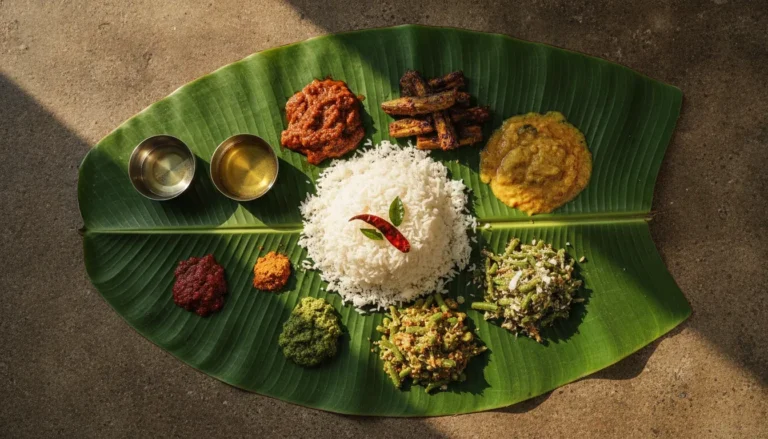
To understand what N. Ananda saw in 1988, it helps to understand what Andhra food actually is, and what he had been eating for years. An Andhra meal is not a single dish. It is a composition: rice and ghee at the centre, pappu (dal), pulusu (a tamarind-based gravy), one or two koora (vegetable preparations), gongura pachadi (sorrel-leaf chutney), avakaya (mango pickle), podi (a spiced powder), papad, and curd. On a banana leaf, served hot, with everything arriving in the right order and being refilled without asking. That is the bhojanam, the Andhra meal in its proper form.
Bangalore had Andhra food in corners of the city, but not in a form that a family could sit down to properly. Not from a kitchen that was built around it, that sourced the right chillies, that knew what pulusu needed to taste like. N. Ananda had been eating that food across South India for years. He knew what was missing because he had tasted what it was supposed to be.
There is a kind of business instinct that does not come from studying markets. It comes from knowing a thing so thoroughly that the absence of it is obvious to you and invisible to everyone else. N. Ananda had that instinct. He had spent years developing it without calling it that. In 1988, the family recalls, he began planning. The location he chose for the first outlet was Minerva Circle, a commercial address in central Bangalore that in 1989 announced a restaurant was serious about what it intended to do.
January 1989: The Founder of Nandhini Deluxe Opens His Doors
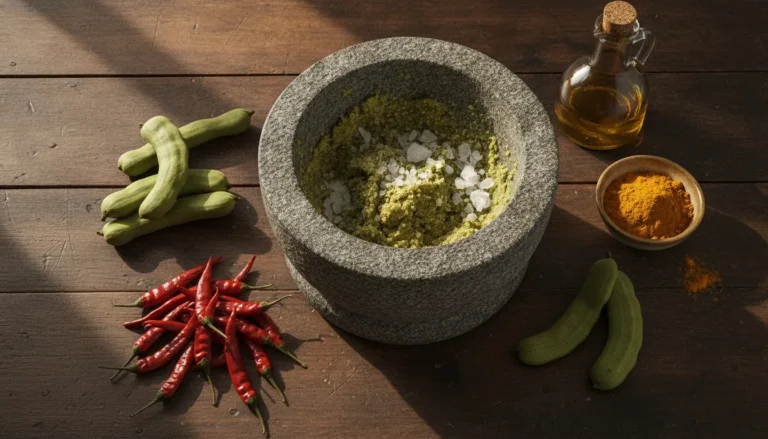
Nandhini’s first restaurant opened at Minerva Circle in January 1989, the date the family marks. The intention was straightforward from the first service: this was Andhra food, made correctly, served to families who wanted to eat it properly. The spices came directly from Andhra Pradesh. The recipes were built around Guntur chillies, which run between 30,000 and 50,000 on the Scoville scale, balanced against tamarind and ghee and the particular sour brightness of gongura pachadi that defines Andhra cooking from any other South Indian tradition.
N. Ananda had been eating this food his entire life and across his years of travel. He was not approximating it for a Bangalore audience or softening it for people who might not be familiar with it. He was making it correctly and trusting the audience to find it. They did. The regulars arrived and kept arriving. The kitchen found its rhythm. Within a few years, the family recalls, a second outlet followed in 1993, then more, each one chosen deliberately for its position in a growing city.
Every outlet was company-owned. None were franchised. That decision was made early and has not changed in 37 years. It is the reason the food is consistent from one Nandhini to the next, from RT Nagar to St. Marks Road to Nazarbad in Mysuru. The founder made a choice about what kind of company he was building, and the company has held that choice through every generation since.
The Man People Remembered
Dhanush Srinivas is Nandhini’s current Managing Director and N. Ananda’s grandson. He speaks about his grandfather with a specificity that goes beyond the professional. As a boy, he remembers following him between outlets, not because anyone was teaching him the business but because he wanted to be wherever his grandfather was. The business came later. What he was absorbing then was something harder to name.
What Dhanush remembers most clearly is not the expansion or the numbers. It is the way people responded to N. Ananda as a person. He was jovial, Dhanush recalls. He was respectful to everyone around him: the kitchen staff, the regulars who had been coming for years, the suppliers, the people doing the unglamorous work that keeps a restaurant running. People trusted him before they trusted the restaurant, and they trusted the restaurant partly because of what they made of him.
Dhanush worked alongside his grandfather for roughly three years before N. Ananda passed. He has described those years not as a formal handover but as an extended conversation about what the food needed to be, why the no-franchise position mattered, what it meant to be responsible for 10,000 customers every day and not let the scale become a reason to cut corners. That conversation is the foundation under everything that has come since.
The family recalls N. Ananda had spoken about outlets in Dubai. A venture was attempted there around 2007 and ran for several years. But Bangalore remained the core of what Nandhini was, and everything that grew outward from it grew according to the same logic the founder had used to open the first one: find the gap, fill it properly, do not hand it to someone else to manage.
What the Founder of Nandhini Deluxe Left Behind
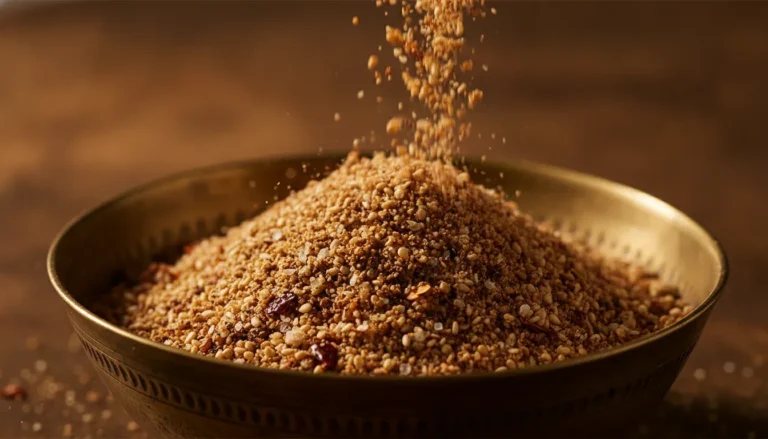
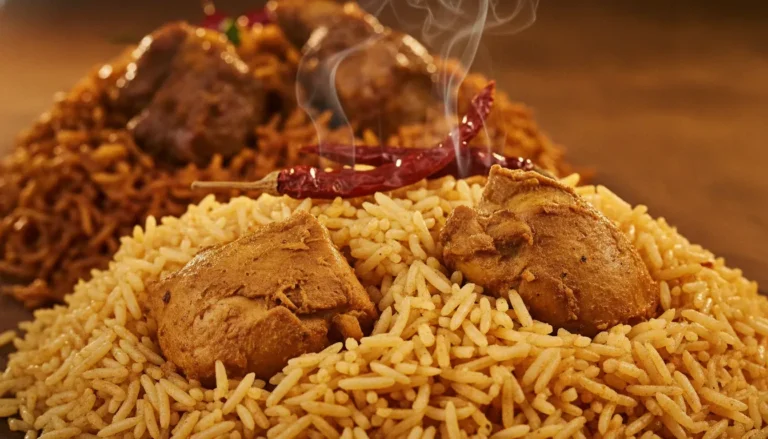
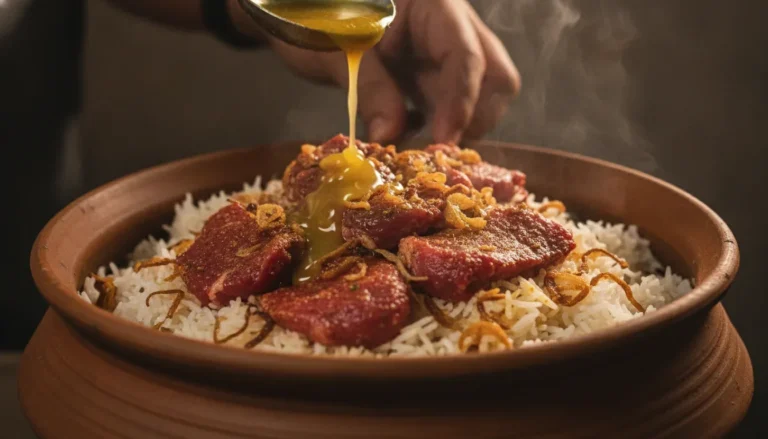
The first thing he left behind is the recipe. The mutton biryani served at Nandhini today uses the same spice blend N. Ananda built the restaurant around in 1989. Not a version of it. The same one. In a business where the easiest way to manage rising costs is to quietly change what goes into the pot, holding that line across 37 years is not inertia. It is a deliberate position about what the restaurant is.
The second is the structure. Every one of Nandhini’s 19 outlets across Bengaluru and Mysuru is company-owned. No franchise, no licensing, no handing the name to someone else to interpret. That decision is the reason a customer who has been eating at Nandhini for twenty years and walks into an outlet they have never visited before finds the food the way they remember it. Dhanush inherited the decision as much as he inherited the outlets. He has held it in the same way.
The third thing is harder to put into a sentence. It is the quality of attention N. Ananda brought to things: to a kitchen he noticed while on a sales route through a town he had never been to, to what City Market was teaching him about how a neighbourhood builds trust, to the specific absence in Bangalore that he decided to fill. That quality of attention is what the family recalls when they speak about him. It is also what built the business, and it is what the business has been trying to sustain ever since.
Nandhini serves 10,000 customers every day across Bengaluru and Mysuru. You can read more about 37 years of the Nandhini story, or find the full history of the brand on the about page.
The Beginning That Stayed
The first outlet opened in January 1989. The second followed four years later. After that, one at a time, each one chosen with care, none of them handed to someone else to run. Thirty-seven years of that approach, adding up quietly.
N. Ananda never called himself a restaurateur, the family says. He was a man who loved food, who had spent years learning what Andhra cooking was supposed to be, and who saw that Bangalore did not yet have it in the form it deserved. He decided to provide it. He made the food correctly, charged fairly, kept the kitchen in his own hands, and let the restaurant speak for him. It has been speaking ever since.
The kitchen at Minerva Circle still opens every morning. So do eighteen others. The spice blend is the same. The banana leaf is still on the table. And Dhanush, who followed his grandfather between outlets as a boy without quite knowing why, now carries the same conversation forward.
For those who want to understand how Nandhini pioneered Andhra dining in this city, that story continues here . But every story of what Nandhini became begins with one man, a Rs.150 salary, and the kind of curiosity that could not leave a new town without first finding out what it tasted like.
He built a name people trusted. Three generations later, the kitchen still opens at the same hour. Some legacies you inherit; this one you earn back every day.