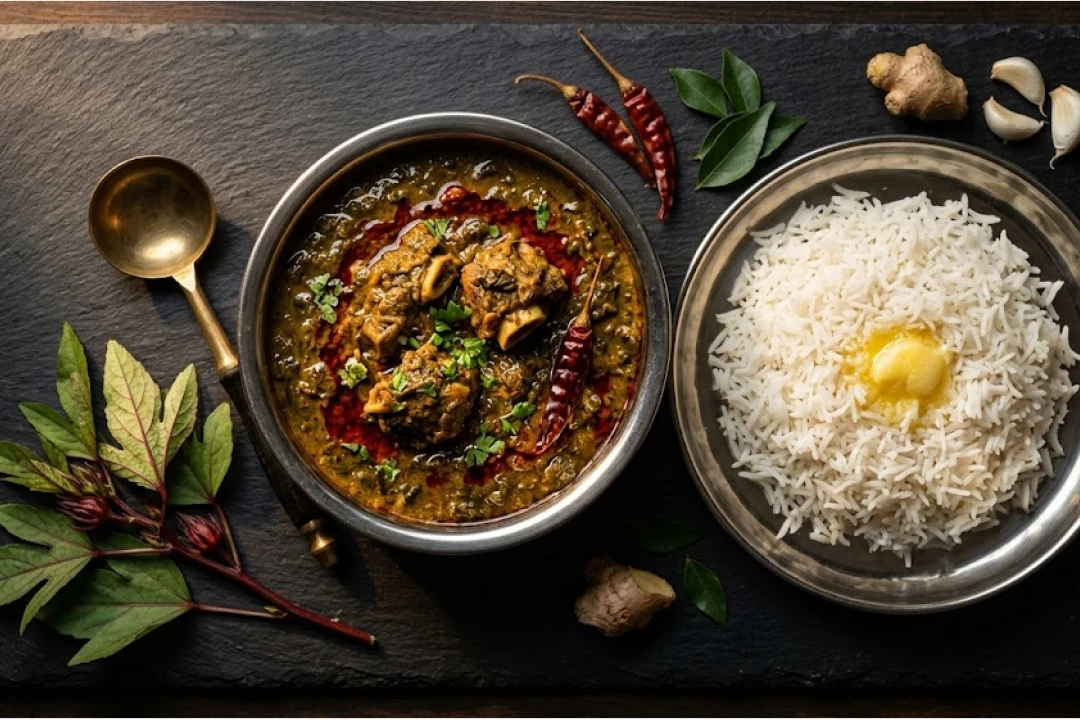
Gongura mamsam is the dish that quietly tells you how serious an Andhra kitchen is about its non-veg work. Sorrel leaves cooked down to a green-brown paste, bone-in mutton slow-cooked separately, the two folded together at the end. That is the whole structural idea, and it is the reason no two versions of this curry taste alike.
Here is what the rest of this guide covers: what gongura mamsam actually is, why the cooking technique matters more than the spice mix, how it differs from regular mutton curry, what to eat it with, and where to find it well-made in Bangalore. The word mamsam means meat in Telugu, and in this dish it almost always means goat.
What Gongura Mamsam Actually Is
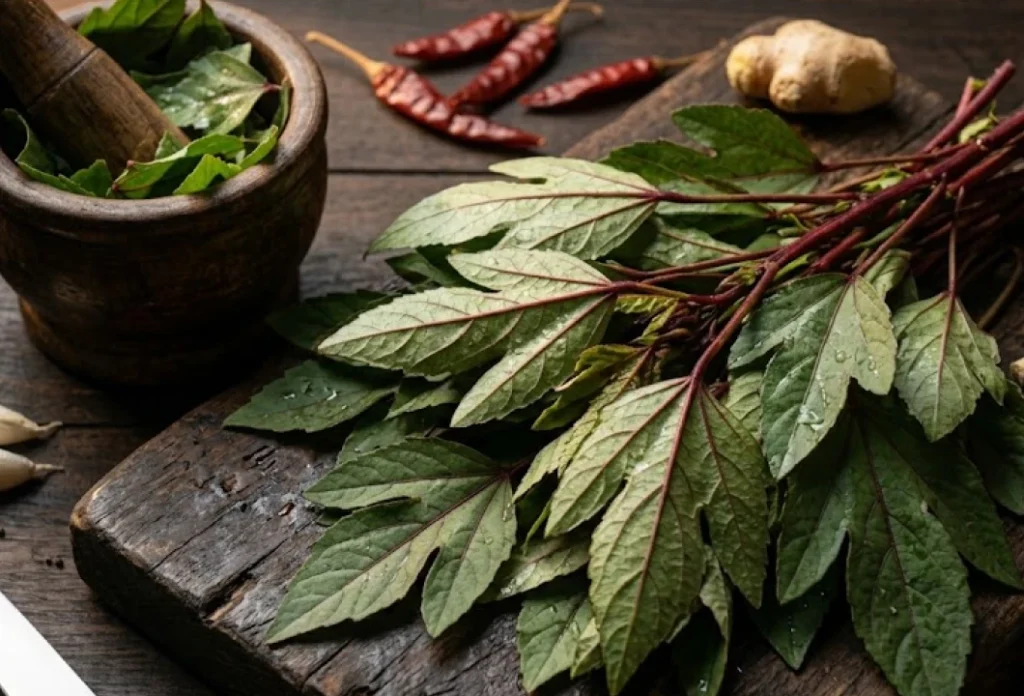
Gongura mamsam is a regional Andhra mutton curry built around sorrel leaves. Gongura is the Telugu name for the leaf, botanically Hibiscus sabdariffa var. rubra, a hibiscus-family plant grown widely across Andhra Pradesh and Telangana. The leaf is naturally tart, almost lemony when raw, and the cooking transforms that sharpness into a rounder, deeper sourness that carries the gravy.
The dish belongs to the Telangana-Andhra borderlands more than to any single district. Cooks in Anantapur and Guntakal will tell you their grandmothers made it; so will families from Khammam and Warangal. It travels well across that geography because gongura grows easily there, and the technique was built around a leaf that was always in season somewhere.
It is also a festival dish. On Kanuma, the third day of Sankranti, gongura mamsam is one of the meals that signals the harvest celebration has crossed into its meat-eating phase. The Wikipedia entry on gongura and the Bloomsbury Handbook of Indian Cuisine both place the leaf at the centre of Andhra non-veg cooking, and gongura mamsam is the dish most often cited as its signature meat application.
Red-stemmed gongura is the variety preferred for the meat version. It is sourer than the green-stemmed variety, and it holds its colour better against the brown of slow-cooked mutton.
The Cooking Technique (And Why It Matters)
The defining feature of gongura mamsam is not the spice mix or the cut of meat. It is the order in which things happen.
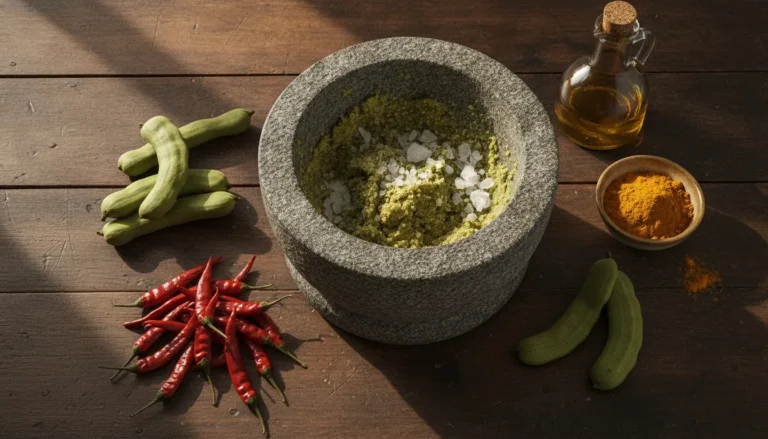
Gongura is cooked separately first. The leaves are washed, picked from their stems, and wilted in oil with green chillies until they collapse into a coarse, dark paste. Salt goes in here. The mutton is pressure-cooked separately in its own masala base of onion, garlic, ginger, and a careful dose of dry red chilli powder. The two preparations only meet at the end of the cooking, where they finish together for ten to fifteen minutes.
Why this matters: if you add raw gongura to mutton, the leaf does not break down properly and you end up with stringy bits floating in gravy. If you grind the leaf raw and stir it in, you lose the cooked-leaf depth that gives the dish its character. And if you cook the meat and the leaf together from the start, the mutton absorbs the sourness too early and tastes flat at the bone. Restaurants that take the dish seriously combine the two components only at the finish so the meat keeps its own savoury weight and the leaf contributes its sourness as a layer on top, not a marinade.
The bone-in cut matters too. Marrow enriches the gravy as the meat slow-cooks, and bone-in pieces hold up to the second cook when the gongura joins them. Boneless cubes turn rubbery by the time the dish is plated.
How It Differs from Regular Mutton Curry
Most mutton curries lean on tomato, onion, and a closing dose of garam masala for their body. Gongura mamsam replaces that base with cooked-down sorrel leaves, and the result reads sharper and greener. The tang comes from the leaf itself, not from tomato or tamarind, and it sits higher on the palate.
A clean side-by-side helps:
| Gongura Mamsam | Regular Mutton Curry |
| Sour base from cooked sorrel leaves | Sour base from tomato (and sometimes tamarind) |
| Green-brown gravy | Red-brown gravy |
| Tang reads sharper, leafier, higher on the palate | Tang reads rounder, fruitier, lower on the palate |
| Pairs best with hot rice | Pairs comfortably with rice or roti |
| Heat amplified by the leaf’s sourness | Heat softened by tomato’s sweetness |
| Regional to Andhra and Telangana | Pan-Indian with regional variations |
Is gongura mamsam very spicy?
Yes, and it is fair to flag it. Andhra mutton dishes use Guntur Sannam chillies, which sit at 30,000 to 50,000 Scoville. In gongura mamsam, the heat lands harder than in a tomato-based curry because the leaf’s sourness amplifies chilli on the front palate rather than absorbing it. First-timers should pair it with hot rice and curd, not roti, and they can ask the kitchen to adjust the chilli level. There is a quick spice decoder for first-timers if you want to plan the rest of your meal around it.
What to Eat It With
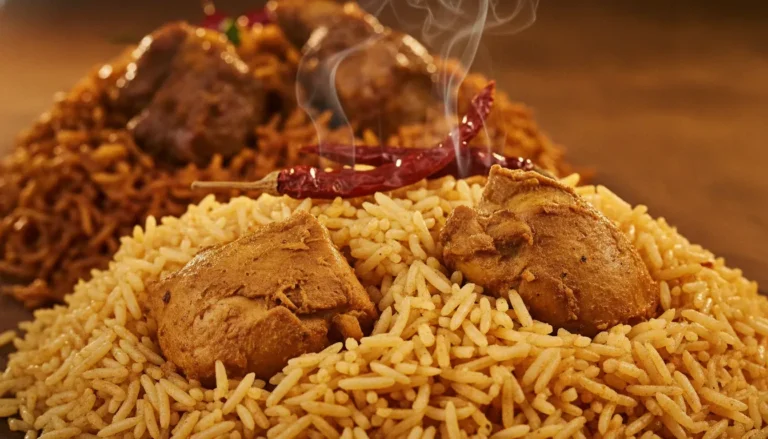
Hot steamed rice first and foremost. The dish was built to be ladled over rice, and the gravy is on the thinner side; rice absorbs it cleanly and lets the sourness move through the meal. Bagara rice or jeera pulao are upgrades when you want the plate to feel a little fuller. A small portion of Andhra mutton biryani and gongura pairing alongside gives you a richer plate, though the biryani itself is a separate experience.
Chapati and phulka are secondary options. They work, but the gravy is thin enough that rice is genuinely the better match. What does not work: sweet drinks, heavy north Indian breads like naan or kulcha, and another dose of gongura on the side. Gongura pickle on top of gongura mamsam is too much of the same note. Avakaya, the mango pickle, offers a useful contrast instead. Buttermilk closes the meal well, and curd rice at the end settles the heat.
The Nandhini Gongura Mamsam Experience
Gongura mamsam sits on the Andhra non-veg menu at Nandhini, beside Andhra chicken curry, kodi vepudu (chicken fry), and chepala pulusu (fish curry in tamarind). It is not a one-off menu item; it is part of a non-veg section the kitchen has run since 1989.
The gongura comes red-stemmed. The mutton is bone-in. The two are cooked along the lines described above, finishing together at the end, and the dish is plated with hot rice on the side rather than rolled into a thali. Outlets where it is reliably served include the St. Marks Road flagship, the Jayanagar outlet, and Koramangala. Other Bangalore locations carry it on most days, though availability can rotate, so a quick call ahead is sensible if the dish is the main reason for the visit.
If you want to see where the dish sits inside the wider menu, the wider Andhra non-veg menu runs through the full spread – meals, curries, fries, and the biryani section that Andhra mutton biryani and gongura pairing handles in detail. Gongura mamsam is one dish in a system that has been serving Andhra non-veg across 15-plus outlets in Bangalore and Mysuru for thirty-seven years.
Frequently Asked Questions
What is gongura mamsam?
Gongura mamsam is a signature Andhra mutton curry where bone-in goat meat is slow-cooked and then combined with sorrel leaves (gongura) cooked down to a thick paste. The leaves’ natural sourness fuses with the rich mutton gravy, producing a dish that is tangy, spicy, and unmistakably Andhra.
What does gongura mean?
Gongura is the Telugu name for sorrel leaves, botanically Hibiscus sabdariffa var. rubra. It is a hibiscus-family leaf grown widely in Andhra Pradesh and Telangana, used for its naturally sour, tart flavour in chutneys, dals, and meat curries. The red-stemmed variety is sourer than the green-stemmed one. You can read more on gongura entry on Wikipedia.
How is gongura mamsam different from regular mutton curry?
Regular mutton curry uses tomato, onion, and garam masala for its body. Gongura mamsam replaces that acid-and-aroma base with cooked-down sorrel leaves, which give a sharper, leafier sourness than tomato and a tang that comes from the leaf itself rather than tamarind. The result reads tangier and greener.
Is gongura mamsam very spicy?
Yes. Andhra mutton dishes use Guntur Sannam chillies (30,000 to 50,000 Scoville), and gongura mamsam is among the spicier preparations because the leaf’s sourness amplifies the chilli heat on the palate. First-timers should pair it with rice and curd rather than roti, and ask the kitchen to balance the chilli if needed. Why Andhra mutton dishes burn explains the chilli choice in more detail.
What do you eat gongura mamsam with?
Hot steamed rice is the classic pairing – the dish was built to be ladled over rice. It also works with bagara rice, jeera pulao, or plain biryani for a richer plate. Roti and chapati are secondary options; the gravy is on the thinner side and rice handles it better than bread.
Where can I find gongura mamsam in Bangalore?
Andhra restaurants serve gongura mutton more reliably than multi-cuisine kitchens. Nandhini Deluxe has it on the Andhra non-veg menu across 15-plus Bangalore outlets – Jayanagar, Koramangala, RT Nagar, and St. Marks Road among them. A handful of dedicated Andhra mess-style places carry it too, though availability varies.
Can gongura mamsam be made with chicken instead of mutton?
Yes. Gongura chicken is a common variant and cooks faster than the mutton version. Some kitchens also do gongura royyalu (prawns). Mamsamspecifically means meat (typically goat/mutton) in Telugu, so the chicken version is usually called gongura chicken or gongura kodi, not gongura mamsam.
The Last Word
Gongura mamsam is not a side dish, and it is not a recipe to mimic at home on a Tuesday. It is a regional Andhra signature whose technique – gongura cooked separately, mutton cooked separately, the two married at the end – is the reason it tastes the way it does. Understand that, and you will understand why a good version stays with you and an average one feels like any other curry.
The kitchen has been cooking this dish since 1989. Find your nearest Nandhini outlet when you are ready. The gongura is in season. The mutton is on the stove. Some dishes are worth showing up for.