“Authentic since 1989” is the easiest line in the restaurant business to write, and the hardest to actually keep. Almost every menu in the city carries some version of it. Far fewer can show you what it costs to honour, day after day, across more than a dozen kitchens at once. The Nandhini legacy is built entirely on that gap between the slogan and the work behind it, so this article is an attempt to open the gap up and show you what sits inside.
Consistency sounds like the dullest promise a restaurant can make. It is also the most expensive one, because keeping a dish identical for 37 years means refusing a thousand small temptations to change it. This is a plain accounting of what “same recipe since 1989” actually requires, told without the usual flourish, because the facts are more convincing than any adjective we could add.
What “Same Recipe” Actually Requires
Start with what the phrase does not mean. It does not mean a recipe written once and left in a drawer. A recipe on paper is the easy part. The hard part is reproducing the same result when the cook changes, the season changes, the supplier has a bad week, and the outlet is on the other side of the city from where the dish was first made. A recipe is a promise about an outcome, and keeping that promise is an operational problem long before it is a culinary one.
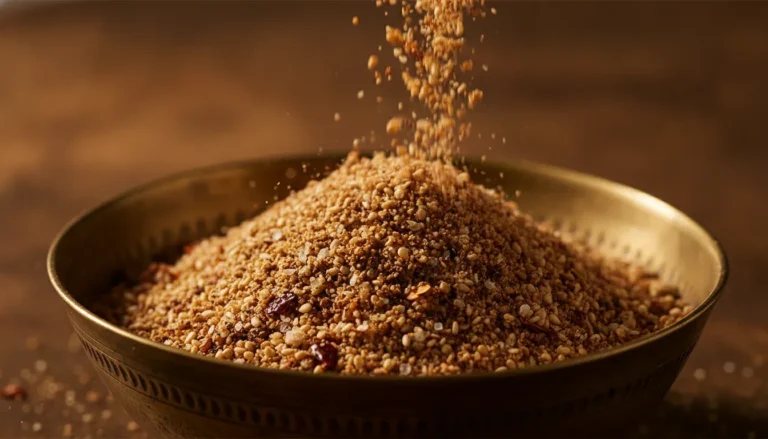
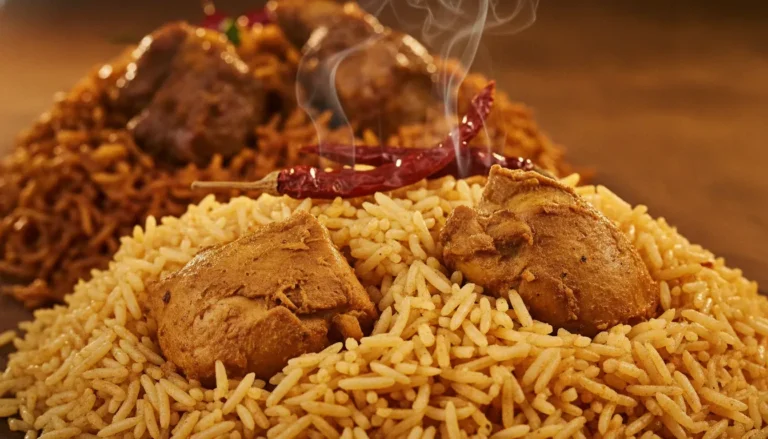
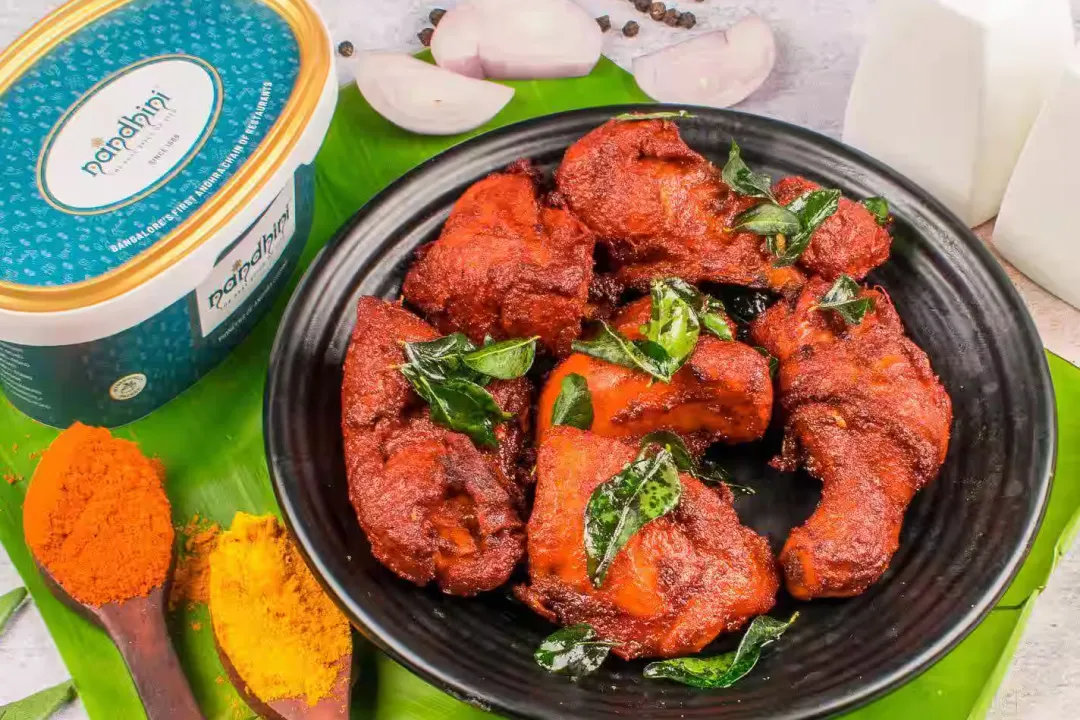
So when we say the mutton biryani uses the same spice blend it did in 1989, the claim is really about everything underneath the blend. The same chillies, ground the same way. The same method, taught to each new cook until their version matches the last one. The same refusal to swap an ingredient for a cheaper one when costs rise. Every one of those is a decision someone has to make again this morning, and the morning after that. That repetition, unglamorous and invisible, is the actual substance of the Nandhini legacy.
The first place that discipline shows up is in where the ingredients come from.
Sourcing: The Guntur Chilli, Brought from the Source
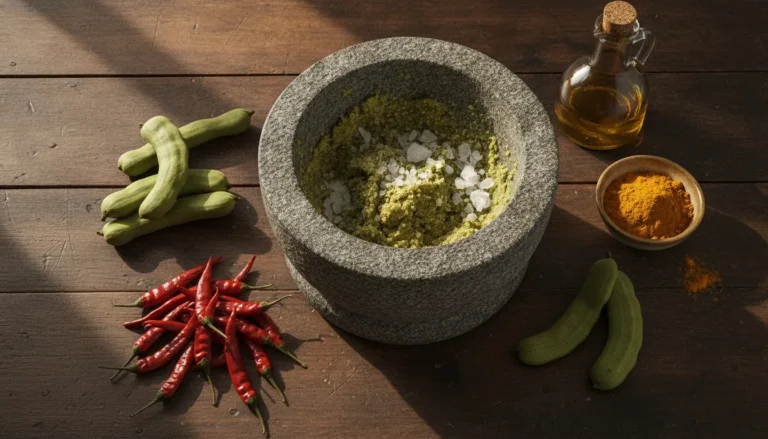
The defining ingredient of Andhra cooking is the Guntur chilli, and we source ours directly from the Guntur region of Andhra Pradesh rather than buying whatever generic dried chilli is cheapest in the local market. This matters more than it sounds. The chilli sits at roughly 30,000 to 50,000 on the Scoville scale, and just as importantly it carries a specific flavour, not only heat, that a substitute simply does not replicate. Change the chilli and you change the dish, however faithful the rest of the method.
Direct sourcing is harder and rarely cheaper than buying local. It means a supply line that runs back to a particular region, and a willingness to keep that line open even when a nearer option would do at a push. We hold it because the heat and depth of the food depend on it. If you want to understand exactly how that chilli behaves on the plate, our breakdown of the spice levels behind Andhra heat goes through it in detail. The short version is that the ingredient is not interchangeable, so neither is the sourcing.
Holding the Method at the Scale of 19 Outlets
Cooking one excellent biryani is a craft. Cooking the same excellent biryani in more than 19 kitchens on the same afternoon is a system, and the two are not the same problem. This is the part of consistency that almost nobody outside a kitchen thinks about, and it is where most chains quietly drift. A dish that tastes one way at the original outlet and another way three suburbs over has not kept its recipe, whatever the menu claims.
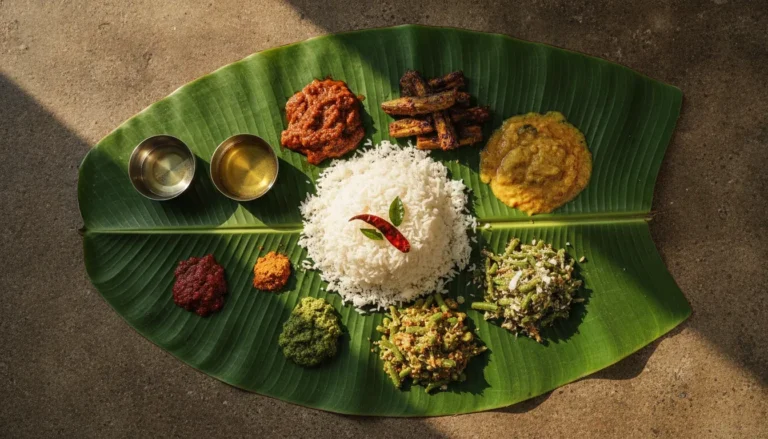
Holding the line at scale takes training more than it takes talent. Each new cook learns the method from someone who already makes it correctly, and the standard is the previous version of the dish, not a written shortcut. Sourcing is centralised so the same Guntur chillies and the same core ingredients reach every kitchen. The traditional preparations, the slow dum cooking, the banana-leaf bhojanam (the meal), the gongura pachadi (sorrel-leaf chutney) made the long way, and the pickles that define an Andhra meal, are kept rather than streamlined for speed. None of that is efficient in the way a management consultant would mean the word. It is, however, the only way the food stays the same across the city.
There is one structural choice that makes all of this possible, and it is the one we lean on hardest.
Company-Owned, No Franchise: The Quiet Differentiator
Every Nandhini outlet is company-owned. We do not franchise, and we never have. In a market where almost every successful food brand eventually sells franchises to grow faster, that is an unusual line to hold, and it is the single biggest reason the food stays consistent. It is worth understanding why, because it is the least visible and most important fact in this whole article.
A franchise model grows a brand by licensing its name to independent operators. It is faster and lighter, but it hands day-to-day control of the kitchen to someone whose incentives are their own. The recipe becomes a guideline rather than a guarantee, and quality starts to vary from owner to owner. By staying entirely company-owned across all 19 and more outlets in Bengaluru and Mysuru, we keep the kitchen under one roof of accountability, even when the roofs themselves are spread across two cities. The same standard, enforced by the same company, is why a regular can walk into an outlet they have never visited and order with confidence. The no-franchise discipline is not a marketing line. It is the mechanism.
It is also the part of the Nandhini legacy that costs the most to maintain and shows the least. Franchising would have let the brand grow faster and shift the financial risk of each new outlet onto someone else. Choosing not to means every new kitchen is our own investment, our own hire, our own standard to uphold. That choice slows the map down, and we have made it deliberately every time, because a name that means the same thing everywhere is worth more than a name that is merely everywhere. Speed was never the point. Sameness was.
The Biryani Bell, and the Idea Behind It
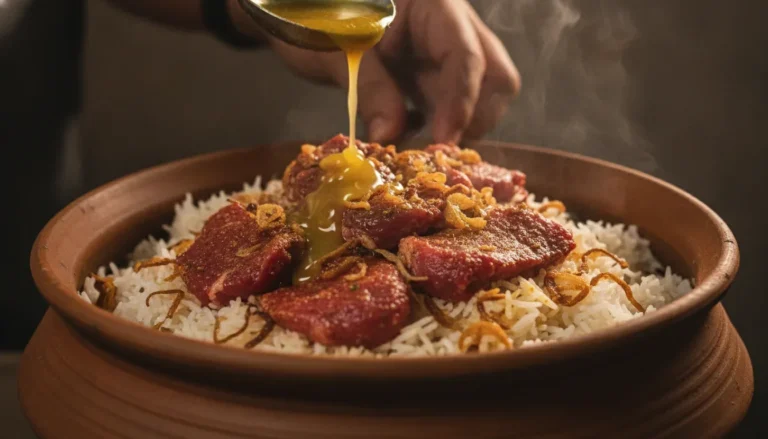
There is a detail from our story that captures the spirit of all this, and we will tell it carefully because it deserves accuracy. A practice noted in press coverage describes a bell being rung when a fresh batch of dum biryani is ready, a small signal that what is about to be served has just come off the heat rather than sat waiting. Whether or not a bell rings on any given day, the idea behind it is the real point: biryani is meant to be eaten fresh, and a kitchen built around freshness needs a way to mark the moment it is at its best.
That is the philosophy in miniature. Not a grand statement about heritage, but a practical insistence that the food reach you in the state it was designed to be eaten in. Freshness is not a feature you advertise. It is a habit you keep, or fail to keep, several hundred times a day. The bell, real or remembered, stands for the habit.
Why Identical-Everywhere Is Harder Than It Sounds
Put the pieces together and the difficulty becomes clear. Direct sourcing from a specific region, a method taught person to person rather than cut for speed, full company ownership of every outlet, and a working obsession with freshness. None of these is dramatic on its own. Together they are the entire reason “same recipe since 1989” is a fact rather than a flourish, and each one is a cost we choose to carry rather than a benefit we stumbled into.
This is also why the easy version of the promise is so common and the real version so rare. Writing “authentic since 1989” takes a copywriter an afternoon. Keeping it takes a supply line, a training system, an ownership structure, and 37 years of refusing shortcuts. You can read the fuller account of how the company is built and run on our about Nandhini Deluxe page, and the dishes that consistency protects are laid out in our guide to a proper Andhra meal in Bangalore. The slogan is everywhere. The structure behind it is the part that is hard to copy.
Consistency is not glamorous. It is the same chilli, the same method, the same plate, every outlet, every day, for 37 years. That is the whole secret.