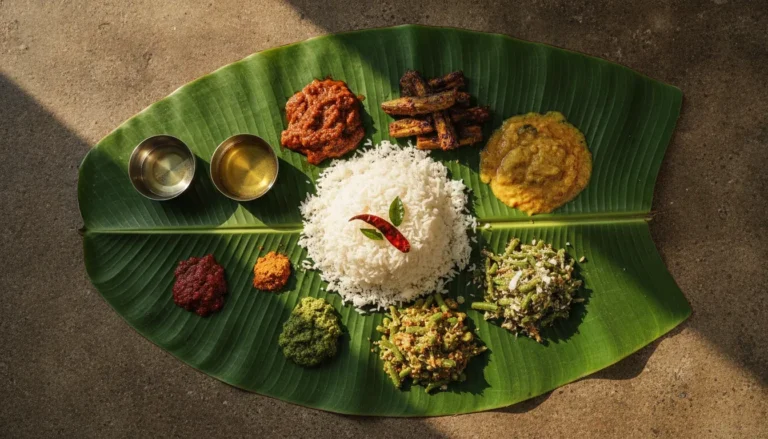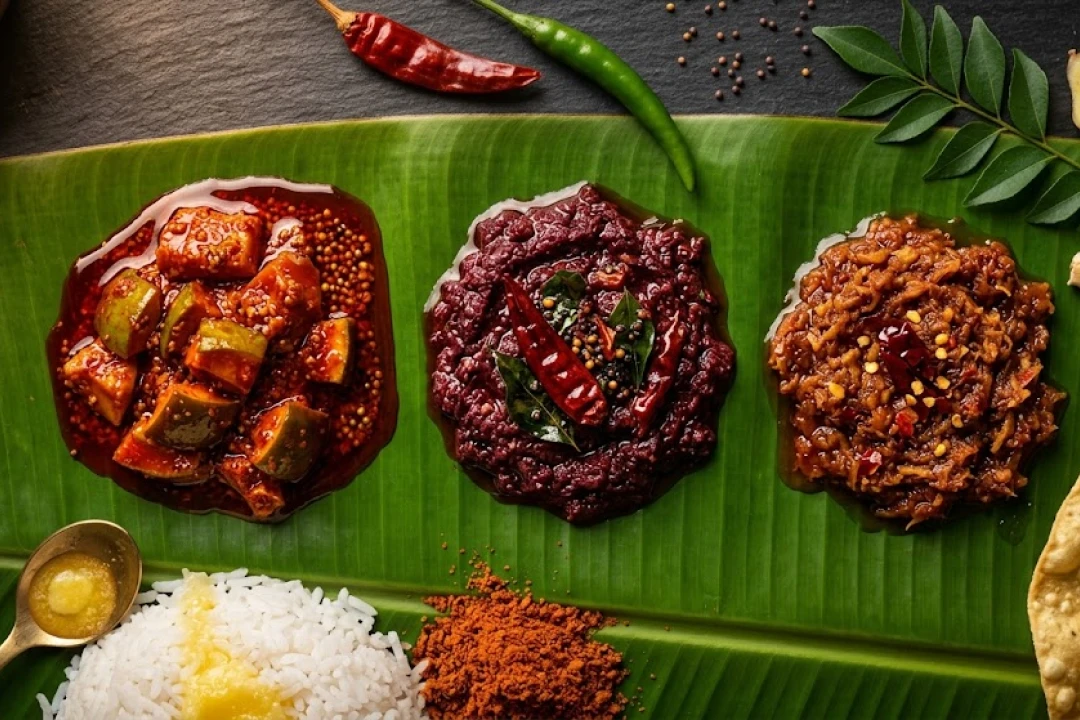
You sit down to an Andhra meal. The banana leaf arrives, rice steaming in the centre, and there, near the top edge, are three small dabs of red-brown paste. You recognise one of them – the mango. The other two you have eaten a hundred times without ever knowing the names. This guide is for the second and third dabs. It walks through the full Andhra pickle family – avakaya, gongura, maagaya, nimmakaya, allam, chinthakaya, and the non-veg cluster beyond – what each one is made of, what it tastes like, and where it sits in the meal. If you want the broader meal context, how pickles fit into an Andhra thali and the complete Andhra thali breakdown sit alongside this page. We have been serving these pickles at Nandhini Deluxe for 37 years; what follows is the family, written from the leaf inward.
What ‘Andhra Pickle’ Means (and Why It’s Not Just Mango)
Andhra pickles are oil-based, slow-fermented preserves from Andhra Pradesh that play a structural role in the regional meal. They are not a side dab. They are part of the system. On a full thali, the pickle holds the sour-pungent-salty corner of the Ayurvedic six-tastes frame, which is why every other element on the leaf – the rice, the ghee, the dal, the curd – earns its place by sitting next to it. Pull the pickle off the plate and the meal collapses inward.
The category is wider than most people assume. Telugu households make pickles from mango, sorrel leaves, lime, ginger, raw tamarind, garlic, and – on the coast – from prawns. Each has its own season, its own ceramic jar (the bharani or jaadi), and its own job at the table. To get the names right, you also need one small Telugu distinction that gates the whole family.
If you want the wider cultural anchor, the Wikipedia entry on Andhra cuisinencovers the avakaya tradition and many of the regional variants this page touches on.
Pachadi vs Pickle: A Telugu Distinction
In Telugu, the word for an oil-fermented preserve is ooragaya (sometimes spelled uragaya). It keeps for a year or more. It is made in large batches, sealed in a jar, and lives in the kitchen as a year-round resource. Pachadi means something different – a fresh chutney or relish made daily, finished within a day or two. Gongura is one of the few names you will see for both. Gongura pachadi is the fresh, ground-today version. Gongura ooragaya is the long-keeping pickled one. On a restaurant leaf you will usually see the fresh form alongside the long-keeping avakaya, and now you know why one tastes brighter and the other tastes deeper.
How Spicy Are Andhra Pickles?
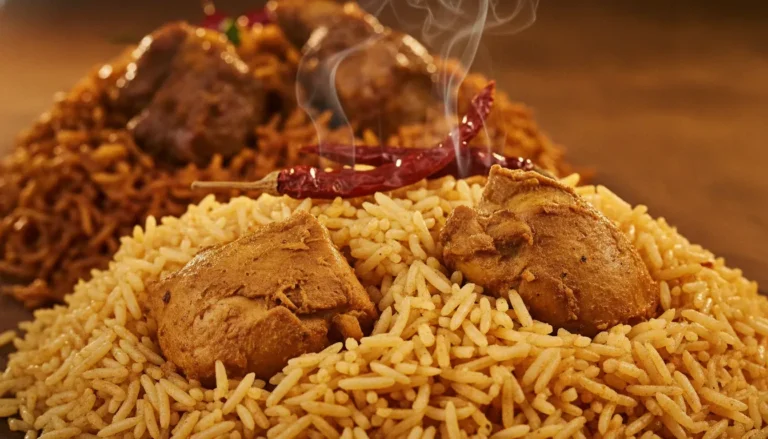
Spicier than most things you have eaten. Andhra pickles use Guntur Sannam chilli’s heat profile, which hits 30,000 to 50,000 on the Scoville scale. The chilli is used at near-equal weight to salt in some recipes, and the high oil content – sesame, called nuvvula nune – carries the heat further than a dry powder would. The heat is real. But why Andhra pickles pack heat is also why the meal around them works: ghee softens, curd cools, papad gives texture, and you eat the pickle in spoon-sized amounts, not in smears. The spices behind Andhra pickles are the same ones that build the rest of the cuisine; the pickle is just the most concentrated version of them.
Avakaya: The Mango Pickle
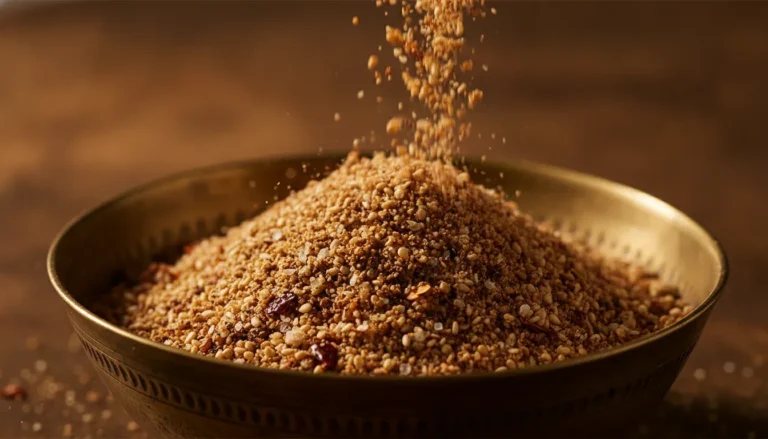
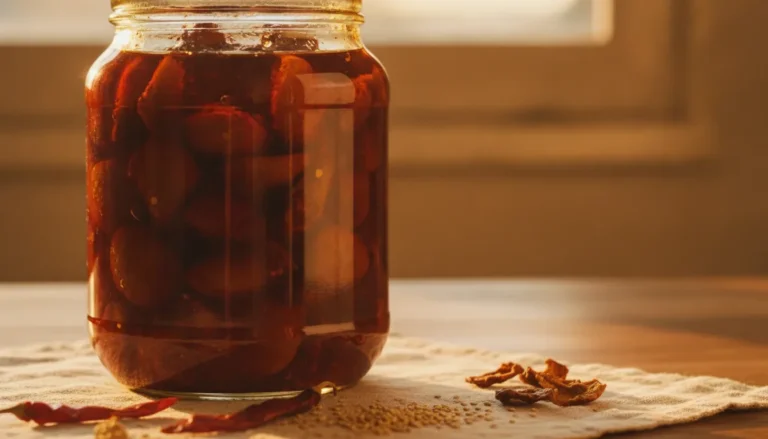
Avakaya is the flagship. The name itself tells you the recipe – ava means mustard, kaya means raw fruit – which is the literal contract of the pickle: raw, sour, green mango cut into chunks, mixed with mustard powder, red chilli powder, fenugreek, salt and sesame oil, sealed in a ceramic jar, and left to ferment for several weeks. The mustard softens. The mango softens. The oil rises to the top and seals the pickle from the air. After three or four weeks the jar is ready, and it will keep for a year if you do not lose your discipline around it.
What it tastes like: the first hit is heat from the chilli, then the sour-bitter snap of the raw mango, then the fenugreek’s mellow bitterness, and finally the oil carrying it all on the tongue. The texture matters too. The mango chunk should still have some bite. Mush is failure.
Across Andhra Pradesh, avakaya is the annual ritual. When the sour mangoes arrive in summer – April, May – families set up the kitchen for two days, weigh out the spices, slice the mangoes, mix in big steel basins, and fill the bharani jars that will feed the household until next summer. Daughters learn it from mothers. Most home cooks will tell you their mother’s avakaya tastes different from their mother-in-law’s. They are right.
Variants You’ll See Across Andhra
Vellulli avakaya is garlic-heavy – whole peeled cloves go in with the mango, and the garlic does what garlic does in oil over time. Bellam avakaya uses jaggery alongside the salt and chilli, which softens the sour edge and adds a low caramel note; it is the friendliest version for first-timers. Endu mamidi avakaya comes from Rayalaseema, the drier interior of Andhra, and uses sun-dried mango instead of fresh – chewier, more concentrated, considerably spicier. Nuvvula avakaya leans into sesame, with toasted sesame seeds ground into the masala alongside the mustard.
And there is a close cousin that often gets lumped in but is its own pickle: maagaya. We will get to it in a moment.
The Rest of the Family: Gongura, Nimmakaya, Allam and More
Avakaya is the flagship. The family around it is what makes Andhra pickling a tradition rather than a single recipe. Each of the pickles below shows up on different meals at different times of year, and learning the shape of the family is what lets you recognise the second and third dabs on the leaf.
Gongura Pickle
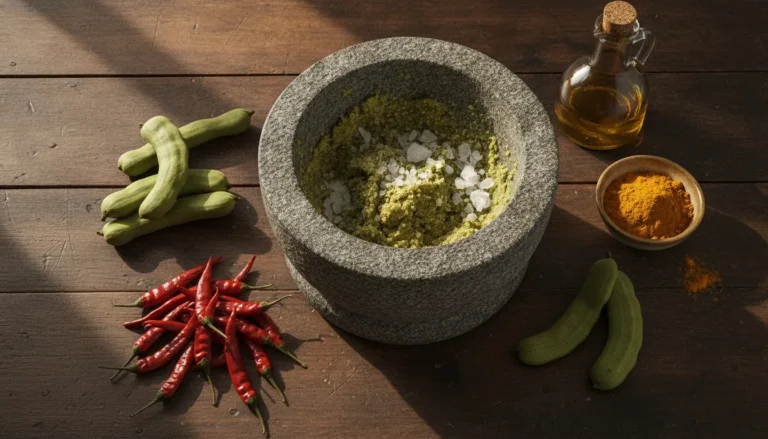
Sorrel leaves – gongura in Telugu, ambadi in Marathi, pulicha keerai in Tamil. The leaves are sautéed dry in a heavy pan until they collapse and lose their water, then ground with roasted spices (fenugreek, mustard, red chilli, garlic) and preserved in sesame oil. The Government of Andhra Pradesh’s Guntur district page on gongura calls it the Andhra Matha, the mother of Andhra cuisine, and that is not casual marketing. The pickle is intensely sour from the leaves themselves, layered with the chilli heat. It is the second-most-defining Andhra pickle after avakaya, and you will see how gongura works in mutton form too, where the same leaves carry an entire curry.
Maagaya
The sun-dried mango variant. Where avakaya uses fresh, soft chunks, maagaya uses pieces that have been sun-dried to leather, then soaked back briefly before pickling. The texture is chewier, the flavour is more concentrated, and the pickle keeps longer than avakaya – up to two years in a properly sealed jar. It is the pickle the household reaches for once the avakaya jar starts running low.
Nimmakaya Pachadi
Andhra-style lime pickle. Brighter and considerably more tart than the north Indian nimbu achar most people are used to. The lime pieces are salted and rested until soft, then mixed with fenugreek, mustard, chilli and oil. It cuts through heavy food, which is why you will often find it on a non-veg meal where the curries are richer.
Allam Pachadi
Ginger pickle. Fresh ginger is ground with tamarind, jaggery, red chilli, mustard and a touch of sesame oil. The jaggery is doing important work here – it tames the ginger’s burn and balances the chilli. Allam pachadi is the monsoon and winter favourite, and crucially, it is the pickle that lives with breakfast: pesarattu, idli, dosa. Some Andhra households serve it daily through the cold months and forget it the rest of the year.
Chinthakaya Pachadi
The underdog. Raw tamarind pickle – tart in a way the other Andhra pickles are not, almost mouth-puckering, with chilli and garlic to round it out. Most first-timers skip it. Most regulars come back to it. The flavour is sharper and more interrogative than avakaya; you will know on the first bite whether you like it.
The Non-Veg Pickle Cluster
Coastal Andhra has a small but distinct family of non-veg pickles. Royyala avakaya – prawn pickle – is the most famous of these. Prawns are cleaned, dried, then pickled in the same mustard-chilli-oil base as the mango version, and the result is intense, briny and serious. You will also see gongura chicken pickle and gongura mutton pickle as preserves on some menus – not the curry, but the leaves and meat together in oil for shelf life. These are not everyday pickles. They are special-occasion preserves.
The Pickle on the Plate: What Pairs with What
Every pickle has a natural partner on the meal. Knowing the pairings is what turns a busy thali into something the diner can navigate without guessing. The table below is the short version.
| Pickle | Best Paired With | Why It Works |
| Avakaya | Mudda pappu + hot rice + ghee | The classic first-bite combination. Dal carries the heat, ghee softens it, pickle delivers the full mango flavour without the burn. |
| Gongura pickle | Hot rice with sesame oil; or curd rice | Curd rice cools the leaf’s intense sourness. Sesame oil on plain rice carries the pickle without dilution. |
| Allam pachadi | Pesarattu, idli, dosa | A breakfast pairing. The ginger’s warmth fits a morning meal; the jaggery sweetness sits well against fermented batter. |
| Nimmakaya pachadi | Curd rice; or non-veg meals | Cuts through richness. The lime brightness resets the palate between heavier bites. |
| Maagaya | Hot rice with ghee | Same logic as avakaya. The chewier texture works well as a side to a simple meal. |
| Chinthakaya pachadi | Plain rice, in small quantities | Pure tart-and-chilli. Best when nothing else on the plate competes with it. |
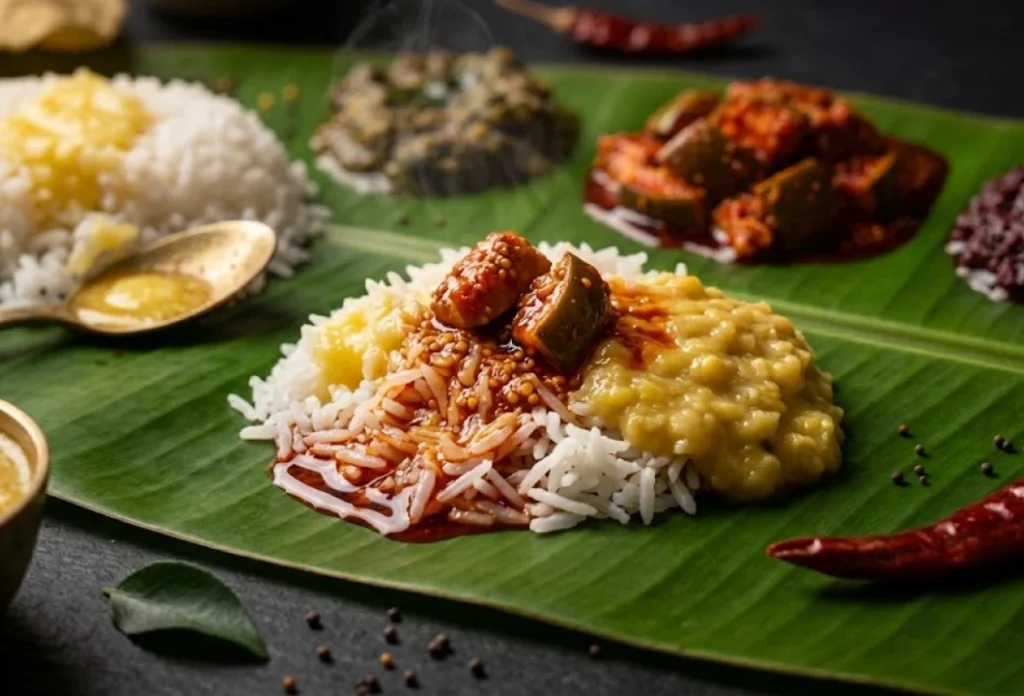
One rule of portion sense: a spoon, not a smear. The pickle is concentrated, and the plate has room for two or three dabs, not one big swipe of a single pickle. Rotate. The point of Andhra mess pickle culture is exactly this rhythm – small amounts of intense flavour against the calmer body of the meal. There is a Telugu phrase for the opening combination: modhati muddha, the first bite, which is the moment a thumb of ghee, a spoon of dal, a few grains of rice and a fingertip of avakaya all arrive in your mouth together. That is the meal beginning.
The Nandhini Pickle Plate
On a Nandhini banana leaf, the pickle arrives in two small dabs near the top edge of the leaf, set between the papad and the podi. Avakaya is the default – chunks of raw mango in red oil, the mustard still visible in the paste – and on most meals there is a second dab of gongura pickle alongside it. When the season is right, particularly through the cooler months, allam pachadi joins the leaf as a third option. The pickle is not refilled like the rice or the dal; it is a measured serving, the way a household serves its own jar.
We have been serving this exact spread since 1989. Across 15-plus outlets in Bangalore and Mysuru, the pickles arrive on the leaf in the same rhythm – avakaya first, gongura beside it, seasonal additions as the months turn. You will find the full pickle plate on the lunch thali at Jayanagar, RT Nagar, and the St. Marks Road flagship. The pickles change with the year. The system does not.
How to Start: A First-Timer’s Pickle Guide
If this is your first Andhra meal, do not start with gongura. Start with avakaya, in the smallest possible quantity, placed on top of mudda pappu and hot rice with a thumb of ghee. The dal absorbs the chilli oil. The ghee coats the tongue. The pickle delivers the full mango-mustard flavour, but the heat lands soft rather than sharp. This is the modhati muddha, and it is the safest, most flavour-forward way to enter the cuisine.
Save gongura pickle for your second visit, or for later in the same meal once you have tested the avakaya. Gongura is sour on top of being spicy, and the double-acid hit is harder to read on the first try. Skip chinthakaya pachadi entirely if you are heat-shy; it is the most unforgiving of the family.
If you go too far – and most first-timers do, once – the rescue is curd rice with a small dab of nimmakaya pachadi on the side. The curd cools, the lime resets the palate, and three or four bites later you are back. A first-timer’s spice decoder covers the same logic across the rest of the meal, not just the pickle corner. And if you want milder pickle servings, every Nandhini outlet adjusts on request.
Frequently Asked Questions
What are Andhra pickles?
Andhra pickles are oil-based, slow-fermented preserves from Andhra Pradesh that play a structural role in the regional meal – not a garnish. The family includes avakaya (mango), gongura pachadi (sorrel leaf), nimmakaya (lime), allam (ginger), maagaya (sun-dried mango), and a non-veg cluster like royyala avakaya (prawn).
What is the difference between pachadi and pickle?
In Andhra usage, pachadi is a fresh, short-shelf-life chutney or relish made daily, while pickle (ooragaya or uragaya) is an oil-fermented preserve that keeps for a year or more. Gongura is one of the few names you will see for both – gongura pachadi (fresh) and gongura ooragaya (long-keeping).
What is avakaya?
Avakaya is the Andhra mango pickle made by mixing raw, sour green mangoes with mustard powder, red chilli powder, fenugreek, salt and sesame oil, then fermenting in a sealed jar for several weeks. The name comes from the Telugu words ava (mustard) and kaya (raw fruit).
Why are Andhra pickles so spicy?
Andhra pickles use Guntur Sannam chillies, which hit 30,000 to 50,000 on the Scoville scale, along with red chilli powder used at near-equal weight to salt. The high oil content carries the heat further. The spice is balanced by the way the pickle is eaten – small amounts, with rice, ghee and curd.
What is gongura pickle made of?
Gongura pickle is made from red or green sorrel leaves (gongura in Telugu, ambadi in Marathi, pulicha keerai in Tamil), sautéed dry, ground with roasted spices – fenugreek, mustard, red chilli, garlic – and preserved in sesame oil. It is the second-most-defining Andhra pickle after avakaya.
Which Andhra pickle should a first-timer try?
Start with mudda pappu and a small smear of avakaya on hot rice with ghee. The dal carries the heat, the ghee softens it, and you get the full pickle flavour without the burn. Save gongura pickle for your second visit – it is intensely sour as well as spicy.
How long do Andhra pickles last?
Properly made avakaya, maagaya and gongura pickle can last 12 months or more, thanks to the high salt, sesame oil and lack of moisture in the recipe. Fresh pachadis (chutney-style) are made for the day and finished within 24 to 48 hours.
The Last Bite
Pickle is structural, not a side. Once you can name the family – avakaya, gongura, maagaya, nimmakaya, allam, chinthakaya – the Andhra meal becomes legible. You stop staring at the unfamiliar dabs near the top of the leaf and start choosing them in the order you want them, in the quantities you can handle. Start with avakaya and the modhati muddha. Add gongura when you are ready. Skip chinthakaya until you trust your tongue. Find your nearest Nandhini outlet when you want to walk the family across a banana leaf yourself – we have been pouring the oil and slicing the mangoes since 1989, and the jars are still doing their work. The leaf is ready when you are.