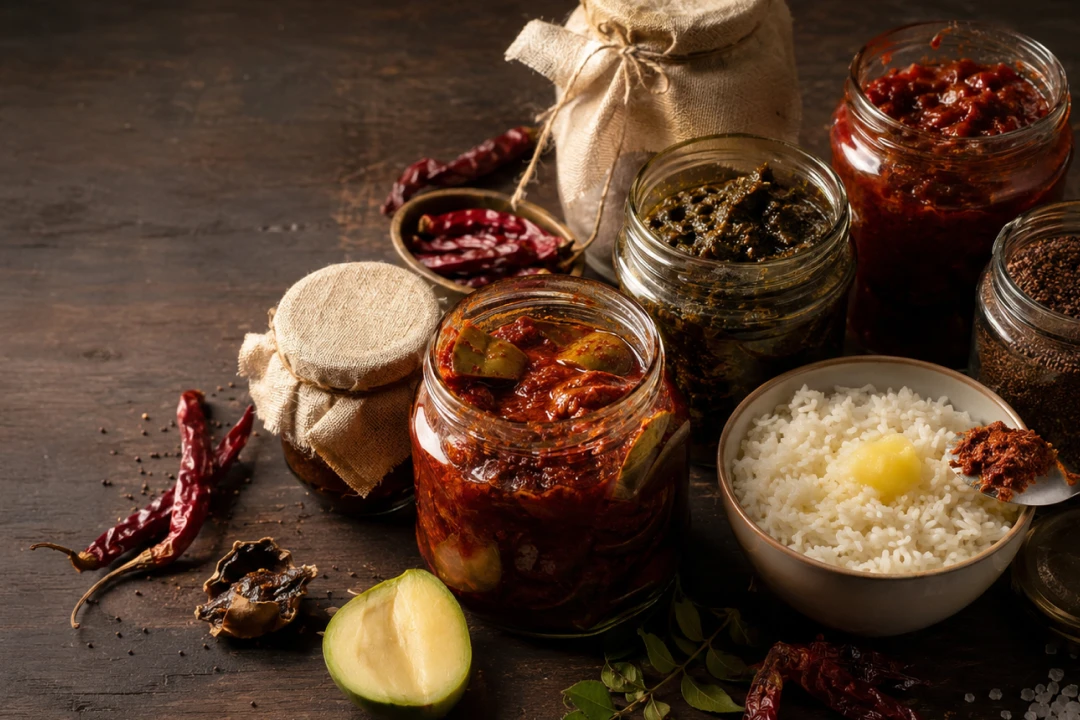
On an Andhra plate, the loudest thing is often the smallest. A thumbnail of avakaya (raw-mango pickle) or a spoon of karam podi (spice powder) against a mound of plain rice and ghee, that first mixed mouthful, the modhati muddha, is where an Andhra meal announces itself. This is the world of the Andhra pickle and the Andhra podi: small dabs of concentrated heat and sourness, built to wake up a calm bowl of rice.
There are more of them than most people realise, and they are not all the same thing. This guide sorts out what they are, how long they keep, and where to buy the real ones.
In Telugu, an ooragaya is an oil-cured pickle that keeps for a year or more, while a pachadi is a fresh chutney eaten within a day or two. Between them sits the nilava pachadi, a pachadi made with extra oil and salt to store for months. Gongura appears as both a pickle and a pachadi.
Table of Contents
Pickle or pachadi? The Telugu names, explained
English gives us one word, pickle, and then makes us guess. Telugu is more precise, and the precision is worth learning, because it tells you exactly what you are eating and how long it will last.
An ooragaya (or uragaya) is the true preserve: fruit or vegetable cured in oil, salt and chilli, made once in its season and kept for a year or more. Avakaya is the one everyone knows. A pachadi is the opposite end, a fresh chutney or relish ground for the day and eaten within a day or two, bright and quick to spoil. Tomato, ginger and coconut pachadi live here.
Between the two sits a useful third category, the nilava pachadi, a stored pachadi carrying enough extra oil and salt to last for months rather than days. Some things, gongura above all, are made in every register, as a fresh pachadi in the morning and as a year-keeping ooragaya in the pickling season.
Why bother with the names? Because they set your expectations. Ask for a pachadi and you should get something fresh and fleeting; ask for an ooragaya and you are buying into a jar built to last. The podis are a third thing again, a dry powder family that keeps by having no moisture in it at all, and they get their own section below.
How an ooragaya is actually built and kept, the curing, the oil, the sun-drying, is a craft with a long guide of its own. Here it is enough to hold the three names and what each one promises by the time it reaches the plate.
Guntur heat, sesame oil and salt
Three things give an Andhra pickle its force, and none of them is applied with a light hand.
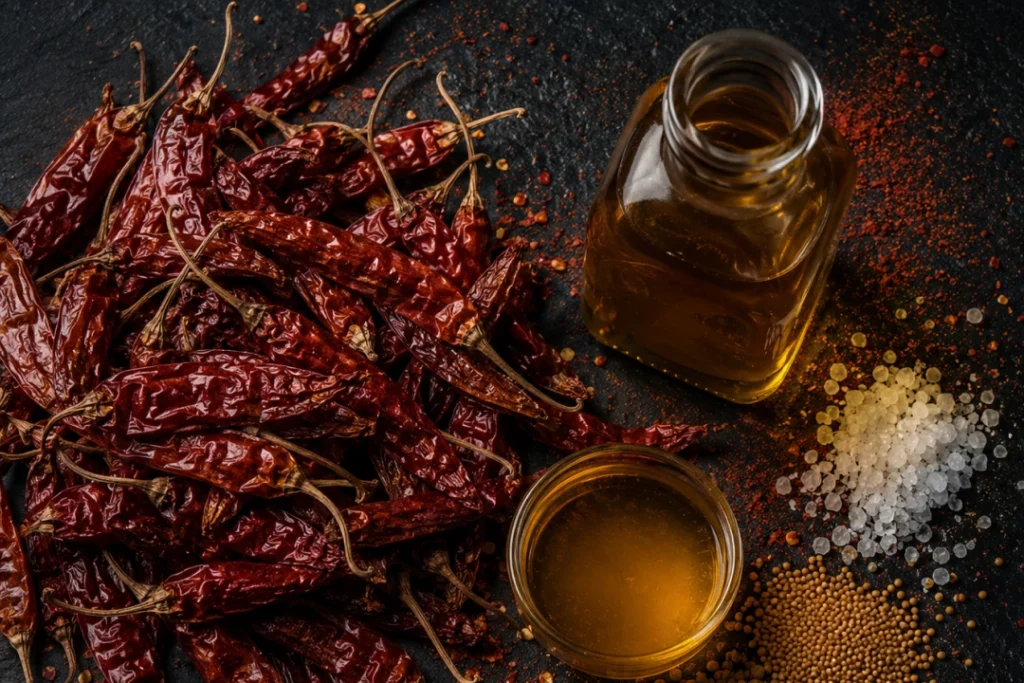
The chilli comes first. Andhra pickling runs on the Guntur Sannam, the dried red chilli grown around Guntur, which sits at roughly 30,000 to 50,000 on the Scoville scale, hot enough to dominate but red enough to colour the whole jar. In a proper ooragaya it goes in at close to the same weight as the salt, and the salt is the second force: not seasoning but preservative, pulling moisture out so nothing spoils.
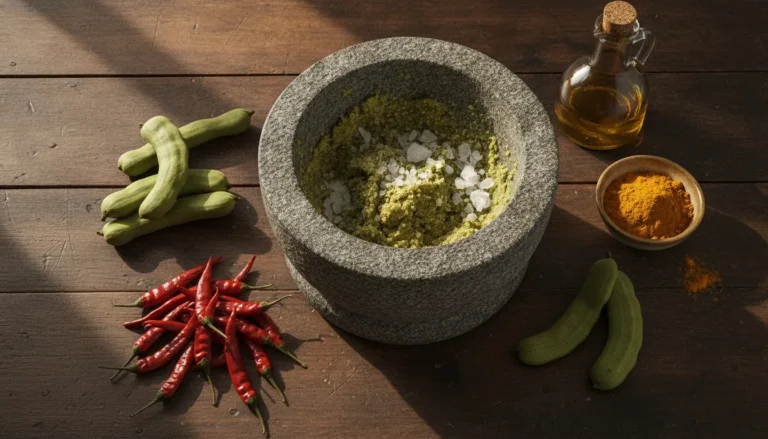
The third is the oil, and the choice is deliberate. Andhra pickles are set in cold-pressed sesame oil (nuvvula nune), which carries the chilli’s heat deep into the fruit and seals the top of the jar against air. Groundnut oil does similar work in some households. Mustard (ava pindi) and fenugreek (menthi) round out the flavour, and the sun does the rest, drying the cut fruit before it ever meets the oil. Loud, yes, but every part of it is there for a reason.
There is a balance underneath the noise. A little jaggery softens the sourest pickles, a pinch of asafoetida (inguva) deepens them, and turmeric guards against spoiling. The heat is real, but it is never careless.ge
It is worth saying why Andhra goes further than most pickling traditions: the state grows the chilli, so where another region’s pickle might use a spoon of chilli powder, an Andhra one uses a fistful, because it can.
The famous Andhra pickles
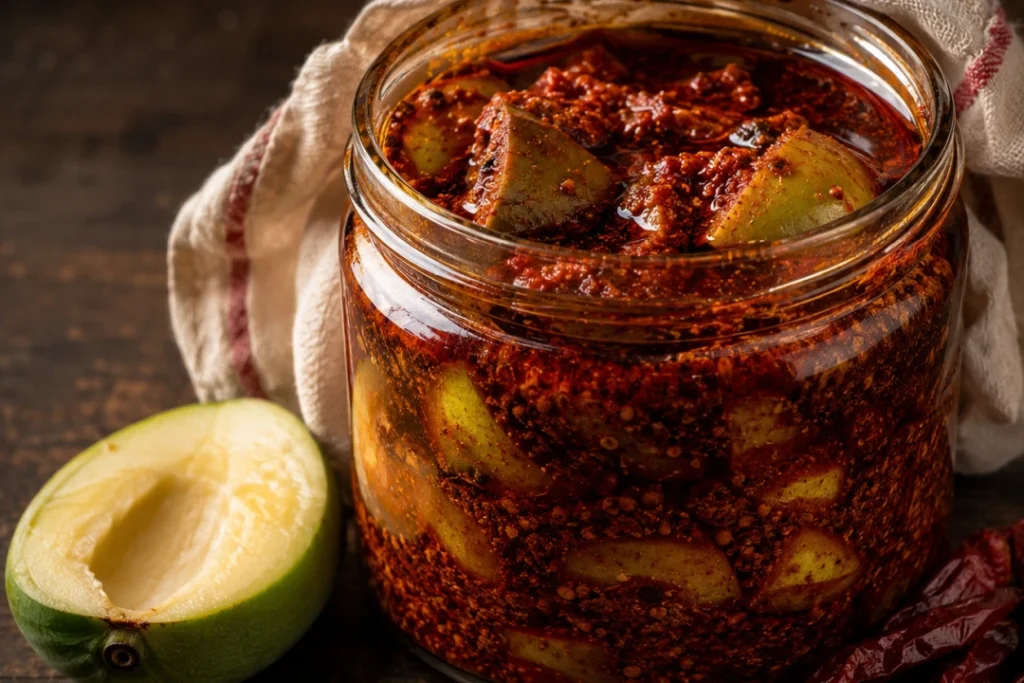
Every Andhra household keeps its own roll of pickles, but a handful turn up everywhere and have earned their names.
Avakaya is the king, and it deserves the title. Made from hard, sour raw mango cut with the shell still on, packed with mustard, Guntur chilli and sesame oil, it is the pickle Andhra families make by the potful each summer and eat right through the year. No other jar carries the same weight of tradition.
Making it is a small event. Families buy sour mangoes by the sackful in the weeks after Ugadi, when the fruit is at its hardest, and a grandmother’s proportions of chilli to salt to oil are guarded and argued over. A well-made pot is shared out among relatives, which is how a house recipe travels.
Gongura comes next, the sorrel leaf that is practically an Andhra flag. As a pickle it is cooked down and preserved in oil; as a fresh pachadi it is sharp and lemony. Either way, it is unmistakable once you have tasted it.
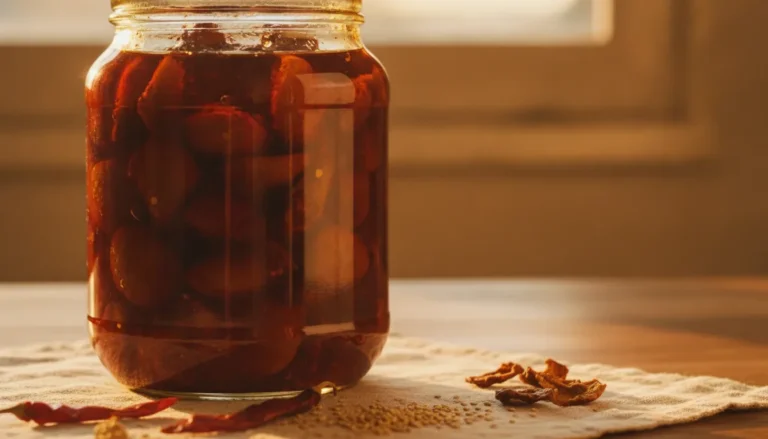
Then the sour fruits. Usirikaya (gooseberry, or amla) pickle is prized as much for its astringent bite as for its reputation as a tonic. Chintakaya, made from tender green tamarind, is fiercely sour and deep red, a Rayalaseema favourite. Pandu mirapakaya, a pickle of ripe red chillies stuffed with spice, is for anyone who wants the heat unmediated. Each has its own short season, and each keeps for the better part of a year in a well-sealed jar.
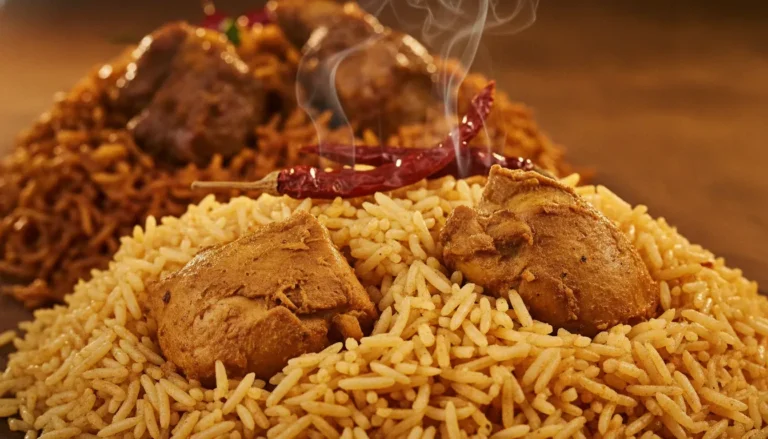
Not everything oily is a year-keeper. Tomato pachadi, cooked down with chilli and tempered with mustard, is eaten fresh or stored as a nilava pachadi for months, which is why it sits on so many tables. Beyond these are the ones that rarely leave the region’s own kitchens: nimmakaya (lemon) pickle, allam (ginger) pachadi, the fenugreek-heavy maagaya. And in the coastal Godavari districts around Bhimavaram, the tradition turns to meat and seafood, with chicken, prawn and fish pickles that are a speciality all their own. These are cooked, not raw-cured, the meat simmered down in oil and Guntur chilli until it will keep for weeks, and they are prized enough that families carry them across the country in tins. It is a bigger family than any single jar suggests.
Andhra podis: the powder family
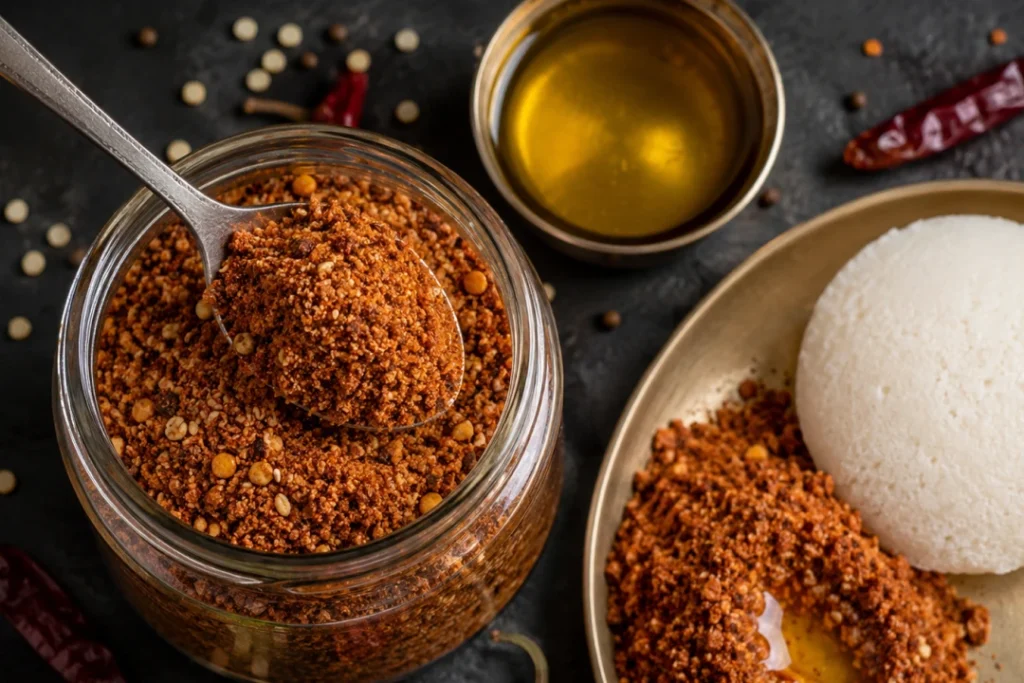
If the pickles are the wet half of the Andhra pantry, the podis are the dry half, and this is where the guide covers ground the pickle lists never reach.
A podi is a dry spice-and-lentil powder, roasted and ground, that keeps for weeks in a jar and turns a plate of rice into a meal with nothing more than a spoon of ghee. It is everyday food, the thing a working kitchen reaches for when there is rice but little else, and the food that travels best, packed for students and long journeys. The family is large.
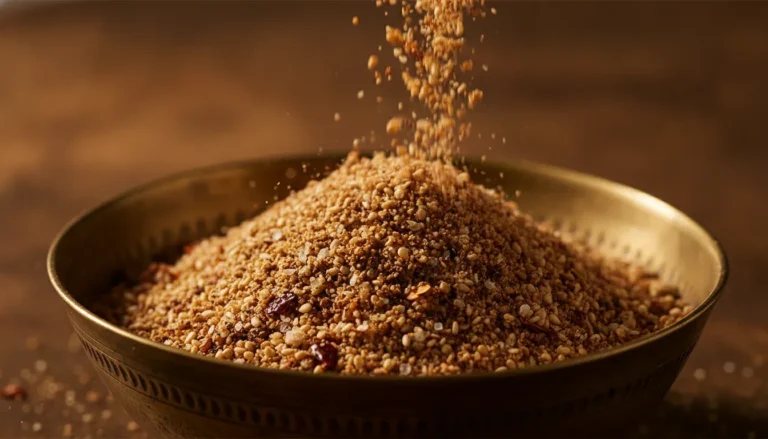
The method is the same across the family: lentils and dried chilli roasted until fragrant, sometimes with garlic, curry leaf or sesame, then ground coarse. The English nickname, gunpowder, is earned honestly, both for the colour and for what a heaped spoon does to an unsuspecting palate. What changes from one podi to the next is the base.
- Idli podi – the best known, a roast of lentils, dried chilli and sesame, often called gunpowder, eaten with idli and dosa or stirred into rice with ghee.
- Karam podi – the plainer, hotter table powder (karam simply means spicy), leaning on chilli and garlic, made for mixing straight into hot rice.
- Kandi podi – the toor-dal powder, nuttier and gentler, a staple of Telugu breakfasts and lunchboxes across the state.
- Nuvvula podi – a sesame podi, dark and rich, its oil coming through as you fold it into the rice.
- Palli podi – a groundnut podi, softer in heat and faintly sweet, the one children and travellers tend to reach for.
Kept dry, a podi outlasts almost anything else in the kitchen, which is why it became the traveller’s staple, folded into paper and carried for a week away from home. It answers a very old question cheaply: what do you eat when there is rice and nothing to cook?
There is a coconut version, kobbari podi, besides, and countless house blends nobody writes down. All of them share one habit: a spoonful, a knob of ghee, hot rice, and nothing else needed.
How Andhra pickles are kept
The reason an ooragaya can sit in a cupboard for a year comes down to a few unglamorous rules, all of them about keeping spoilage out.
Pickles are made in season, when the raw mango or the red chilli is at its best and cheapest, and made in bulk to last until the next season comes round. Salt and oil do the preserving between them: salt pulls the water out of the fruit, and a generous layer of sesame oil seals the surface from air. The cut fruit is sun-dried first so no raw moisture goes into the jar, and from then on the golden rule is a dry spoon, always, because a single drop of water can turn a whole batch. It is simple, old and reliable. The calendar is fixed by the crop: mango pickles in the heat before the monsoon, red-chilli pickles after the winter harvest, so a full pantry is really a year of seasons in jars. The full method, jar by jar, is a guide of its own.
Pickle, podi and the Andhra plate
None of this is eaten by the spoonful. A pickle or a podi is a punctuation mark, not a course.
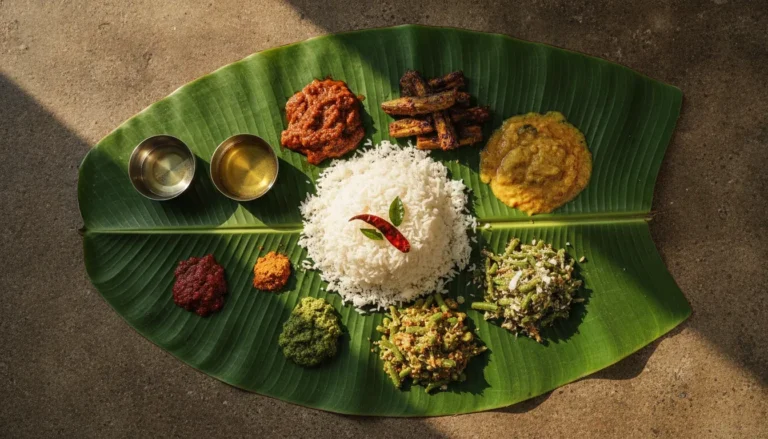
On a banana-leaf meal the pickle sits near the top edge, a small mound between the papad and the podi, and you take it in tiny amounts, a smear on a mouthful of rice. The classic first bite of an Andhra lunch, the modhati muddha, is rice mixed with a little ghee and a dab of ooragaya, eaten before the curries arrive to set the tone for everything after. Curd rice at the end, cooled with a touch of pickle, closes the loop. Used this way, in small dabs against rice, ghee and curd, even the fiercest avakaya makes sense. Nothing is wasted, either: the last smear of oil in an empty pickle jar is mixed into rice as a small luxury of its own. It is a whole cuisine’s worth of context in a teaspoon.
Buying authentic Andhra pickles and podis
The hard part, outside an Andhra kitchen, is finding the real thing. A good deal of what sells as Andhra pickle is milder than it should be: cheaper oil, tamer chilli, a shortcut on the salt and the sun-drying that a keeping-pickle actually needs.
Authentic means specific things here: Guntur chilli rather than generic chilli powder, cold-pressed sesame oil rather than refined, salt and sun-drying done properly so the jar genuinely lasts. On a label the tells are simple: a named oil rather than ‘edible oil’, Guntur or Sannam chilli rather than plain ‘red chilli’, and a colour that comes from spice rather than dye. Nandhini makes its pickles and podis the way it has cooked Andhra food in Bengaluru since 1989, and sells them through its own retail range, World of Nandhini, for anyone who wants a jar of avakaya, gongura or a podi without putting up a season’s batch themselves. For a household in Bengaluru after authentic Andhra pickles and no two-day process, that is the short answer. The longer one is on the plate, at any of the 22 outlets. Making a keeping-pickle at home is a two-day, sackful commitment, so a jar off the shelf is the sensible answer for most kitchens, provided the jar is an honest one.
Andhra pickles and podis at a glance
The main pickles and podis side by side, by type, base ingredient and how long each one keeps. Each name links down to a fuller guide.
| Name (Telugu / English) | Type | Base | Keeps for |
| Avakaya (raw-mango pickle) | Ooragaya | Raw mango, Guntur chilli, mustard | A year or more |
| Gongura (sorrel) | Ooragaya / pachadi | Sorrel leaves | Days as pachadi, months as pickle |
| Usirikaya (gooseberry / amla) | Ooragaya / pachadi | Gooseberry | Months |
| Chintakaya (green tamarind) | Ooragaya | Tender tamarind | A year or more |
| Pandu mirapakaya (red chilli) | Ooragaya | Ripe red chilli | A year or more |
| Nimmakaya (lemon) | Ooragaya | Lemon | A year or more |
| Tomato pachadi | Pachadi / nilava | Tomato | Days, or months as nilava |
| Idli podi (gunpowder) | Podi | Roasted lentils, dried chilli, sesame | Weeks to months (dry) |
| Karam podi / kandi podi | Podi | Lentils, chilli, garlic | Weeks to months (dry) |
| Nuvvula podi | Podi | Sesame, chilli | Weeks to months (dry) |
| Palli podi | Podi | Groundnut, chilli | Weeks to months (dry) |
Frequently asked questions
Which pickle is famous in Andhra Pradesh?
Avakaya, the raw-mango pickle, is the most famous Andhra pickle, followed closely by gongura made from sorrel leaves. Both are oil-preserved ooragaya, built on Guntur chilli, mustard and sesame oil, and eaten in small amounts with rice and ghee.
What are pickles called in Telugu?
In Telugu, an oil-preserved pickle that keeps for a year or more is called ooragaya (or uragaya). A fresh chutney-style relish eaten within a day or two is a pachadi. A pachadi made to store for months is a nilava pachadi.
What is the difference between ooragaya and pachadi?
Ooragaya is an oil-cured pickle made in season and kept for a year or more, such as avakaya. Pachadi is a fresh relish made daily and eaten within 24 to 48 hours. The difference is preservation against freshness rather than one of ingredients.
What is Andhra gunpowder podi?
Karam podi, often called Andhra gunpowder, is a dry spice powder of roasted lentils, chilli and garlic, eaten mixed with hot rice and ghee or with idli and dosa. Kandi podi and idli podi are close relatives in the same family.
Why are Andhra pickles so spicy?
Andhra pickles use Guntur Sannam chilli, which sits around 30,000 to 50,000 on the Scoville scale, often at close to the same weight as the salt. Sesame oil carries the heat further. The intensity is balanced by eating small amounts with rice, ghee and curd.
Nandhini bottles its own Andhra pickles and podis under the World of Nandhini range, made the way its kitchens have since 1989 – for anyone who would rather buy a jar than cure a season’s mangoes.