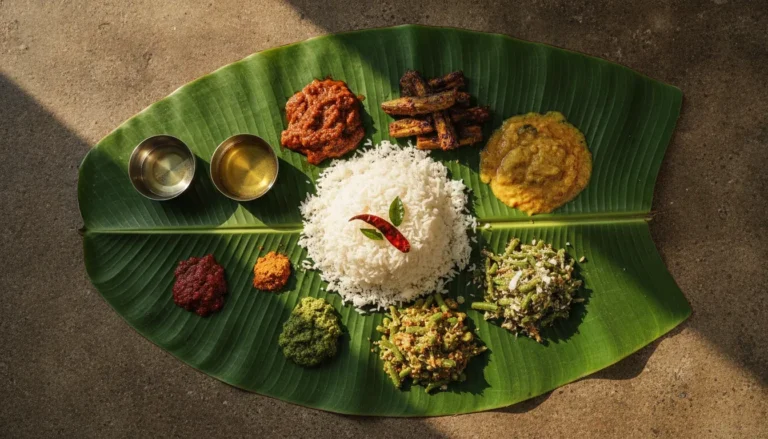
Start with a mouthful of pulihora (tamarind rice) and you already have the argument in miniature: sour tamarind, the slow build of red chilli, rice that carries both. That balance is the whole point of Andhra Pradesh famous food, and it is what most lists miss when they hand you twenty dishes with no way to read them.
This is Telugu cooking from the Krishna and Godavari basins, a cuisine that grows its own heat and sours its own gravies. It is spicy for a reason, not for show. What follows is the famous food of Andhra Pradesh set out the way the state actually eats it, by region and by dish, with an honest line drawn between Andhra and the Hyderabadi food it so often gets confused with.
Andhra cuisine is the Telugu food of Coastal Andhra and Rayalaseema, built on Guntur red chillies, tamarind and rice. Known as India’s Rice Bowl, it pairs fiery, tangy curries with pappu, pulusu and a pickle for every season. It is related to, yet separate from, the Nizami-rooted Hyderabadi cooking of neighbouring Telangana.
Table of Contents
What is Andhra cuisine?
Andhra food belongs to the Telugu-speaking people of the state’s two great halves. Coastal Andhra is the fertile delta where the Krishna and Godavari rivers run down to the Bay of Bengal. Rayalaseema is the drier, rockier interior to the south-west. Between them they set the rules. The coast leans on rice, seafood and a clean sourness from tamarind. The interior cooks harder, drier food with country meat and millet, and a heat that does not apologise.
Two facts explain almost everything on an Andhra plate. First, the state is India’s Rice Bowl, so rice is not a side here but the centre of the meal, the thing every curry is built to flavour. Second, it grows the country’s red chilli in bulk, which is why the heat runs through the whole table rather than sitting in one showpiece dish. Andhra food is generously spiced by design, on farmland that made chilli cheap and rice plentiful.
One correction is worth making early, because most food writing gets it wrong. Hyderabadi biryani and the wider Nizami kitchen are often filed under Andhra. They are not. When Telangana became a separate state in 2014, Hyderabad and its Mughlai-influenced court cooking went with it. The two cuisines grew up as neighbours, share a long border and a longer history, and borrow freely from each other. But Andhra food is the chilli-and-tamarind Telugu cooking described here, and Hyderabadi food is its richer, saffron-scented cousin. Telling them apart is the first step to understanding either.
| Andhra cuisine | Hyderabadi cuisine | |
| Home | Coastal Andhra and Rayalaseema (Andhra Pradesh) | Hyderabad (Telangana since 2014) |
| Roots | Telugu farming and coastal tradition | Nizami and Mughlai court kitchens |
| Flavour base | Guntur red chilli and tamarind | Saffron, dried fruit and rich gravies |
| Signature dishes | Natu kodi pulusu, chepala pulusu, pulihora | Hyderabadi dum biryani, haleem |
| Profile | Fiery, tangy, rice-led | Aromatic, mild-to-medium, ghee-rich |
Guntur heat, tamarind and gongura
Three ingredients carry the flavour of Andhra food, and none of them is shy.
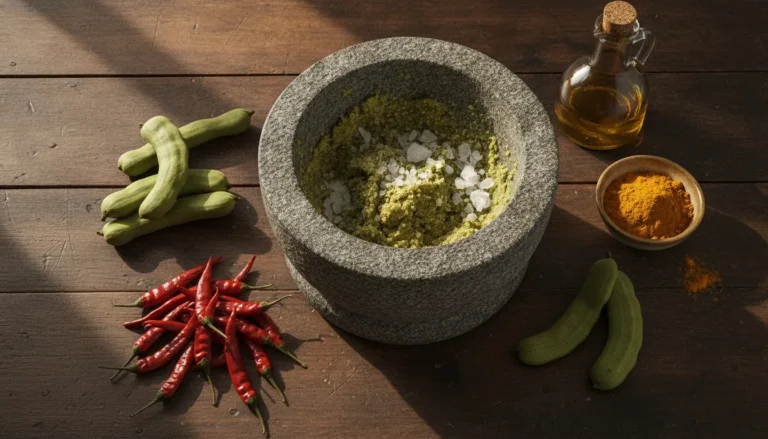
The first is the Guntur chilli. Guntur district trades more red chilli than anywhere else in India, and its best-known variety, the Guntur Sannam, lands around 35,000 on the Scoville scale: several times hotter than a jalapeno, though well short of the chillies grown purely for shock. It is used dried and ground, so the heat arrives with a deep, smoky red colour and a fruitiness that raw green chilli never has. Cooks reach for it by the spoonful, not the pinch.
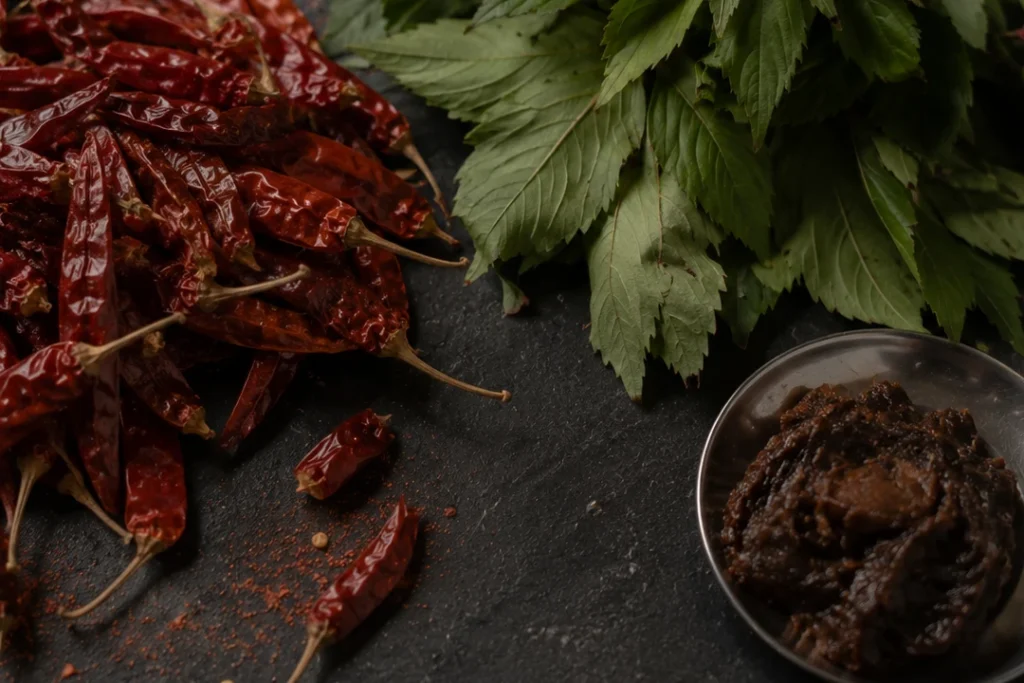
The second is tamarind (chintapandu). Where much of north Indian cooking turns to cream or tomato for body, the Andhra kitchen turns to sourness. Tamarind pulp gives pulusu its tang and cuts across the chilli, so the heat reads as bright rather than blunt. A good Andhra gravy is a running argument between sour and hot, and neither side is allowed to win.
The third is gongura, the sorrel leaf that is almost a state emblem. Cooked down into a pachadi (chutney) or folded through mutton, it brings a sharp, lemony sourness of its own, different from tamarind and unmistakable once you have met it. Around these three sit the supporting cast: curry leaf and mustard spluttered in hot oil, jaggery to round the edges, groundnut and sesame for weight, and ghee to carry it all. The food is loud on purpose, and balanced underneath the noise.
The Coastal Andhra table
The coast is where Andhra food is at its most generous. The delta soil is wet and giving, the rivers and the Bay of Bengal are close, and the cooking shows it: rice at the centre, fish and prawn in the gravy, a clean tamarind sourness running through most of the plate.
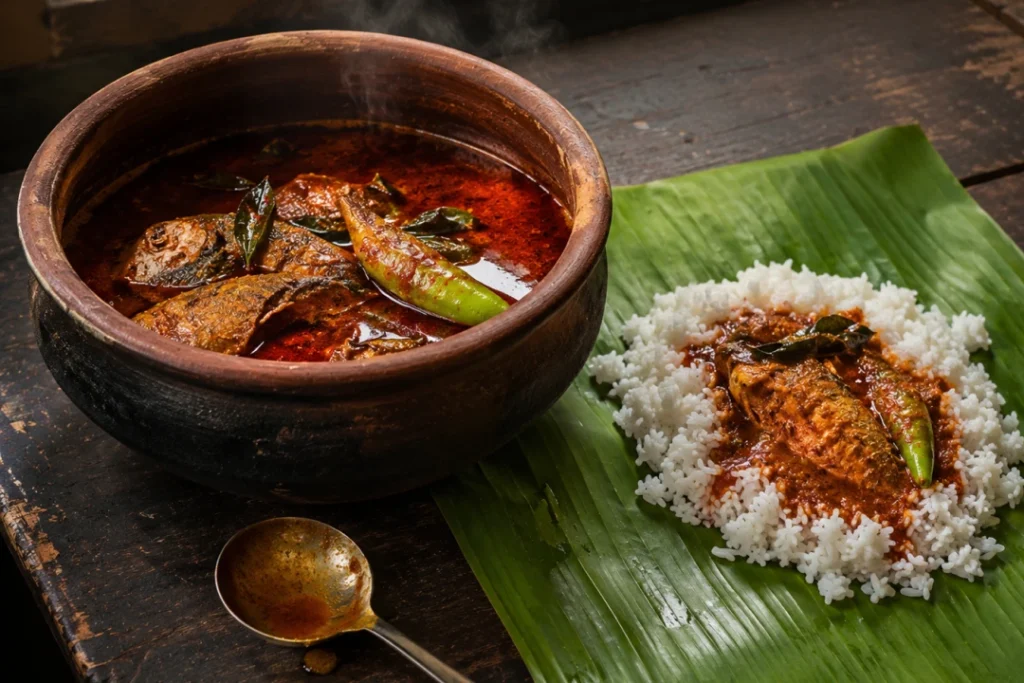
Chepala pulusu (fish curry) is the dish to know first. Firm river or sea fish is simmered in a thin, fiery tamarind gravy sharpened with fenugreek and red chilli, then left to stand so the sourness soaks into the flesh. It is one of those curries that tastes better the next day, and coastal families cook it that way on purpose, making a pot in the evening to eat at noon.
Royyala iguru (dry prawn masala) and royyala veppudu (prawn fry) are the everyday seafood of the region. Iguru keeps a little clinging gravy; veppudu is cooked down until the prawns are dry and coated in a dark chilli-and-onion masala that catches at the edge of the pan. Both lean hard on Guntur chilli and very little else.
Pulihora (tamarind rice) belongs here too, a temple and festival staple of rice tossed with tamarind, mustard, curry leaf, groundnut and a hit of chilli. It travels well, keeps for a day, and turns up at every celebration and long journey. Underpinning all of it are pappu (Andhra lentils) and pulusu (a soured stew), the two dishes that appear on nearly every coastal plate in one form or another.
One dish sits above the rest in reputation and price: pulasa, the monsoon hilsa of the Godavari. A local proverb has it that you would pawn your jewellery to buy one. The fish runs for only a few weeks a year when it swims upriver, and a good pulasa pulusu is treated as an event rather than a meal, cooked slowly and argued over for days afterwards.
The Rayalaseema table
Cross into Rayalaseema and the cooking changes character. This is the dry interior, historically a harder place to farm, and its food carries that flint. Less coconut, less coastal sweetness, more chilli, more meat, and a directness that can catch a coastal cook off guard.
Natu kodi (country chicken) is the region’s pride. This is the lean, slow-grown free-range bird, not the soft farm chicken, and its meat holds up to long cooking without falling apart. Natu kodi pulusu (country-chicken curry) simmers it in a dark, peppery tamarind gravy until the flavour turns deep and almost gamey. The heat here is real, and locals will tell you plainly that it is the point.
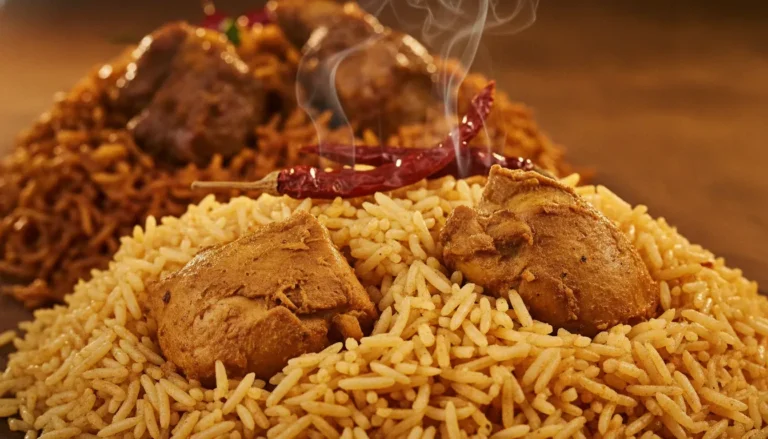
Andhra chicken curry, or kodi kura, is the broader everyday version: chicken in a roasted-spice, chilli-forward gravy, hotter and drier than its coastal cousins. Andhra kodi pulao takes the same spirit into rice, a one-pot chicken pulao built on whole spice and green chilli that stands apart from biryani in both method and mood. It is faster, sharper and less fussy, and it is what many Andhra homes cook when biryani would be too much work.
The region’s vegetables get the same intense treatment. Gutti vankaya (stuffed brinjal) is the standout: small aubergines slit and packed with a groundnut, sesame and chilli masala, then cooked slowly in oil until the skins collapse and the stuffing turns nutty and dark. It is proof that the Rayalaseema kitchen treats a vegetable with as much seriousness as a bird.
To carry all this heat there is ragi sangati, a stiff finger-millet-and-rice ball that is the daily staple of the interior. You tear off a piece, dip it into the pulusu, and let the mild, earthy millet soak up the fire. It is peasant food in the best sense: cheap, filling, and built to make a fierce curry go further.
Pappu, pulusu and the veg backbone
For all its reputation as meat-and-chilli country, everyday Andhra eating is mostly vegetarian, and it rests on two workhorses.
Pappu is the Andhra answer to dal, firmer and sharper than the north Indian version and often cooked with a souring agent folded straight in. Tomato pappu, gongura pappu, dosakaya pappu (yellow-cucumber dal) and palakura pappu (spinach dal) are all daily variations on one idea: lentils given a vegetable and a tang. Pulusu is its liquid cousin, the tamarind stew that will take almost any vegetable, from okra to drumstick to raw banana.
Around them sit the dry-fried curries the Telugu kitchen calls kura and vepudu. Dosakaya (cucumber), bendakaya (okra), beerakaya (ridge gourd) and potato all get the same crisp treatment with mustard, curry leaf and chilli, cooked until the edges catch. These are the quiet, daily dishes that never make a listicle but fill most plates.
Then comes the cooling counterweight, because a meal this hot needs one. Perugu annam (curd rice) closes almost every Andhra lunch, soft rice folded through thick curd with a tempering of mustard and curry leaf. Majjiga charu (a spiced buttermilk broth) does the same job in soup form, its gentle sourness settling the palate after the pulusu has had its say. And though it belongs as much to Telangana as to Andhra, pesarattu, the thin green-moong crepe eaten with ginger chutney, is the Telugu belt’s favourite savoury breakfast, lighter than a dosa and quietly filling.
Andhra biryani and rice dishes
Andhra has its own biryani tradition, and it is not the Hyderabadi one. Where the Hyderabadi style is layered, saffroned and gentle, the Andhra styles run hotter, wetter and more direct.
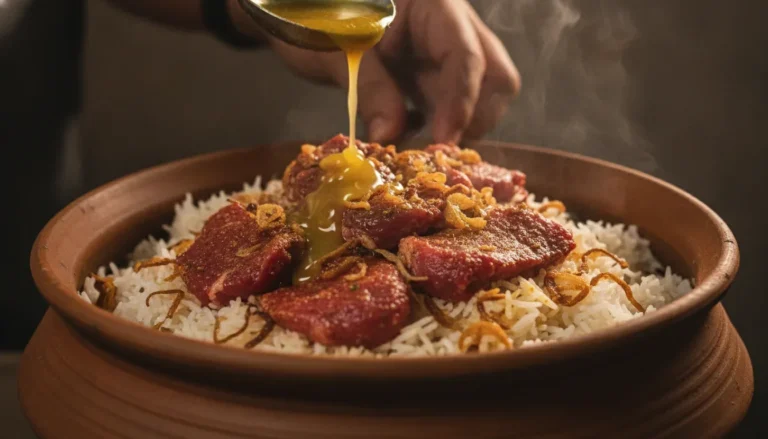
Nellore, on the southern coast, gives its name to a chilli-heavy biryani served with a fiery gravy on the side rather than a cooling raita. Ulavacharu biryani pairs the rice with a thick, dark horse-gram broth that is a Godavari speciality in its own right, earthy and faintly bitter. Andhra chicken and mutton biryanis are built on green chilli and roasted spice rather than sweetness, and they let you know it.
There is far more to say about how these styles are made, and where they sit among the country’s many biryanis, than a single section can hold. The full picture belongs on its own page. Here it is enough to know that Andhra rice does not copy Hyderabad. It goes its own, spicier way.
Pickles, podis and preserves
No Andhra meal is complete without something pickled or powdered at the edge of the plate, and this is a category the state takes almost as seriously as the main course.
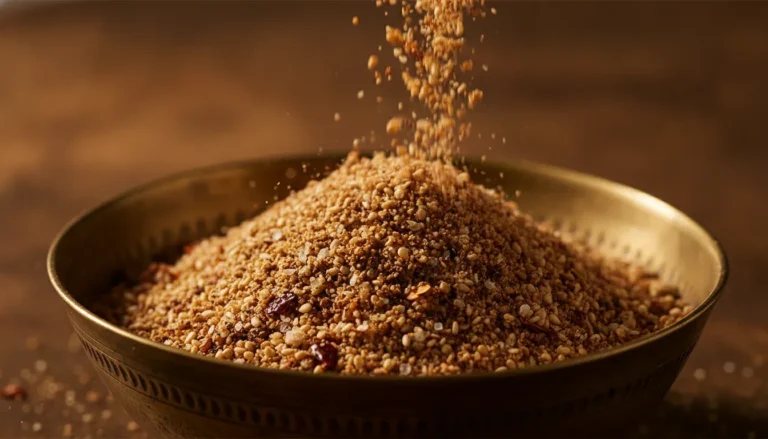
Avakaya, the raw-mango pickle cured with mustard, red chilli and oil, is the most famous of all, made in bulk each summer and eaten through the year. Gongura pachadi, the sorrel-leaf chutney, brings that signature lemony sourness in concentrated form. Alongside them sit the dry spice powders known as podi: idli podi, the roasted lentil-and-chilli “gunpowder” eaten with a smear of ghee, plus kandi podi and curry-leaf podi. These preserves are a craft with their own grammar of curing, sun-drying and storage, and they have their own dedicated guide. On the meal itself, their job is simple: a fierce, salty, sour full stop against all that rice.
The sweets of Andhra Pradesh
Andhra sweets are festival food above all, made in quantity for Sankranti, Ugadi and weddings rather than eaten every day.
Pootharekulu is the one that stops people in their tracks: sheets of rice starch so fine they are called the paper sweet, folded around jaggery and ghee. The best come from Atreyapuram, a single village in the Godavari delta whose name now carries a geographical tag. Bobbatlu (also called bhakshalu) is the Telugu holiday sweet-flatbread, a soft dough parcel stuffed with a chana-and-jaggery filling and griddled in ghee. Ariselu, deep-fried discs of rice flour and jaggery, are the sticky, chewy sweet of Sankranti in particular, and a test of any cook’s patience.
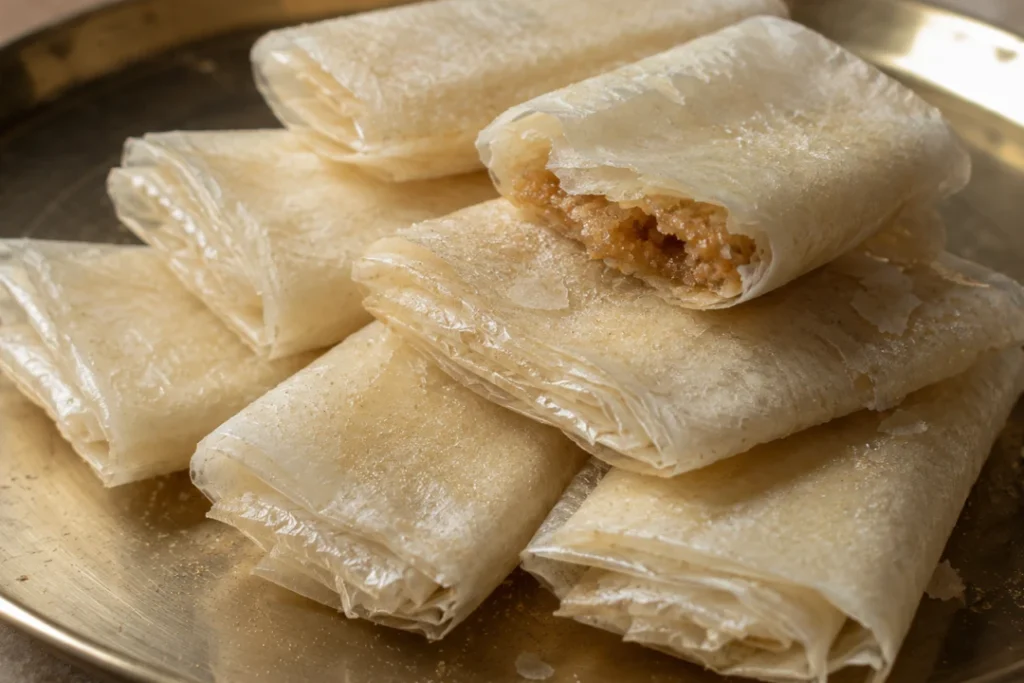
Beyond these sit regional favourites such as the layered Kakinada kaja and the dumpling-sweet boorelu, each with its own local following. Together they close the Andhra table on jaggery and ghee rather than refined sugar: older, earthier, and tied to the festival calendar that shaped them.
Andhra food in Bengaluru
Andhra food travelled well beyond its home state, and few cities took to it more readily than Bengaluru, where it has been part of the everyday eating for decades.
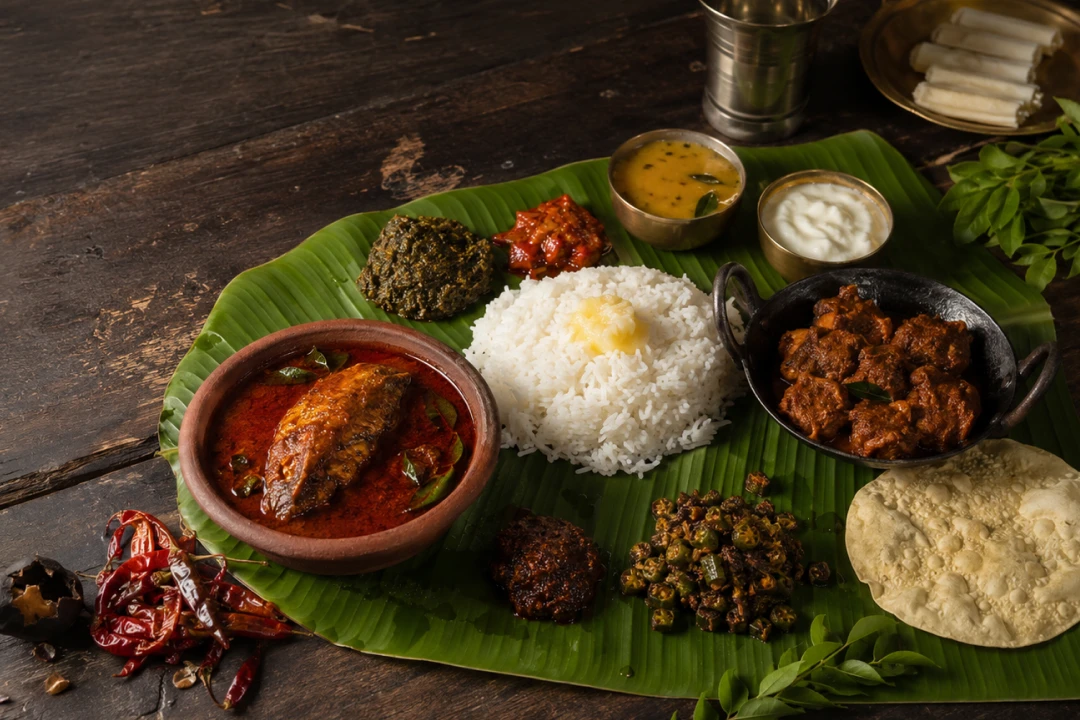
Nandhini Deluxe has cooked this exact cuisine in the city since 1989, when it opened as Bengaluru’s first Andhra restaurant chain. What began at Minerva Circle now runs to 22 company-owned outlets, 20 across Bengaluru and 2 in Mysuru, serving the Coastal-Andhra and Rayalaseema dishes described above on a banana leaf, in the bhojanam style. The kitchen buys its Guntur chillies, tamarind and gongura at source for the same reason the food demands them: the heat and the sourness are the cuisine, not a garnish on it.
That daily practice, cooking the food rather than writing about it, is the whole claim. Andhra cuisine reads differently once you have eaten a proper banana-leaf meal built the right way, with chilli, sourness and rice in the proportions the two regions intend.
Signature dishes of Andhra Pradesh at a glance
The signature dishes of the cuisine, grouped by where they belong on the map.
Coastal Andhra
- Chepala pulusu (fish curry)
- Royyala iguru and royyala veppudu (prawn masala and prawn fry)
- Pulihora (tamarind rice)
- Pappu (Andhra lentils) and pulusu (tamarind stew)
- Pulasa pulusu (Godavari hilsa, seasonal)
Rayalaseema
- Natu kodi pulusu (country-chicken curry)
- Andhra chicken curry (kodi kura)
- Andhra kodi pulao
- Gutti vankaya (stuffed brinjal)
- Ragi sangati (finger-millet ball)
Everyday and vegetarian
- Dosakaya pappu, gongura pappu and other pappu variations
- Perugu annam (curd rice)
- Majjiga charu (spiced buttermilk broth)
- Pesarattu (green-moong crepe)
Rice and biryani
- Nellore chilli biryani
- Ulavacharu biryani
- Andhra chicken and mutton biryani
Pickles and podis
- Avakaya (raw-mango pickle)
- Gongura pachadi (sorrel-leaf chutney)
- Idli podi and other spice powders
Sweets
- Pootharekulu (Atreyapuram)
- Bobbatlu (bhakshalu)
- Ariselu
- Kakinada kaja
Frequently asked questions
What food is famous in Andhra Pradesh?
Andhra Pradesh is known for fiery, tangy dishes built on Guntur chillies and tamarind: pulihora (tamarind rice), gongura pachadi, natu kodi (country chicken), chepala pulusu (fish curry) and pappu. Festival sweets such as pootharekulu and bobbatlu round out the table.
What is Andhra State food?
Andhra’s food is Telugu cuisine from Coastal Andhra and Rayalaseema: rice-centred, generously spiced with Guntur red chilli, soured with tamarind, and served with pappu, pulusu, pachadis and pickles. It is distinct from the Hyderabadi cuisine of neighbouring Telangana.
What are the most popular Andhra dishes?
The best known are pulihora, gongura pachadi, gutti vankaya (stuffed brinjal), natu kodi pulusu, chepala pulusu, ulavacharu and Andhra-style biryani, finished with sweets such as pootharekulu, bobbatlu and ariselu at festival time.
Is Andhra food the same as Hyderabadi food?
No. Andhra cuisine is Telugu food from Coastal Andhra and Rayalaseema, led by chilli and tamarind. Hyderabadi cuisine is Nizami-rooted and now belongs to Telangana, which separated from Andhra Pradesh in 2014. The two share history but are separate traditions.
What makes Andhra food so spicy?
Andhra Pradesh is India’s largest producer of red chilli, above all the Guntur variety, so chilli is used generously and with intent. Tamarind and sun-dried chilli powder deepen the heat, balanced by jaggery, ghee and cooling curd-based dishes.
If you would rather taste the cuisine than read about it, Nandhini has served Coastal-Andhra and Rayalaseema food in Bengaluru since 1989, across 22 outlets. It still arrives the old way, on a banana leaf.