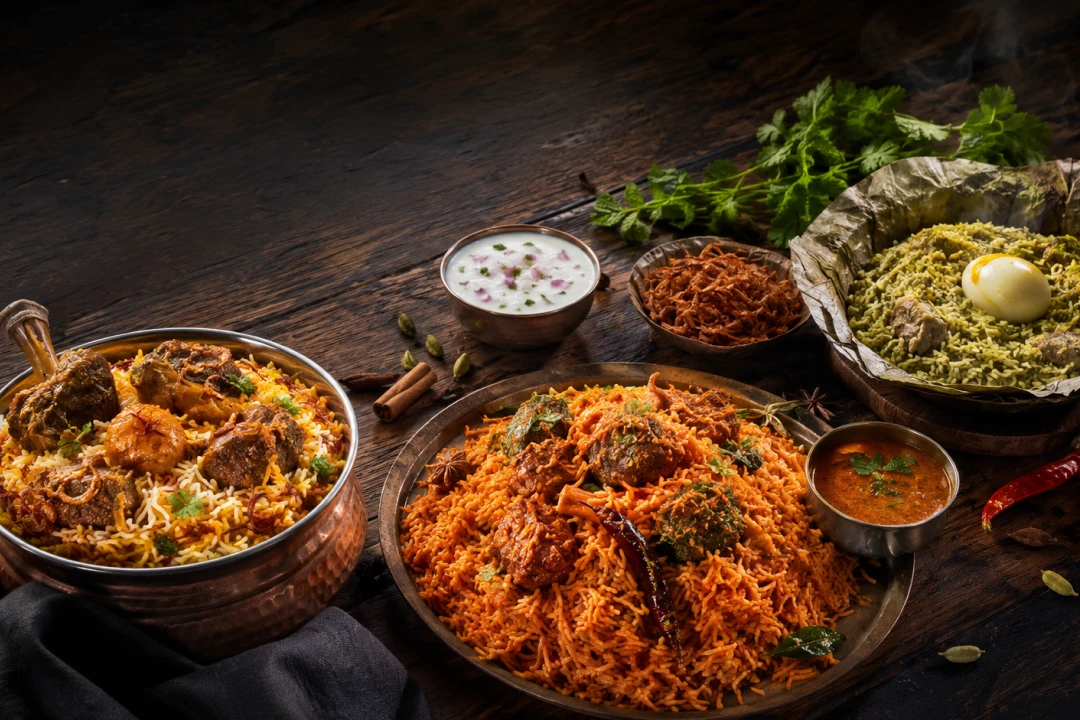
Ask ten people from ten states to name the real biryani and you will start ten arguments. That is the first thing to understand about the types of biryani in India: there is no single dish here, only a large family that shares a shape and splits on everything else, on the rice, the spice, and the way the pot is built.
A Hyderabadi cook seals raw meat and raw rice together and trusts the steam. A Bengaluru military hotel spoons a herby green rice into a leaf bowl. An Andhra kitchen pours a fierce gravy over the top. Same idea, three different worlds. What follows is a map of those worlds, sorted by region and by method, rather than another numbered list of names.
Biryani is a layered dish of spiced meat or vegetables and long-grain rice, cooked together rather than side by side like pulao. It is built two ways: kacchi, where raw marinated meat and raw rice are sealed and slow-cooked as one, and pakki, where both are cooked first, then layered.
Table of Contents
Biryani, defined: kacchi vs pakki
Before the regions comes the method, because it is the fault line that runs under every style.
A biryani is rice and spiced meat brought together in layers and finished so the two carry one flavour. That is what separates it from pulao (pilau), where everything cooks in a single pot from the start. Biryani keeps its parts a little apart, then marries them; pulao never separates them at all. It is a real distinction, and it has a page of its own.
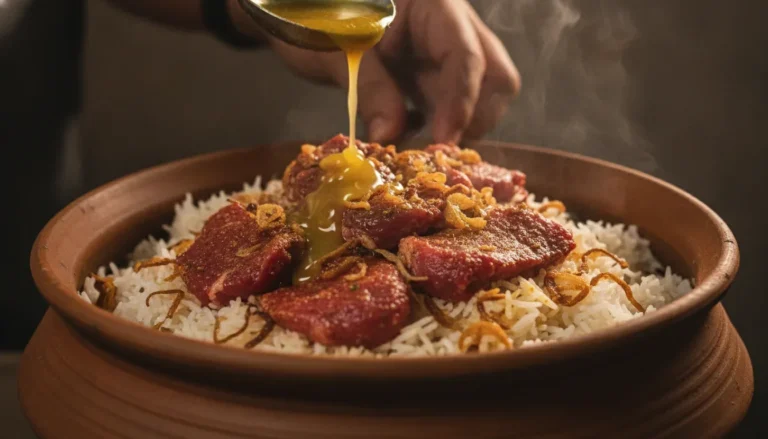
The deeper split is in how that layering is cooked. In the kacchi method, raw marinated meat is laid under raw, part-soaked rice, the pot is sealed, and the whole thing is slow cooked together over a low flame. The rice drinks the meat’s juices as both cook, which is why a good kacchi biryani carries so much depth, and why it is the harder method to get right. Hyderabadi biryani is the famous example.
In the pakki method, the meat is cooked to a gravy and the rice is boiled most of the way separately, then the two are layered and finished together on dum, a gentle steam under a sealed lid. The result is cleaner and more forgiving, the grains distinct, the flavour a shade lighter. Lucknowi and most Tamil Nadu styles work this way. Almost every biryani in India is a variation on these two ideas.
Whatever the method, a few things stay constant. The meat is marinated first, usually in yoghurt and spice, to tenderise it and season it through. Fried onions, the birista, go into the layers for sweetness and colour, whole spices such as cardamom, clove and cinnamon perfume the rice, and the pot is sealed for the final steam so nothing escapes. The regions argue about everything else.
The two axes: method and region
With the method clear, two more things decide how a biryani tastes: the rice and the region.
The rice matters more than most people expect. The north and the Deccan reach for long-grain basmati, prized for its length and perfume. Much of the south does not. Tamil Nadu and Bengaluru favour seeraga samba, a short, round, aromatic grain that drinks up spice and stays firm, which is why an Ambur or a Donne biryani feels so different in the mouth from a Hyderabadi one. Kerala has its own khyma (jeerakasala) grain again.
The spicing splits the same way. The north and the Deccan lean on warm whole spice and saffron; the south reaches for more chilli, curry leaf and, on the coast, coconut. Read the rice and the spice together and you can often place a biryani on the map before anyone tells you where it is from.
Region is the last axis and the most visible. Every biryani belt has its own spice logic, its own accompaniment, its own account of how the dish arrived. The rest of this guide is arranged that way: the Mughlai court styles first, then Tamil Nadu and the coast, then the Andhra and Telugu family, and finally Bengaluru’s own Donne.
The Mughlai styles: Hyderabadi, Lucknowi and Kolkata
The Mughal courts gave biryani its most famous faces, all of them descended from the Persian pilau their kitchens refined.
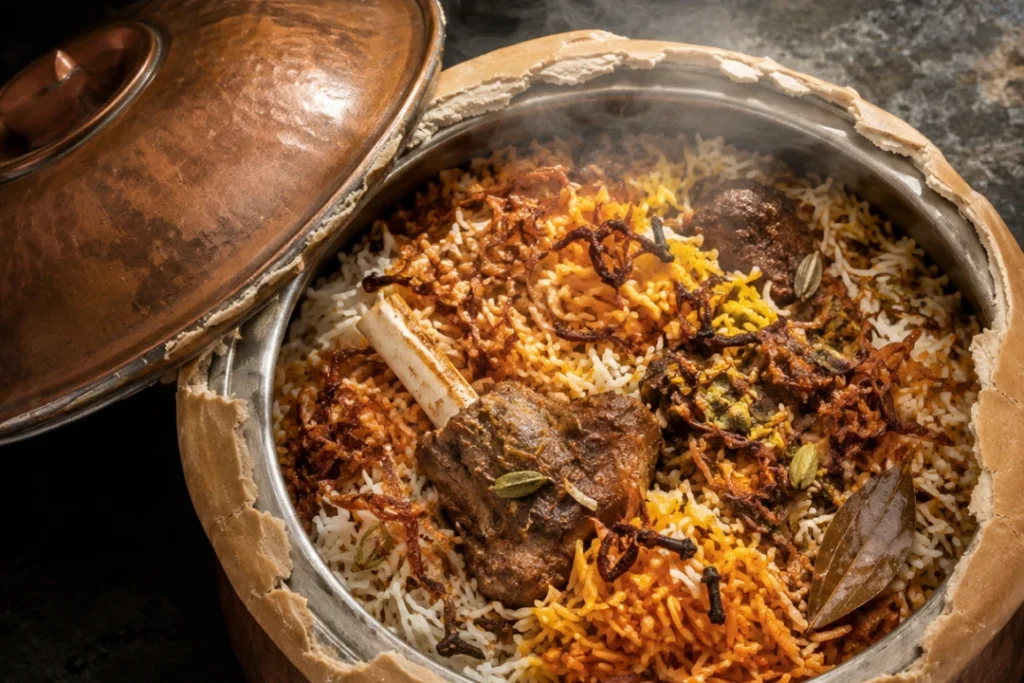
Hyderabadi biryani is the one most people picture and the one most searched. It is a kacchi dum biryani from the old Nizami court, built on basmati, saffron, fried onions and a heavy hand of whole spice, with raw marinated meat cooking under the rice. One point is worth making, since even the automated summaries get it wrong: Hyderabad sits in the south, on the Deccan, and has belonged to Telangana since that state separated from Andhra Pradesh in 2014. It appears here for its lineage, not its location. It is Nizami food, a close cousin to the Andhra styles further down this page but not the same thing.
Lucknowi biryani, also called Awadhi, is Hyderabadi’s gentler relative. It is cooked pakki, the meat simmered in a delicate yakhni stock before the rice goes on, so the flavour is aromatic and mild rather than fiery, with kewra and rose doing the work that chilli does elsewhere.
Kolkata biryani carries a story on every plate. When the exiled Nawab Wajid Ali Shah reached Calcutta in 1856, his kitchen had to make do, and a potato, often with a boiled egg, took a place beside the meat. The stretch became a signature. It is lightly spiced and faintly sweet, scented with rose and kewra, the mildest of the great biryanis.
Sindhi biryani leans the other way. It is tangy and hot, lifted with green chilli, soured with dried plums (aloo bukhara) and yoghurt, and studded with potato, a livelier, sharper plate than its Mughlai neighbours.
A few more round out the picture. Kalyani biryani, from Bidar and the old Hyderabad state, is a hearty buffalo-meat version once eaten as a cheaper everyday biryani, tomato-rich and heavily spiced. The Bohra and Memoni communities of Gujarat and Mumbai keep their own house styles too, tangier and often potato-laden, a reminder that almost every community that took up the dish bent it to its own taste.
The south coast: Ambur, Dindigul, Malabar and Bhatkali
South of the Deccan the biryani changes its rice and loosens its ties to the Mughal template.
Ambur biryani, from the old town of Vaniyambadi in northern Tamil Nadu, is the standard-bearer. The Nawabs of Arcot brought the dish; local cooks made it their own with seeraga samba rice, a restrained hand of masala so the meat and rice come through clean, and a fiery brinjal side called dhalcha. It is a lighter, redder, chilli-led biryani, eaten with a spoon of that gravy over the top.
Dindigul biryani, tied to the Thalappakatti name, does something few others do: it sours the rice with curd and lemon and leans on black pepper as much as chilli, so the heat is warm and rounded rather than sharp. Seeraga samba again, and small cubes of meat rather than large pieces.
Chettinad biryani, from the same state, is the loudest of the Tamil styles, built on a dark roasted-spice masala of star anise, stone flower and dried chilli that gives it real depth and a slow, building heat.
Then the coast proper. Malabar biryani, also called Thalassery after its home town in northern Kerala, swaps basmati for the short khyma (jeerakasala) grain and finishes with fried cashews, raisins and a whisper of coconut, a mild, festive, faintly sweet plate. A little further up, Bhatkal on the Karnataka coast gives its Navayath community a biryani heavy with green chilli, onion and coriander, closer to the Andhra end of the spice scale than the Kerala one. Between them, the south alone could fill a guide of its own.
Andhra biryani and its regional styles
Here is where almost every national guide gives up. It folds the whole Telugu biryani tradition into a single line about fiery chillies and tamarind, or files it under Hyderabadi and moves on. It is a much bigger family than that, and it is worth pulling apart.
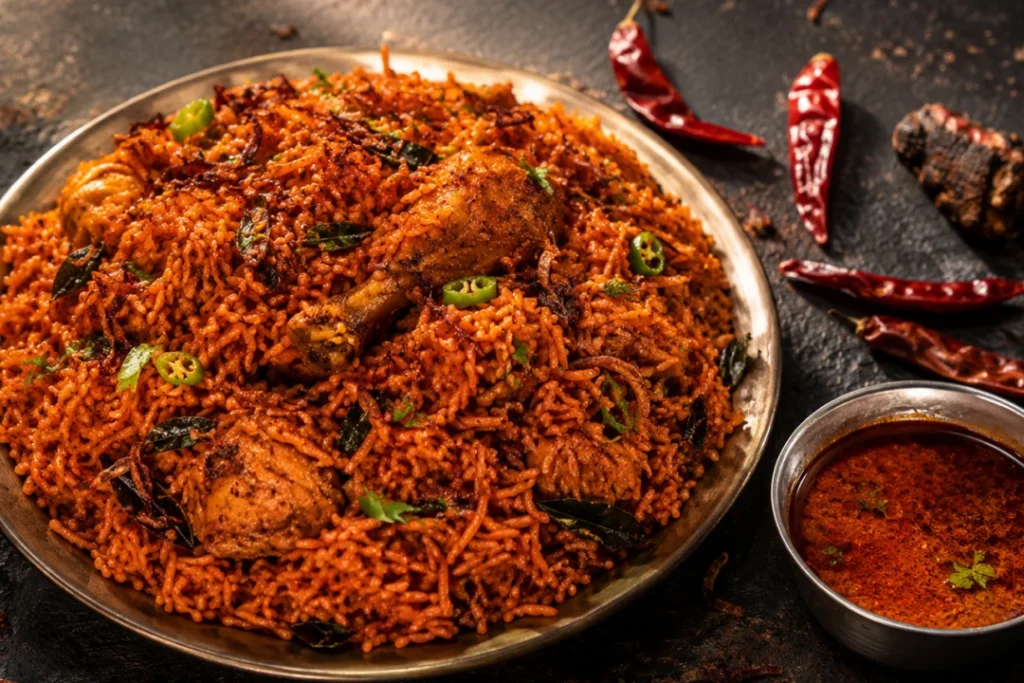
Andhra biryani is the parent style: hotter than most of India’s, built on Guntur chilli and often soured with or served beside tamarind, and almost always partnered with a separate spicy gravy rather than a cooling raita. Where Hyderabadi aims for perfume and balance, Andhra aims for heat with purpose. What ties the family together is a refusal to be mild, and a habit of pouring that gravy over the plate so the rice, the meat and the sauce are eaten as one hot mouthful. Under the umbrella sit several distinct regional styles, each worth a plate of its own.
- Guntur biryani – the fiercest of the family, carrying the full weight of the district’s namesake red chilli, its heat tempered only by the meat and the rice.
- Vijayawada biryani – a bold, deeply spiced coastal style from the Krishna delta, known for a generous masala and a rich, moist plate.
- Nellore biryani – from the southern coast, chilli-forward and usually served with its own fiery gravy on the side in place of a raita.
- Rayalaseema biryani – the dry interior’s version: rustic and pepper-and-chilli heavy, often built on country meat that stands up to long, slow cooking.
- Ulavacharu biryani – the outlier and the connoisseur’s pick, where the rice is married to ulavacharu, a dark, earthy horse-gram broth that gives a savoury depth found nowhere else.
Named together like this, they read as what they are: a regional cuisine’s worth of biryani, not a footnote to Hyderabad. The differences are real ones, of chilli, of souring, of the broth or gravy each is built around, and they are exactly the differences a numbered list flattens. Each has its own page in this guide.
Donne biryani: Bengaluru’s military-hotel style
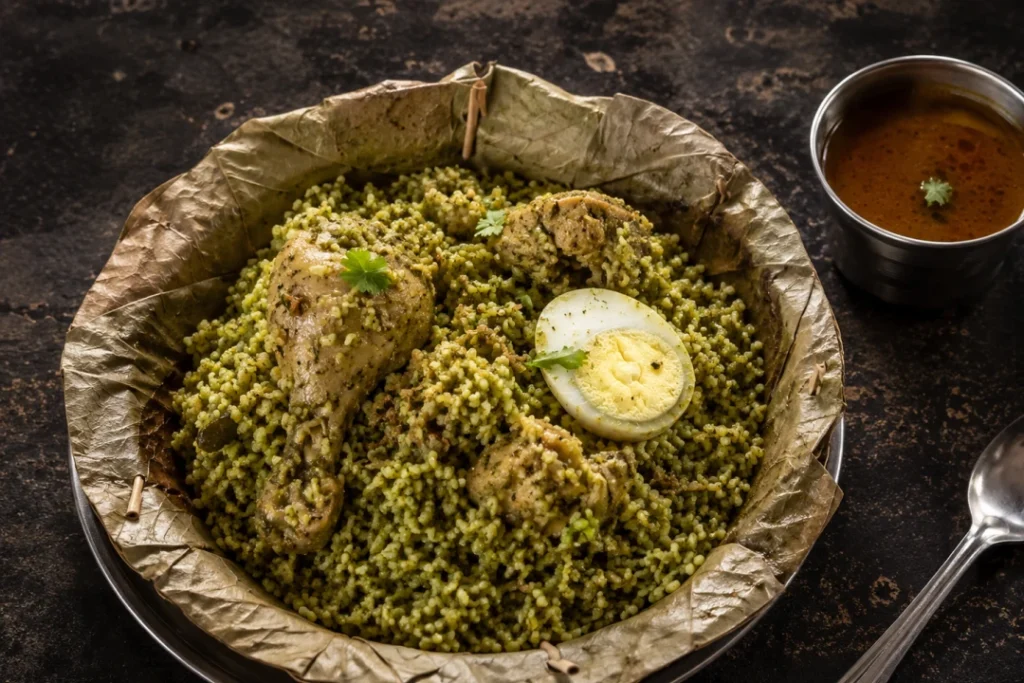
Bengaluru has a biryani of its own, and it neither looks nor tastes like any of the above.
Donne biryani takes its name from the donne, the bowl of dried palm or banana leaf it is traditionally served in, which lends the rice a faint green scent as you eat. It is made with short seeraga samba rice and a bright masala of mint and coriander that turns the whole dish a pale green, lighter and herbier than the deep browns of a dum biryani. The heat is there, but the herbs lead. Most versions keep to chicken or mutton with a boiled egg, and the good ones are judged on the rice alone, on whether each grain stays separate and stained green right to the core.
Its home is the city’s old military hotels, the no-frills eating houses that fed meat and rice to soldiers and workers, a tradition local historians trace to the arrival of Maratha forces under Shahaji Bhosale around 1638. It is fast, cheap, herb-driven food raised to an art, and it is the everyday biryani a great many Bengaluru families grew up on. How it measures up against the Andhra styles is a question worth its own page.
Salan, raita and the biryani table
A biryani rarely arrives alone, and what sits beside it is part of the dish, changing by region.
The classic partner is mirchi ka salan, a thick, nutty gravy of green chilli, peanut, sesame and tamarind that comes alongside Hyderabadi biryani, meant to be spooned over the rice. Salan is a subject in its own right, with a page of its own. Raita, cooling yoghurt with onion or cucumber, does the opposite job, calming the heat rather than adding to it. In Tamil Nadu the accompaniment is often dhalcha, a sour lentil-and-vegetable stew, while the Andhra styles bring their own fierce gravy instead. Kerala sends out a simple onion-and-lemon salad instead, and Kolkata often needs nothing at all. The sauce you are handed tells you as much about a biryani’s origin as the rice does.
Biryani at Nandhini
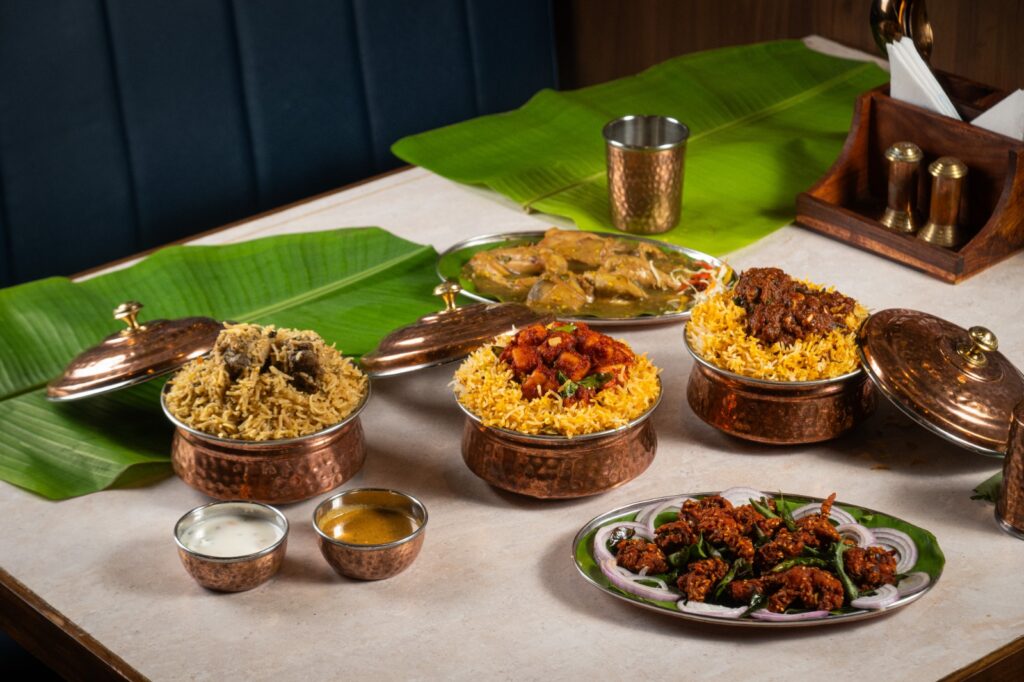
Most of these styles you will have to travel for. A few, Nandhini has been cooking in Bengaluru since 1989.
Mutton Biryani has been a signature on the menu from the early years, cooked in the Andhra manner the kitchen knows best, with Guntur chilli in the mix and the spice given room to be felt. Across 22 outlets, 20 in Bengaluru and 2 in Mysuru, it is served the way the family styles intend, with a gravy rather than an apology for the heat. Being a Bengaluru kitchen, it also sits in Donne biryani’s home city, close to the military-hotel tradition that shaped the local plate. The point is a plain one: this is a working biryani kitchen rather than a list, and it has cooked the Andhra family and eaten alongside the Donne for more than three decades.
Types of biryani in India at a glance
The major styles side by side, by region, method and rice. The Andhra family and Donne each link down to a fuller guide.
| Style | Region | Method | Rice | Defining trait |
|---|---|---|---|---|
| Hyderabadi | Hyderabad, Telangana | Kacchi, dum | Basmati | Saffron, Nizami spicing, raw-meat dum |
| Lucknowi (Awadhi) | Lucknow, UP | Pakki | Basmati | Mild and aromatic, kewra and rose |
| Kolkata | West Bengal | Pakki | Basmati | Potato and boiled egg, lightly sweet |
| Sindhi | Sindhi kitchens | Pakki | Basmati | Tangy, dried plums, green chilli, potato |
| Ambur | Vaniyambadi, TN | Pakki | Seeraga samba | Chilli-led, light masala, dhalcha side |
| Dindigul | Dindigul, TN | Pakki | Seeraga samba | Curd, lemon and black pepper |
| Malabar (Thalassery) | Northern Kerala | Pakki | Khyma (jeerakasala) | Coconut, cashew, raisin, mild-sweet |
| Andhra (family) | Andhra Pradesh | Both | Basmati / seeraga samba | Fiery, Guntur chilli, tamarind, spicy gravy |
| Guntur | Guntur, AP | Both | Basmati | The hottest of the family, chilli-forward |
| Vijayawada | Krishna delta, AP | Both | Basmati | Bold masala, rich and moist |
| Nellore | Nellore, AP | Both | Basmati | Chilli-forward, served with gravy |
| Rayalaseema | Rayalaseema, AP | Both | Basmati | Pepper-and-chilli, country meat |
| Ulavacharu | Godavari belt, AP | Pakki | Basmati | Horse-gram broth, earthy depth |
| Donne | Bengaluru, Karnataka | Pakki | Seeraga samba | Leaf bowl, mint-coriander green masala |
Frequently asked questions
How many types of biryani are there in India?
There is no fixed number. Biryani is a family of dozens of regional styles that share a layered structure but differ in rice, spice and method. The most cited include Hyderabadi, Lucknowi, Kolkata, Ambur, Dindigul, Malabar, Andhra and Donne.
What is the most famous biryani in India?
Hyderabadi biryani is the most searched and most widely served style, known for its kacchi dum method, saffron and bold spicing. Regionally, Andhra, Ambur, Kolkata and Donne biryani each command strong local followings of their own.
What is the difference between kacchi and pakki biryani?
In kacchi biryani, raw marinated meat and raw rice are sealed together and slow-cooked, so the rice absorbs the meat’s juices. In pakki biryani, meat and rice are cooked separately, then layered and finished on a low flame, giving a milder, cleaner result.
How is Andhra biryani different from Hyderabadi biryani?
Andhra biryani runs fierier, built on Guntur chillies and tamarind and often served with a spicy gravy. Hyderabadi biryani is Nizami-rooted, saffron-forward and cooked kacchi. They share a region’s history but are distinct styles from two different states.
What is Donne biryani?
Donne biryani is a Bengaluru style served in a dried-leaf bowl called a donne. It uses seeraga samba rice and a green mint-and-coriander masala, and traces to the city’s old military hotels. It is lighter and herbier than a Hyderabadi dum biryani.
If reading all this has made you hungry, the Mutton Biryani that started it is still on the menu, cooked the Andhra way across Nandhini’s 22 outlets in and around Bengaluru since 1989.