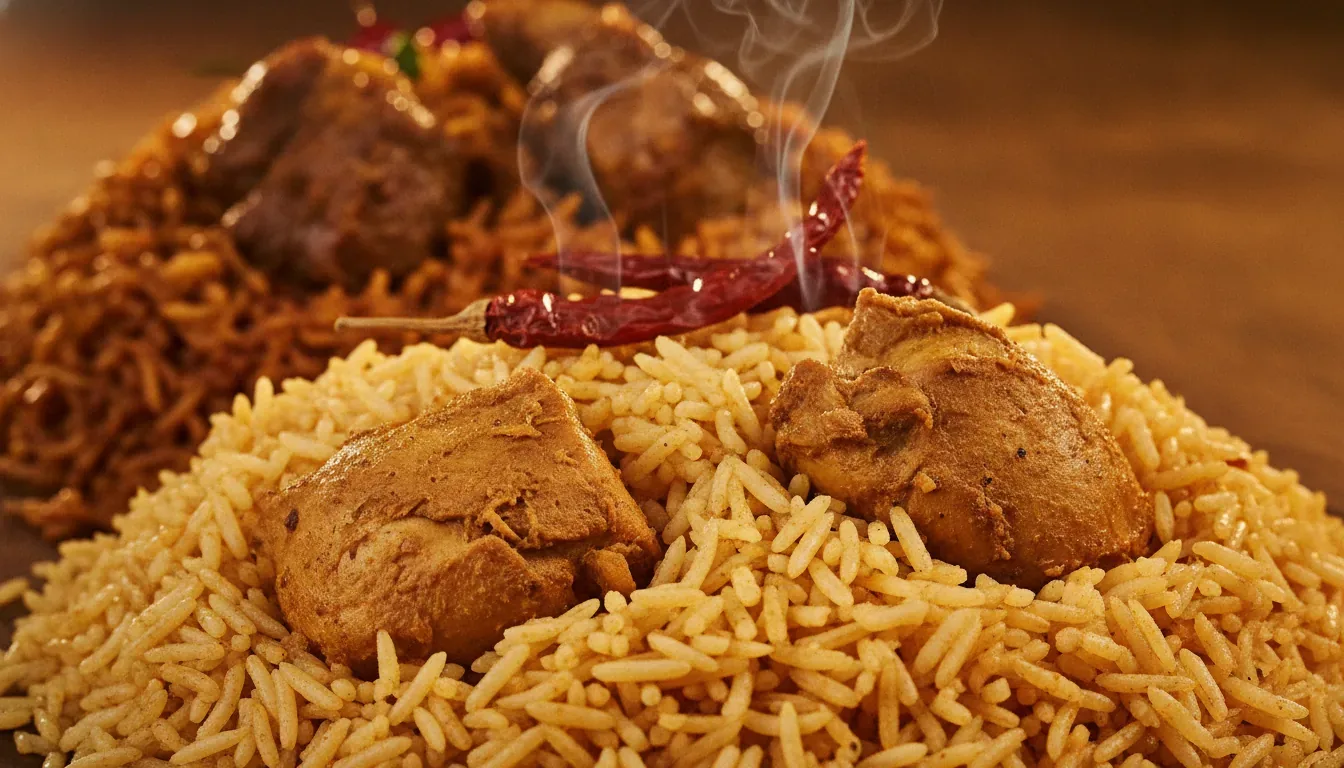
You are at the counter, or halfway down a menu, and the Guntur biryani comes in two forms. Chicken or mutton. Guntur chicken biryani and its mutton sibling share a fiery base and the same district-famous chilli, yet the two plates eat nothing alike. Most people pick on habit. The sharper question is what you actually want from the next twenty minutes of eating.
Both proteins draw their heat from Guntur chillies, grown in the Andhra Pradesh district India calls its chilli capital, where the Sannam variety runs 30,000 to 50,000 on the Scoville scale. Hold onto that shared foundation, because it turns the decision into something simpler than spice. What you are really choosing is texture, cook time, and how deep you want the flavour to run.
The short answer
Guntur chicken biryani cooks faster and eats lighter and fresher, with a cleaner bite and less fat. Guntur mutton biryani slow-cooks on the dum, holding spice deeper for a richer, more mature plate. Both ride the same Guntur-chilli heat, so the real choice comes down to texture and depth rather than how hot it gets.
Table of Contents
Chicken vs mutton, side by side
Set the two plates against the same measures and the trade-off gets clear fast. Nothing here is about which is better. It is about which one fits the meal you are ordering for.
| Guntur chicken biryani | Guntur mutton biryani | |
|---|---|---|
| Texture | Soft and juicy, quick to yield | Firm at first, then tender and falling off the bone after a long dum |
| Cook time and dum | Fast: short marination, brief dum | Slow: long marination, extended dum |
| How it takes the Guntur heat | Reads hotter up front, with less fat to soften it | Carries the heat longer as the fat rounds and holds it |
| Fat and richness | Leaner, lighter plate | Fuller and richer, more unctuous |
| Bone-in or boneless | Both common; boneless eats easy in volume | Usually bone-in, and the bone feeds the gravy |
| Best for | Weekday meals, first-timers, lighter appetites | Special occasions, bold eaters, traditionalists |
| Price band | Lower | Higher, since mutton costs more per plate |
Read the table top to bottom and one row does most of the work: the heat line. Both proteins sit on the same chilli, so what shifts between them is what the meat does to that spice, which is worth pulling apart on its own. One more line rewards a second look. Bone-in or boneless is a real sub-decision, not a detail, and aggregator listings sell both. It changes the eating: boneless is quicker and cleaner for a shared or rushed plate, while bone-in gives up more flavour to the rice and suits a slower meal. Chicken comes both ways; mutton is usually bone-in, which is part of why it eats richer.
Why the heat feels different
Here is the part the generic chicken-versus-mutton posts skip. When two Guntur biryanis come off the same base, built on the same Guntur chillies, the heat you taste is not the same heat.
Fat is the reason. Chicken carries less of it, so the chilli lands early and sharp, with little to blunt the first few bites. You register the burn quickly, right at the front of the palate, and it clears almost as fast. Mutton works the other way. Its natural fat coats the tongue and slows everything down, so the same Guntur heat arrives later, settles in, and stays well after you have swallowed. The chilli quantity can be identical in both pots. The sensation is not.
This is why a diner who finds the mutton milder is usually wrong about the recipe and right about their own mouth. The fat is doing the rounding. It softens the edge of the chilli and stretches it into something warmer and longer, while the chicken version stays bright and immediate. Want the heat to hit and go, and chicken gives you that. Want it to build and stay, and the fat in mutton is what carries it. Same chilli, two very different burns.
When to order the chicken
Order the chicken when you want the biryani to eat clean and quick. It is the lighter plate, lower in fat, and it holds its freshness even when you are working through a fair amount, which makes it the sensible weekday choice and the safer bet for anyone new to Andhra-level heat.
Chicken also gives you options mutton does not. Boneless is widely sold and eats fast, with no picking around bone, so it suits a lunch you are rushing or a plate you are sharing. If you want more character, look for natu kodi (country chicken), the leaner, firmer, deeper-tasting bird that stands up to the Guntur masala better than farmed chicken and rewards a slightly longer cook.
A couple of adjacent versions are worth knowing by name. Gongura chicken biryani folds in gongura (sorrel leaf) for a sharp, sour note layered over the chilli, cutting the heat with tang instead of dulling it. Ulavacharu chicken biryani leans on a horse-gram broth for an earthy, savoury depth. Both sit a step away from the plain version, and many Andhra kitchens list them separately, so order by name if that is what you are after. For most tables, the straight Guntur chicken biryani is the one to start with, fiery and easy to keep eating.
When to order the mutton
Order the mutton when the meal is the event. Guntur mutton biryani is a slow plate by design. The meat needs a long marination and an extended dum to turn tender, and that patience is exactly what gives it the deeper, more mature flavour and the fuller aroma a fast chicken cook cannot reach.
This is the biryani for a bold appetite and an unhurried table. The fat renders into the rice, the bone feeds the gravy, and the Guntur heat settles into something rounder and longer, for the reason set out above. It rewards eating slowly: weekend lunches, family gatherings, the plate you order when you want the biryani to be the reason everyone turned up.
Mutton also opens onto the wider Andhra mutton tradition. Gongura mamsam, the sour-hot mutton built on gongura (sorrel leaf), runs on the same instinct, letting a strong meat carry a strong flavour without either backing down. If you like your mutton biryani, that dish is a natural next order. Nandhini lists Mutton Biryani among its signatures, cooked in the Guntur-chilli idiom that defines this whole comparison, so a diner in Bengaluru weighing the two can taste the mutton case first-hand. When you want depth over speed, this is the side to land on.
What makes it Guntur, either way
Strip away the protein and both plates are built the same way, which is what makes either one a Guntur biryani in the first place. The identity comes from the chilli, not the meat.
Guntur chillies, the Sannam and hotter Teja varieties grown across Guntur and Coastal Andhra, set the heat and the deep red colour. From there the method is shared. A chilli-forward marination works spice into the protein, then comes dum, the slow layered cook where sealed rice and meat finish together and trade flavour under a tight lid. The rice is usually seeraga samba, the short aromatic southern grain that soaks up masala better than long basmati, though basmati turns up too.
That shared spine is why Guntur biryani reads as its own style, distinct from the milder, saffron-led Hyderabadi plate and from the meatier Rayalaseema styles further inland, and why it belongs to the same fierce coastal family as Vijayawada biryani. Change the protein and you change the texture and the depth. You do not change what makes it Guntur. So whichever you order, the chilli is the constant, and chicken or mutton is a decision layered on top of a style that was fierce before the meat ever went in.
Where Nandhini fits
If you are in Bengaluru and want to settle the question by tasting rather than reading, Nandhini gives you both sides on one menu. It is an Andhra house anchored in Guntur chillies, the same chilli that sets the heat in every version above, so this comparison is not theoretical for its kitchen.
Mutton Biryani sits among its signatures for the depth-and-occasion camp, with chicken options for the lighter, quicker plate. Order one of each across a table and you have run the whole comparison in a single sitting: same base, two textures, one clear preference by the end. For the broader picture of where these plates sit among the city’s Andhra biryanis, the wider Bangalore guide is worth a look before you decide.
Frequently Asked Questions
Which is spicier, Guntur chicken or mutton biryani?
Neither is meaningfully hotter, since both ride the same Guntur-chilli base. Chicken can read hotter at first bite because it holds less fat, while mutton’s natural fat rounds and carries the heat longer on the palate. The heat source is identical; the sensation differs.
Which Guntur biryani should I order, chicken or mutton?
Order chicken for a lighter, faster-cooked, fresher-tasting plate that suits weekday meals and first-timers. Choose mutton for a richer, slow-cooked dum with deeper, more mature flavour and a fuller aroma, better for a special meal or a bolder appetite.
What makes a biryani ‘Guntur’ style?
Guntur style takes its identity from Guntur chillies, grown in the district known as India’s chilli capital. The result is a fierier Andhra biryani built on marination and dum layering, distinct from the milder, saffron-led Hyderabadi style. The chilli, not the protein, defines it.
Is Guntur chicken biryani the same as gongura chicken biryani?
No. Guntur chicken biryani leads with Guntur-chilli heat. Gongura chicken biryani adds gongura (sorrel leaf) for a sharp, tangy note layered over that heat. They share an Andhra base but sit apart in flavour, and many kitchens offer both separately.
Can I get both chicken and mutton Guntur biryani in Bangalore?
Yes. Andhra restaurants in Bengaluru serve both proteins in the Guntur idiom, usually offered as bone-in or boneless. Nandhini Deluxe, a Guntur-chilli-anchored Andhra chain, lists Mutton Biryani among its signatures alongside chicken options, so both sit one order away.
The honest answer is that there is no wrong order, only a wrong match for your appetite that day. Chicken for light and quick, mutton for deep and slow, with the same Guntur heat under both. If you are in Bengaluru, Nandhini serves both in the Guntur-chilli idiom across its outlets, and the menu is the fastest way to decide.