Ordering chicken biryani comes down to one quick choice that changes the whole plate: bone-in or boneless. Most guides tell you both are good and leave you exactly where you started. This one gives you a straight answer.
Bone-in wins on deep, traditional flavour and a slow, satisfying meal. Boneless wins on speed, clean eating, kids, and office lunches. The rest of this guide shows you why, when each one is the better order, which cut to look for, and how to order the right style in Bangalore.
The quick verdict
Short on time? Choose bone-in chicken biryani when flavour and a relaxed meal matter most. Choose boneless when you want fast, mess-free eating, or you are feeding kids and older family members. Here is the side by side.
| Factor | Bone-in biryani | Boneless biryani |
|---|---|---|
| Flavour | Deeper and more traditional; the bone adds richness | Even and masala-forward; leans on the marinade |
| Texture | Varies bite to bite; juicy near the bone | Uniform and fork-friendly |
| Ease of eating | Slower; you work around the bones | Fast and mess-free |
| Best cut | Thigh, leg, or drumstick | Boneless thigh, not breast |
| Delivery | Holds moisture well over travel time | Best eaten soon after it arrives |
| Kids and elders | Needs more care | Easy to chew and portion |
| Best for | Home meals, flavour lovers, tradition | Office lunch, kids, quick clean eating |
Bone-in vs boneless biryani: the core difference
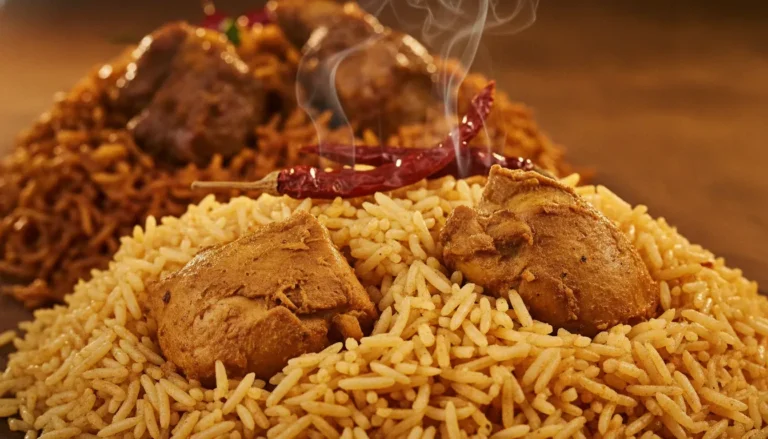
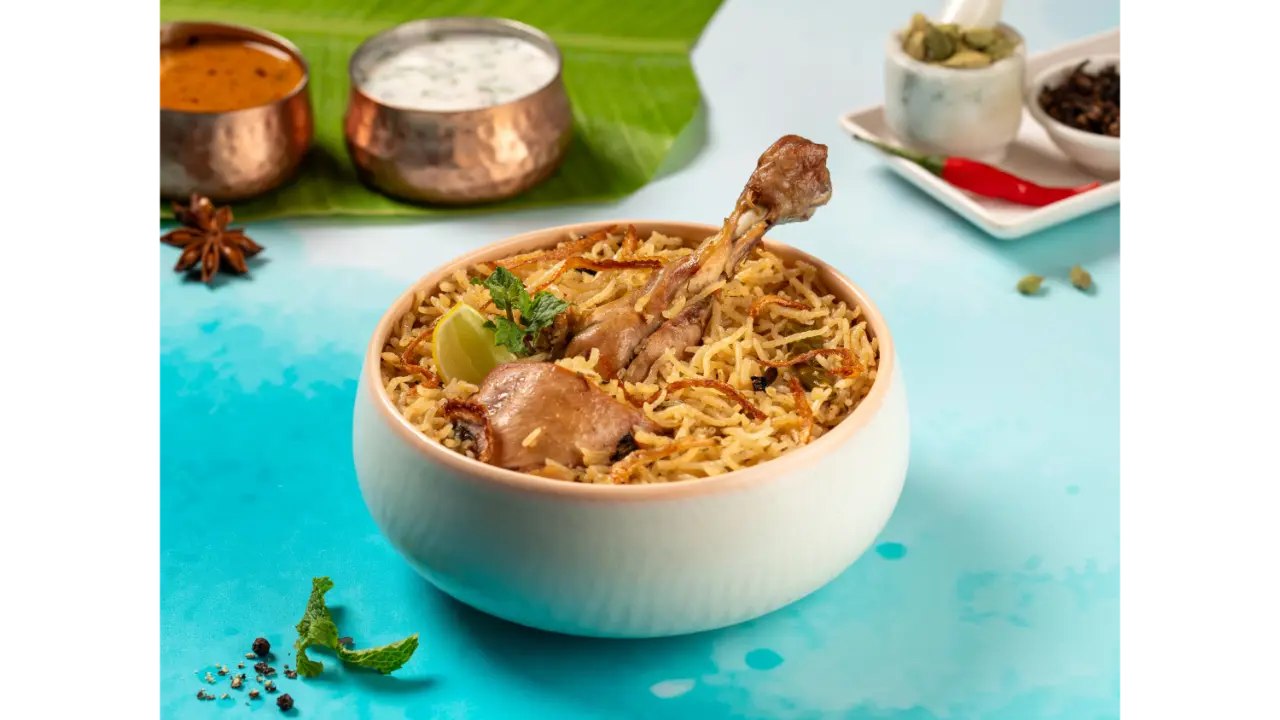
Bone-in biryani uses chicken pieces cooked on the bone, usually thighs, legs, or curry-cut pieces. The meat, bone, and connective tissue cook together with the masala and rice.
Boneless biryani uses chicken without bones, cut into cubes or bite-sized chunks, marinated and layered with the rice.
Two things actually change between them: how the flavour develops during cooking, and how easy the biryani is to eat once it is served. Spice level, rice fragrance, and aroma come down to the recipe and the cook, not to the bone.
Does chicken biryani have bones?
Traditionally, yes. Most classic biryani, including Hyderabadi and Andhra styles, is made with bone-in chicken, because the bone adds flavour during slow dum cooking.
That said, boneless chicken biryani is common now at restaurants and for delivery, made with cubed chicken for easy eating. So the honest answer is simple: biryani is bone-in by tradition, but you can order either. If bones are a problem for you, ask for a boneless-labelled item when you order.
Taste and aroma: which is more flavourful?
On flavour, bone-in usually has the edge. During cooking, collagen and marrow from the bone melt into the masala and rice, which builds a deeper, rounder, more traditional chicken taste. Slow dum cooking gives the bone time to do this, which is why many home cooks and restaurants still prefer bone-in for a classic biryani.
You often notice the difference the moment you open the box. Bone-in tends to smell more chicken-forward, while boneless smells more of the masala and spice blend.
Boneless is not far behind, and it is not less tasty. Because the cubes are coated evenly, every bite carries a consistent hit of masala. What boneless leans on is the marinade and spice, since it does not get the bone’s contribution. The trade-off is depth for evenness.
A quick note on nutrition: both bone-in and boneless chicken biryani are high in protein. Some food writers point out that bone-in cooking also releases small amounts of minerals such as calcium and phosphorus into the gravy, though the difference on a plate is modest. If protein is your goal, either style works.
Texture, juiciness, and the cut that matters
Texture is where the choice shows up most, especially after delivery. Bone-in pieces vary bite to bite: some are tender near the bone, some have more chew, and the meat often stays juicy because the bone holds heat and moisture. Boneless is uniform and fork-friendly, easy to eat quickly with no separating meat from bone.
Here is the part most guides skip: the cut matters more than the bone. Chicken thigh, bone-in or boneless, stays juicy because it has more fat and connective tissue. Chicken breast dries out fast, especially boneless, if it is cooked a minute too long. So a good boneless biryani is usually made with thigh, not breast. If a boneless biryani ever felt dry, the cut was the likely reason, not the missing bone.
Delivery note: bone-in tends to hold moisture better over travel time. Boneless is best eaten a little sooner after it arrives, and it helps to fluff the rice gently so trapped steam does not soften everything.
Which chicken cut is best for biryani?
For flavour and juiciness, bone-in thigh and leg pieces are the usual favourites. They handle slow cooking well and stay moist. For boneless, thigh meat is the better pick over breast for the same reason: it resists drying.
Drumsticks are popular for bone-in biryani because they are easy to hold and full of flavour. Breast works if you like leaner meat, but it needs careful timing. If you are choosing at a restaurant, thigh-based pieces, bone-in or boneless, are the safer bet for a juicy plate.
One more practical point: bone-in pieces take a little longer to cook through, which is why kitchens that do bone-in well tend to cook in smaller, slower batches.
What about dum biryani?
Dum biryani comes up a lot in this debate, so here is the short version. Dum is a cooking method, not a cut. The pot is sealed and the biryani finishes in its own trapped steam, which is what builds that layered aroma.
Both bone-in and boneless biryani can be made dum style. So a chicken dum biryani may be bone-in or boneless depending on the kitchen. Hyderabadi dum biryani is traditionally bone-in, but many places now offer a boneless dum version for easier eating. If the cut matters to you, the word dum on the label will not tell you whether there are bones, so check the description or ask.
Convenience and mess: office, travel, kids
Convenience is a real reason people pick one over the other, because biryani is often a one-box meal.
Boneless is the easier order when you are eating at your desk, you have a short lunch break, you are using only a spoon and fork, or you would rather not deal with bones and napkins.
Bone-in suits a relaxed setting: eating at home, taking your time, and going for that fuller, traditional experience.
For kids and older family members, boneless is usually the safer choice, since it is easy to chew and portion with no bones to manage. Bone-in can work too; it just needs more attention for young children. For travel or eating in the car, boneless keeps things clean and low-fuss. Save bone-in for when you can sit and enjoy it.
Which should you order? A quick decision guide
Use one rule: decide what matters most for this meal.
Choose bone-in if you want deeper flavour, a traditional feel, varied texture, and a slower, relaxed meal. Choose boneless if you want clean, quick eating, consistent pieces, office-friendly convenience, and easy sharing with kids and elders.
Whichever you pick, a bowl of raita or curd on the side balances the spice.
| Occasion | Best pick | Why |
|---|---|---|
| Office lunch | Boneless | Fast and mess-free at your desk |
| Family dinner | Bone-in, or mix both | Richer and less rushed; order one of each for mixed tables |
| Kids | Boneless | Easy to chew and portion, no bones to manage |
| Group or party | Mix both | Boneless goes fast; bone-in pleases the traditionalists |
| Travel or car | Boneless | Clean and low-fuss on the move |
| Solo comfort meal | Your preference | Bone-in for flavour, boneless for ease |
Price and portion: does bone-in give you more?
A common worry is whether bone-in biryani gives you more chicken for the money. Not necessarily. Bone-in pieces weigh more because of the bone, so a heavier portion is not always more meat. Boneless is all edible chicken, which can mean less waste on the plate even if the piece count looks smaller.
Prices depend on the restaurant and the portion size, not on the bone alone. If you are ordering for a group and want easy, predictable servings, boneless portions are simple to divide. If you want the fuller, hearty look and do not mind the bones, bone-in feels more generous. Judge by the stated weight or piece count, not by whether there is a bone.
How to order the right biryani in Bangalore
Menus do not always say bone-in or boneless, which is the most common ordering headache. A few practical tips make it easy.
- Check the item name and description first. Boneless items are often labelled boneless, or described as cubed or tikka-style. If it just says chicken biryani, it is often bone-in or mixed.
- If it is not clear, ask before you order, especially for kids or a quick lunch.
- For delivery, boneless travels and eats more easily. For a sit-down meal, bone-in is worth the slower pace.
- Add raita, and for a group, order both styles so everyone is covered.
Nandhini Deluxe is an Andhra restaurant chain in Bangalore, with 22 outlets across Karnataka, and you can order biryani for takeaway, dine-in, or delivery through Swiggy and Zomato. If you want a specific style, check the menu listing or ask the outlet whether a biryani is bone-in or boneless before you place the order. [FACT-GAP: confirm from the current menu which Nandhini biryani items are offered boneless vs bone-in, and their portion sizes.]
Call to action: Order Nandhini biryani on Swiggy or Zomato, or visit your nearest outlet in Bangalore.
Common myths, cleared up
- Myth: boneless biryani is always dry. Reality: dryness comes from using breast or overcooking, not from removing the bone. Thigh-based boneless stays juicy.
- Myth: bone-in always means more chicken. Reality: the bone adds weight, not always more meat.
- Myth: boneless is not real biryani. Reality: boneless dum biryani is a genuine, popular style. The cooking method is what makes it biryani.
- Myth: dum biryani is always one or the other. Reality: dum is a slow-steam method, not a cut, so it can be bone-in or boneless.
Add-ons that pair well with each
Keep add-ons simple so they support the biryani instead of competing with it. Raita or curd cools the spice and works with both styles. A crunchy side adds contrast if you like it.
For boneless, keep it light so the rice stays separate, and skip piling on extra gravies. For bone-in, which already tastes rich, onion and lemon on the side is usually enough. Add extra rice only if you like a longer mix.
Leftovers and reheating
Reheat gently and keep the biryani covered so it holds moisture. Avoid high heat, which dries out both the rice and the chicken. Bone-in pieces reheat well because they hold moisture around the bone. Boneless reheats fine too; just go slow and low.
FAQs: bone-in vs boneless chicken biryani
Which is better, boneless or bone-in chicken biryani?
Bone-in is generally more flavourful and traditional; boneless is easier and quicker to eat. Pick bone-in for taste and a relaxed meal, boneless for convenience, kids, and delivery.
Does chicken biryani have bones?
Traditionally yes, most biryani is made bone-in, but boneless chicken biryani is widely available at restaurants and for delivery. Check the menu or ask if you want a specific style.
Is boneless chicken biryani less flavourful?
Not really. Boneless can be very flavourful because the masala coats each piece evenly. Bone-in just adds extra depth from the bone during cooking.
Which chicken cut is best for biryani?
Thigh and leg pieces, bone-in or boneless, stay juiciest. Breast is leaner and dries out faster, so it needs careful cooking.
Is chicken dum biryani boneless or bone-in?
Dum biryani can be either. Dum refers to the sealed, slow-steam cooking method, not the cut, so both bone-in and boneless can be cooked dum style.
Which is better for kids?
Boneless is usually better for kids because it is easy to chew and portion, with no bones to manage.
Does bone-in biryani come with more chicken?
Not always. Bone-in pieces can look larger because of the bone, while boneless is all edible meat. Portions depend on the restaurant, so choose by preference, not by assuming one gives you more.
Bone-in or boneless: the final call
Bone-in and boneless chicken biryani are both good orders; they just suit different moments. Order bone-in when you want classic flavour and a slow, satisfying meal. Order boneless when you want quick, clean eating, or you are feeding kids and a busy office table.
If you are still unsure for a group, order one of each and let everyone pick. Next time you order in Bangalore, check whether the biryani is bone-in or boneless first, and you will get exactly the plate you wanted.