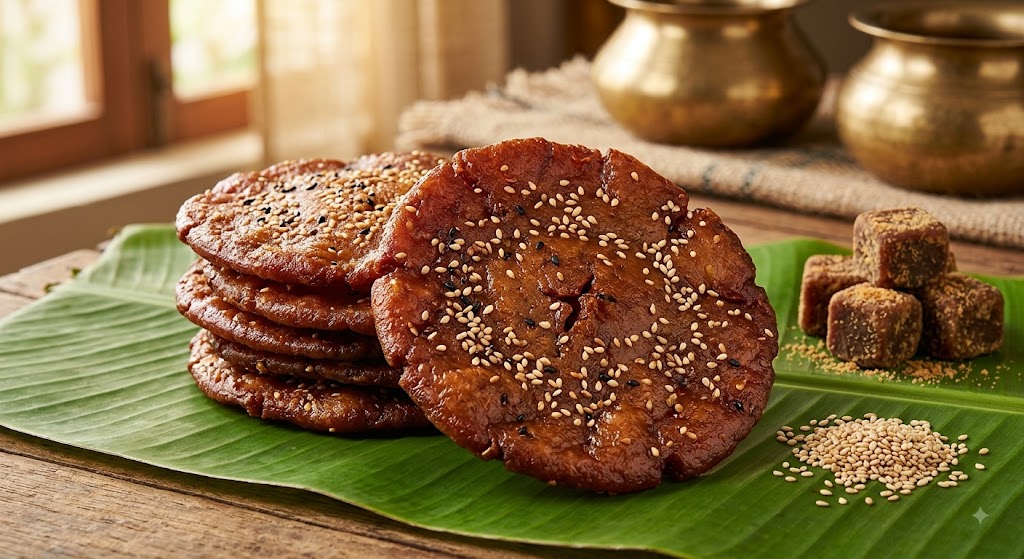
Watch someone in an Andhra kitchen fry ariselu and you notice the pause. One disc of jaggery-dark dough goes into low oil, then comes up between two spoons that press it flat, oil running out in a thin stream. That press is half the skill. Ariselu is a rice-and-jaggery sweet made across Andhra Pradesh and Telangana for Makara Sankranti, and it has earned a quiet reputation for going wrong. It dissolves in the oil. It drinks oil. It sets rock-hard the next day. Almost always the reason is the jaggery, and almost always it is fixable. This page sets out what ariselu is, how it is made, and why it fails.
Ariselu is a deep-fried sweet from Andhra Pradesh and Telangana, made from rice flour and jaggery and often finished with sesame or ghee. Cooks grind soaked rice, cook jaggery to the soft-ball stage, bind the two into a dough, shape discs and fry them on a low flame. It is the classic Sankranti sweet of the two Telugu states.
Table of Contents
One sweet, many names
The same sweet answers to a different name in almost every southern and eastern kitchen. What Telugu families call ariselu, Tamil cooks call adhirasam or athirasam, and the two are the same rice-and-jaggery disc down to the frying method. Move the map and the name shifts again: kajjaya in Kannada, anarsa in Marathi, arisa pitha in Odia, airsa in Chhattisgarhi. The differences sit at the edges. Tamil adhirasam often carries cardamom and dried ginger and leans towards Diwali; Marathi anarsa is pressed onto poppy seeds; the Andhra and Telangana ariselu belongs to Sankranti and frequently wears a coat of sesame. Underneath, the dish is one: rice ground to flour, jaggery cooked to a syrup, the two worked into a dough and fried. If a recipe under any of these names looks familiar, that is because it is the same sweet wearing a different accent.
| Name | Language (region) | Notes |
|---|---|---|
| Ariselu | Telugu (Andhra Pradesh, Telangana) | The Sankranti form; often sesame-coated |
| Adhirasam / athirasam | Tamil (Tamil Nadu) | Diwali and temple offering; spiced |
| Kajjaya | Kannada (Karnataka) | Festival sweet, same method |
| Anarsa | Marathi (Maharashtra) | Diwali sweet, pressed onto poppy seeds |
| Arisa pitha | Odia (Odisha) | Festival and ritual sweet |
| Airsa | Chhattisgarhi (Chhattisgarh) | Regional cousin of the same dish |
Why ariselu is hard to get right
Ask anyone who has made ariselu once and given up, and the story is the same. The first disc goes into the oil looking perfect, and within seconds it loosens at the edges, spreads, then breaks apart into the pan. Or it holds its shape but comes out heavy and greasy, oil sitting in it like a sponge. Or it fries up fine and then, by the next morning, has set so firm it takes real effort to bite.
None of these is a frying accident. All three trace back to one earlier step: the jaggery. Cook the syrup a shade too far and the dough turns brittle and splits. Stop it short and the dough stays loose and soaks oil. Rush the grind so the rice flour is coarse, and the same thing happens. The frying is where the fault shows up, but the fault is set before the oil is ever hot. That is the part most recipes skate over, and the part worth getting exactly right.
What ariselu is made of
Ariselu is built from a short list, which is exactly why the proportions matter so much.
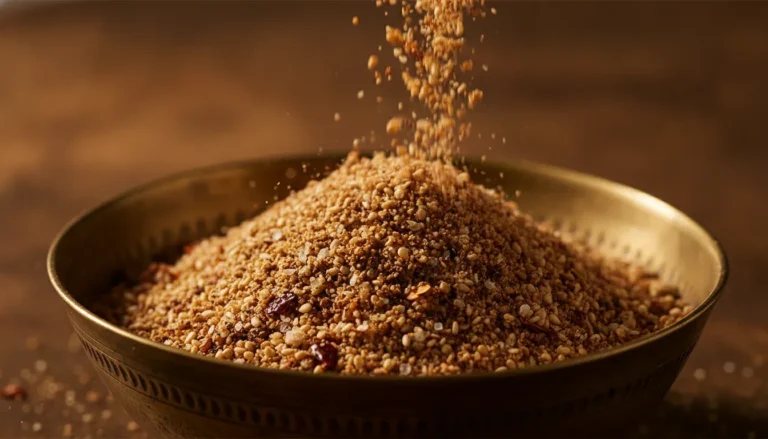
Rice is the body. Raw rice is soaked, drained, shade-dried until just damp, then ground to a flour that should feel fine between the fingers, not gritty. Jaggery (bellam) is the sweetness and the binder both. It is cooked with a little water to a syrup, and the stage that syrup reaches decides whether the sweet holds together at all. Sesame seeds (nuvvulu) go on the outside or through the dough for a nutty crackle. Ghee (neyyi) or oil does the frying, and the choice is not trivial: ghee-fried ariselu stays soft and rich, oil-fried turns firmer and semi-crisp. Some cooks add a pinch of cardamom, dried ginger or pepper, more common in the Tamil adhirasam than the Andhra version.
Two names cover the main variants. Nuvvula ariselu is the sesame-coated one, the most common on the Sankranti plate. Bellam ariselu is the plainer jaggery version without the sesame jacket. Neither is difficult. Both live or die on the same two things: the fineness of the rice flour and the stage of the jaggery syrup.
How ariselu is made
The method has not changed much across generations, and every step earns its place. Read it through once before starting, because the timing of the jaggery does not wait for you to look things up.
- Soak the rice. Rinse raw rice and soak it for four to six hours, then drain it well.
- Dry it. Spread the drained rice on a cloth in the shade until it is dry to the touch but still holds a trace of moisture, usually thirty to forty minutes. Fully sun-dried rice grinds too coarse.
- Grind and sieve. Grind the rice to a flour, then sieve it and grind the coarse bits again. You want it fine and even; coarse flour is the single most common cause of oil-soaked ariselu.
- Make the jaggery syrup. Melt grated jaggery with a splash of water and cook it to the soft-ball stage, around 112–115 °C. Drop a little into cold water: it should gather into a soft ball you can roll between your fingers. This stage is the whole recipe. Under it, the dough stays loose; over it, the sweet turns hard and splits.
- Mix the dough. Work the rice flour into the hot syrup at roughly three parts flour to one part syrup by volume, adding a spoon of ghee and the sesame seeds. It should come together as a soft, pliable dough.
- Rest it. Cover the dough and let it rest for a few hours, or overnight, which relaxes it and makes shaping far easier. The un-fried dough at this stage is called chalimidi, and it can be eaten as it is.
- Shape. Take a lump and flatten it on a greased sheet or a banana leaf into a disc four to six millimetres thick.
- Fry low and slow. Slide each disc into oil or ghee on a low flame, let it puff and turn golden brown, and turn it once. High heat browns the outside before the inside cooks.
- Press out the oil. Lift each fried disc and press it between two flat spoons or ladles the moment it leaves the pan, squeezing the excess oil back in. This one habit is why a good ariselu is rich rather than greasy.
Why it splits or drinks oil
Every ariselu problem is really a jaggery problem or a flour problem, and once you can read which, the fix is quick. Here is the short diagnostic most recipes leave out.
| Problem | Why it happens | Fix |
|---|---|---|
| Splits or dissolves in oil | Too much jaggery, or syrup cooked past the soft-ball stage, so the dough has no structure | Cook the syrup only to soft-ball; if the dough is already loose, work in a little more fine rice flour, or a spoon of maida, before shaping the next disc |
| Absorbs too much oil | Coarse rice flour, syrup under-cooked below soft-ball, or moisture left in the dough | Grind and sieve the flour fine; cook the syrup fully to soft-ball; fry on a low flame and press each disc between two spoons |
| Turns hard the next day | Syrup cooked past soft-ball, or too little ghee in the dough | Stop the syrup at soft-ball and add a little more ghee; ghee-fried batches stay softer than oil-fried |
| Browns outside, raw inside | Oil too hot | Lower the flame; ariselu needs slow frying to cook through |
| Will not hold a disc shape | Dough too warm or too loose | Rest the dough longer and shape on a greased sheet or banana leaf; chill it briefly if the kitchen is hot |
The rescue worth remembering: if a disc splits the moment it hits the oil, do not keep frying the rest and hoping. Pull the dough back, knead in a spoonful of fine rice flour (a little maida works in a pinch), and try one test disc before committing the batch. A loose dough only gets looser in hot oil.
Storage and make-ahead
Ariselu keeps well, which is part of why it suits a festival that runs across several days. Fried and cooled completely, it stores in an airtight container at room temperature for about two weeks. It firms up a little after the first day and softens again in the warmth of the kitchen, so a batch made two or three days before Sankranti is fine.
The bigger make-ahead trick is the dough. The un-fried chalimidi keeps for roughly a month in the fridge, so many cooks make the dough well in advance and fry in small batches as they are needed, fresh each time. Fry only what will be eaten within a fortnight, and keep the rest as dough.
Ariselu at Sankranti in Andhra and Telangana
Ariselu belongs to Makara Sankranti, the harvest festival that marks the sun turning northward in mid-January. In Andhra Pradesh, Telangana and the Rayalaseema region, it is one of the Sankranti sweets that defines the festival table, made in quantity in the days around Bhogi and Sankranti and shared across households. The new season rice and fresh jaggery are both in hand at exactly this point in the year, which is no coincidence: the sweet is a harvest sweet, built from what the harvest brings.
It appears at Deepavali too, and the Tamil adhirasam shows up at Diwali and as a temple offering, which places the dish inside a much older tradition. References to adhirasam turn up in medieval Tamil feasts under the Cholas, and the sweet features in Vijayanagara-era accounts around Krishnadevaraya’s court. A rice-and-jaggery sweet fried in ghee was festival and temple food centuries before it was a recipe blog. That long backstory is part of why ariselu still carries the weight it does on a Sankranti plate, and why it tends to be made the careful, old way rather than shortcut.
Where Nandhini fits
Nandhini has cooked Andhra food in Bengaluru since 1989, when Shri N. Ananda opened the first outlet at Minerva Circle and made it the city’s pioneering Andhra restaurant chain. Across the decades that followed, the kitchen has become a fairly reliable reference point for how Andhra and Telangana food is made and where each dish sits in the wider spread, festive sweets included.
Ariselu is not on that table. It is a home and sweet-shop sweet, made for Sankranti rather than served in a restaurant, and Nandhini neither makes nor sells it. What the kitchen does serve is the rest of the Andhra and Telangana table the festival sits within, the meals and biryanis that share the same regional roots. On a dish like ariselu, think of Nandhini less as the cook and more as the place that knows where it belongs.
Frequently asked questions
Is ariselu the same as adhirasam?
Yes. Ariselu in Telugu and adhirasam or athirasam in Tamil are the same rice-and-jaggery sweet. It is also kajjaya in Kannada, anarsa in Marathi and arisa pitha in Odia. The regional names differ, but the dish is one.
Why does ariselu split or dissolve in oil?
Usually too much jaggery, or syrup cooked past the soft-ball stage. The dough loses its structure and breaks apart in the oil. Knead a little fine rice flour, or a spoon of maida, into the dough to firm it before shaping the next disc.
Why do ariselu absorb too much oil?
Coarse rice flour, syrup cooked short of the soft-ball stage, or moisture left in the dough all make ariselu drink oil. Grind the flour fine, cook the syrup fully, fry on a low flame and press each disc between two spoons straight from the pan.
Which festival is ariselu made for?
Chiefly Makara Sankranti in Andhra Pradesh and Telangana, when families make it together from the new rice and jaggery. It is also prepared for Deepavali, and the Tamil form, adhirasam, appears at Diwali and as a temple offering.
How long does ariselu stay fresh?
Kept airtight at room temperature, ariselu stays good for about two weeks. The un-fried rice-and-jaggery dough, called chalimidi, keeps roughly a month in the fridge, so many cooks make the dough ahead and fry it in small batches as needed.
What is the difference between nuvvula ariselu and bellam ariselu?
Nuvvula ariselu is coated or mixed with sesame seeds (nuvvulu) for a nutty crunch, while bellam ariselu is the plain jaggery version without them. Separately, ghee-fried ariselu stays soft and rich, whereas oil-fried turns firmer and semi-crisp.