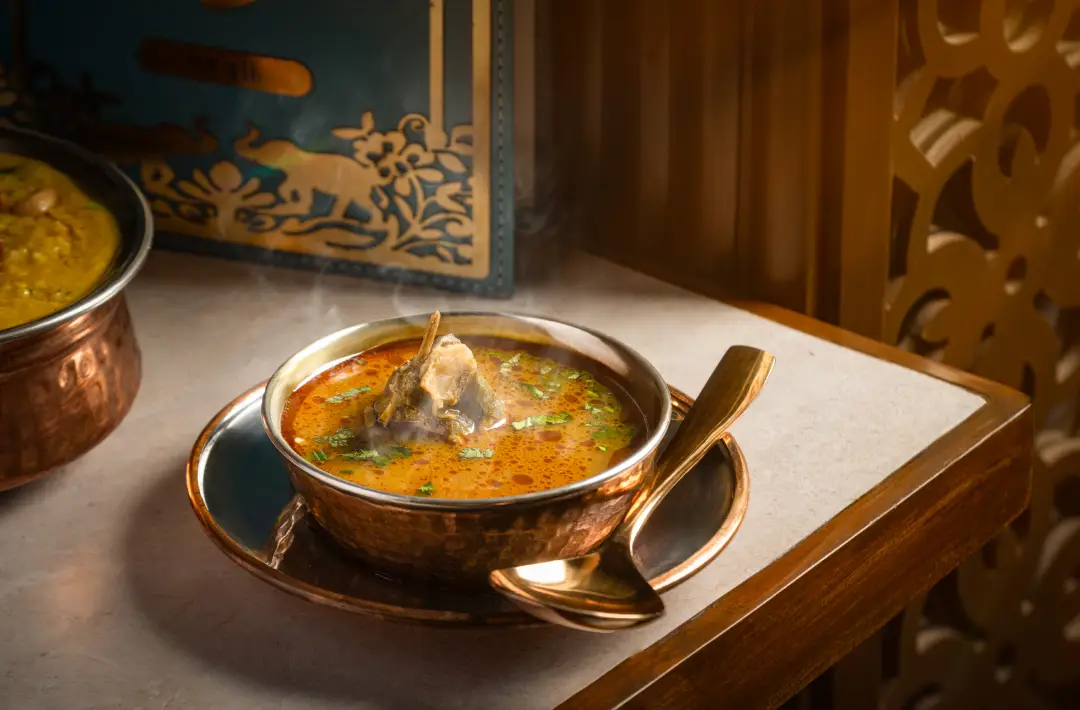
Bangalore has more Andhra restaurants per square kilometre than any city outside Andhra Pradesh. Yet most people who eat at one every week still can’t explain what makes Andhra food different from “South Indian food.” That gap between familiarity and understanding is exactly what this guide fills.
Andhra food in Bangalore is not a single dish or a single restaurant. It’s an ecosystem meals served on banana leaves, biryani built on Guntur chillies, breakfast items you won’t find at any generic tiffin centre, and a spice philosophy that treats heat as structure rather than spectacle. This city has been eating it since the late 1980s, and the cuisine has shaped Bangalore’s food culture as much as Bangalore has shaped how Andhra food is served.
What follows is the complete reference: what makes it different, what to eat in each category, how to handle the spice, and where to find it in your part of the city. Written by a kitchen that’s been serving it here since 1989.
What Makes Andhra Food Different from Other South Indian Cuisines
Three things define Andhra cuisine, and they show up in every dish on the table.
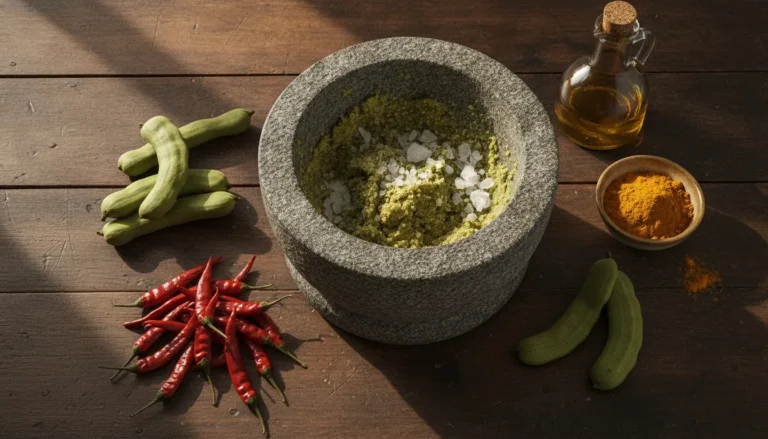
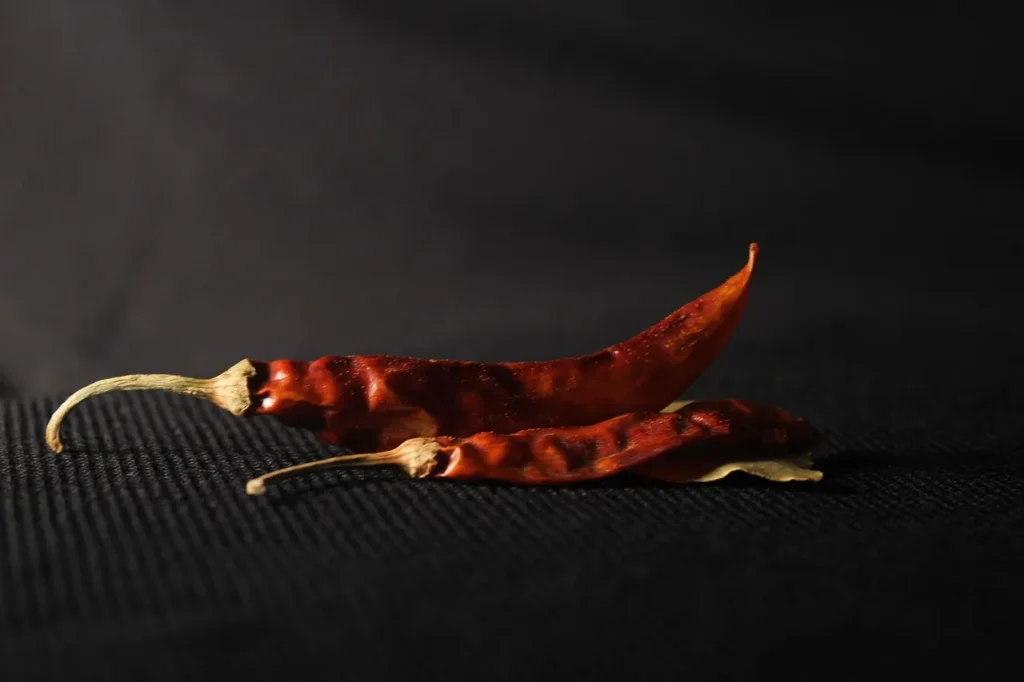
First, the chilli. Andhra Pradesh produces over 75 per cent of India’s red chillies, and the Guntur Sannam variety – 30,000 to 50,000 on the Scoville scale is the backbone. This isn’t heat for the sake of heat. Guntur chillies carry a fruity, almost smoky undertone that builds flavour alongside intensity. Tamil cuisine leans on black pepper and sambar powder; Karnataka food centres on byadgi chillies (milder, more colour than punch). Andhra cooking uses chillies the way French cooking uses butter structurally, in everything, as a foundation rather than a finishing touch.
Second, tamarind. Where other South Indian kitchens might use tomato or coconut as their souring agent, Andhra cooking runs on tamarind. It’s the base of pulusu (a tangy stew), charu (a thinner broth served toward the end of a meal), and pulihora (tamarind rice). The tang doesn’t compete with the chilli it counterbalances it. That interplay between sour and hot is the signature of the Andhra cuisine tradition.
Third, the rice-centred meal system. Everything on an Andhra plate is designed to be mixed with rice, and the order matters. You start with podi (spiced powder) and ghee on hot rice. Then pappu (lentil stew). Then a koora (curry) or vepudu (dry fry). Then charu or rasam. Then curd to cool everything down. It’s not a buffet where you grab what you like it’s a sequence, and each stage prepares your palate for the next.
And then there are the accompaniments that exist nowhere else: gongura pachadi (sorrel leaf chutney with a sour bite), avakaya (raw mango pickle aged in mustard and chilli), and a rotating cast of podis ground fresh from sesame, peanut, or curry leaf. We source our Guntur chillies directly from Andhra Pradesh – the same variety, the same grade, since 1989. The the spices behind the flavour haven’t changed because the land hasn’t changed. You can also read more about Guntur chilli heat levels to understand the science behind the fire.
Andhra Meals: The Rice-and-Sides Experience
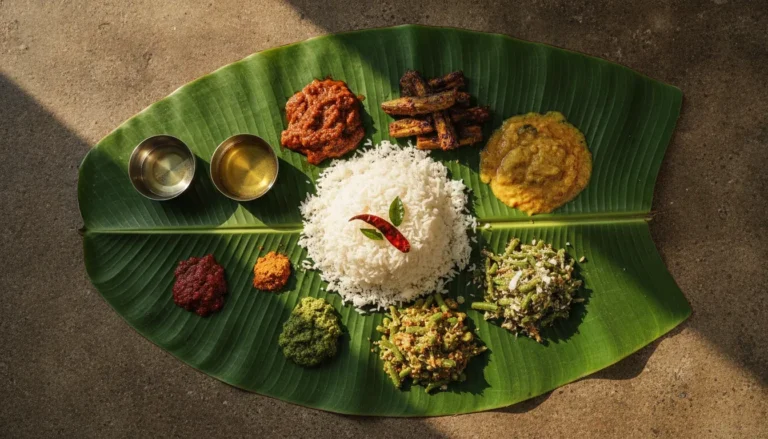
An Andhra meal – bhojanam – is not a plate of food. It’s a system. Unlimited rice arrives at the centre. Around it: pappu (dal), two or three koora (curries, one dry and one gravy), charu or rasam, podi with ghee, pachadi (a chutney or relish), pickle, papad, curd, buttermilk, and a sweet to close. The non-veg version adds a piece of chicken or mutton curry. The veg version doesn’t feel like it’s missing anything – it has its own identity.
The eating order isn’t random. Podi-ghee-rice first, because it’s dry and sharp and wakes up your appetite. Pappu next – mild, creamy, a bridge. Then the koora, where the spice begins to climb. Charu comes late, almost as a palate cleanser. Curd rice last, to cool everything down. Skip the order and you’ll still eat well. Follow it and you’ll understand why people who grew up on this food eat it every single day without getting bored.
If this is your first time, start with pappu-rice and work outward. For the full breakdown of what goes on a thali and why, see our complete thali menu breakdown. For dedicated veg and non-veg guides, there’s the best Andhra meals in Bangalore page.
Andhra Biryani: Spicier, Bolder, Different
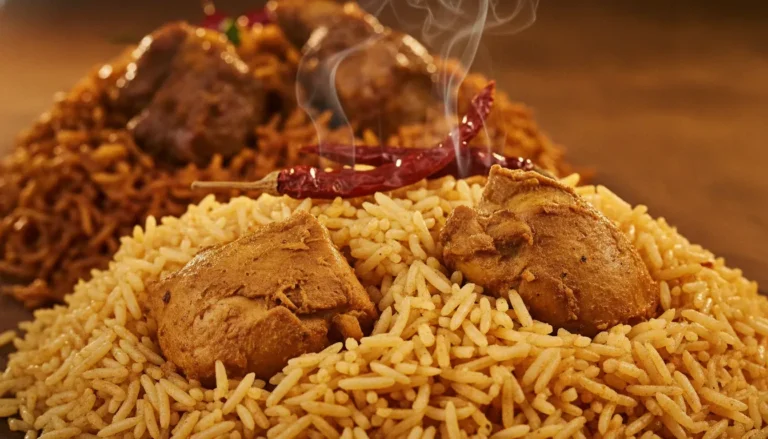
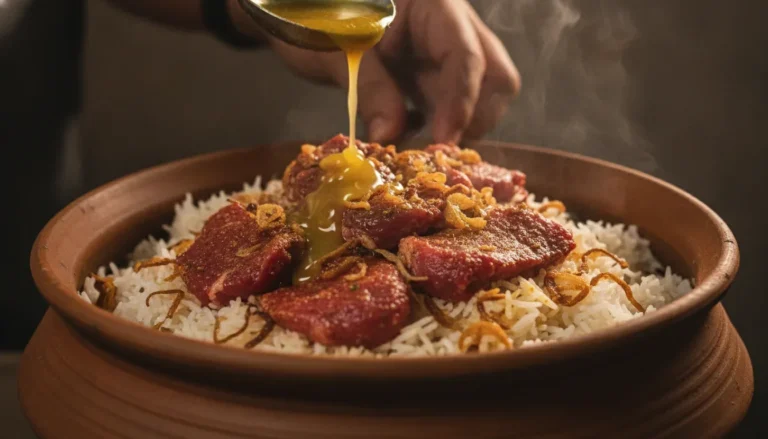
Andhra biryani and Hyderabadi biryani share a state but not a recipe. Hyderabadi biryani is a Mughal-lineage dish – layered, dum-cooked, aromatic with saffron and kewra water, designed so the rice stays white in parts. Andhra biryani is hotter, drier, and built on the pakki (pre-cooked) method. The rice absorbs the masala colour completely. The spice doesn’t hide behind aromatics it leads.
Regional variants matter. Nellore-style biryani is coconut-milk-based, milder. Vijayawada biryani packs the most heat. Ulavacharu biryani uses a horse gram broth as the cooking liquid, giving the rice a darker colour and an earthy depth you won’t find anywhere else. Each style has a loyal following in Bangalore.
One practical advantage: Andhra biryani survives delivery better than most. The drier grain structure and the absorbed masala mean it doesn’t steam into mush inside a container the way wetter, layered biryanis can. If you’re ordering in, this is the biryani that arrives the way it left the kitchen.
Andhra Breakfast: Beyond Idli and Dosa
Every South Indian kitchen serves idli and dosa. Andhra kitchens serve pesarattu a crispy dosa made from whole green moong dal, not rice batter. It’s nuttier, denser, and packed with protein. Upma pesarattu folds a layer of semolina upma inside the dosa, turning breakfast into a two-course meal in one item. You will not find this at a Darshini or a Sagar.
Then there’s punugulu – deep-fried idli batter balls, golden and crunchy outside, pillowy inside. Podi idli – steamed idlis broken apart and tossed in kandi podi (roasted lentil powder) and ghee until every surface is coated in heat and crunch. Pulihora tamarind rice that doubles as breakfast, snack, or temple offering. These items define the Andhra morning, and they’re the easiest way to taste the cuisine without committing to a full meal.
For the full guide to where and what to eat for an Andhra morning in the city, see Andhra breakfast options in the city.
The Spice Question: Yes, It’s Hot. Here’s How to Handle It
Guntur chillies hit 30,000–100,000 SHU. That’s real heat, not a marketing claim. But here’s what most people miss: an Andhra meal is designed so the heat never stands alone. Curd, buttermilk, ghee, and the sweet dish at the end are not optional extras – they’re structural counterbalances. The meal architects its own cooling system.
If you’re nervous, start with pappu-rice or curd rice. Order a raita or a glass of buttermilk. Ask the server – every established Andhra restaurant adjusts spice levels daily and can dial it down. The fear is always worse than the reality, because the fear assumes the chilli is the only thing on the plate. It isn’t.
Andhra spice isn’t a dare. It’s a system – the meal is designed so heat never stands alone. For the deeper science behind why Andhra food is the way it is, read understanding Andhra spice levels.
Where to Find Andhra Food Across Bangalore
Andhra food isn’t concentrated in one neighbourhood. It’s spread across every zone of the city, shaped by the area’s workforce, commute patterns, and dining habits. Here’s what each belt looks like.
Central Bangalore: MG Road, St Marks Road, Residency Road
The most concentrated Andhra restaurant belt in the city. This is where the cuisine first established itself in Bangalore – close to offices, theatres, and foot traffic. Late-night options exist here that you won’t find in residential zones. Nandhini’s St Marks Road outlet has been part of this stretch since the early days. If you want the full sit-down experience with a post-dinner walk, this is the area.
South Bangalore: Jayanagar, JP Nagar, Banashankari
Family-friendly territory. The lunch crowd here is heavy – thali meals dominate between 12 and 2 pm, and most outlets run unlimited rice-and-sides formats. Evening sees a shift to biryani and starters. If you’re feeding a family of four and want reliable Andhra meals without crossing the city, South Bangalore has the density.
East Bangalore: Indiranagar, Koramangala, Whitefield
The tech corridor. Delivery dominates here – biryani is the top-ordered category, and dry fry starters travel well in containers. Dine-in options exist but the ordering pattern skews toward biryani combos and individual portions rather than family-style meals. If you’re ordering in, stick to biryani and dry-fried items. They hold up. Gravies don’t.
North Bangalore: RT Nagar, Yelahanka, Hebbal
Residential and growing. The Andhra restaurant presence here is newer but expanding. Meals and family packs move well. Weekend biryani orders spike. The audience is families and young professionals who moved north for housing and discovered they didn’t have to give up their regular Andhra fix.
Mysuru Road, Jigani, Electronic City
The factory and IT park belt. Carrier meal services – where a packed Andhra meal is delivered to your office desk or factory floor – are a bigger category here than dine-in. It’s a working-class and tech-worker lunch economy, and Andhra meals dominate it because the format (rice, dal, curry, pickle, curd) travels in stackable steel containers better than almost any other cuisine.
For delivery anywhere in the city, biryani and dry fry items travel best. Dum biryani with heavy gravy tends to steam itself soggy. Andhra biryani’s drier grain holds. For a detailed area-by-area restaurant breakdown, see where to find the best Andhra restaurants. And if you’re the type who eats with a beer, there’s a guide on pairing Andhra food with beer that covers what works and what fights.
Vegetarian Andhra Food: More Than Just Removing the Meat
A common mistake: assuming the veg version of an Andhra meal is the non-veg version with the protein pulled out. It isn’t. Andhra vegetarian cooking has its own deep roster. Gutti vankaya koora (stuffed brinjal curry), gongura pachadi, pesarattu, avakaya biryani, multiple pappu varieties rotated by lentil type (toor, moong, chana), and koora curries built on seasonal vegetables – dondakaya (ivy gourd), beerakaya (ridge gourd), bendakaya (okra).
At Nandhini, the veg thali runs 12-plus items and rotates daily. The podi changes, the koora changes, the pachadi changes. It’s not a fixed plate. For the full veg picture, there’s the vegetarian Andhra options page and the dedicated must-try Andhra dishes guide that covers both veg and non-veg standouts.
Coastal, Rayalaseema, Uttarandhra: Three Kitchens, One Cuisine
Not all Andhra food is the same. The state’s cuisine splits into three distinct regional profiles, and knowing which one you’re eating changes the experience.
| Region | Flavour Profile | Key Dishes | Spice Level |
| Coastal Andhra (Guntur, Krishna, Godavari) | Tamarind-heavy, coconut in gravies, seafood-rich | Chepala pulusu, royyala vepudu, gongura mamsam | High – Guntur chilli base |
| Rayalaseema (Kurnool, Kadapa, Anantapur) | Driest, most chilli-forward, ragi-based staples | Ragi mudda, ulavacharu, jonna rotte | Very high – the source of Andhra’s “hottest food” reputation |
| Uttarandhra (Vizag, Srikakulam) | Sweeter touches, jaggery, fenugreek | Fish curries with coconut, bamboo chicken | Moderate – less tamarind, more coconut |
Most Andhra restaurants in Bangalore draw primarily from Coastal Andhra traditions – that’s the “standard” Andhra food you encounter at meals restaurants and biryani outlets. For a deeper look at the coastal profile and where to find it in the city, see coastal Andhra food in Bangalore. The India’s official cultural archive on Andhra food provides additional context on how geography shaped each region’s kitchen.
Frequently Asked Questions
What is Andhra food known for?
Andhra food is known for its bold spice from Guntur chillies, tangy tamarind-based gravies, signature accompaniments like gongura pickle and avakaya, and a rice-centred meal structure that balances heat with cooling elements like curd, buttermilk, and ghee.
Is Andhra food the spiciest in India?
Andhra Pradesh produces over 75 per cent of India’s chillies, and Rayalaseema-region cuisine is among the hottest in the country. But coastal Andhra food balances heat with coconut and tamarind, so the cuisine offers a range of spice levels, not just extremes.
What is the difference between Andhra food and Hyderabadi food?
Andhra food centres on rice, pappu, spicy koora curries, and fermented pickles using Guntur chillies. Hyderabadi food is Mughal-influenced, built around dum biryani, haleem, and aromatic spice blends. They share a state but are distinct culinary traditions.
Can beginners handle Andhra food?
Yes. Start with milder items like pappu rice, curd rice, or pesarattu for breakfast. Pair spicier dishes with raita, buttermilk, or curd. Most Andhra restaurants in Bangalore adjust spice on request.
What should I order at an Andhra restaurant for the first time?
Start with a chicken or veg biryani with raita, add one mild starter like a kebab, and keep buttermilk or sweet lassi handy. For the full meal experience, try an Andhra thali it includes built-in cooling sides that manage the heat for you.
The Starting Point, Not the Finish Line
Andhra food isn’t just “spicy South Indian food.” It’s a complete culinary system chilli, tamarind, rice, pickle, curd – designed so every flavour has a counterpart. The heat has a coolant. The tang has a sweetness. The dry has a gravy. Nothing sits alone on the plate, and nothing should.
Bangalore became the natural home for this cuisine because the city was ready for it – a workforce from Andhra Pradesh that needed to eat, and a local population curious enough to try what they were eating. Since 1989, we’ve watched that curiosity turn into a daily habit for thousands.
Start anywhere. The biryani, the thali, the pesarattu. Check Nandhini menu for current options. We’ve been serving all of it since 1989, across every corner of the city.
The rest is just choosing your door.