Bangalore has plenty of caterers. Very few actually plan an Andhra menu. The difference shows up at lunch service on the wedding day – when the pickle runs out at table 12, when the pulusu is too thin because nobody mentioned tamarind grade, when the non-Telugu in-laws hesitate at the gongura and there is nothing milder on the leaf for them.
If you are planning an Andhra wedding, housewarming, or corporate lunch in Bangalore, this guide walks you through what a real Andhra catering menu looks like, how to size an order for 50 to 500 guests, what the per-plate range actually is, and the four mistakes hosts repeat. It is written from the kitchen side – at Nandhini we have been cooking this menu since 1989, across 15 outlets and daily catering orders.
Andhra catering means the unlimited meals-led Andhra spread served on banana leaves or as a buffet, planned around a Coastal Andhra, Rayalaseema, or Telangana base, with veg, non-veg, or no-onion-no-garlic variants. Per-plate pricing typically runs ₹150 to ₹1,800 depending on event type.
Planning an Andhra Wedding Menu
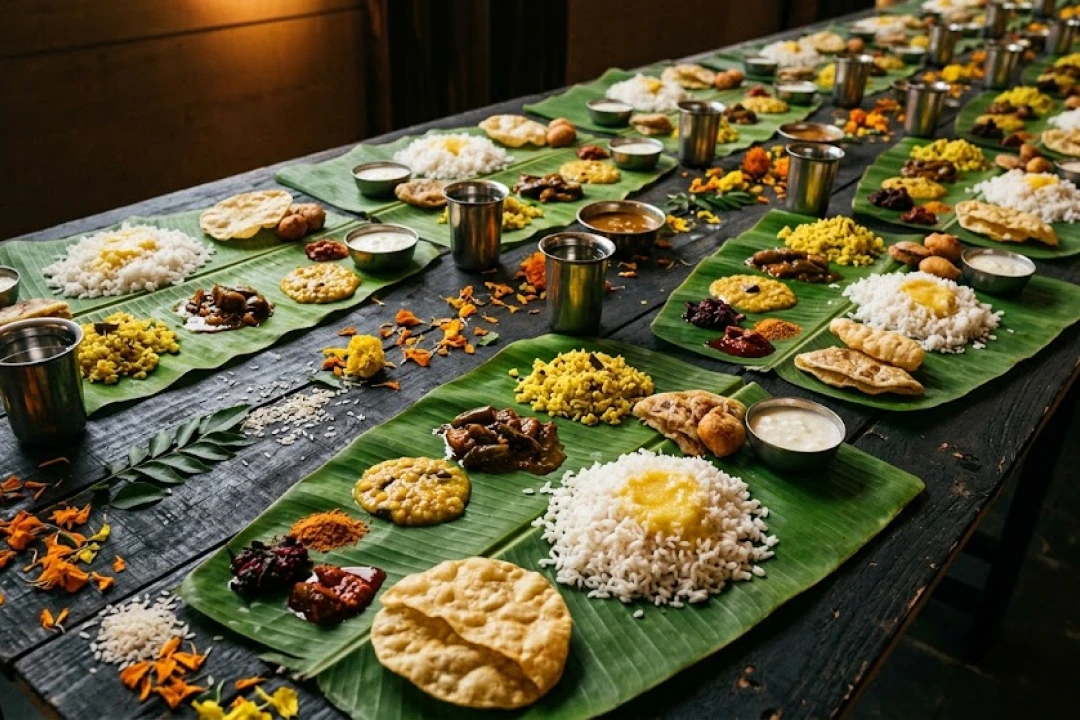
A traditional Andhra wedding meal is a sequence, not a list. Each course earns its position on the leaf, and skipping any one of them is the first thing a Telugu guest notices.
The structure of a traditional Andhra wedding meal
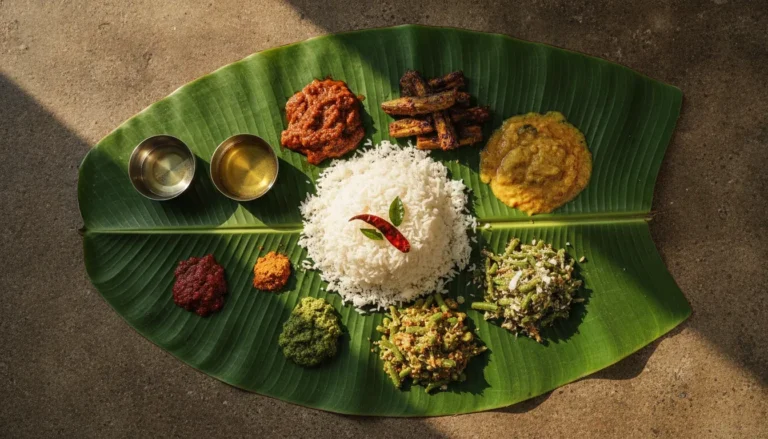
A standard Andhra wedding lunch moves through six stages. Welcome drinks first – panakam (jaggery-pepper-lemon water) and majjiga (spiced buttermilk). Then one or two starters: garelu (lentil vada) and mirchi bajji are the safe pair. The main course is rice with ghee, alongside mudda pappu (plain dal), pulusu (tamarind curry), and one or two koora (vegetable curries) – gutti vankaya is the signature.
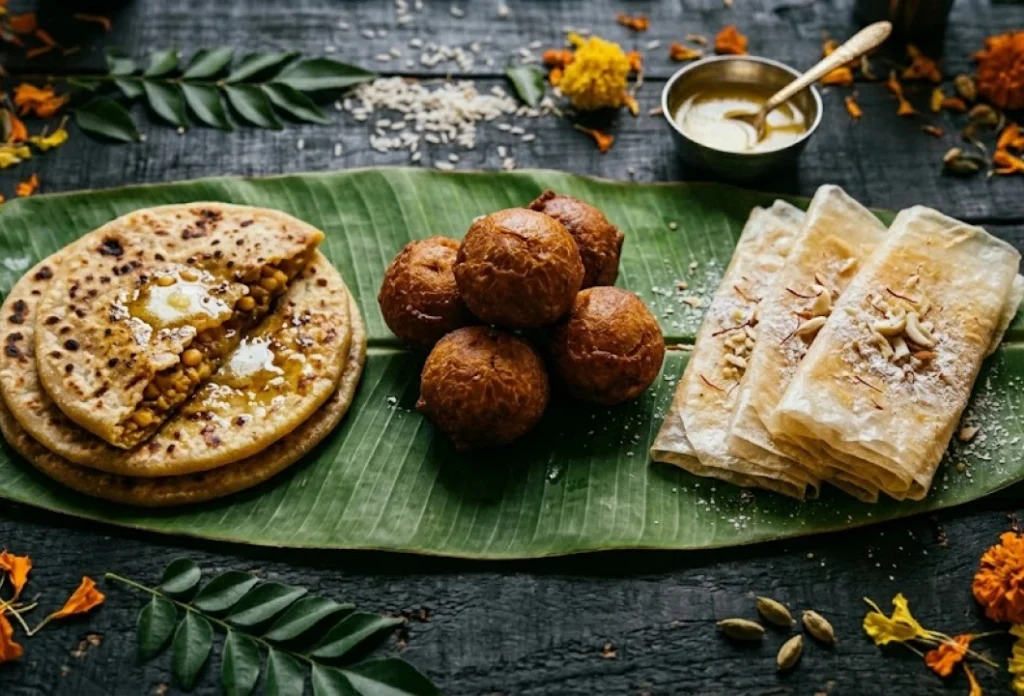
After the curries comes pulihora (tamarind rice) – skip this and Andhra guests will assume the planner did not know the menu. The pickle and podi corner carries gongura pachadi, avakaya, and one or two podis with ghee. Curd rice closes the savoury side. The sweet course rotates between bobbatlu, boorelu, or pootharekulu – an Andhra sweet, not gulab jamun. For what an Andhra meal is built around leaf-by-leaf, see what an Andhra meal actually looks like.
Coastal Andhra, Rayalaseema, and Telangana variations
The menu shifts by region. Coastal Andhra leans on seafood, tamarind, and gongura. Rayalaseema runs drier and chilli-forward, with ragi sangati and natu kodi pulusu (country chicken curry). Telangana brings sarva pindi and jonna rotte. Ask the family which side leads – bride and groom often come from different regions, and a thoughtful planner balances both.
Vegetarian or with non-vegetarian alongside
Brahmin and Vaidiki weddings are pure vegetarian. Most other Telugu weddings include non-veg as a separate paid spread alongside the unlimited veg meal. The veg side stays unlimited because it is the ceremonial meal; the non-veg side – gongura mamsam, kodi vepudu, chepala vepudu (fish fry) – is portioned because it works out to a different cost per plate. Plan them as two parallel menus, not one combined buffet.
No-onion-no-garlic catering
Satyanarayana Puja, Upanayanam, and Brahmin weddings need pure satvik catering. The menu replaces onion-based curries with pumpkin (gummadikaya), ridge gourd (beerakaya), and yam (kanda) preparations. Asafoetida, ginger, and curry leaves carry the savoury notes. Confirm this requirement at the menu tasting, not the morning of the event.
Banana leaf or buffet
Banana leaf is the traditional Andhra format – guests sit, servers plate each item down the line, and the leaf folds toward the guest when the meal ends. It works for Telugu weddings up to about 400 guests where the timing is unhurried. Buffet works better for mixed-region guest lists, evening receptions, and corporate events. Leaf service needs roughly one server per 25 to 30 guests; buffet runs on fewer servers but more chafing-dish maintenance.
The mixed-region guest list problem
Most Telugu weddings in Bangalore are not all-Telugu. The in-laws may be Kannadiga, Tamil, or North Indian, and avakaya at 30,000 to 50,000 Scoville is not their starting point. The fix is operational: offer a milder pickle (lemon pickle or tomato pachadi) alongside avakaya, label the spicy items on the buffet card, and brief the leaf-service team to ask before they ladle gongura. A short guide to Andhra spice levels helps the host brief their guests. The format itself varies by neighbourhood – the Andhra meals tradition across Bangalore shows how. And the pickles that complete a wedding spread deserve their own attention – hosts most reliably under-order them.
Andhra Corporate Catering
Andhra catering for offices follows different rules from a wedding. The window is tighter (usually 60 to 90 minutes for lunch service), the rice-heavy meal needs adjustment because most attendees go back to a 2 PM meeting, and the spread has to work for a mixed team that may not include a single Telugu speaker.
Andhra corporate catering makes sense for Sankranti and Ugadi office celebrations, monthly regional-cuisine rotations, Telugu-client lunches, and team offsites where the menu is part of the experience. The corporate per-plate range in Bangalore sits between ₹300 and ₹600 for a standard meal, climbing to ₹800 to ₹1,500 for full-day catering with breakfast, lunch, snacks, and tea.
Adjust the menu for office context: a lighter rice portion, one starter instead of two, individually plated meals or three-compartment packed boxes for desk lunches, and a single dessert. Most offices have a vegetarian-only policy at scale – plan the veg menu first, then add non-veg as an optional packed alternative. For the full operational checklist – delivery timing, service staff, leftover handling – the corporate-event catering checklist covers it.
Sizing an Andhra Catering Order: 50, 100, 200, 500 Guests
Per-plate is the headline number, but the absolute order matters more once you cross 100 guests. Bangalore catering pricing typically includes food, transport, on-spot poori or roti station, leaves or plates, serving staff, and cleanup. Decor, mandap, and beverages beyond welcome drinks are usually separate.
Here is what each guest count translates to operationally.
| Guest Count | Typical Event | Per-Plate Range (₹) | Operational Note |
| 50 | Housewarming, naming ceremony, small family lunch | 150–300 veg / 250–450 non-veg | Minimum for most Andhra caterers is 30. Below 30, plan as a restaurant pre-order instead. |
| 100 | Engagement, baby shower, milestone birthday | 250–500 veg / 400–700 non-veg | 2 servers on banana leaf, 1 supervisor. Most flexible size for menu experimentation. |
| 200 | Wedding reception, mid-scale corporate event | 400–800 veg / 550–1,000 non-veg | Service staff scales to 7–8. Two cooking stations recommended for fresh poori or roti. |
| 500 | Full wedding lunch, large reception | 500–1,500 veg / 700–1,800 non-veg | Book 1–3 months ahead. Banana leaf works if the venue layout supports row seating; otherwise buffet. |
Bangalore wedding-catering benchmarks for vegetarian menus run ₹500 to ₹1,500 per plate, and non-vegetarian ₹700 to ₹1,800. These ranges align with public catering-cost data and what Nandhini quotes for events of similar scale. For smaller household guest counts on a biryani-led event, the how to size biryani for guest counts gives the scaling logic.
A few rules of thumb from a kitchen that does this daily: one server per 25 to 30 guests for leaf service; plan for 70 to 80 percent of headcount on non-veg portions; over-order pickles and podi by 20 percent (guests want seconds, and the cost is negligible); pulihora at one full ladle per guest; biryani at half a portion if it is a side, full portion only if it is the headline.
Common Pitfalls Hosts Make with Andhra Catering
Most catering disasters are not about taste. They are about planning. Five mistakes show up across enough events that they are predictable.
Under-ordering pickles and podi
Avakaya and gongura pachadi are not garnish – they are how Andhra guests pace the meal. Caterers who quote tight on pickles end the lunch with half the leaves looking unfinished. Order 20 percent more than the per-head quote suggests.
Skipping pulihora
Pulihora (tamarind rice) is the dish Andhra guests use as the meal’s mid-point. Without it, the rhythm breaks – pappu, pulusu, koora all flow into each other and the meal feels heavy. Some caterers cut pulihora to save on per-plate cost. Don’t agree to that.
Over-ordering biryani at the expense of meals
Hyderabadi-style weddings lead with biryani. Andhra weddings lead with bhojanam – the meals spread. Putting biryani at the centre and reducing the meals portion is a planning import from a different cuisine, and Telugu guests notice. Biryani belongs at dinner or as a second-day reception item.
Ignoring spice tolerance for non-Telugu guests
Andhra heat is not optional – Guntur chillies are the cuisine. But a wedding is not a tasting menu. Offer one milder pickle (lemon pickle, sweet lime, or tomato pachadi) alongside avakaya, label the spicy items on the buffet, and brief the leaf-service team to ask before serving gongura.
Defaulting to gulab jamun for sweets
Gulab jamun is the easy default. It is also a signal that the caterer did not commit to Andhra. Bobbatlu, boorelu, or pootharekulu are the sweets that anchor the meal in the cuisine. Pootharekulu in particular – the paper-thin rice wafer sweet – almost no Bangalore caterer offers it. If you can source it, do.
How We Plan an Andhra Wedding Menu at Nandhini
Catering at Nandhini starts with a menu tasting. Pick an outlet – Jayanagar and RT Nagar are the most common for catering conversations – and the kitchen plates a half-portion version of the menu the family is considering. The host tastes the gongura, decides if the spice register works for their guest list, swaps in a milder pickle if needed, and sees the actual sweet course before the day.
From there the conversation runs through a sequence. Headcount and dietary mix – veg, non-veg, no-onion-no-garlic, mixed. Service style – banana leaf, buffet, or plated. Spice tolerance check for the mixed-region guest list. Day-of timing rhythm. We have been cooking this menu since 1989, and running it 10,000 times a day across our restaurants is what makes the scaling for a 500-guest wedding predictable rather than improvised.
Banquet halls are available alongside the catering setup at our Banashankari, JP Nagar, RT Nagar, New BEL Road, and HSR Layout outlets – useful when the family wants the venue and the food in one conversation. For full details on hall capacities and packages, see banquet halls available with Nandhini catering. The same menu we cater is served daily at our Andhra restaurants serving the same menu daily – so when a host asks how a dish will taste at scale, the answer is already on a leaf at lunch service.
Frequently Asked Questions
How much does Andhra catering cost in Bangalore?
Andhra vegetarian catering in Bangalore ranges from ₹150 to ₹700 per plate, with most family events landing between ₹250 and ₹500. Wedding menus reach ₹500 to ₹1,500 per plate vegetarian and ₹700 to ₹1,800 non-vegetarian. Final cost depends on guest count, menu complexity, and banana-leaf versus buffet service.
What is included in a typical Andhra wedding menu?
A standard Andhra wedding menu includes welcome drinks (panakam, buttermilk), one or two starters (mirchi bajji, garelu), rice with pappu and ghee, pulusu, two koora curries, pulihora, gongura pachadi, avakaya pickle, podi, papad, curd rice, and an Andhra sweet such as bobbatlu, boorelu, or pootharekulu.
Is Andhra catering vegetarian only?
Many Andhra caterers in Bangalore are pure vegetarian, especially Brahmin-style caterers serving Satyanarayana Puja or Telugu Brahmin weddings. Non-Brahmin Telugu weddings often include non-vegetarian dishes – gongura mamsam, chicken curry, fish fry – as a separate, paid spread alongside the unlimited vegetarian meal.
What is the difference between banana leaf service and buffet for Andhra catering?
Banana leaf service is the traditional Andhra format – guests sit, servers move down the line plating each item, and the leaf is folded toward the guest when the meal ends. Buffet is self-serve from chafing dishes and works better for mixed-region guests, standing receptions, and corporate events with limited time.
How far in advance should I book Andhra catering in Bangalore?
For weddings of 200 or more guests, book 1 to 3 months ahead, especially during peak wedding season from November to February. For housewarming and family events of 30 to 100 guests, 2 to 4 weeks is usually enough. For corporate events, 1 to 2 weeks ahead works for standard menus.
Can Andhra catering be no onion no garlic?
Yes. No-onion-no-garlic Andhra catering is standard for Satyanarayana Puja, Upanayanam, Telugu Brahmin weddings, and Jain-style functions. The menu replaces onion-based curries with pumpkin, ridge gourd, and yam preparations, and uses asafoetida and ginger to carry the savoury notes that onion and garlic normally provide.
What is the minimum guest count for Andhra catering?
Most Andhra caterers in Bangalore start at 30 guests for vegetarian banana-leaf service. Smaller groups can be served as restaurant pre-orders or banquet-hall packages rather than full catering setups. Below 30 guests, the per-plate cost climbs because the kitchen team, transport, and serving staff are fixed.
What are the common mistakes hosts make when planning Andhra catering?
Four mistakes repeat: under-ordering pickles and podi (guests want second servings), skipping pulihora (the meal feels incomplete), over-ordering biryani at the expense of meals (Andhra weddings are meals-led, not biryani-led), and ignoring spice tolerance for non-Telugu guests (offer a milder pickle option alongside avakaya).
Closing Thought
Andhra catering is operational, not magical. The caterer who answers the boring questions – pickle volumes, leaf-versus-buffet headcounts, sweet course choices, no-onion-no-garlic substitutions – is the one whose lunch service will run smoothly. The vendor who only talks about flavour and ambience usually has not planned this many times.
Nandhini has been planning Andhra menus since 1989, daily at our restaurants and across catering orders for weddings, housewarmings, and corporate events. The conversation usually starts with a menu tasting at the nearest outlet and a quote built around your guest count and event type. When you’re ready to plan, request a catering quote and we’ll take it from there. The leaf is patient. The pickle is ready.