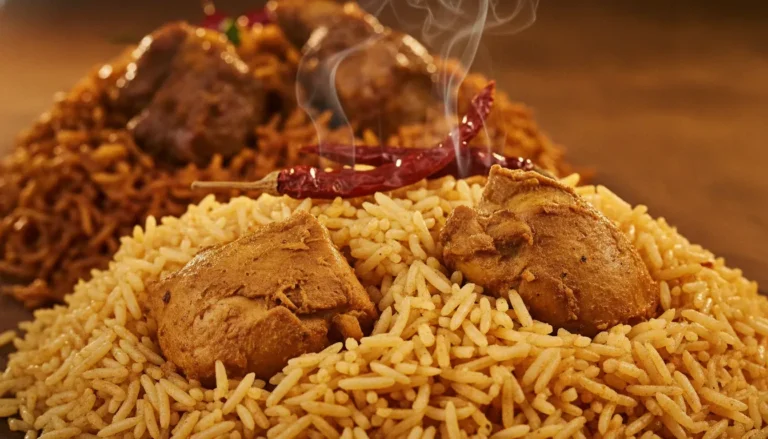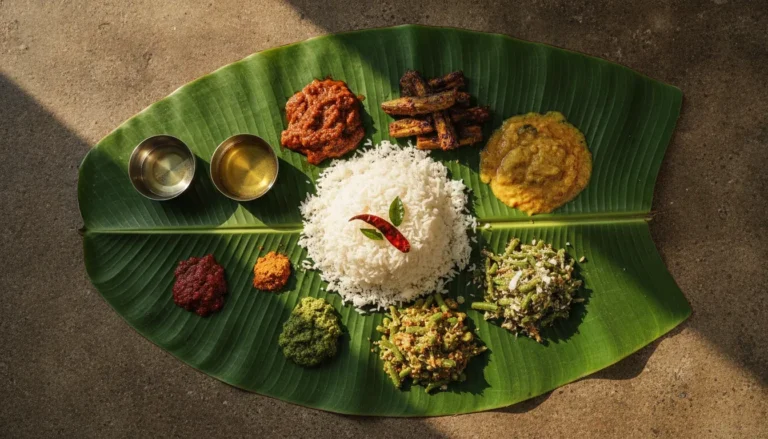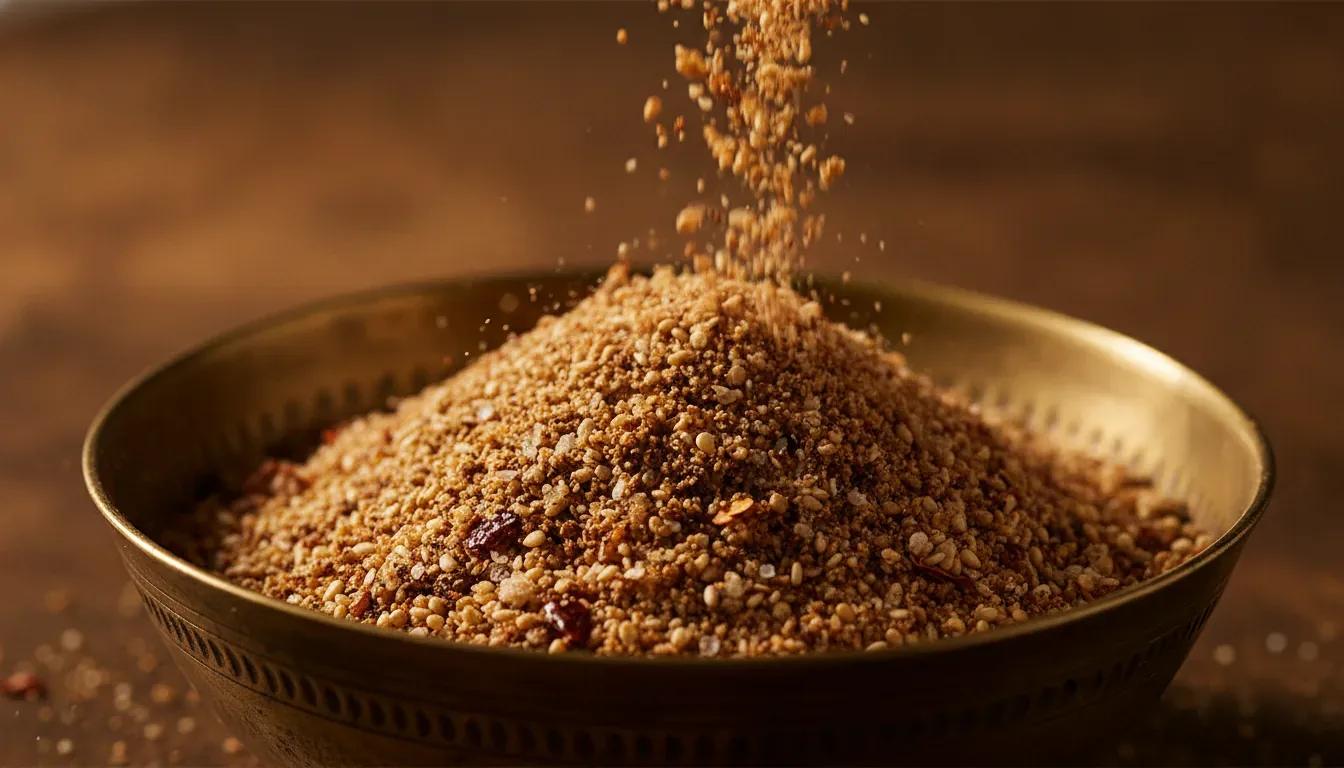
The first thing on the plate, before the sambar and before the curry, is a heaped spoon of nuvvula podi worked into hot rice with a thumb of ghee. Sesame, red chilli and salt, ground coarse enough that you still catch the odd whole seed between your teeth. It is the quiet backbone of an Andhra meal, the powder that turns plain rice into something you keep going back to. If you have eaten off a banana leaf in Andhra Pradesh and wondered what that nutty, spicy heap was, this is it, and the rest of this page is about getting it right in your own kitchen.
What is nuvvula podi?
| Nuvvula podi is a dry Andhra spice powder made from roasted sesame seeds, red chilli and salt, eaten mixed into hot rice or as a dip for idli and dosa. Nuvvula, or nuvvulu, is Telugu for sesame seeds, so the name simply means sesame powder. It is a podi, a dry condiment, not a chutney or a pickle. |
Across the south the same seed travels under other names: til in Hindi, ellu in Tamil and Kannada. The black variety, the iron-forward one, is nalla nuvvulu. People search nuvvula podi in english and mostly find others asking the same thing, because few pages say it plainly. When the powder is made hot with chilli it is called nuvvula karam podi, karam being the Telugu word for spice heat, and you will also see it written nuvvulu podi, shortened to nuvvu podi, or called nuvvula powder. That name matters, because a sweet jaggery version and a fiery chilli one share it while sitting at opposite ends of the plate. Keep the two apart and everything below falls into place.
Table of Contents
Which nuvvula podi to make: karam, plain, no-garlic, black or sweet
Search for a recipe and every page hands you one version, then calls it the version. That is the gap worth filling, because there are five worth knowing, and the right one depends on who is eating and how long the jar has to last.
| Style | Also called | Key add-in | Heat or sweet | Best for |
|---|---|---|---|---|
| Karam (spicy) | nuvvula karam podi | extra Guntur chilli | hot | everyday rice and ghee |
| Plain | nuvvula podi | sesame, chilli, salt | mild | idli, dosa, first-timers |
| Brahmin style | no-garlic podi | more cumin, no garlic | mild to medium | festival and temple cooking |
| Nalla (black sesame) | nalla nuvvula karam podi | black sesame | earthy, iron-forward | making it for iron |
| Sweet | nuvvula podi with jaggery | jaggery, no chilli | sweet | a snack or for children |
Pick by the eater. Someone new to Andhra heat should start plain and work up. A house that eats podi with every meal wants the karam version, made hot enough to earn its name. Cooking for a festival, or for anyone who keeps a no-onion no-garlic kitchen, points you at the Brahmin style, where cumin does the work garlic would. And if iron is the reason the podi is being made at all, the black sesame version, nalla nuvvula karam podi, carries more of it and tastes deeper for the swap.
The split that trips people up is savoury against sweet. Nuvvula karam podi is the fiery everyday one, chilli-forward, made for rice. The jaggery version drops the chilli for sweetness and behaves like a different food entirely, closer to a snack. In between sits the choice of plain sesame or a lentil-added mix: a spoon of chana dal (bengal gram) and urad dal (black gram), roasted in with the sesame, gives more body and a podi that clumps less, which is the version Sailu’s kitchen and many home cooks favour. Garlic or no garlic is the last fork, and it decides shelf life more than taste, which the next sections get into.
The ingredients that decide it
Four things carry this podi, and each one is a decision.
Sesame comes first. White sesame is the standard, mild and nutty once roasted. Black sesame, nalla nuvvulu, is earthier and carries more iron, which is why the health-minded reach for it, though it grinds a shade oilier and needs a lighter hand at the mixer. Whichever you use, buy it fresh, because sesame goes rancid quietly and a stale batch will sour the whole jar.
Chilli sets the character. Guntur chillies bring the real heat, in the region of 30,000 to 50,000 Scoville, which is what makes a karam podi actually hot rather than merely red. Byadgi chillies do the opposite job, deep red colour and gentle heat, so many cooks blend the two, Guntur for bite and byadgi for the colour that makes the powder look as good as it tastes. Bare ‘very spicy’ tells you nothing, and the ratio of the two chillies is the dial you actually turn.
Salt is the quiet keeper. It seasons, and it also pulls moisture, which is part of why a well-salted podi holds longer. Cumin (jeelakarra) sits in the background, a warm note under the chilli. Garlic is optional and divisive: it adds a savoury punch, but fresh garlic carries water, and water is what shortens the life of any dry podi.
How to make nuvvula podi
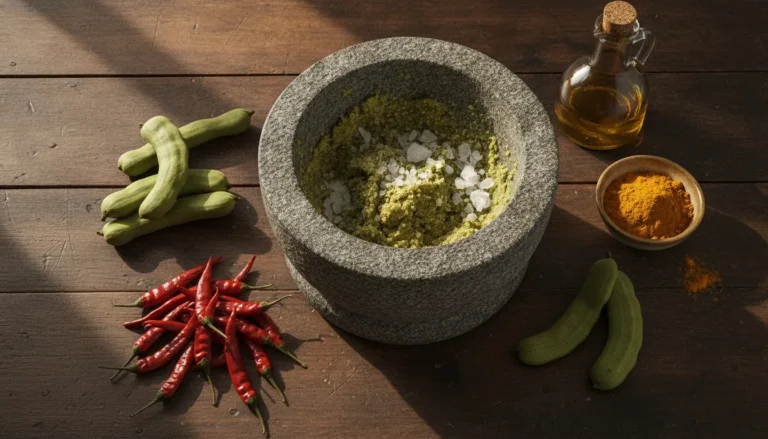
Here is a nuvvula podi recipe that stays a dry powder, with a ratio you can scale. Work to roughly one cup of white sesame, eight to ten dried red chillies (fewer for a milder podi, more for a proper karam), one teaspoon of cumin, salt to taste, and four or five garlic cloves if you want them.
- Dry-roast the sesame. No oil. Keep the heat low and the seeds moving, and take them off the moment they start to pop and turn pale gold. Sesame scorches fast, and burnt sesame is bitter all the way through. Tip it straight out of the pan to stop the cooking.
- Roast the chillies on their own. Same dry pan, low heat, until they darken a shade and smell toasty. Doing them separately lets you control the heat of each without one overcooking while you wait for the other.
- Roast the cumin for under a minute, just to wake it up. If you are using garlic, dry-roast the peeled cloves briefly too, which drives off some of their moisture and helps the podi keep.
- Cool everything completely. This is the step people skip and regret. Warm sesame gives up its oil the instant it meets a fast blade, and there goes your dry powder.
- Grind in short bursts. Add the cooled sesame, chillies, cumin, salt and garlic to the mixer and pulse in two to three second bursts. Stop, shake the jar, pulse again. You want a coarse, loose powder that still shows flecks of whole seed, not a smooth paste. Under-grinding is easy to fix with another pulse, and over-grinding is not fixable at all.
Store it cool and airtight once it has come fully to room temperature. That is the whole method, and the discipline is all in steps four and five.
Why nuvvula podi turns lumpy, and how long it lasts
The single way this goes wrong has a name: over-grinding. Sesame is roughly half oil by weight, and that oil stays locked in the seed until heat and friction let it out. Run the mixer in one long spin and the seeds warm, the oil releases, and the powder collapses into a lump that no amount of extra grinding will rescue.
| Keep it a dry powderRoast and cool the sesame fully, then pulse in two to three second bursts and stop while it still pours. Run the mixer continuously and the seeds heat, the oil comes out, and you get a paste instead of a powder.Stored dry and airtight with a dry spoon, a plain sesame and chilli nuvvula podi keeps for several weeks, often up to a couple of months. Add fresh garlic and it turns far sooner, so make those batches small and use them within days. |
Shelf life follows moisture. A plain, dry, well-salted podi has almost nothing in it to spoil, which is why it sits happily in the pantry for weeks. The enemies are all wet: a damp spoon, a lidless jar in a steamy kitchen, or fresh garlic ground in. Use a dry spoon every time, keep the lid on, and store the garlic versions the way you would treat a fresh chutney, in the fridge and eaten soon.
Is nuvvula podi good for you, and how to eat it
The health claim around nuvvula podi is real but oversold. Sesame is a genuine source of calcium and iron, and black sesame more so, which is why you will hear it called an iron-rich podi and see reels crediting it with fixing someone’s iron levels. The seeds do carry those minerals. What the reels leave out is that a podi is a salted, oil-dense condiment eaten a spoon at a time, not a supplement you dose. Treat it as a good habit, a nourishing way to make plain rice worth eating, rather than a cure.
How to eat it is simpler. Nuvvula podi for rice is the classic: a heaped spoon into hot steamed rice with ghee or sesame oil, mixed until every grain is coated. Beyond rice it is a dry dip for idli, dosa, upma and uttapam, and a good scatter over tamarind or lemon rice when you want a nutty, spicy lift. Hot rice and a fat, whether ghee or oil, is what carries it best.
The Andhra podi tradition behind it
A good sesame podi is a small test of an Andhra kitchen. The roast has to stop at the right second, the grind has to hold its nerve, and the chilli has to be Guntur, not a milder stand-in. Get those three right and the powder tastes like it should, and get any one wrong and you can taste the mistake.
Nandhini Deluxe has cooked this way since 1989, serving podis alongside rice and ghee as part of banana-leaf bhojanam across its outlets in Bengaluru and Mysuru, built on the same Guntur chillies that give a karam podi its edge. The same kitchen bottles its own Andhra pickle and masala range, for anyone who would rather take the craft home than stand over a hot pan. The technique on this page is the one that kitchen would recognise.
Frequently Asked Questions
What is nuvvula podi made of?
Nuvvula podi is made from dry-roasted sesame seeds (nuvvulu) ground coarsely with dried red chilli and salt. Many cooks add cumin, garlic, or a little chana and urad dal. The sesame and chilli are the constant, and the grind is kept coarse so it stays a dry powder rather than a paste.
What is nuvvula in English?
Nuvvula, also spelt nuvvulu, is the Telugu word for sesame seeds. So nuvvula podi means sesame powder, specifically an Andhra dry spice powder, or podi, eaten with rice or tiffin. It is a condiment, not a chutney or a pickle.
What are the benefits of nuvvula podi?
Sesame seeds carry calcium and iron, which is why nuvvula podi is often called an iron-rich podi. It is still a salted, oil-rich condiment eaten by the spoonful with rice or idli, so treat it as a flavourful accompaniment rather than a health supplement.
Why does my nuvvula podi turn oily and lumpy?
Because the sesame was over-ground. Running the mixer continuously heats the seeds and releases their oil, turning the powder into a paste. Grind cooled seeds in short two to three second pulses, and stop while it is still a dry, coarse powder.
How long does nuvvula podi last?
Made dry and stored airtight with a dry spoon, a plain sesame and chilli nuvvula podi keeps for several weeks, often up to a couple of months at room temperature. Versions with fresh garlic hold far less moisture and are best eaten within a few days.
How do you eat nuvvula podi?
Most often mixed into hot steamed rice with a spoon of ghee or sesame oil. It also works as a dry dip for idli, dosa, upma or uttapam, and can be sprinkled over tamarind or lemon rice for a nutty, spicy edge.