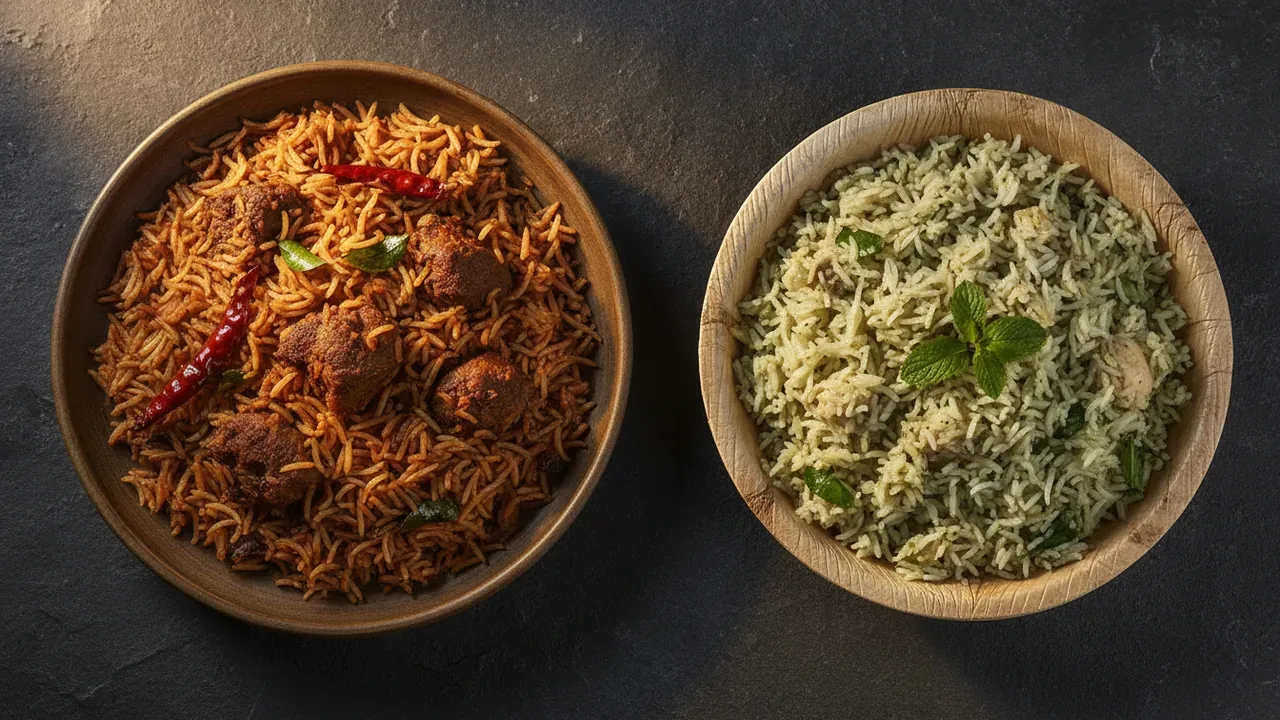
Two plates land on the same Bangalore table. One comes in a small leaf cup, the rice pale green with coriander and pepper, stock still steaming off it. The other sits dry and dark on a plate, every grain separate, a chilli heat you can read before you taste it. That is the decision plenty of hungry people face without a clear answer: Andhra biryani or Donne biryani. The two look related. They are cooked differently, spiced differently, and built for different kinds of evening. This page sets them side by side so you can order the right one tonight.
Table of Contents
The 30-second answer
Andhra biryani is chilli-forward and dry, built on Guntur chillies with tamarind and curd, the meat pre-cooked then sealed under dum so the grain stays separate. Donne biryani is a Bangalore style, cooked in one pot with coriander, mint and pepper, lighter and stock-bound, and served in a leaf cup.
Andhra and Donne biryani, side by side
If you only have a minute, the table below is the whole argument. Read down the rows and you will see the two styles are not variations on one recipe. They begin in different places, use different rice, and land on the plate, or in the cup, feeling like two separate meals.
| Feature | Andhra biryani | Donne biryani |
|---|---|---|
| Origin | Andhra Pradesh – Coastal Andhra, Nellore, Rayalaseema, Guntur | Bangalore – Chickpet lanes and the Military Hotel lineage |
| Rice | Long-grain basmati, or seeraga samba in some kitchens | Short-grain seeraga samba |
| Cooking method | Pakki (pre-cooked meat), layered and sealed under dum | Single pot – rice and meat cooked together |
| Heat source | Dried Guntur red chilli (30,000–50,000 SHU) | Fresh green chilli and black pepper |
| Key spices | Guntur chilli, tamarind, curd, curry leaf | Coriander, mint, green chilli, pepper |
| Mouthfeel | Dry, separated grain | Moist, stock-bound |
| Service vessel | Plate or banana leaf | Areca-leaf cup (the donne) |
| Best for | Chilli depth and a fuller meal | A lighter, herby, quick plate |
The rest of this page walks each of those rows, starting with the style that raises the most questions.
What is Donne biryani, and is it even a biryani?
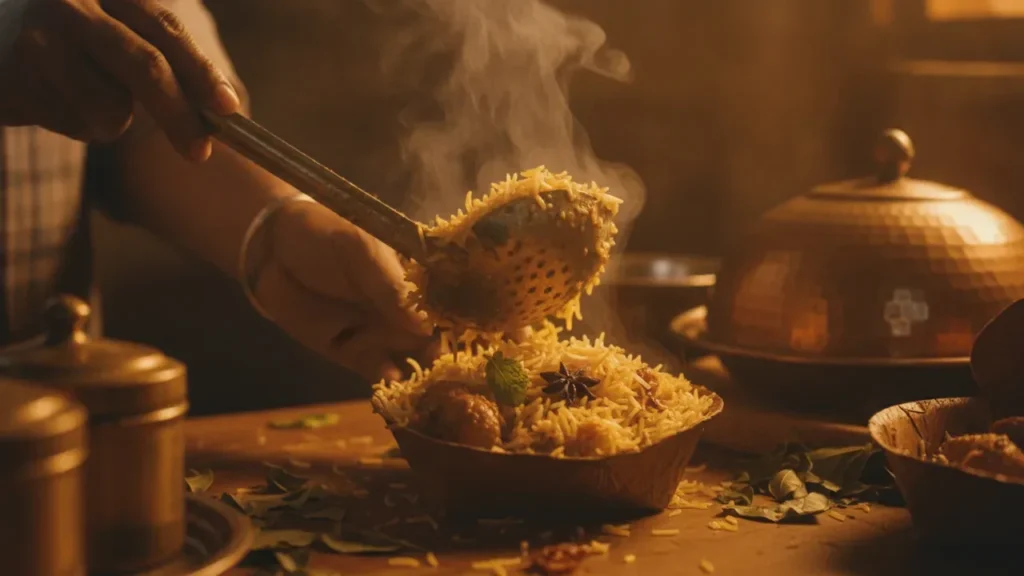
Donne biryani is the Bangalore military-hotel plate, and its name comes from the vessel. A donne (a small cup pressed from a dried areca, or arecanut, palm leaf) is stitched at the sides, and the biryani is scooped straight into it. The leaf holds the steam and lends a faint green aroma that a steel plate never will. The style traces back to the Bangalore Military Hotel kitchens and the lanes around Chickpet, where hot, stock-rich rice plates fed workers who wanted something filling and fast.
The cooking is the part people argue about. Rice and mutton go into one pot and finish together, carried by a stock heavy with coriander, mint, green chilli and black pepper. There is no separate layering of pre-cooked meat and rice, and no long dum seal. That single-pot method is why the grain comes out moist and bound rather than dry and loose. The rice is usually a short-grain seeraga samba, which drinks up the stock and gives donne its soft, spoonable body.
Which brings up the old question: is donne even a biryani, or a pulao? By strict technique it leans pulao, since the rice and meat cook together rather than being layered and dum-sealed. Bangalore has served it and called it biryani for generations, though, so both labels hold. Order it for what it is, a herby, peppery, stock-cooked plate in a leaf cup, and the label stops mattering.
What defines Andhra biryani
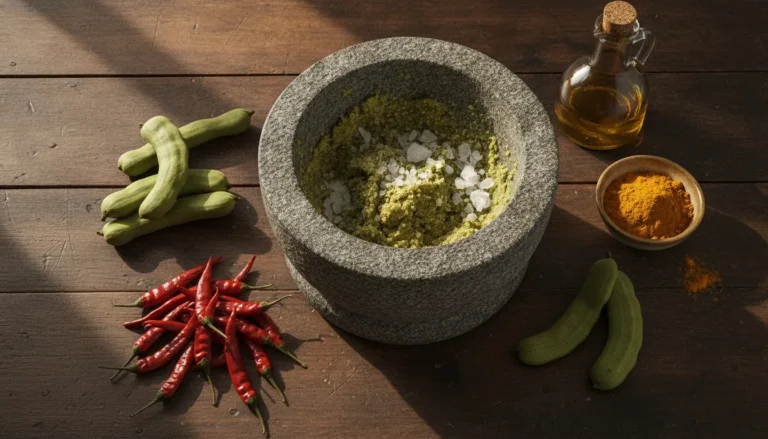
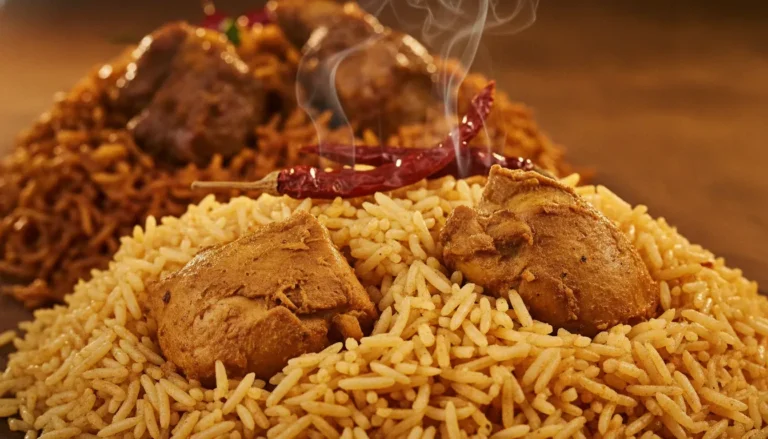
Andhra biryani starts with the chilli. The dried Guntur red chilli (30,000–50,000 SHU) sets the flavour before anything else, a deep, roasted heat rather than a fresh green bite. Around it sit tamarind and curd for tang, curry leaf and whole spice for aroma, and a marinade that works into the meat overnight. The method is pakki, meaning the meat is cooked most of the way before it meets the rice, and the two are then brought together and finished under dum. Done well, the grain stays dry and separated, each one carrying colour and spice without turning sticky. The overnight marinade of curd and chilli does quiet work here, tenderising the mutton and setting the tang before a single grain of rice goes near the pot.
Andhra biryani is really a family of styles, and the region tells you what to expect on the plate. Nellore, on the coast, leans milder and sometimes brings coconut into the pot. Vijayawada runs the wettest and most green-chilli-driven of the lot. Rayalaseema, inland and dry, carries the most chilli of all, often with kalpasi (black stone flower) deepening the base. Guntur, the chilli country itself, gives the style its signature heat and much of its name recognition.
For someone deciding what to eat in Bangalore, the useful takeaway is that Andhra biryani is the chilli-and-tang plate: dry grain, dried-red-chilli depth, a tamarind edge that donne biryani does not chase. It is a fuller, heavier meal, and it is meant to be. Where donne is built for speed and lightness, Andhra biryani is built for a proper sit-down with the heat kept front and centre. If you like a biryani you can still taste a while after the last bite, this is the side of the table you want.
Heat, method and mouthfeel: the three real differences
Three things separate these plates once you get past the name. Understand them and you can predict which one suits you before it even arrives.
Heat comes first, because it is the question people ask most. Is donne biryani spicy? It has warmth, but it is a fresh, lifting heat from green chilli and black pepper, the kind that clears rather than lingers. Andhra biryani works the other way. Its heat is dried Guntur red chilli (30,000–50,000 SHU), roasted and deep, the sort that builds and sits. One brightens the plate; the other loads it.
Method is the reason the two taste the way they do. Andhra biryani is layered: meat cooked first, rice par-cooked, the two sealed together under dum so the flavours set without the grains breaking down. Donne biryani is a single pot, rice and meat simmering in the same stock from the start. In a proper Andhra dum, the pot is often sealed with a ring of dough so the steam has nowhere to go but back through the rice. Layering keeps things separate and dry; one-pot cooking binds everything together.
Mouthfeel follows straight from method. Andhra biryani gives you dry, separated grain, each one loose and spiced, a plate you eat forkful by distinct forkful. Donne biryani is moist and stock-bound, softer, the rice carrying broth in every spoon. Neither is better cooking. They aim at different sensations, one crisp and defined, the other comforting and loose, and knowing which you are in the mood for is most of the decision.
Which one should you order?
Here is the honest way to choose, from people who cook the Andhra side for a living.
Order donne biryani when you want something lighter and quicker. It is the plate for a working lunch, for a herb-and-pepper mood, for when you want biryani without the weight of a full spread. The leaf cup is part of the pleasure, and the stock-bound rice goes down easy. It rewards a smaller appetite and a faster meal.
Order Andhra biryani when you want chilli depth and a proper meal. This is the plate for when you have time to sit, when you want tamarind tang and Guntur heat that stays with you, and when you are happy for the biryani to be the main event rather than a light bite. It pairs with a fuller table, a raita to cool it, and an appetite to match.
If spice tolerance is your deciding factor, be honest with yourself. Donne is the safer bet for a milder palate. Andhra biryani, especially a Rayalaseema-leaning one, is the plate for people who actively want the burn. And if you truly cannot decide, there is no rule against ordering both across two visits and settling the question with your own tongue, which is the only verdict that really counts.
Where Nandhini fits
Nandhini does not serve donne biryani. It is an Andhra kitchen, so its authority sits squarely on the Andhra half of this comparison, which is where it has spent the longest.
Nandhini Deluxe is Bengaluru’s first Andhra restaurant chain, cooking Andhra food in the city since 1989 and now running 22 outlets. Its Andhra-style Mutton Biryani is the house signature, built on the same Guntur chilli heat and tamarind edge that define the style described above. When you read what separates an Andhra biryani from a donne, that separation is not theory here; it is the plate the kitchen has served for decades.
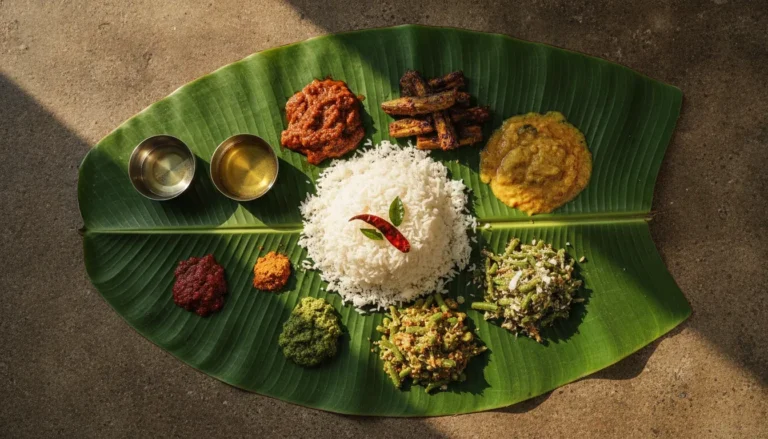
For the donne side, any good military-hotel kitchen in the Chickpet lanes will do it justice. For the Andhra side, if you want dry, chilli-forward, Guntur-led biryani in Bengaluru, Nandhini has been cooking it on a banana leaf since 1989. Come find it, and let the comparison settle itself on your own table.
Frequently Asked Questions
Is donne biryani the same as Andhra biryani?
No. Donne biryani is a Bangalore style, cooked single-pot and served in an areca-leaf cup, with coriander, mint and pepper leading. Andhra biryani is chilli-forward and drier, built on Guntur chillies with tamarind and curd. Different regions, methods and heat profiles.
Is donne biryani a biryani or a pulao?
It sits between the two. Rice and meat cook together in one pot rather than being layered and dum-sealed, which is closer to a pulao technique. Even so, it is widely served and known as a biryani across Bangalore, so both names are fair.
Which is spicier, Andhra or donne biryani?
Andhra biryani is usually spicier. Its heat comes from dried Guntur chillies (30,000–50,000 SHU), roasted and deep. Donne biryani leans on fresh green chilli and black pepper, giving a lighter, herby warmth rather than a lingering chilli burn.
Why is it called donne biryani?
Donne is the cup or bowl made from a dried areca (arecanut) palm leaf that the biryani is served in. The leaf holds steam and lends a faint aroma to the rice. The name comes from the vessel, not the recipe.
What makes Andhra biryani different?
Guntur red chillies lead the flavour, with tamarind and curd for tang, curry leaves for aroma, and a pre-cooked (pakki) method that keeps the grain dry and separated. Regional styles range from milder, coconut-touched Nellore to fiery, chilli-heavy Rayalaseema.
Does Nandhini serve donne biryani?
No. Nandhini is an Andhra restaurant and serves Andhra-style biryani built on Guntur chilli heat, not donne biryani. For the Andhra style, its Mutton Biryani is the house signature, served across its Bengaluru and Mysuru outlets since 1989.