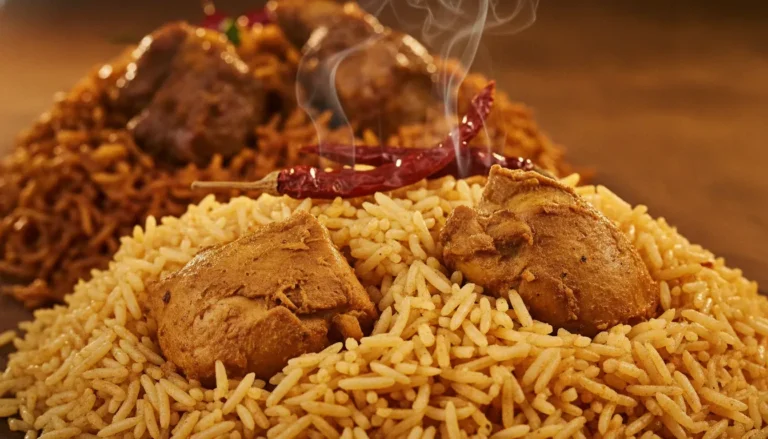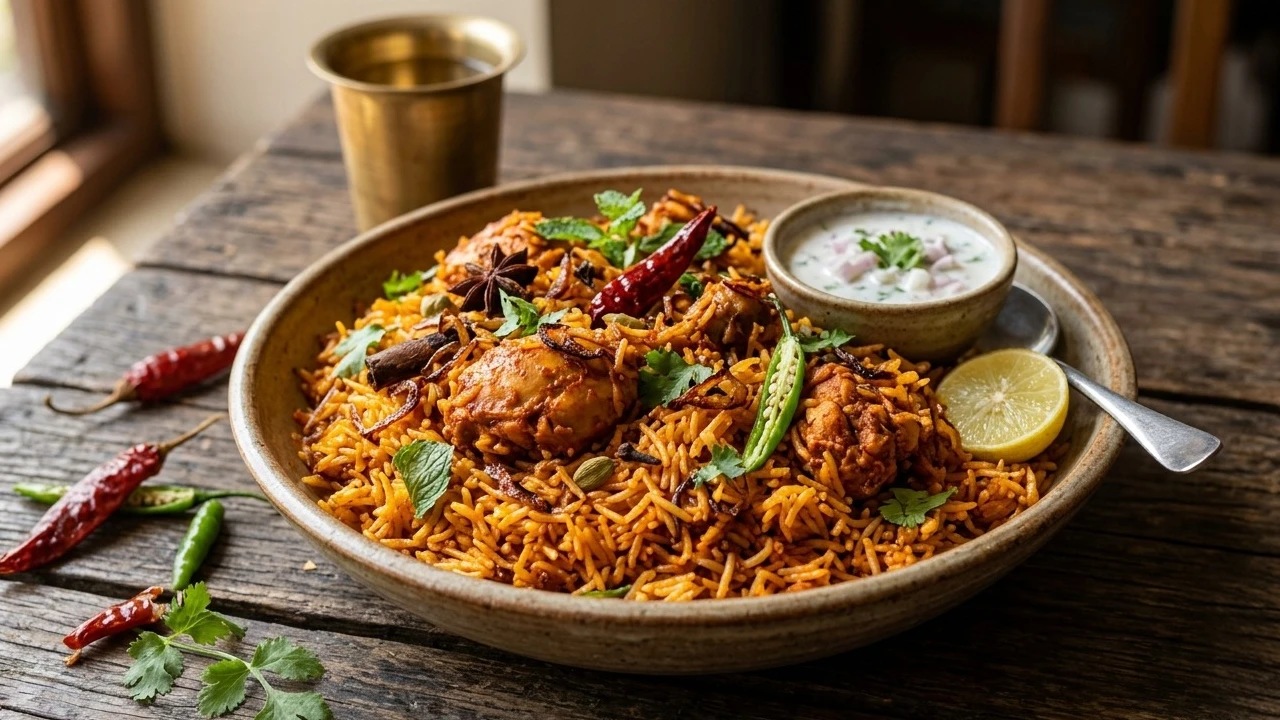
The first mouthful of a proper Guntur biryani does not creep up on you. The heat lands on the front of the tongue, holds there, then spreads, and by the third forkful your forehead has formed an opinion. This is Andhra Pradesh’s most uncompromising rice dish, built around the same chilli that made the town of Guntur a name traders across three continents recognise. If you have only eaten Hyderabadi biryani and assumed every southern biryani sits in that register, a plate of guntur biryani will correct you inside a minute. It runs drier, hotter, and much less interested in being polite about the fact.
| WHAT GUNTUR BIRYANI IS : Guntur biryani is a fiery, dum-cooked biryani from Coastal Andhra, built around the Guntur chilli that drives its heat. The protein, usually mutton or chicken, is marinated in a chilli-forward paste, layered with basmati, and sealed under a lid to finish. It runs drier and hotter than the milder-by-default Hyderabadi style. |
Table of Contents
Why it runs fiery
The heat has a specific source, and it is not a generic pinch of red chilli powder. Guntur biryani is built on the Guntur Sannam, a chilli grown across the black-soil belt of Coastal Andhra and carrying a heat that sits around 30,000 to 50,000 on the Scoville scale. For reference, that is several times hotter than a jalapeno and well above the Kashmiri chilli that most north Indian biryani leans on for colour rather than burn. The Sannam even holds a Geographical Indication tag, which is a formal way of saying the region and the chilli are treated as one thing, the way Champagne belongs to Champagne.
Raw Scoville numbers only tell half the story. The Sannam is prized as much for its deep red colour and its aroma as for its heat, which is why the style reads as flavourful-hot rather than simply painful. A well-made plate carries the toasted, faintly fruity note of the chilli underneath the burn, not the burn on its own. That is the reason Andhra food has its spicy reputation and Guntur biryani sits close to the centre of it.
The clever part is what the cooks do to stop the heat bullying everything else off the plate. Sour ingredients lower how sharply the tongue registers capsaicin, so a tomato base, a thread of tamarind, or a spoon of curd on the side softens the perceived heat while leaving the flavour intact. In gongura (sorrel-leaf) versions of the biryani, the leaf’s own tartness does the same job from the inside. The heat is real, but it is managed rather than accidental, and that balance is the difference between a plate that only hurts and one you return to despite the sweat.
How the style is built
Guntur biryani is marinade-forward, and that is the first thing separating it from a biryani where the flavour lives mostly in the gravy. The mutton or chicken is coated in a paste of Guntur chilli, ginger, garlic and warm spices, sometimes with a little besan (gram flour) worked in to help the coating cling and deepen the colour. It sits in that paste long enough for the heat and the aromatics to work into the meat rather than only its surface, which for mutton often means a few hours.
The rice is basmati, soaked, then boiled separately to just short of done so the grains stay long and distinct. Then comes the layering. Marinated protein on the base, par-cooked rice above, a scatter of onions caramelised slowly in ghee, fresh coriander and mint, and often a drizzle of ghee or fried-onion oil for richness. The pot is sealed, traditionally with a ring of dough pressed around the lid, and finished on a low flame so the steam trapped inside does the cooking. That slow, sealed finish is the dum, and in the Andhra kitchen it is usually the pakki style, where the meat is largely cooked before the rice goes on rather than sitting raw beneath it.
The fried onions are worth a word of their own. Cooked slowly to a deep brown, then partly folded through the rice and partly saved for the top, they add a low sweetness that plays against the chilli and stops the plate reading as one flat note of heat. Skimp on them and the biryani loses a dimension. A cook who has resisted the urge to rush this step is usually one whose biryani is worth ordering.
The masala doing the aromatic work is the familiar biryani set, coriander seed, cumin, black peppercorn, cinnamon, clove and cardamom, ground and used with restraint so the chilli stays in charge. What you will not find is the heavy, saffron-rich, almost sweet finish of a Hyderabadi pot. Guntur biryani leans dry and direct, bright with a tomato-and-tamarind tang running through it, and it wants the chilli to be the last thing you taste.
Mutton or chicken, bone-in or boneless
Ask anyone from the region and the mutton biryani is the one carrying the legend. Guntur has long-standing names built entirely on slow-cooked dum mutton biryani, the Subhani style among the most quoted, where the meat is cooked until it gives against the side of a spoon and the rice beneath has taken on the fat and the chilli. Mutton holds heat and a long cook better than chicken does, which is why the serious eaters order it.
Chicken is the everyday version, and here the common question is whether it comes boneless. The honest answer is both. Bone-in chicken is the traditional choice, since the bone feeds flavour into the rice during the dum, but boneless is widely served for convenience and for mixed tables. Neither is more authentic than the other. The Guntur-chilli marinade and the sealed dum finish stay the same whichever you order, so the heat and the character do not shift with the cut.
Guntur biryani vs Hyderabadi, and the coastal cousins
People reach for Hyderabadi biryani as the yardstick, so it is worth drawing the line clearly. Both are dum biryanis, and both grew out of what was once a single Telugu-speaking region, but they pull in different directions. Hyderabadi biryani belongs to Telangana and, in its classic kacchi form, layers raw marinated meat under the rice with saffron, fried onion and a richer, milder default. Guntur biryani belongs to Coastal Andhra and puts the Guntur chilli in charge, running hotter, drier and tangier. The coastal neighbours each play their own variation on the theme.
| Style | Region | Heat driver | Method | Character |
|---|---|---|---|---|
| Guntur | Coastal Andhra | Guntur Sannam chilli | Pakki dum, marinade-led | Hot, dry, tomato-tamarind tang |
| Hyderabadi | Telangana | Aroma-led (saffron, fried onion) | Kacchi dum, raw meat layered | Rich, fragrant, milder by default |
| Vijayawada | Coastal Andhra | Guntur chilli, generous masala | Dum | Bold, moist, heavily spiced |
| Nellore | Coastal Andhra | Local chilli, lighter hand | Dum | Softer and subtler than Guntur |
| Rayalaseema | Rayalaseema | Stone-ground chilli, little water | Dry dum | Very dry, rustic, intensely hot |
The distinction matters at the table more than it looks on paper. Reach for Hyderabadi when you want fragrance and a gentler heat, and Guntur when you want the chilli to lead. If a menu lists an Andhra biryani without naming the style, it usually means the Guntur register, so it is worth asking about the heat before the plate lands rather than after the first bite.
None of these is the correct one. They are regional dialects of the same idea, and Guntur simply speaks the loudest.
What to eat it with
A plate of Guntur biryani is rarely served alone, and the sides are not an afterthought. The traditional partner is mirchi ka salan (a chilli-and-peanut gravy), nutty, tangy and gently spiced, a curry made for biryani that softens the edge of the rice without cooling it. Alongside it comes raita, the plain curd side doing the actual cooling, cutting the heat on the tongue between forkfuls.
Some kitchens offer gutti vankaya (stuffed baby aubergine) as an alternate, its sesame-and-peanut masala echoing the salan while giving a vegetable counterpoint to the meat. The working system is simple: salan for flavour, raita for relief, a squeeze of lemon if the tang needs lifting. Skip the sweet commercial raita if you can. A thin, salted, lightly cumin-spiked curd does far more for a hot plate than a sugary one.
Toning the heat down
Guntur biryani has a reputation, and it puts some people off before they have tried it. It does not have to. Most kitchens that cook it well will make a reduced-heat version on request, dialling back the chilli in the marinade without losing the aroma that makes the style worth eating. If you are ordering it as served, the levers are in your hands. Extra raita or a bowl of plain curd blunts the burn quickly, a sour side leans on the same tamarind trick the cooks use, and eating it with a mild dal spreads the heat across the plate. For a mixed table, a half-heat mutton or chicken biryani with salan and plenty of curd tends to keep the cautious and the heat-seekers happy at the same board.
Where Nandhini fits
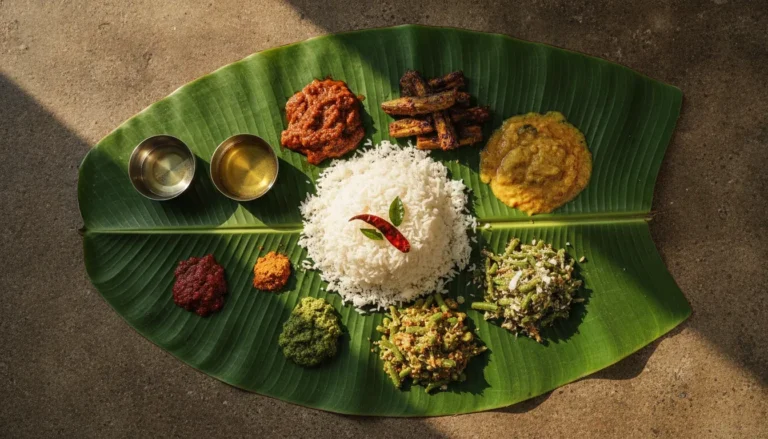
The Guntur chilli is not a guest ingredient at Nandhini. It is the spine of how the kitchen has cooked since 1989, when Shri N. Ananda opened the first Nandhini at Minerva Circle and built Bengaluru’s first Andhra restaurant chain from it. The same heat that defines this biryani style runs through the Andhra mutton and chicken biryani served across all 22 outlets, 20 in Bengaluru and two in Mysuru, plated the way it should be, on a banana leaf with the salan and raita already in their place.
If you have read this far and would rather taste the style than only understand it, that is the short version of where to go. The longer answer, with the best Andhra biryani addresses in Bengaluru set out in full, is a separate guide. Either way, a plate cooked by people who have sourced this chilli for more than three decades is a fair place to meet the dish.
Frequently Asked Questions
What makes Guntur biryani fiery?
The heat comes from the Guntur Sannam chilli, which sits around 30,000 to 50,000 on the Scoville scale and goes into both the marinade and the masala. The style leans on dry, direct heat balanced by a tomato-and-tamarind tang, rather than the milder default of Hyderabadi biryani.
Which biryani is famous in Guntur?
Guntur is known for its fiery mutton and chicken dum biryanis, with several long-standing local names built around the same Guntur-chilli style. The defining trait is the heat level and the marinade-forward method, not a single shop or one fixed recipe.
Is Guntur chicken biryani boneless?
It is served both ways. Bone-in is the traditional choice and carries more flavour into the rice during the dum, while boneless versions are common for convenience and mixed tables. The Guntur-chilli marinade and the dum method stay the same either way.
How is Guntur biryani different from Hyderabadi biryani?
Both are dum biryanis, but Guntur, from Coastal Andhra, runs hotter and drier, driven by the Guntur chilli, while Hyderabadi, from Telangana, is usually richer and milder by default. Guntur also leans more on a tomato-and-tamarind tang than on saffron and fried onion.
Can Guntur biryani be made less spicy?
Yes. Many kitchens will cook a reduced-heat version on request, and ordering it with extra raita or plain curd tones down the burn while keeping the flavour. Sour sides such as tamarind soften how sharply the heat reads on the tongue.