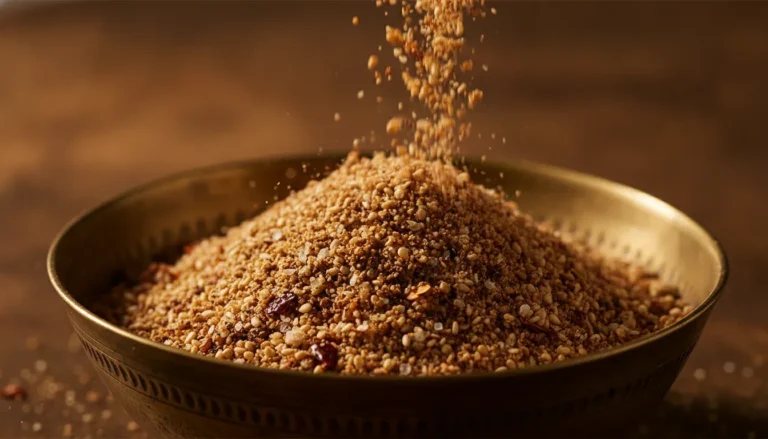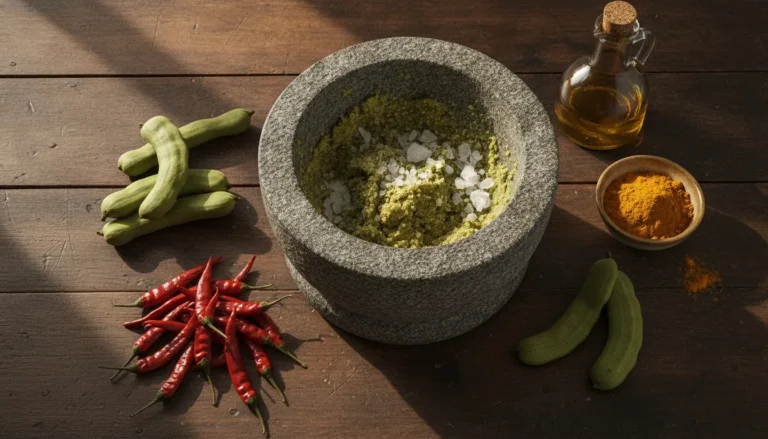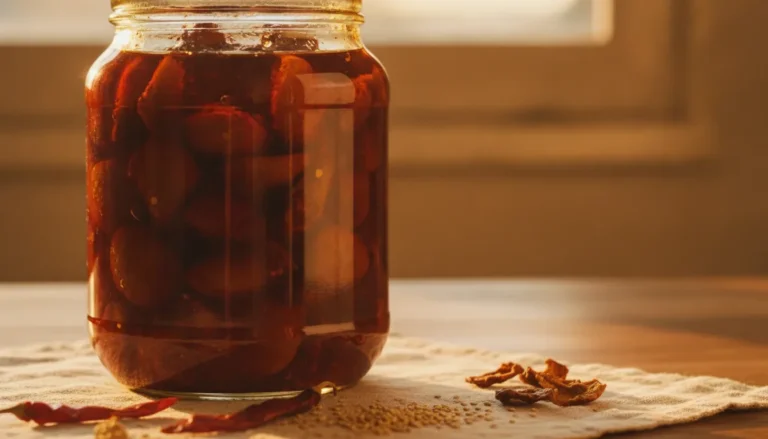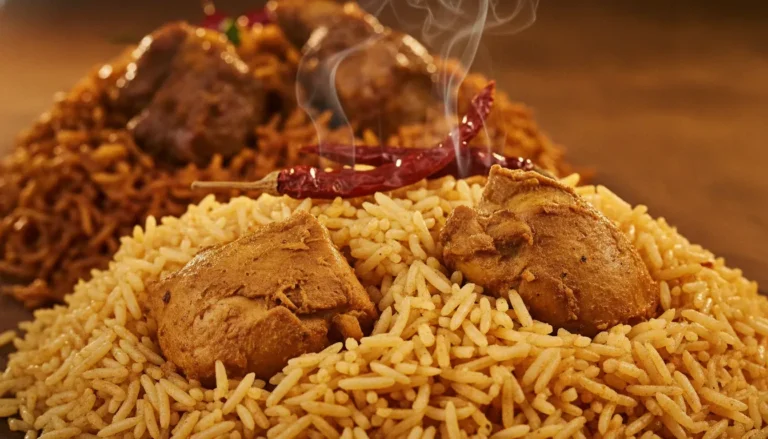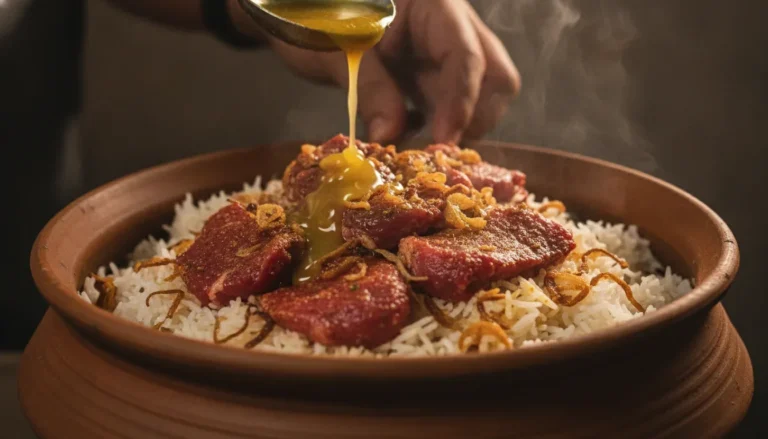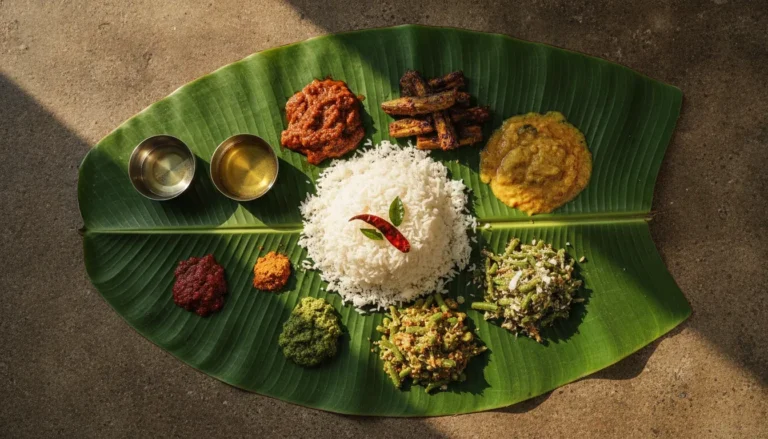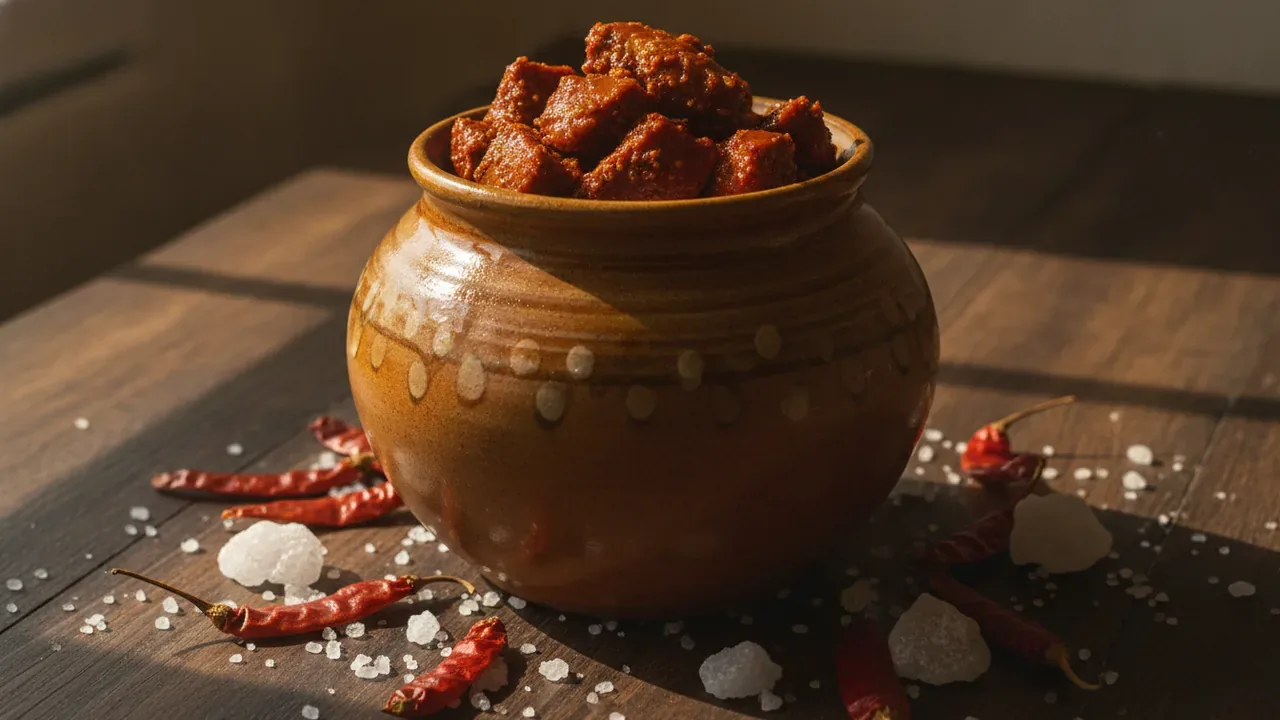
Open an Andhra kitchen in April and two things are usually going on at once. On the counter, a bowl of pachadi ground that morning, meant to be finished by tomorrow. In the corner, a ceramic jar the size of a bucket, packed tight, topped with a finger of oil, and left to sit until next April. Same cuisine, opposite timescales. That jar is an Andhra Ooragaya, and it is what most people mean when they say Andhra pickle. This page is about both halves of it: how the jar gets built, and how it keeps for a year without a fridge.
| An Andhra pickle is called ooragaya (ఊరగాయ), an oil-preserved pickle cut in large seasonal batches, packed with chilli, salt and mustard, and sealed under sesame oil in a ceramic jar, where it keeps for a year or more. It differs from pachadi, a fresh chutney made daily and eaten within a day or two. |
Table of Contents
What Andhra pickle is called, and how it differs from pachadi
Two Telugu words do most of the work, and the confusion between them is why home pickling so often goes wrong. Ooragaya is the oil pickle that keeps; some regions and older cooks say uppinakaya, literally the salt-preserved thing, for the same idea, and you will see it written uragaya in transliteration. Pachadi is the other word entirely. A pachadi is fresh: leaves or vegetables ground with chilli and salt, tempered, eaten the same day it is made. If you know the Hindi word achar, ooragaya is roughly its Telugu equivalent, though the Andhra style leans harder on chilli and sesame oil than most northern pickles.
The tell is time. If a recipe finishes in an afternoon, it is a pachadi. If it tells you to wait weeks before the first spoon, it is an ooragaya. Gongura is the one name that sits in both camps, which is exactly why people mix them up: gongura pachadi is the fresh relish, gongura ooragaya is the long-keeping jar. Keep the two apart in your head and half the mistakes disappear before you start.
Why most Andhra pickle pages tell you only half
Search for how to make an Andhra pickle and you land in one of two places. Either a single recipe, almost always avakaya, that assumes you already own a bharani and know what cold-pressed sesame oil is for. Or a shop page selling you the finished jar. Both skip the part that decides whether your pickle actually survives.
Making the paste is the easy half. Keeping it is where a home batch turns bitter, grows a grey skin of mould, or ferments into something sour and wrong by June. The cause is nearly always the same: water got in. A wet spoon, a jar left in the sun, an oil layer that slipped below the surface. The recipes stop at the pack-and-seal moment, the sellers never write it down at all, and the keeping, the harder and more useful half, goes unowned. That is the half this page treats as the main event.
Guntur chilli, salt and sesame oil: the three forces
A keeping pickle is not seasoned food. It is preserved food that happens to taste of Andhra, and three ingredients do the preserving.
Guntur Sannam chilli. The dried red chilli grown around Guntur sits at roughly 30,000 to 50,000 on the Scoville scale, and it goes into the jar at close to the same weight as the salt. Heat that high is not there to punish you. Capsaicin discourages the microbes that spoil food, and the chilli’s deep red colours the whole batch. It is the same chilli Nandhini has cooked with in Bengaluru since 1989.
Salt. Coarse crystal or rock salt, used as a preservative and not a seasoning. It works by drawing moisture out of the mango or the sorrel and out of the air trapped in the jar, so nothing is left for mould to live on. Under-salt an ooragaya and it will not keep. This is the one place in the recipe where restraint is the enemy.
Cold-pressed sesame oil. Nuvvula nune (gingelly or til oil) does two jobs. It carries the chilli’s heat and the mustard’s bite into the base as the pickle matures, and it forms a seal across the top of the jar that keeps air off everything below. Two supporting spices finish the chemistry. Mustard powder (avapindi) sharpens the flavour and helps the ferment along, while roasted, ground fenugreek (menthi) adds the faint bitterness that tells you a pickle was made properly. Turmeric goes in for colour and its own mild antiseptic edge.
How an ooragaya is built, step by step
The steps below are the general shape of an ooragaya. Swap the base and you have a different pickle: raw mango for avakaya, sorrel for gongura, lime for nimmakaya. Avakaya is the one most people learn first and it has a recipe of its own worth following closely; here it is only the worked example for the method every oil pickle shares.
- Prepare the base. Wipe it bone dry, never wash and pack. For avakaya, raw green mango is cut into pieces with a little of the inner shell left on; for gongura, the leaves are stripped, washed, then dried completely. Any surface water at this stage is the seed of later mould.
- Sun-dry. Spread the base on a clean cloth in direct sun, from a few hours to a full day depending on the ingredient, until the cut surfaces lose their wet sheen. Sun-drying is the first line of preservation, not a step to skip.
- Coat. Mix the dry masala, roughly equal parts chilli powder and salt, with mustard powder, roasted fenugreek and turmeric, then rub it through the base until every piece is covered.
- Pack. Press the coated base into a clean, dry ceramic jar, the bharani (jaadi), pushing it down so no air pockets remain. Glass or food-grade steel works too; avoid reactive metal, which turns the pickle metallic.
- Top with oil. Pour warmed and fully cooled cold-pressed sesame oil over the top until it stands a finger deep above the pickle. This layer is the seal, not a garnish.
- Seal and ferment. Cover with a clean cloth or lid and leave it in a cool, dark place. Stir every couple of days with a dry spoon for the first week so the salt and oil work through evenly. Most ooragayas are ready in one to three weeks, and they only improve after that.
How to keep a pickle for a year
This is the half the recipes skip, and the half that decides everything. A well-made ooragaya keeps for six to twelve months, and often past a year, on nothing more than salt, oil and a little discipline. The rules are short and worth treating as non-negotiable.
- Always a dry spoon. Moisture is the single enemy of a keeping pickle. One wet spoon introduces water and the bacteria that spoil it, and a jar can turn within days. Keep a dedicated dry spoon beside it and never let a used one back in.
- Keep the oil layer topped. The finger of sesame oil across the surface is what seals the pickle from air. As you eat down the jar the oil drops, so top it up and never let the layer break. An exposed surface is where mould starts.
- Store cool and dark before opening. A sealed, maturing jar wants a cool, dry shelf out of direct sunlight, not the fridge. Heat and light push the ferment too fast and can turn a good batch bitter.
- Refrigerate after opening. Once you are eating from the jar, the fridge slows everything down. This matters most for prawn and other non-veg pickles such as royyala avakaya, which spoil faster than the vegetable ones.
- Trust salt and oil, nothing else. A pickle made with enough salt and enough oil needs no preservative to last a year. If a batch keeps going bad, the answer is almost always more salt, more oil, or a drier spoon.
When a pickle does go wrong, the fault is usually readable. A grey or fuzzy skin on top means air reached the surface, so the oil seal broke or a wet spoon went in; skim it off, top up the oil, and move the jar somewhere cooler. A batch that turns sharply sour has generally fermented too warm or too fast. Bitterness most often comes from over-roasted fenugreek, or too much of it, rather than from the chilli. None of these is a preservative problem. Each one traces back to moisture, temperature, or a heavy hand with the menthi.
The Andhra pickle family, by base and keeping
Ooragaya is a family, not a single pickle, and the family is sorted by what goes in the jar. Most are vegetarian and built on the same three forces; a coastal cluster runs to non-veg. Mango and sorrel are the two most famous, each with a guide of its own, and the rest follow the same method with a different base.
| Pickle | Base | Notes and keeping |
|---|---|---|
| Avakaya (mango) | Raw green mango | The most famous ooragaya, the benchmark oil pickle, built to keep a year in the jar |
| Gongura ooragaya (sorrel) | Sorrel leaves | The tart green counterpart to mango; gongura also appears as a fresh pachadi |
| Nimmakaya (lime) | Whole limes | Softens and mellows over months; among the longest-keeping of all |
| Allam (ginger) | Fresh ginger | Sharp and warming; usually made in smaller batches |
| Maagaya (sun-dried mango) | Dried mango pieces | Chewier and more concentrated than avakaya |
| Pandu mirapakaya (red chilli) | Ripe red chillies | Chilli as the base itself; serious heat within the 30,000–50,000 SHU range |
| Usirikaya (amla) | Indian gooseberry | Tart and seasonal, valued as much for health as for taste |
| Chintakaya (tamarind) | Raw tamarind | Deeply sour, a Rayalaseema favourite |
| Royyala avakaya (prawn) | Prawns | The coastal non-veg pickle; shorter shelf life, keep refrigerated |
Geography shapes the shelf. Coastal Andhra and Uttarandhra lean on mango, prawn and the wetter bases, while Rayalaseema, drier and hotter, favours tamarind and heavy chilli pickles that keep through a long summer. Avakaya and gongura each deserve their own reading, which is where the dedicated mango and sorrel guides take over.
Andhra pickles in Bengaluru, off the shelf
Making a keeping pickle is a two-day job and a sackful of mango, which is more than most households in a Bengaluru flat want to take on. The shortcut that holds the quality is a jar made the same way, by a kitchen that pickles at scale.
Nandhini has cooked Andhra food in Bengaluru since 1989, on the same two forces a good ooragaya runs on: Guntur chilli and gongura. Alongside its 22 outlets across Bengaluru and Mysuru, the kitchen makes its own pickle and masala range through World of Nandhini retail, so an Andhra pickle in Bengaluru need not mean a two-day batch of your own. You can take a jar home, or eat it the way it is meant to be eaten, a small mound on the side of a rice plate at the table.
Whether it comes from your own bharani or a shop shelf, the test of a jar stays the same: enough salt, a clean oil seal, and a dry spoon every time.
Frequently Asked Questions
What is Andhra pickle called in Telugu?
An oil-preserved Andhra pickle is called ooragaya (ఊరగాయ), sometimes written uragaya or called uppinakaya. It keeps for a year or more. This is distinct from pachadi, a fresh chutney or relish made daily and finished within a day or two.
Which pickle is famous in Andhra Pradesh?
Avakaya, the raw-mango pickle, is the most famous Andhra pickle, followed closely by gongura made from sorrel leaves. Both are oil-preserved ooragaya, built on Guntur chilli, mustard and sesame oil, and eaten in small amounts with rice and ghee.
What are Andhra pickles made of?
The base is a raw ingredient such as green mango, sorrel, lime or ginger. Three forces preserve it: Guntur chilli at roughly 30,000 to 50,000 on the Scoville scale, coarse salt that draws out moisture, and cold-pressed sesame oil that seals the jar against air.
How long do Andhra pickles last?
A properly made oil pickle keeps for six to twelve months, and often past a year, when stored well. Keep the jar in a cool, dark place, top up the oil so it seals the surface, and always use a dry spoon, since moisture is the one thing that spoils it.
What is the difference between pachadi and ooragaya?
Pachadi is a fresh, short-shelf-life chutney made daily and finished within two days. Ooragaya is an oil-fermented pickle that keeps for a year or more. Gongura appears as both: gongura pachadi is fresh, gongura ooragaya is the long-keeping jar.