Every Telugu summer has a smell, and for a lot of households it is the smell of avakaya being made. The raw mangoes come in by the crate, the terrace fills with drying jars, and someone’s grandmother runs the kitchen like a foreman. Avakaya is the raw-mango pickle of Andhra Pradesh, and it is not a casual thing you throw together on a Tuesday. It is planned, argued over, and made once a year to last the year.
It is also the taste people carry furthest from home. A jar of avakaya rides in more diaspora suitcases than almost anything else out of an Andhra kitchen, wrapped in three plastic bags and a quiet prayer that it will not leak over the clothes.
There is a reason it earns this much ceremony. Avakaya is built to survive a full year in a jar with no fridge, through a South Indian summer, which is a real feat of preserving. Made right, it rewards you for months. Made wrong, you find fur on the top by July.
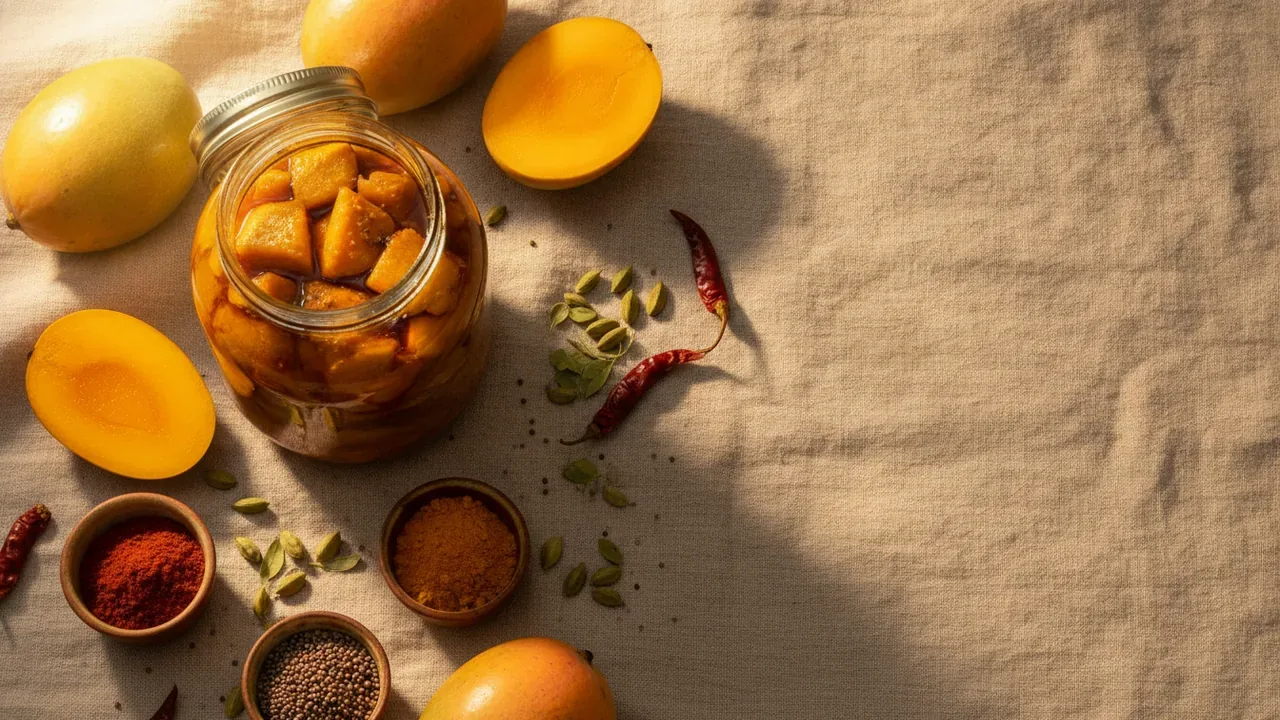
Avakaya (ఆవకాయ) is Andhra Pradesh’s raw-mango pickle: pieces of sour green mango, some kept with a bit of the kernel, mixed with mustard powder (aava pindi), Guntur red chilli, fenugreek and rock salt, then sealed under sesame (gingelly) oil. It is avakai in Tamil, and it is made in mango season to keep all year.
How avakaya differs from ordinary mango pickle
People abroad often reach for avakaya and get sent a jar of something quite different. Ordinary mango pickle, the kind sold everywhere, is usually small cubes of mango in a mild, sweetish or turmeric-led masala, sometimes lightly cooked. Avakaya is a different creature. The mango is cut large, with a shard of the hard kernel left on each piece, and the flavour leads with mustard, not sweetness.
The other close relative is maagaya (a drier Andhra mango pickle), which uses smaller, part-dried mango and far less oil, so it sets firmer and keeps a shorter while. And the milder North-Indian aam ka achar, with its fennel and nigella, sits in another register altogether. Avakaya is the loud one: sour, salty, mustard-sharp, and slicked with oil.
Three things make an avakaya an avakaya. The mango keeps a bit of kernel, which holds the piece together through months in the jar. Nothing is cooked and no water goes in, so the salt and oil do all the preserving. And a clear layer of gingelly oil sits on top from the first day to the last. The table sets it beside its cousins.
The name is worth knowing, because it is the recipe in two syllables. Avakaya comes from ava (mustard) and kaya (raw fruit). Mustard and raw mango: that is the whole idea. It is also why ordering plain mango pickle abroad so often disappoints a Telugu palate, since the mustard lead is exactly what goes missing.
| Avakaya | Maagaya | Ordinary cut-mango pickle | |
|---|---|---|---|
| Mango cut | large pieces, a bit of kernel left on | smaller, part-dried pieces | small cubes, no kernel |
| Spice lead | mustard powder, sharp and forward | chilli-led, less mustard | often chilli and turmeric |
| Oil | sealed under gingelly oil | less oil, drier set | light oil or none |
| Cooked? | never cooked, cured raw | never cooked, cured raw | sometimes lightly cooked |
| Shelf life | up to a year and beyond | several months | weeks to months |
The right mango and the Guntur heat
The mango matters more than any other choice. Avakaya wants a hard, very sour raw mango, tight-fleshed enough to survive being cut into rough pieces and left to cure for a year. In Andhra the season varieties are chosen for exactly this sourness and firmness. Abroad, where those varieties are hard to find, cooks reach for the sourest, firmest green mangoes they can get, often the large green ones sold in Asian and Latin American shops, and simply accept that the result will taste of where they live.
The heat comes from Guntur chillies. Guntur Sannam powder runs about 30,000 to 50,000 on the Scoville scale, which is why a spoon of avakaya bites the way it does. Some cooks blend in a milder, redder chilli for colour, but the Andhra default leans Guntur, because the mango and the salt can carry that much heat and still taste balanced.
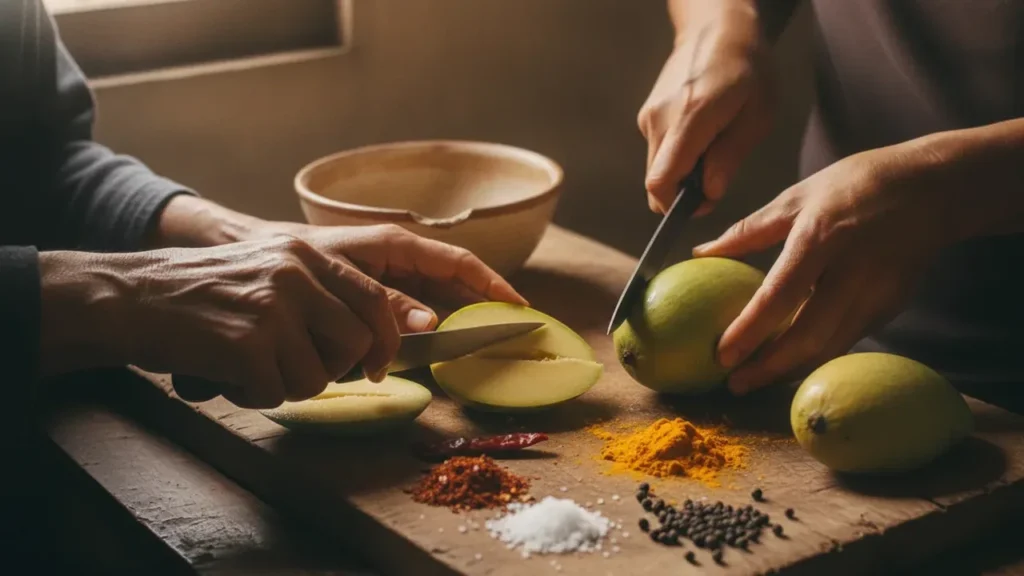
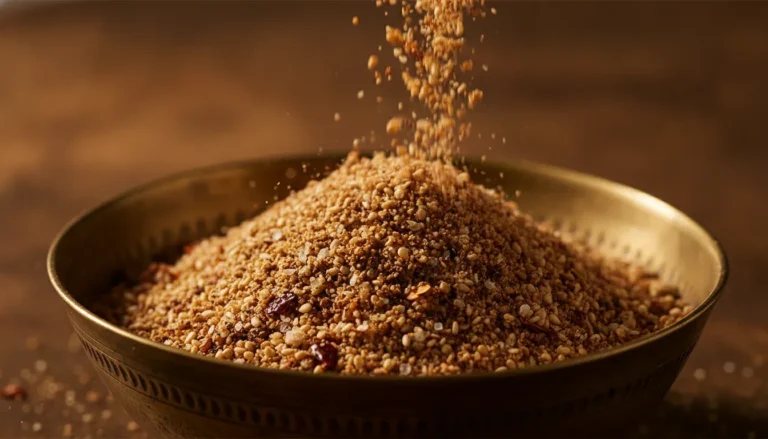
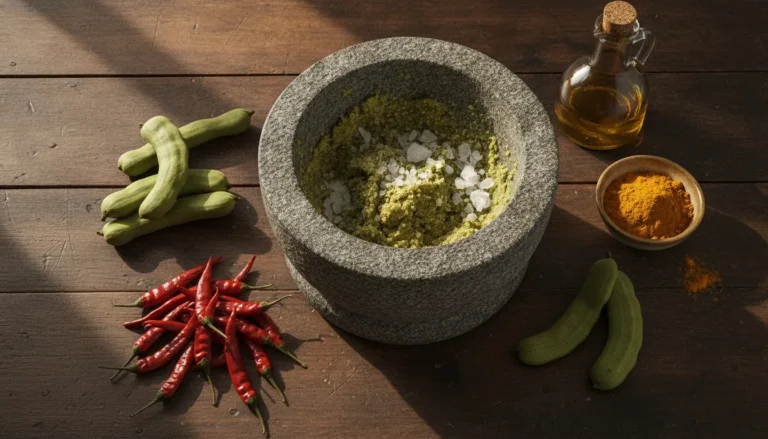
Underneath sits the mustard-and-fenugreek backbone. Freshly ground mustard powder, aava pindi, gives avakaya its signature pungency, and a little menthulu (fenugreek), roasted and used with restraint, adds a bitter depth without tipping into actual bitterness. Get the mango, the chilli and the mustard right, and the pickle almost makes itself.
One thing is not open to negotiation, and that is the oil. Avakaya is a gingelly-oil pickle. The nutty, heavy sesame oil pressed in the South stands up to the mustard and chilli and forms the seal that keeps the jar safe. A lighter oil holds neither the flavour nor the float, which is why every serious avakaya kitchen keeps a tin of nuvvula nune (sesame oil) for exactly this job.
How to make avakaya
This is the classic proportion a Telugu kitchen works to. The golden rule sits above every step: everything must be bone dry. One drop of water is what turns a good batch mouldy by monsoon.
Ingredients
- 1 kg raw sour green mangoes, wiped completely dry, cut into 2 cm pieces with a little kernel left on each
- 1 cup mustard powder (aava pindi), freshly ground
- 1 cup Guntur red chilli powder
- 3/4 cup rock salt
- 2 tbsp menthulu (fenugreek), lightly roasted, half of it powdered
- 2 to 2.5 cups sesame (gingelly) oil
- 1 head of garlic, peeled, optional (for the velluli version)
Method
- Wipe the mangoes bone dry and cut them into 2 cm pieces, leaving a little of the hard kernel on each. Dry the board, the knife and your hands too, since surface water is what spoils a pickle.
- In a dry bowl, mix the mustard powder, chilli powder, salt and fenugreek into an even, dry blend. No water goes near this at any point.
- Fold the mango pieces through the spice mix until every piece is coated. Add the garlic now if you are making velluli avakaya.
- Pour in enough gingelly oil to wet the mixture through and leave a shallow pool on top. Spoon it all into a dry ceramic or glass jar.
- Cover and leave it to mature for three to five days, turning it once a day with a dry spoon. The salt pulls juice from the mango, the mustard blooms, and the oil rises to the surface.
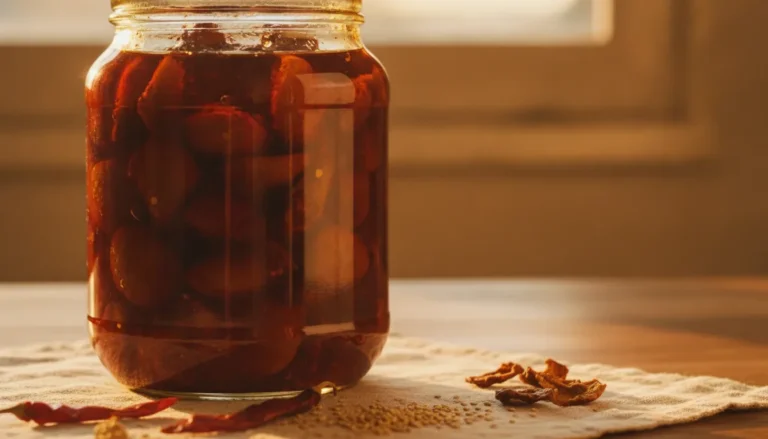
- Top up with more oil so a clear float always sits above the pickle. Kept dry and sealed like this, avakaya holds for up to a year at room temperature, and the flavour only deepens.
A few things worth knowing before you start. The proportions flex with the sourness of your mango, so taste the salted mix and add salt until it is assertively, almost too, salty. Never wash the cut mango; wipe it. And once it is jarred, leave it alone apart from the daily turn, because impatience and a wet spoon undo more batches than any wrong ratio ever will.
The variants
Once you have the base right, the variants are small turns of the same recipe. Velluli avakaya (garlic avakaya) folds in whole peeled garlic cloves, which soften and sweeten as the pickle matures. Menthi avakaya leans harder on fenugreek for a deeper, faintly bitter edge, while bellam avakaya (jaggery avakaya) rounds the heat with a little jaggery for households that like a sweet-sour balance. Pesara avakaya adds soaked moong, which swell and soak up the oil and spice.
The general keeping method, the drying, salting and oil-sealing, is shared across the whole Andhra pickle family, so once you can make one avakaya well, the rest follow with a change of one ingredient.
Beyond the named versions, every household tweaks the ratio a little, more chilli here, a heavier hand of garlic there, which is why no two families make quite the same avakaya and everyone is quietly certain theirs is right.
Why avakaya spoils, and how to save it
Almost every failed avakaya comes down to one word: moisture. A wet mango piece, a jar that was not fully dry, a spoon straight from the sink, or simply too little oil and salt, and the surface grows a bloom of mould within weeks. The pickle may also turn watery if the salt is short, since it is the salt that binds the juice the mango gives up.
The fixes are the ones the method already asks for. Dry everything, be generous with salt and oil, and keep a finger of oil floating on top at all times, topping it up as the pickle is eaten down. Use a dry spoon, every single time. If a thin skin does appear on the surface early on, lifting it off and adding a fresh layer of hot, cooled oil will often save the jar.
For cooks working in humid flats or without strong sun, the old sun-drying step can be skipped so long as the mango is wiped truly dry and the salt and oil are not stinted. The sun helps, but dryness and salt are what actually keep the pickle.
The diaspora meets a harder version of this problem. Humid flats, no terrace sun, and mangoes that are less sour all stack the odds against a jar. The workarounds are simple. Salt a little more heavily, keep the oil float thick, and if the climate is against you, store the matured pickle in the fridge, where it loses none of its character and gains a longer, safer life.
Avakaya on the plate
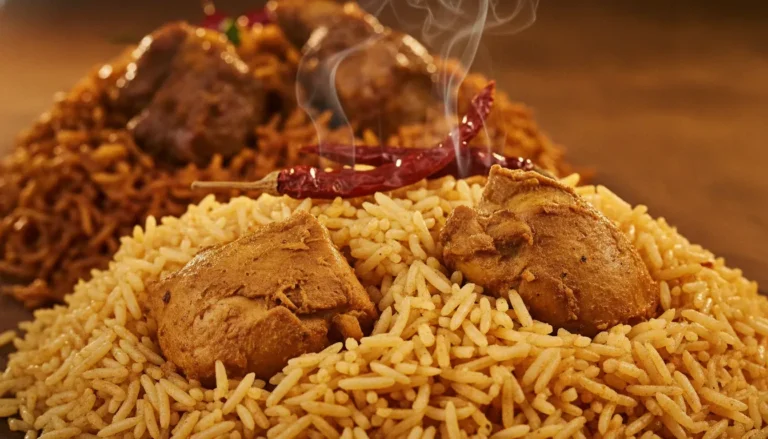
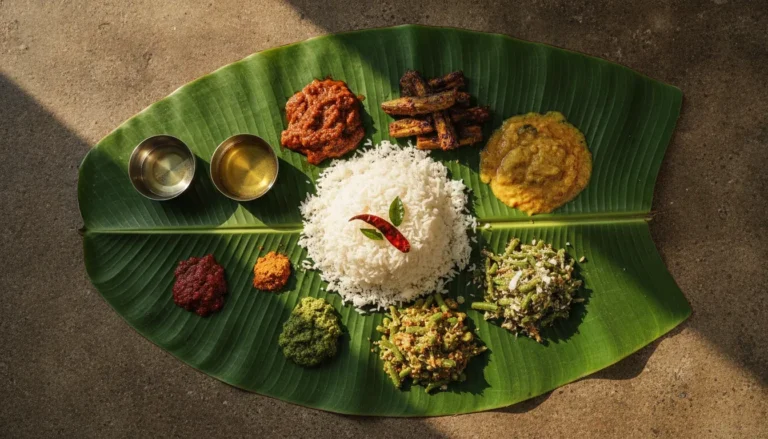
The reason to make all this effort sits in one plate: avakaya-annam. A spoon of avakaya mashed into hot steamed rice with a little ghee, eaten with your fingers, is one of the plainest and most complete things an Andhra kitchen offers. On a full banana-leaf meal it holds down a corner of the leaf, the sharp note you return to between richer curries.
For many people the memory is specific: a steel plate, the first avakaya-annam of the year, and an elder insisting you eat it with your hands because a spoon does not do it justice. That memory is what someone is really buying when they order a jar from abroad, which is why a pickle that tastes right matters far more than one that only looks the part.
Making a year’s worth is a project, and not everyone has a terrace, a crate of the right mangoes, or a free week in May. Buying a well-made jar from a kitchen that knows the pickle is a fair alternative, and for the diaspora it is often the only way to taste the real thing.
A good avakaya tells on itself the moment you open the jar. The oil should sit clear on top, the smell should be sharp with mustard and sour mango rather than fermented, and the pieces should hold their shape instead of slumping into a puddle. Oily, red and intact means someone made it properly.
Nandhini has served Andhra food in Bengaluru since 1989, and avakaya sits where it always has on the banana-leaf meal, beside the rice and the ghee. The Andhra pickles from World of Nandhini carry that same kitchen home in a jar, for the stretches when making your own is not on the cards.
Frequently Asked Questions
What is avakaya made of?
Avakaya is made from raw green sour mango cut into pieces, mixed with mustard powder (aava pindi), red chilli powder, rock salt and fenugreek, then preserved under a generous layer of sesame (gingelly) oil. Garlic is added in the velluli version.
What is avakaya in English?
There is no exact English word. It is best described as Andhra-style raw-mango pickle, a spicy, mustard-forward, oil-preserved pickle. It is not the same as the milder North-Indian mango pickle or a lightly cooked cut-mango pickle.
Is avakaya a fruit?
No. Avakaya is a pickle, not a fruit. The confusion comes from its name and its main ingredient, raw mango. The mango is the fruit; avakaya is the spiced, oil-preserved pickle made from it.
Why does avakaya spoil or turn watery?
Moisture is almost always the cause: wet mango pieces, a damp jar, a wet spoon, or too little oil and salt. Dry everything thoroughly, keep a good oil float on top, and use a dry spoon each time.
How long does avakaya last?
Made the traditional way, with dry mango, enough salt and oil, and a dry spoon, avakaya keeps for up to a year at room temperature, and often longer. The flavour deepens as it matures over the first few days.
In which state is avakaya famous?
Avakaya is the signature pickle of Andhra Pradesh and Telangana, made across Telugu households every mango season. It is eaten far beyond, wherever Telugu families have settled, mixed into hot rice with a little ghee.