It’s 4:30 in the afternoon and you want something to eat. Not a meal. Not a snack. Something in between – savoury, filling enough to hold you till dinner, but not so heavy that dinner stops mattering. In most of South India, that thing has a name: tiffin. The Andhra version of it is its own little world.
An Andhra tiffin is a light savoury meal – pesarattu, idli with karam podi, upma, punugulu, or Andhra-style pongal – eaten between or alongside the main meals of the day. It uses Andhra spices, podis, and chutneys, which makes it noticeably hotter than a Karnataka or Tamil tiffin. This guide explains what an Andhra tiffin actually is, the dishes that define it, and where to find Andhra tiffins in Bangalore.
What an Andhra Tiffin Actually Is
The word “tiffin” comes from a long-extinct British slang verb, “to tiff”, meaning to take a small drink. By 1867 it had become an Anglo-Indian noun for a light meal between main meals. South India absorbed the word and gave it specific shape: dosas, idlis, vadas, upma, pongal – savoury things that aren’t a full bhojanam (the unlimited rice-and-curry plate) but aren’t quite a snack either.
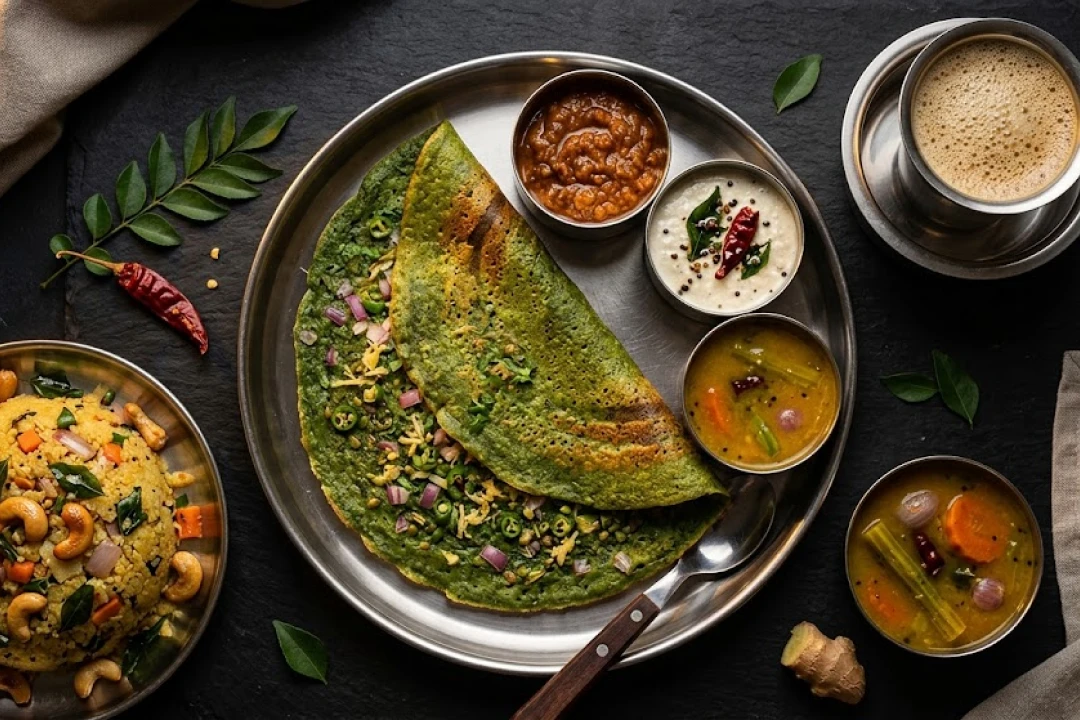
Andhra’s version is built around the same idea with its own register. The lead dish is usually pesarattu – a crepe made from whole green moong dal rather than fermented rice-and-urad batter. The chutney isn’t a mild coconut white; it’s allam pachadi, a ginger chutney sharp enough to stand up to the green moong. The idli, when it appears, comes with karam podi (a coarse chilli-and-lentil spice powder) and ghee rather than plain sambar.
An Andhra tiffin doesn’t try to be a meal. It’s the plate you order when you want flavour at the front of the day, or something between lunch and dinner that respects both.
Tiffin vs Breakfast
These two get used interchangeably, but they aren’t the same thing. Breakfast is a time slot – the first meal of the day. Tiffin is a meal category – any light savoury plate, eaten morning, evening, or late afternoon. In Bangalore, the overlap is real, because most tiffin items happen to be breakfast favourites. But you can have a tiffin at 4 PM and it’s still a tiffin. You can’t have breakfast at 4 PM and still call it breakfast.
If you’re specifically searching for an early-morning Andhra plate – the 6:30 AM pesarattu, the 7:30 AM idli – the wider Andhra breakfast guide is the right place to look. It maps the places that open before 9 AM. This article is the broader take on andhra style tiffins near me across the day, not just the early-morning slot.
For the broader picture of how Andhra food works in Bangalore, the wider picture of Andhra food in Bangalore sits one level up from this guide.
The Tiffin Centerpiece: Pesarattu
If an Andhra tiffin has a flagship dish, it’s pesarattu. The name comes from Telugu: pesalu (or pesara) means green gram, attu means crepe. So pesarattu is, literally, a green gram crepe. The description doesn’t sound exciting until you taste one.
The batter is made from whole green moong dal soaked for four to six hours, then ground with ginger, cumin, green chillies, and sometimes a small piece of soaked rice for crispness. There’s no fermentation. The batter is ready when it’s ground. This is what separates pesarattu from a regular dosa: a dosa needs eight to twelve hours of fermentation before you can pour it on a tawa, and a pesarattu doesn’t.
Texture follows from that. Pesarattu is denser than a dosa, slightly grainy, a little chewier in the middle, crisp at the edges where it meets the tawa. The colour is unmistakable – a deep moss green when the batter is fresh, golden-brown where it crisps. The flavour is earthy and slightly nutty from the green gram, with green chilli heat and a sharp ginger bite cutting through.
Pairing is non-negotiable: allam pachadi (ginger chutney). The ginger in the chutney echoes the ginger in the batter and adds the sourness from tamarind and the sweetness from jaggery. Coconut chutney and a thin sambar usually come alongside, but it’s the allam pachadi that defines the plate. The chutneys and pickles that go with tiffin get their own deep-dive elsewhere in our blog.
MLA Pesarattu (Upma Pesarattu)
Here’s a small piece of history most pesarattu plates don’t tell you. The version stuffed with rava upma – the one often called MLA pesarattu or upma pesarattu – was born in the canteens of the MLA quarters in Hyderabad in the 1950s. The cooks needed to make the dish substantial enough to stand alone, so they folded a mound of rava upma into the centre before flipping it shut. One plate, one price, and the dish stopped being just a starter.
It worked. Today MLA pesarattu is on almost every Andhra tiffin menu in Bangalore, ours included. The upma inside soaks up the moong batter from above and below, the texture goes from crisp to soft as you cut through, and the green chillies in both layers reinforce each other.
Because pesarattu deserves more than a section, the full pesarattu deep-dive covers regional variations, home-style versions, and the best places in Bangalore for each style.
Other Andhra Tiffin Items Worth Ordering
Pesarattu gets the headline, but the supporting cast on an Andhra tiffin menu deserves your attention.
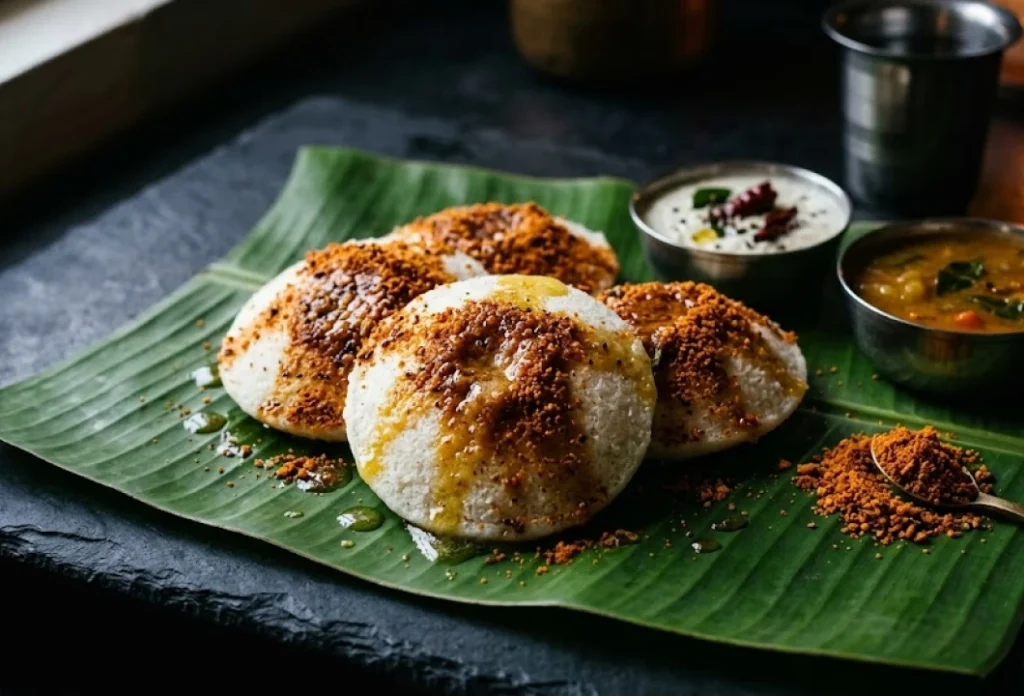
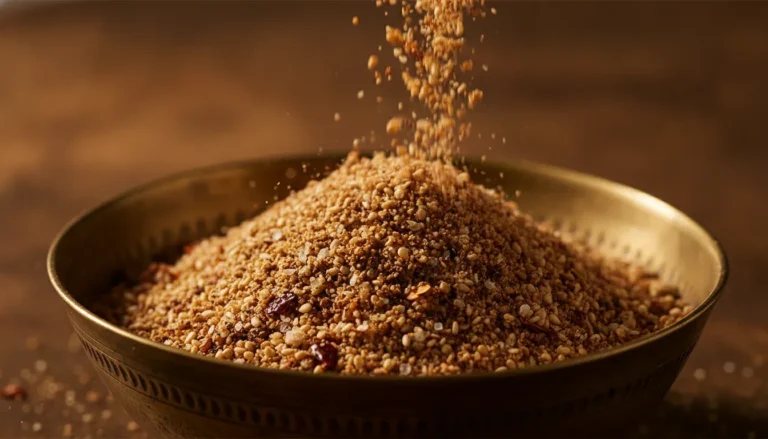
Idli with karam podi. Looks like an idli anywhere else. Tastes different because of what comes with it. Karam podi is a coarse, dry spice powder made from roasted lentils, dried red chillies, sesame seeds, garlic, and curry leaves. The idli arrives, the podi gets sprinkled generously over the top, and a spoon of ghee melts into both. The combination is hotter, denser, and far more savoury than the sambar-and-coconut-chutney version. This is the single biggest tell that you’re at an Andhra tiffin place and not a Tamil or Karnataka one.
Punugulu. Small, deep-fried balls made from leftover or fresh dosa-idli batter. Outside golden and crisp, inside soft and slightly steamy. Bangalore tiffin centres usually serve them as a side, but at an Andhra place they can hold their own as the main order with coconut chutney and a hot cup of filter coffee. They don’t travel well outside Andhra and Telangana, which is partly why finding good ones in Bangalore is satisfying.
Andhra-style pongal. The Tamil version is well known – ghee pongal, khara pongal. The Andhra version adds karam podi on top and uses a slightly looser rice-to-dal ratio, which gives it a more savoury, less stodgy texture. It’s the right tiffin for a cooler morning or when you want something gentler than a pesarattu.
Upma as a standalone. When you don’t want the moong-dal crepe but you do want the rava upma that goes inside it, ordering upma on its own is the right call. The Andhra version uses curry leaves, mustard seeds, green chillies, ginger, and a generous final tempering of ghee. More Andhra dishes worth knowing sits alongside this category.
Podi idli. Mini idlis tossed in karam podi and ghee, eaten with your fingers. A late entrant in the tiffin canon, but popular – especially with kids.
Thatte idli appears in a lot of Bangalore tiffin centres, Andhra-leaning ones included. It’s a Karnataka-Andhra border crossing rather than a strict Andhra item: a large, flat, soft idli served with chutney and sambar. Worth knowing because it’ll be on most tiffin centre menus you walk into.
Where to Find Andhra Tiffins in Bangalore
Most searches for andhra tiffins near me land in two pockets of the city: the eastern IT corridors (Marathahalli, Whitefield, HSR) and the southern Telugu-leaning neighbourhoods (Jayanagar, BTM, Banashankari). Opening hours vary widely: dedicated tiffin centres can open as early as 6:30 AM and run through morning; full Andhra restaurants like Nandhini begin at 11:30 AM, which suits a brunch-time or late-afternoon tiffin better than an early breakfast.
Marathahalli
Andhra Tiffins & Meals on Marathahalli’s outer ring is one of the most consistently named places in the area. The pesarattu is the order to lead with; the allam pachadi is sharp enough to clear a head cold. Lunch transitions into a meals format from 12:30 PM.
Whitefield
AHA Andhra Tiffins serves the Whitefield tech corridor. The MLA pesarattu is a steady seller. Opens early enough to count as a breakfast option for the morning shift.
Jayanagar
Sri Kakatiya Deluxe Mess does the early-morning tiffin well – pesarattu, idli with podi, upma – before turning into a meals place after 11:30. For the post-11:30 tiffin slot in the same neighbourhood, Nandhini Jayanagar is the reliable option, especially for the upma pesarattu and idli with karam podi.
Vijayanagar and Mathikere
Venkateshwara Andhra Hotel in Vijayanagar and Mathikere Tiffin Center handle the older, more workaday tiffin crowd. Plastic chairs, formica tables, fast service, no-nonsense plates. The pesarattu at both is unpretentious and consistent.
BTM Layout
Amma Andhra Tiffins is the South Bangalore stalwart. Solid pesarattu, generous portions, low prices. Filter coffee in steel tumblers.
Indiranagar
Babai Tiffins and Hotel Nandhana Palace both serve the area, and there’s also the family-friendly Nandhini Indiranagar outlet for a brunch tiffin with cleaner seating.
RT Nagar, Banashankari, and the central pockets
Nandhini outlets at RT Nagar and Banashankari serve the tiffin menu within the restaurant’s hours; for the central business district, the St. Marks Road flagship is the closest pick.
For the unlimited-meals version of Andhra food rather than the tiffin format, where Andhra mess places fit in is the companion guide. And for when you want a full Andhra meal instead, the broader meals guide covers that territory.
The Nandhini Tiffin Experience
A tiffin order at Nandhini is straightforward. The pesarattu comes folded in half on a steel plate, allam pachadi and coconut chutney in separate small bowls, a thin sambar on the side. The MLA version arrives a few minutes later because the rava upma stuffing is made fresh, not held over from earlier service. The idli is served with karam podi and a spoon of warm ghee. The upma, ordered on its own, comes with the same ghee tempering and curry leaves.
The thing worth knowing about timing: Nandhini opens at 11:30 AM. If you’re looking for a 7 AM pesarattu, a dedicated tiffin centre is the right answer and you should go to one. What Nandhini does well is the brunch-time tiffin and the late-afternoon tiffin between 4 and 6 PM, when most early centres have already shut for the day. That gap is actually our strength.
Pesarattu batter is ground fresh each morning. There’s no fermentation step – pesalu doesn’t ferment – so freshness is all that matters, and the batter goes onto the tawa the same morning it’s ground.
We’ve served these dishes for 37 years across 15+ outlets. Jayanagar, RT Nagar, Indiranagar, and St. Marks Road are the outlets where tiffin items move fastest and stay reliably available across the day.
Frequently Asked Questions
What is an Andhra tiffin?
An Andhra tiffin is a light savoury meal – pesarattu, idli with podi, upma, punugulu, or pongal – eaten as a substantial snack between meals or as a morning or evening light meal. It is distinct from a full Andhra meal and uses Andhra-specific spices, podis, and chutneys.
What is the difference between tiffin and breakfast?
Tiffin is any light savoury meal eaten between the main meals – morning, evening, or anytime in between. Breakfast is the first meal of the day, usually heavier. In South Indian usage, tiffin is often eaten for breakfast, but the categories are not the same.
What is the most famous Andhra tiffin item?
Pesarattu – a crisp green-moong-dal crepe – is the signature Andhra tiffin item. The version stuffed with rava upma, called MLA pesarattu or upma pesarattu, originated in the MLA quarters canteens of Hyderabad in the 1950s and is now an Andhra menu staple.
What is the difference between pesarattu and a regular dosa?
A regular dosa is made from a fermented urad dal and rice batter. A pesarattu is made from whole green moong dal (pesalu) ground with ginger, cumin and green chillies – no fermentation needed. It is higher in protein, denser in texture, and pairs with allam pachadi.
Where can I find authentic Andhra tiffins in Bangalore?
Babai Tiffins, Andhra Tiffins & Meals in Marathahalli, AHA Andhra Tiffins in Whitefield, Mathikere Tiffin Center, and Amma Andhra Tiffins in BTM are well-known tiffin centres. Nandhini’s 15+ outlets serve the full Andhra tiffin range including pesarattu, idli with podi, and upma from 11:30 AM.
Are Andhra tiffins spicier than other South Indian tiffins?
Yes. Andhra tiffins use Guntur chillies, ginger-heavy allam pachadi, and karam podi – making them noticeably hotter than Karnataka or Tamil tiffins. The pesarattu batter often contains green chillies and ginger directly, so the heat is built in rather than added on the side.
What time should I go for an Andhra tiffin?
Dedicated tiffin centres open as early as 6:30 to 7:30 AM and run through morning. Full Andhra restaurants typically begin service at 11:30 AM, which suits a brunch-time tiffin or a late-afternoon light meal better than an early breakfast.
Are Andhra tiffins vegetarian?
Yes, Andhra tiffins are almost always vegetarian. Pesarattu, idli, upma, pongal, and punugulu are all veg. Non-veg Andhra food appears in the meals and biryani category, not tiffin. A few places offer egg pesarattu or egg dosa as a tiffin add-on.
Conclusion
A tiffin is its own meal occasion. Not a small breakfast. Not a heavy snack. Its own thing, with its own rhythm, eaten when the day asks for something savoury that isn’t a full plate. Andhra has its own version of it, and Bangalore has the places that serve it well – from the 6:30 AM tiffin centres in Mathikere to the 4 PM upma pesarattu at Nandhini Jayanagar. If you’ve been searching andhra tiffins near me without quite knowing what to order, you now have a map.
We’ve been serving pesarattu, idli with karam podi, upma, and punugulu since 1989. Across 15+ outlets, the dishes haven’t changed and the regulars haven’t stopped coming. To find Andhra outlets across Bangalore, the meals guide maps every Nandhini location.
A tiffin doesn’t have to be your biggest meal of the day. It just has to be right for the moment.