Ask a cook in a Rayalaseema village what belongs on the plate for a wedding, or the morning after Sankranti, and the answer lands before you finish asking: natu kodi. It is country chicken, the free-range native bird that fed Telugu households long before poultry farms existed. The meat runs darker, firmer and leaner than the broiler sitting in a supermarket tray, and it behaves nothing like it in the pot. That one difference is why a single bird carries a whole spread of dishes, and why anyone raised on it counts natu kodi among the famous foods of Andhra Pradesh worth travelling for.
| In short. Natu kodi (Telugu: నాటుకోడి) means country chicken, a free-range native (desi) bird raised in the villages of Andhra Pradesh and Telangana. Its meat is firmer and leaner than broiler, so it is cooked longer, most famously as natu kodi pulusu, a tamarind-based curry central to Rayalaseema and Coastal Andhra tables. |
Table of Contents
What natu kodi means, and how it differs from broiler
The word splits cleanly. In Telugu, natu means country, native or local, and kodi means hen or chicken. Put together, natu kodi is a locally reared, free-range bird, the opposite of the mass-farmed broiler that fills most restaurant kitchens. Some families say naati kodi or simply country chicken instead; they all point to the same thing.
The difference you notice first is not the name. It is the meat. A natu kodi bird spends its life moving and foraging around a house or a farmyard, so the muscle works harder and sets firmer. It comes out leaner, darker and higher in protein, with a deeper savour and a bite that holds together on the bone. Broiler chicken, raised fast and mostly still in a shed, is soft, pale and forgiving, and falls apart in twenty minutes.
That firmness is exactly what trips up a home cook trying natu kodi for the first time. Follow a broiler timing and the meat turns rubbery and tight, and people walk away deciding country chicken is just tough. It is not tough. It is a different bird that asks for a different clock, which is where most recipes quietly go wrong before the masala is even ground.
Telling the two apart is easier than it sounds. A country bird is smaller and leaner, its skin more yellow than pale pink, the flesh a deeper red-brown, and it costs noticeably more per kilo because it takes months, not weeks, to raise. When a stall sells large, uniform, pale birds at broiler prices and still calls them natu kodi, they usually are not. The real thing looks like it did some living before it reached the pot.
Why natu kodi cooks differently
Here is the part the raw-meat sellers and quick recipe reels skip. A leaner, firmer bird needs help before it ever meets heat, and it needs longer once it does.
Start with the marinade. Two to three hours is normal, not optional, and curd (yoghurt) earns its place here for a reason beyond flavour. The mild acid in curd loosens the tight muscle fibres, so the meat gives instead of resisting. Ginger-garlic paste, turmeric, red chilli and salt go in alongside it, and some cooks add a spoon of raw papaya or a squeeze of lemon for extra tenderising on an older bird.
Then the cooking runs long. Where broiler simmers to done in fifteen to twenty minutes, natu kodi wants a slow simmer or a pressure cooker doing the patient work. Four to five whistles is the village shorthand, followed by a gravy left to reduce gently rather than a fast boil. Rush it and the meat seizes. Give it time and it turns silky while still holding its shape on the bone.
Age matters as much as the clock. A younger country bird gives in around four whistles, while an older, harder-worked one may want six and a longer simmer after, which is why experienced cooks judge by feel and press a piece rather than trust a fixed number. The finish is Andhra to the core: a tempering of curry leaves, dried red chilli and mustard seeds crackled in hot oil and stirred through at the end. That last step is where a plain country curry becomes natu kodi worth remembering.
None of this is complicated. It only asks that you stop treating a country bird like a farm one. Marinate properly, cook slow, and the same meat that felt stubborn becomes the reason people keep asking for natu kodi in the first place.

The country-chicken dishes of Andhra
One bird, many plates. The firm meat that makes natu kodi awkward for a beginner is exactly what lets it stand up to a long list of Andhra treatments, from a sour tamarind stew to a dry roast to a Sunday biryani. Here is the working repertoire, roughly in the order it turns up on a Telugu table.
Natu kodi pulusu (tamarind country-chicken curry)
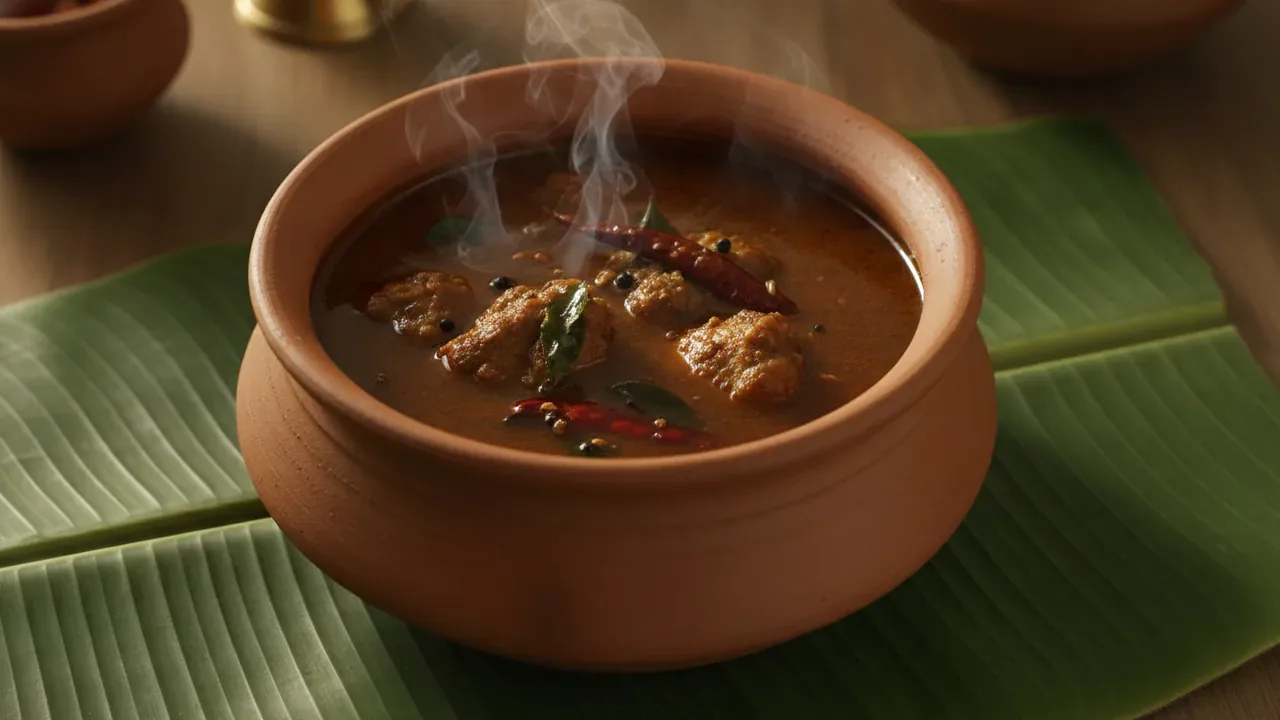
The signature, and the dish most people mean when they say natu kodi. Pulusu is a tamarind-based sour curry, the firm bird simmered slowly in a tangy, spiced gravy until the sourness and the meat settle into each other. It runs thinner than a heavy kura, made to be spooned over rice or, in Rayalaseema, over ragi sankati. The sourness should sit just behind the heat, never ahead of it; a pulusu that tastes only of tamarind has lost its way. If you cook one country-chicken dish, make it this.
Natu kodi kura and vepudu (gravy and dry fry)
Kura is the everyday version, a thicker Andhra chicken curry built on a ground paste of coconut, poppy seeds (khaskhas), melon seeds and cashew with cardamom, clove and cinnamon, rather than on tamarind sourness. Vepudu takes the same bird the other way, a dry roast fried down with curry leaves and chilli until the edges catch and crisp; it is the dish that empties fastest at a family lunch, eaten with rice and rasam or straight off the plate. Iguru sits between the two, a semi-dry masala that clings to each piece. Same bird, three textures.
Natu kodi biryani
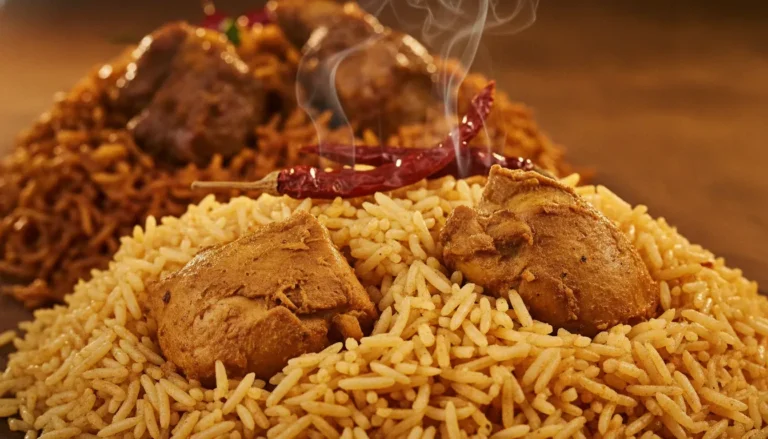
Country chicken makes a firmer, more chewable biryani than broiler, which is precisely why some households will only cook their festival biryani with natu kodi. Layered with fried onions, mint and a curd marinade, then sealed and finished on dum, it holds its own against the rice and the spice instead of shredding into it. It is a slower biryani to get right, for every reason above, and the wait is the point.
Natu kodi pulao
Lighter and quicker than biryani, the Andhra kodi pulao cooks chicken and rice together in one pot with a shorter spice list. With a country bird it turns earthier and less oily than the broiler version, a weeknight dish that still tastes of the farmyard rather than the freezer.
Chintakaya natu kodi
A Rayalaseema and Coastal speciality that leans on chintakaya (raw green tamarind) instead of ripe tamarind pulp, for a sharper, greener sourness. It stays a seasonal, homely dish more than a restaurant one, and it is a good marker of how deep the country-chicken repertoire runs past the famous pulusu.
At a glance, this is how the main dishes line up:
| Dish | Telugu | What it is | Base | Typical pairing |
| Natu kodi pulusu | నాటుకోడి పులుసు | Sour country-chicken stew | Tamarind | Ragi sankati, hot rice |
| Natu kodi kura / vepudu | నాటుకోడి కూర / వేపుడు | Everyday gravy / dry fry | Coconut-poppy masala | Rice, jowar roti |
| Natu kodi biryani | నాటుకోడి బిర్యానీ | Layered spiced rice | Whole spices, curd | Raita, salan |
| Natu kodi pulao | నాటుకోడి పులావ్ | One-pot spiced rice | Light masala | Raita, egg fry |
The Rayalaseema signature: pulusu and ragi sankati
To see where natu kodi truly belongs, look at Rayalaseema, the dry southern belt of Andhra Pradesh where the pairing is close to sacred. Natu kodi pulusu with ragi sankati (a stiff finger-millet dumpling, also called sangati) is a documented Rayalaseema delicacy, and once you have eaten it the logic is plain. The bland, dense millet is built to carry the tangy, fiery pulusu. You pinch off a lump, dip it, and let the two do the work between them.
It shows up when it matters. A Sankranti feast, a wedding lunch, a Sunday when the family bird finally goes into the pot. In the harvest months the pot often goes on before dawn, so the pulusu has hours to deepen before the sankati is pressed. In these households the chicken is usually reared at home or bought live from a known farm, which is half the reason people insist real natu kodi tastes of something the tray-packed version simply does not.
There is a reason beyond taste. Country chicken is leaner and higher in protein than broiler, and across Rayalaseema it carries a long-held reputation as strengthening food, cooked for new mothers and anyone recovering. Whether or not the folk claim holds in full, the bird earns its place at the centre of a feast rather than the edge of one.
Then there is the heat, and Rayalaseema does not hold back. This is Guntur-chilli country, and the Guntur Sannam runs 30,000 to 50,000 on the Scoville scale, sharp and dry rather than merely hot. In a natu kodi pulusu that heat has somewhere to go, cut by tamarind sourness and soaked up by the millet. Served with ragi sankati, jowar roti or plain hot rice, it is the plate that tells you natu kodi is Rayalaseema food first and a menu line second.
Where to eat real country chicken
So where does someone outside a Rayalaseema village actually eat this? That is the question no recipe blog or raw-meat listing answers, and it is where a proper Andhra kitchen earns its place.
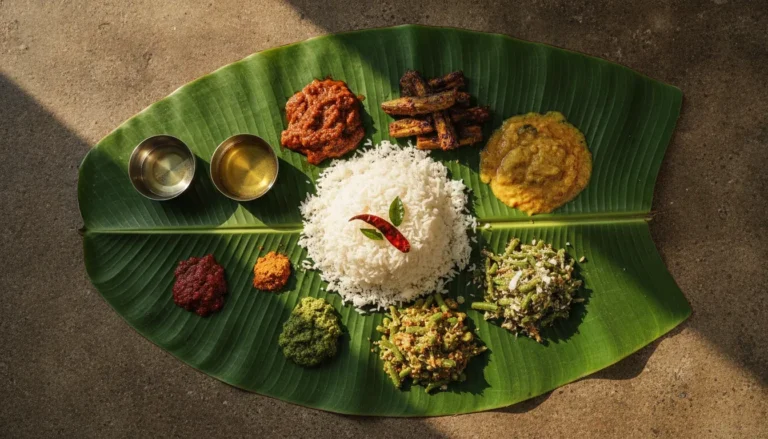
Nandhini Deluxe has cooked Andhra food in Bengaluru since 1989, when Shri N. Ananda opened the first outlet at Minerva Circle. It grew into the city’s first Andhra restaurant chain, now 22 company-owned outlets across Bengaluru and Mysuru, never franchised, serving well over 10,000 diners a day under Managing Director Dhanush Srinivas. The identity has held steady throughout: spice-forward Andhra non-veg, plated the way Rayalaseema and Coastal kitchens plate it, on a banana leaf.
That is the register natu kodi lives in. If you want the wider country-chicken-style Andhra spread, the pulusu-and-rice, the dry fries, the meal that arrives on a leaf rather than a plate, the Andhra non-veg meals guide is the place to see what a full sitting looks like and where to find it. Real country chicken belongs at a table set up for it, and that is the table this cuisine was built on.
Frequently asked questions
What is natu kodi in English?
Natu kodi means country chicken: a free-range, native (desi) bird raised in Andhra and Telangana villages rather than on a poultry farm. Its meat is firmer, leaner and more flavourful than broiler, which is why Telugu cooks prize it for slow curries.
What does natu kodi mean?
In Telugu, natu means country, native or local, and kodi means hen or chicken. Together, natu kodi describes a locally raised, free-range bird, distinct from mass-farmed broiler chicken and closer to how poultry was traditionally reared in villages.
How is natu kodi different from broiler chicken?
A natu kodi bird moves and forages freely, so its meat is firmer, leaner and darker, with a deeper taste. Broiler chicken is softer and cooks fast, while natu kodi needs longer marination and slower cooking to turn tender.
Is natu kodi good for health?
Country chicken is generally leaner and higher in protein than broiler, with less fat, and is raised without the intensive feed of farmed birds. As with any meat, the benefit depends on portion size and how it is cooked.
What is natu kodi pulusu?
Natu kodi pulusu is a tamarind-based country-chicken curry from Andhra and Telangana. The firm bird is marinated, then simmered in a tangy, spiced gravy. In Rayalaseema it is often eaten with ragi sankati, a finger-millet dumpling.
Which natu kodi dishes are worth trying?
Beyond pulusu, the country-chicken repertoire includes natu kodi kura and vepudu (fry), natu kodi biryani and pulao, and chintakaya (raw tamarind) versions. Each uses the same firm bird but changes the base, from tangy gravy to dry roast to rice.
Nandhini has cooked this regional table in Bengaluru since 1989, across 22 outlets and more than 10,000 diners a day. For country chicken, it helps to sit where Andhra non-veg is the whole reason the kitchen exists.