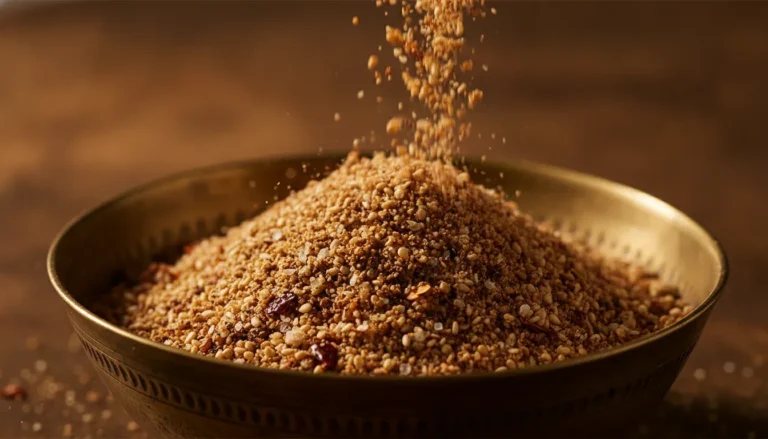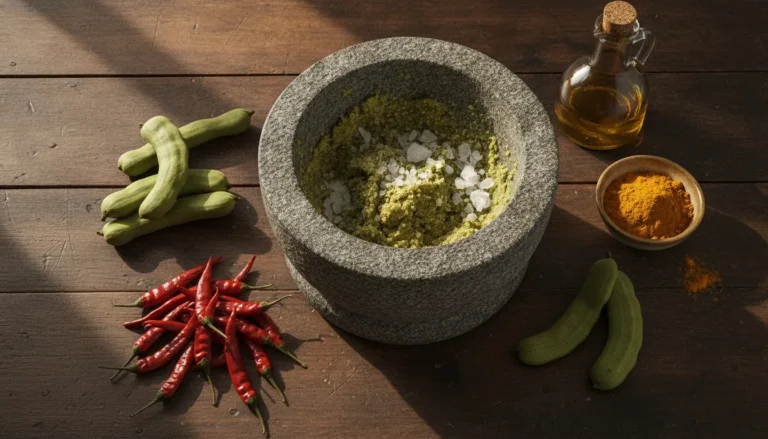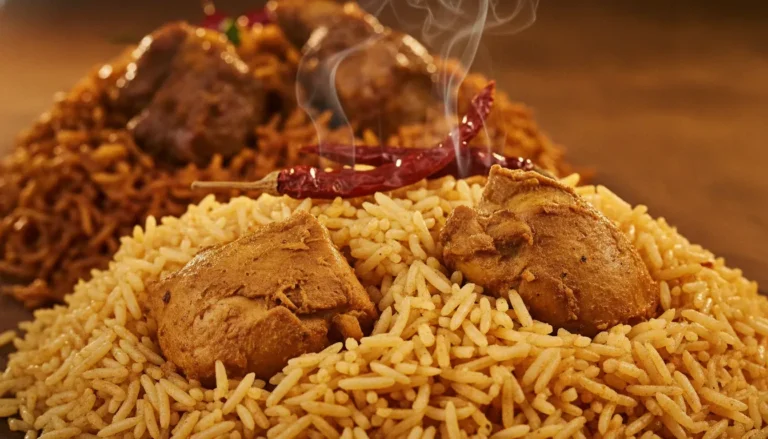
Say gunpowder in an Andhra kitchen and nobody thinks of explosives. They think of a coarse red powder, spooned onto hot rice, drowned in ghee and eaten with the fingers until the plate is clean. The trouble is that one nickname hides two different podis. Karam podi is the fiery, chilli-forward one, sharp with garlic and a whisper of tamarind. Kandi podi is the milder, nuttier cousin, built on toor dal and eaten as much for comfort as for heat. Recipe blogs, and even the AI answers, lump the two together as gunpowder. Andhra cooks know they are not the same thing, and this page is about that difference: what each one is, how to make both, and how they end up on the plate.
Andhra gunpowder is the English nickname for a family of dry Andhra podis eaten with hot rice, idli or dosa and a pour of ghee or sesame oil. It covers two main powders: karam podi, the chilli-forward one built on Guntur heat, and kandi podi (paruppu podi), the milder toor-dal one.
Table of Contents
Karam podi vs kandi podi: the Andhra split
This is the distinction almost nobody online draws cleanly. Karam podi and kandi podi both sit beside an Andhra meal, both answer to gunpowder, and both go on rice with ghee. Past that, they are built for different jobs.
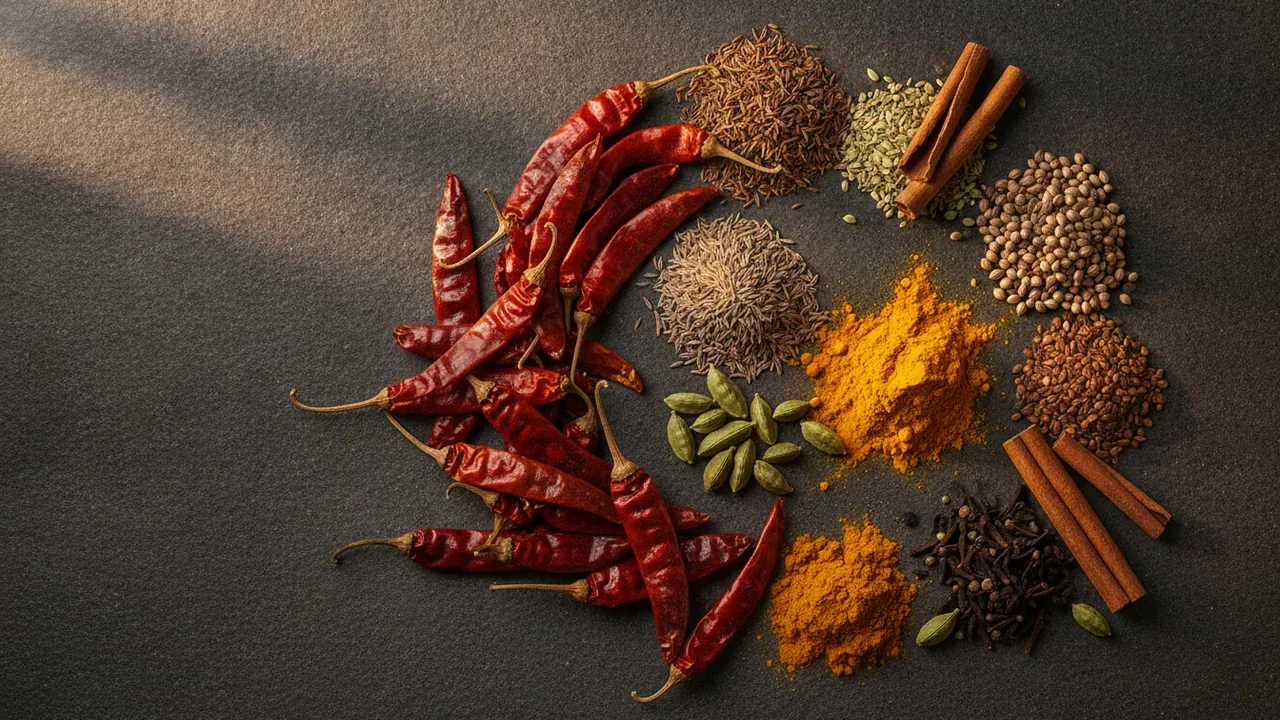
Karam podi (కారం పొడి, spicy powder) is about heat. Karam means spicy in Telugu, and the powder earns the name: dry red chillies lead, backed by chana dal and urad dal for body, garlic for depth, a little tamarind for sourness, and coriander and cumin for roundness. It is sharp and savoury, made to wake up a plain plate of rice. Its darkest version is nalla karam podi (black chilli powder), where the chillies are roasted further and the garlic goes in generously for a smokier result.
Kandi podi (కంది పొడి) is about the lentil. Kandi is Telugu for pigeon pea, so kandi podi is a toor-dal (kandi pappu) powder first and a chilli powder second. Cooks also call it paruppu podi or pappu podi. It is nuttier, milder and heavier with protein, the podi you give a child, or reach for when you want the comfort of dal in powder form. There is heat in it, but it sits behind the roasted-lentil sweetness rather than in front of it.
Karam podi vs kandi podi
| Karam podi | Kandi podi | |
|---|---|---|
| Base lentil | Chana dal and urad dal | Toor dal (kandi pappu), with chana and moong |
| Flavour lead | Chilli, garlic, tamarind | Roasted toor dal, nutty |
| Heat | High, Guntur-led | Mild to medium |
| Texture | Coarse, dry, gritty | Coarse, softer, fuller |
| Best on | Hot rice and ghee, idli, dosa | Hot rice and ghee, milder plates |
| Shelf life | One to two months | About a month |
One more name causes confusion: idli karam podi. That is simply karam podi eaten with idli instead of rice, not a third powder. The recipe is the same; only the plate underneath it changes.
Put simply, karam podi leads with the chilli and kandi podi leads with the dal. If you grew up on gunpowder and remember it as fiery, that was most likely karam podi. If you remember it as nutty and gentle, that was kandi podi.
The Guntur heat question
Why does Andhra gunpowder bite differently from a Tamil or Karnataka podi? Guntur. The dry red chillies grown around Guntur in coastal Andhra carry the heat that defines the whole cuisine, sitting around 30,000 to 50,000 on the Scoville scale, well above the mild 1,000 to 2,000 of a Kashmiri chilli. In karam podi especially, they are the whole point of the powder.
Heat is not the only job, though. A good podi wants colour and depth as much as fire. Cooks who know the craft blend their chillies: Guntur for the burn, and Byadgi or Kashmiri for the deep red colour and a rounder background warmth. Nalla karam podi pushes the other way, roasting the chillies darker for a smokier, almost bitter-edged heat rather than a bright one. Kandi podi keeps a lighter hand on the chilli throughout, because the toor dal is meant to lead. If you are buying rather than roasting, the mark of a real Andhra podi is that Guntur sharpness, not just a red colour on the label.
Colour without heat is the giveaway of a weak podi. A jar that looks bright red but eats flat has usually been padded with mild Byadgi or paprika and skimped on the Guntur. The two chillies do different jobs, and a proper Andhra podi wants both: Guntur to bite, Byadgi to glow.
How to make karam podi
Karam podi is a dry-roast job from start to finish, and the order matters. Roast each thing to its own doneness, cool everything, then grind coarse. Rush it and you get a damp, bitter powder that will not keep.
A working ratio: 1 cup chana dal, half a cup urad dal, 20 to 25 dry red chillies (mostly Guntur, a few Byadgi for colour), 2 tablespoons coriander seeds, a teaspoon of cumin (jeera), a lime-sized ball of tamarind, 8 to 10 garlic cloves, a small piece of asafoetida (inguva / hing), and rock salt to taste.
- Dry-roast the chana dal on low until golden and nutty. It is the hardest to cook through, so it leads. Set it aside.
- Roast the urad dal the same way, to pale gold, and add it to the chana dal.
- Roast the coriander seeds and cumin until fragrant, then the dry red chillies until they crisp and darken a shade. Do not let the chillies burn, or the whole podi turns bitter.
- Dry the tamarind out in the warm pan for a few seconds so it grinds cleanly instead of clumping.
- Blister the garlic cloves until they take a little colour. This is what gives karam podi its savoury backbone.
- Cool everything to room temperature. Grinding warm releases oil and ruins the texture.
- Pulse-grind to a coarse powder, add the rock salt and asafoetida, and pulse once more to combine.
For nalla karam podi, roast the chillies darker and lean harder on the garlic; the powder comes out smokier and near-black. Stored in a dry jar, karam podi holds its heat for weeks.
How to make kandi podi
Kandi podi is gentler to make and more forgiving, because the lentils, not the chillies, carry it. The one rule that matters is roasting each dal properly and separately, since toor, chana and moong all cook at different speeds.
A working ratio: 1 cup toor dal (kandi pappu), a quarter cup chana dal, a quarter cup moong dal, 8 to 12 dry red chillies (Guntur, adjusted to taste), a teaspoon of cumin, 4 to 6 garlic cloves (optional), a small piece of asafoetida, and salt.
- Dry-roast the toor dal on low until deep golden and nutty. This is the flavour of the whole podi, so take it far enough that it smells toasted, never raw.
- Roast the chana dal and moong dal separately to the same golden point, since each takes a different time.
- Roast the cumin and the dry red chillies until fragrant and crisp.
- Blister the garlic if you are using it, for a savoury note.
- Cool everything fully before it goes near the grinder.
- Grind coarse, add the asafoetida and salt, and pulse to mix. Keep it gritty; kandi podi is meant to have some body, not turn to flour.
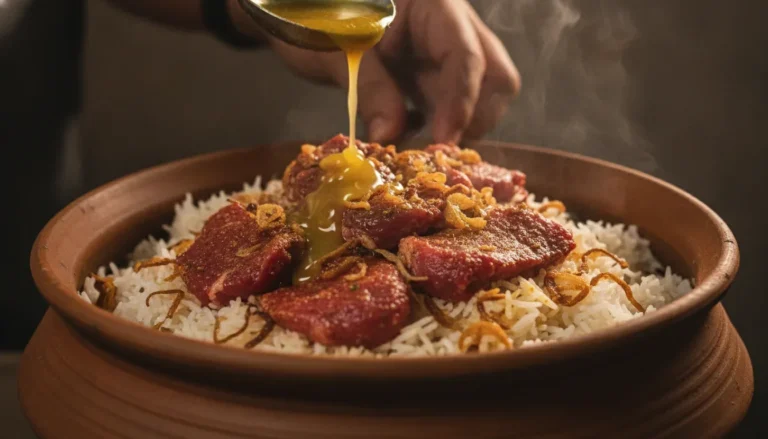
The classic way to eat it makes its own case. Take hot steamed rice, press a small well in the middle, spoon in kandi podi, pour in ghee or sesame oil (nuvvula nune), and mix it through with your fingers until every grain is coated. It is plain food, and it is the kind of thing people who grew up on it crave for years afterwards.
There is a practical reason kandi podi turns up so often at family tables. Because it leans on toor, chana and moong dal rather than chillies, it is genuinely protein-rich, which is part of why it is a standard for growing children and for anyone who wants something nourishing in a single spoonful over rice.
The karam podulu family
Karam podi is really the headline of a whole family of Andhra spice powders, the karam podulu. Once the roast-and-grind method is in your hands, the lead ingredient swaps out and a new podi appears.
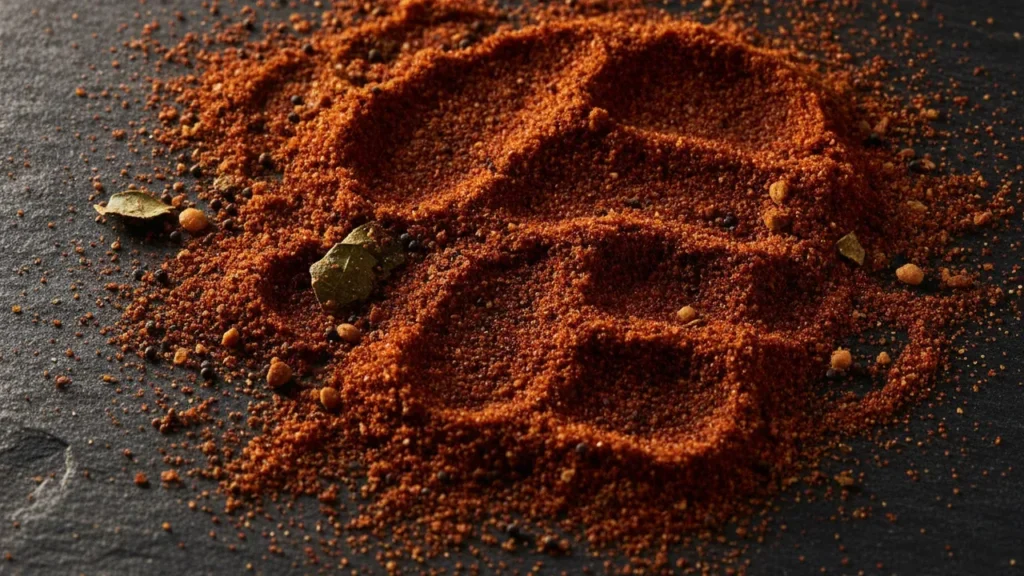
Nalla karam podi is the dark, smoky one, with the chillies roasted further and garlic in force. Palli karam (peanut karam) folds roasted groundnuts into the blend for a nutty richness. Karivepaku karam (curry-leaf karam) is built around handfuls of dry-roasted curry leaves, deep green and faintly bitter, valued as much for digestion as for taste. Kakarakaya karam (bitter-gourd karam) turns dried bitter gourd into a podi with a sharp, medicinal edge that many Andhra households swear by. They share one spine: dry-roast the lead ingredient, balance it with dal and Guntur chilli, grind coarse, keep it dry. Each is a small turn on the same idea, which is why an Andhra pantry often has three or four podi jars going at once. Most of the family carries a quiet health logic too: curry-leaf karam for digestion, peanut karam for richness on a lean plate, bitter-gourd karam as a tonic. They are seasoning and home remedy at once, which is how Andhra kitchens have always treated their podulu.
Keeping it fresh
Both podis fail for the same reason: moisture, and it creeps in from three places. An incomplete roast leaves water inside the lentils, which leaks into the powder over days, so roast everything until dry and nutty. Grinding while warm pushes oil out of the chillies and garlic, and oil is what makes a podi cake into lumps, so cool the roast fully first. And a wet spoon, one dip after touching hot rice or curd, will seed a jar with damp.
Keep karam podi and kandi podi in clean, dry, airtight jars, and always serve with a dry spoon. Karam podi holds for one to two months at room temperature. Kandi podi, carrying a heavier load of lentils, is best inside a month. For longer storage or in humid weather, move the jar to the fridge.
On the plate
The truest test of either podi is the simplest plate. Hot steamed rice, a well of ghee or sesame oil, a heaped spoon of podi, mixed by hand: no curry, no side, and somehow complete. Beyond that, both go beside idli, dosa and uttapam, and both travel well, which is why they turn up in tiffin boxes and on long train journeys across the Telugu states.
They earn their place at breakfast and lunch alike. A spoon of podi turns leftover idlis, a plain dosa or a bowl of curd rice into a full plate in seconds, which is why the jars sit within arm’s reach in most Telugu kitchens rather than at the back of the shelf.
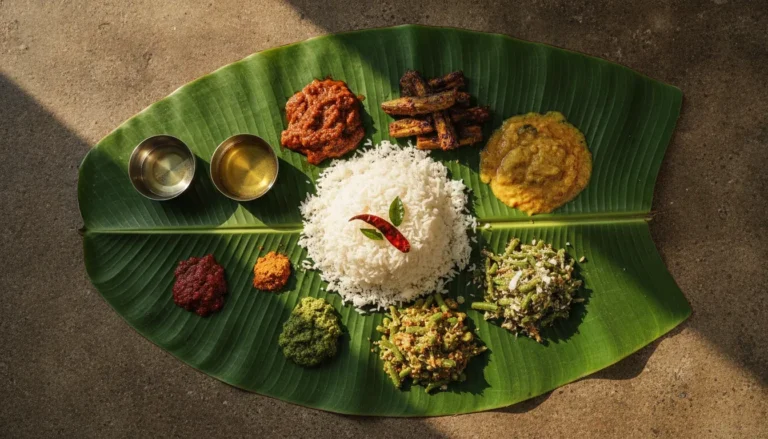
On a full Andhra banana-leaf bhojanam, a mound of podi sits in the corner of the leaf next to the ghee and the pickle, ready for the plain rice at the end of the meal. It is not the showpiece of the spread. It is the part regulars reach for first.
If you would rather buy than roast, a good jar is worth the search. Nandhini serves podi with its banana-leaf bhojanam across its Bengaluru and Mysuru kitchens every day, and its retail arm, World of Nandhini, bottles Andhra podis for taking home. Made in your own kitchen or spooned from a Nandhini leaf, the measure stays the same: a coarse, dry, Guntur-honest podi that tastes of the roast.
Frequently Asked Questions
What is the difference between karam podi and kandi podi?
Karam podi is the chilli-forward Andhra gunpowder, built on dry red chillies, garlic and a little tamarind. Kandi podi is a toor-dal (pigeon pea) podi, milder, nuttier and protein-rich. Both are eaten with hot rice and ghee.
What is karam podi made of?
Karam podi is made by dry-roasting chana dal and urad dal with dry red chillies, coriander seeds, cumin, a little tamarind and garlic, then grinding to a coarse powder with salt. Guntur chillies give it its characteristic heat.
What is kandi podi made of?
Kandi podi, also called paruppu or pappu podi, is built on roasted toor dal (kandi pappu) with chana and moong dal, dry red chillies, cumin, and optional garlic and asafoetida, ground coarse. It is protein-rich and milder than karam podi.
Is karam podi the same as gunpowder?
Gunpowder is a loose English nickname used for both karam podi and kandi podi, and sometimes idli podi too. Strictly, karam podi is the chilli-forward version. The nickname reflects the heat, not one single recipe.
What do you eat karam podi and kandi podi with?
Both are classic with hot steamed rice and a well of ghee or sesame oil, mixed by hand. They also sit beside idli, dosa and uttapam, and travel well as a dry side for tiffin and long journeys.
How long do karam podi and kandi podi keep?
Stored in an airtight jar at room temperature and served with a dry spoon, karam podi keeps for one to two months. Kandi podi, with its heavier lentil load, is best within about a month. Refrigerate either for longer.