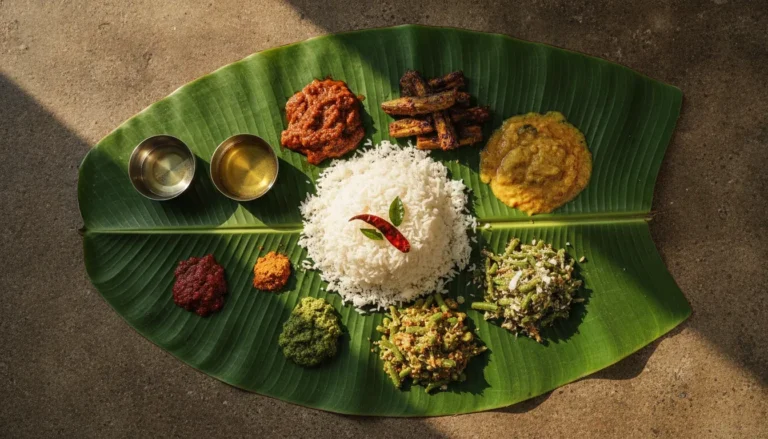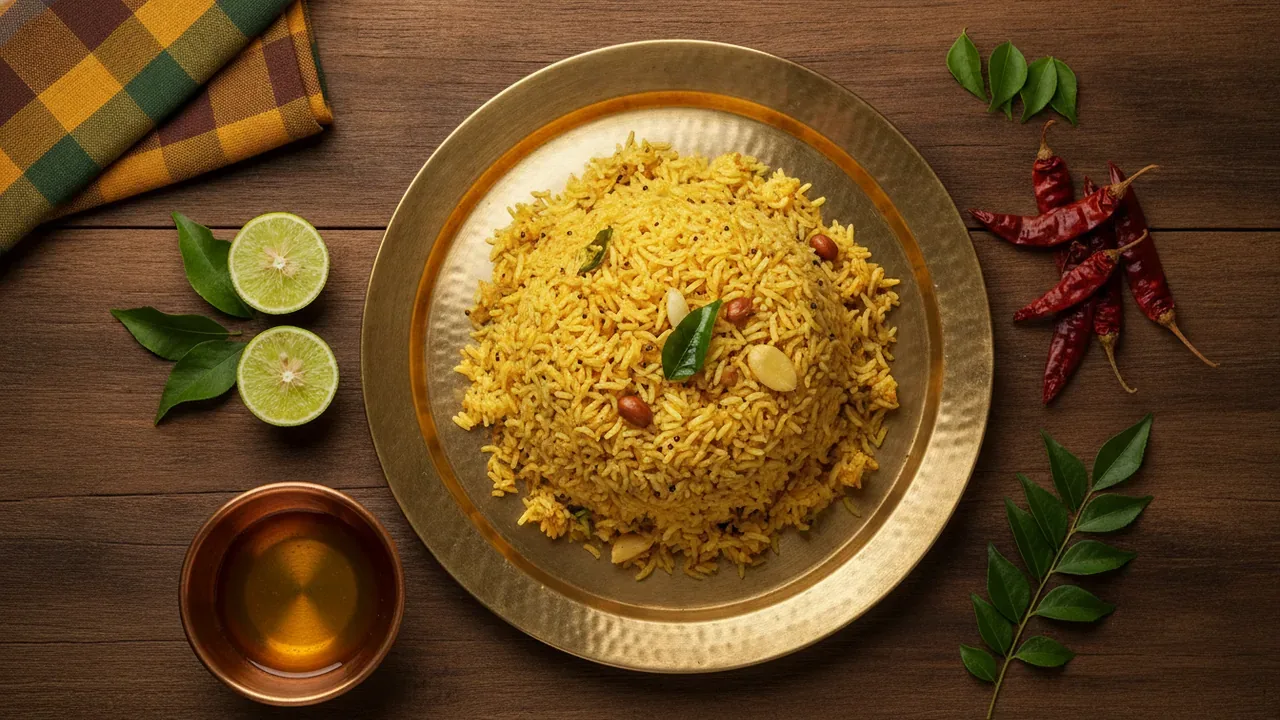
Walk past a Telugu household on the morning of Varalakshmi Vratam and the smell gives it away before you reach the gate: tamarind reducing in sesame oil, mustard seeds cracking, curry leaves going in last. Pulihora is being made. It is the rice on every Andhra festival plate, the prasadam pressed into your palm at the temple counter, the lunchbox dish that honestly tastes better the next day. Most of India knows it loosely as tamarind rice, which is accurate and also not the whole story. This page covers what pulihora actually is, why the name matters, how the Andhra version differs from its southern cousins, and where to find the real thing in Bengaluru.
Table of Contents
What is pulihora?
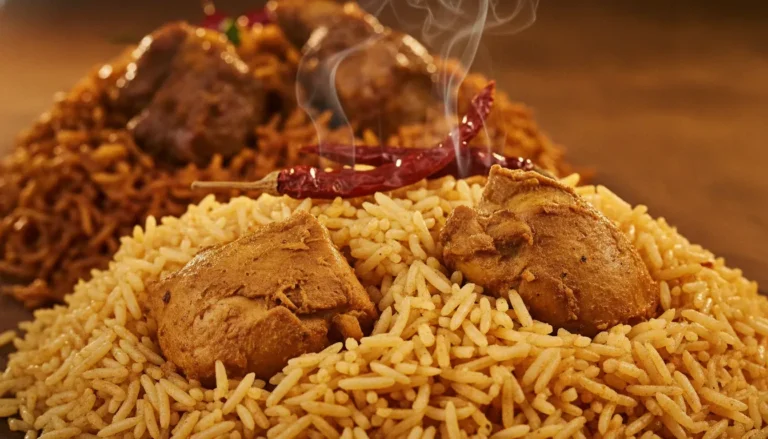
Pulihora is a South Indian rice dish from Andhra Pradesh, made by folding cooled rice into a reduced tamarind (chintapandu) paste with jaggery, then tempering it in sesame oil with mustard seeds, dals, peanuts, chillies and curry leaves. In English it is called tamarind rice. It is served as temple prasadam and festival food.
Why it’s called pulihora
The name does what Telugu food names tend to do: it describes the dish. Puli comes from pulupu, the Telugu word for sour or tangy. Hora traces back to ogaramu, an old word for food or cooked rice. Put together, pulihora means sour rice, which is as honest a label as any dish carries. When the souring agent needs spelling out, it becomes chintapandu pulihora, chintapandu being tamarind. In different districts you will also hear pulisoru and pulinchoru, all pointing at the same plate.
In English, the accepted name is simply tamarind rice. The translation loses the poetry but keeps the point. This is rice built around sourness, and in the classic Andhra version that sourness comes from tamarind, simmered down until it clings to every grain.
Pulihora vs puliyogare vs puliyodarai vs lemon rice
Type tamarind rice into a search bar and four different dishes answer. They are cousins, not copies, and telling them apart matters if you care what lands on your plate.
Andhra pulihora is the palest of the family. It leans on tamarind pulp and a light hand with spice powder, so the rice stays a soft turmeric yellow and the sourness sits right up front. Karnataka’s puliyogare runs darker and sweeter, built on a fried spice paste (gojju) heavy with roasted fenugreek, sesame and jaggery. Tamil Nadu’s puliyodarai, the temple classic of Srirangam, goes darker still: a concentrated pulikachal paste gives it a deep brown colour and a heat that builds as you eat. Chitranna, Karnataka’s everyday tempered rice, usually swaps tamarind for lemon. And lemon rice proper, nimmakaya in Telugu, is a different dish altogether, soured with citrus rather than tamarind, brighter and much quicker to make.
| Dish | Region | Souring agent | Colour and character |
| Pulihora | Andhra Pradesh, Telangana | Tamarind (chintapandu) | Pale turmeric yellow; tamarind-forward, light on spice powder |
| Puliyogare | Karnataka | Tamarind, in a fried gojju paste | Darker, sweeter; roasted fenugreek and sesame notes |
| Puliyodarai | Tamil Nadu | Tamarind, as pulikachal concentrate | Deep brown; spice-powder heavy, heat that builds |
| Chitranna | Karnataka | Usually lemon | Bright yellow; light everyday tempered rice |
| Lemon rice (nimmakaya) | Across South India | Lemon | Fresh and citrusy; a different souring agent entirely |
The short answer for anyone still confused at a counter: if it is pale yellow, tamarind-forward and finished with mustard or sesame powder, you are eating Andhra pulihora.
What makes it taste right
Ask an Andhra cook what good pulihora tastes like and you will not get a recipe. You will get a balance: sour, salt, spice and heat, held in proportion. Tamarind supplies the sour. Jaggery does not make the dish sweet; it takes the raw edge off the tamarind so the sourness reads as deep rather than sharp. Salt carries both. The heat arrives twice, once from dry red chillies fried in the tempering and once from slit green chillies, and in an Andhra kitchen the dried chilli is usually Guntur, which sits around 30,000-50,000 on the Scoville scale, several times the heat of a jalapeno. Even so, pulihora should warm you, not punish you. It is festival food, cooked for grandmothers and five-year-olds off the same pot.
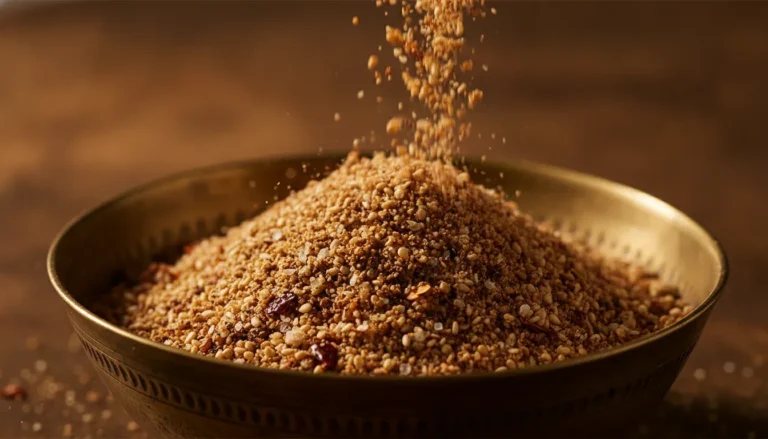
The quiet fourth element is the podi. Roasted mustard powder (ava podi) or roasted sesame powder gives temple pulihora its distinctive nose, and it is also where most home attempts fall apart. Mustard and sesame turn bitter within seconds of over-roasting, and a bitter podi drags the whole plate down with it. Light roast, low flame, off the heat early.
How pulihora is made
The method is short. The discipline is in the details.
Start with aged rice, ideally sona masoori, cooked so the grains stay separate, then spread on a wide plate and cooled completely. This is the single biggest divider between good and bad pulihora: warm rice keeps absorbing moisture and collapses into mush the moment the tamarind goes in. Cold, firm grains take the paste and stay distinct.
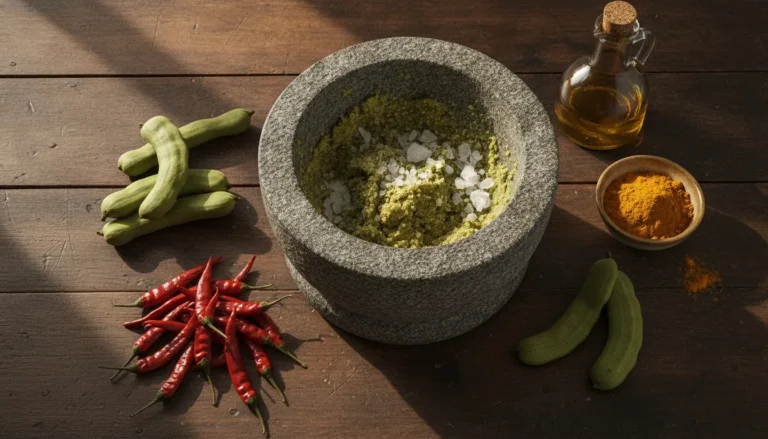
While the rice cools, soak tamarind in hot water and squeeze out a thick pulp. Simmer it down with salt, turmeric and a small piece of jaggery until it thickens to a spoonable paste that tastes slightly too strong on its own. It should, because the rice will dilute it.
The tempering happens in sesame oil, and sesame oil is not negotiable; it is half the aroma of the finished dish. Mustard seeds first, then chana dal and urad dal until golden, peanuts until they crackle, dry red chillies, slit green chillies, ginger, a pinch of hing, and a full handful of curry leaves at the end. Pour the tempering and the tamarind paste over the rice, scatter in the lightly roasted podi, and fold with a light hand, or with fingers, as most Telugu kitchens still do.
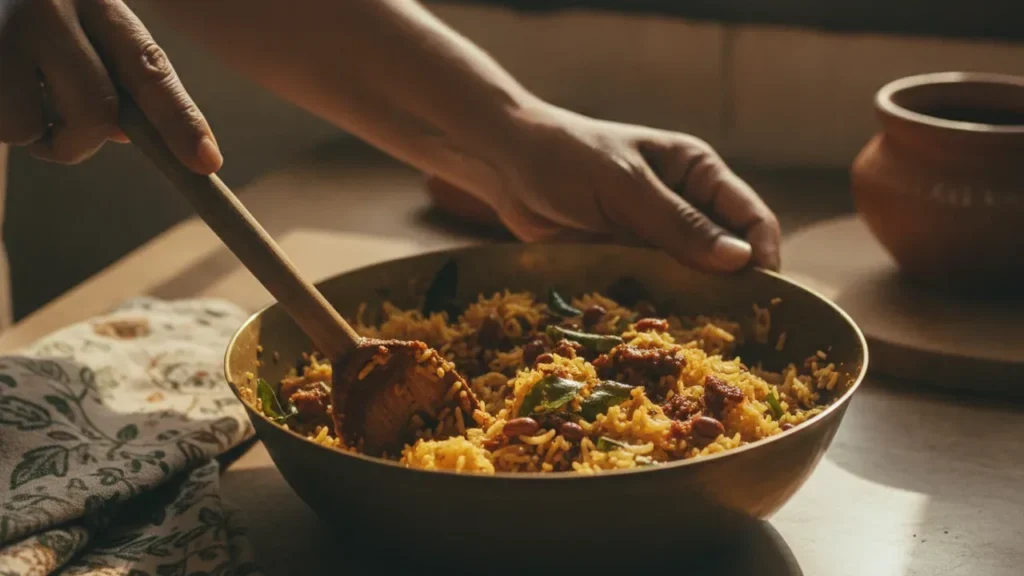
Then the step everyone skips: rest it. An hour at minimum. Pulihora meant for a festival morning is often mixed the night before, because tamarind needs time to walk into the grain. Temple kitchens go one further, leaving out onion and garlic entirely and letting ava podi supply the depth instead.
Serve it at room temperature, never piping hot; the flavours are clearest once the rice has settled. A cashew or two fried along with the peanuts is a festival flourish, not a requirement. And if the batch tastes flat rather than wrong, the fix is nearly always a pinch more salt, not more tamarind.
Types of pulihora
The frame stays constant: cooled rice, a tempering in sesame oil, a souring agent folded through. Swap the souring agent and you get a recognised variant, each with its own season and its own loyalists. Ask three Telugu households which one is proper pulihora and you will get three firm, incompatible answers.
- Chintapandu pulihora (tamarind). The classic and the default; what pulihora means unless someone says otherwise. The festival and temple standard across Andhra Pradesh and Telangana.
- Nimmakaya pulihora (lemon). Lemon juice added off the heat; quicker and brighter, the everyday cousin. This is the one place where pulihora and lemon rice genuinely overlap.
- Mamidikaya pulihora (raw mango). Grated sour mango does the work; made in the March-April mango season and tied closely to Ugadi, which is why interest in it spikes every spring.
- Gongura pulihora (sorrel leaves). The tang comes from gongura, the sour leaf Andhra cooking treats as a birthright; a bridge between the state’s rice table and its pickle jars.
- Nuvvula pulihora (sesame). Roasted sesame powder carries the flavour; nuttier and gentler, and a common naivedyam (temple offering).
- Rava pulihora. The same idea worked on roasted semolina instead of rice; a tiffin-hour shortcut rather than a festival dish.
Pulihora on the festival plate
Pulihora earns its standing by turning up everywhere that matters. Ugadi, Sri Rama Navami, Varalakshmi Vratam, Vinayaka Chavithi, Dasara, Deepavali: if a Telugu calendar marks the day, pulihora is on the plate. It is fixed at weddings and gruhapravesam (housewarming), and it is the prasadam most temples in Andhra Pradesh and Telangana press into waiting palms, often alongside garelu (fried lentil vada), daddojanam (curd rice), paramannam or chakkara pongali. At home it takes company just as easily: majjiga mirapakaya (curd chillies), appadam, a potato fry, a spoon of curd.
Part of the affection is plainly practical. The temple version carries no onion or garlic, travels without complaint and genuinely improves overnight as the tamarind settles in, which is why it fills lunchboxes, train journeys and picnic baskets as reliably as it fills festival plates. Large temple kitchens mix it in vats by the quintal on big festival days, and it holds up, grain for grain, from the first ladle to the last. Old-timers call it the poor man’s festival food, and they mean it kindly: a dish that asks for no meat, no dairy and no occasion grander than a handful of tamarind, yet signals celebration the moment its smell leaves the kitchen.
Where to find authentic Andhra pulihora in Bengaluru
Bengaluru has no shortage of tamarind rice, but most of it is Karnataka’s own puliyogare, darker and sweeter than what an Andhra festival plate carries. For the pale, tamarind-forward version, you want a kitchen that cooks Andhra food as a matter of identity rather than as a menu section.
Nandhini Deluxe has been that kitchen since January 1989, when N. Ananda opened at Minerva Circle; it grew into Bengaluru’s first Andhra restaurant chain, now 22 company-owned outlets across Bengaluru and Mysuru. Festival rices like pulihora sit inside the same tradition as its banana-leaf bhojanam: Guntur heat, sesame oil, food meant to be mixed by hand. If you are searching for pulihora near me in Bengaluru, an Andhra kitchen is the honest answer, and the menu is the place to see what is on the day’s spread.
Frequently Asked Questions
What is pulihora made of?
Pulihora is made of cooked, cooled rice folded with reduced tamarind pulp, jaggery, salt and turmeric, then tempered in sesame oil with mustard seeds, chana dal, urad dal, peanuts, dry red and green chillies, ginger, hing and curry leaves, finished with roasted mustard or sesame powder.
What is pulihora called in English?
In English, pulihora is simply called tamarind rice. In Telugu it is pulihora or chintapandu pulihora. Karnataka makes a related dish called puliyogare, Tamil Nadu calls its version puliyodarai, and Karnataka’s lemon-based everyday rice is chitranna. All belong to the same tempered-rice family.
Is lemon rice the same as pulihora?
No. Both are tempered South Indian rice dishes, but classic pulihora is soured with tamarind while lemon rice uses lemon juice. Andhra kitchens do make a lemon version, nimmakaya pulihora, which is where the two overlap, but the default pulihora is tamarind-based.
Which state is famous for pulihora?
Andhra Pradesh, along with Telangana, is the home of pulihora, where it is a festival staple and the most common temple prasadam. Karnataka and Tamil Nadu make related tamarind rices, puliyogare and puliyodarai, under their own names and with darker, spicier profiles.
Is pulihora healthy?
Pulihora is a reasonable everyday dish: rice with tamarind, turmeric, curry leaves and a tempering that usually includes peanuts and dals for a little protein and crunch. Oil and portion size vary by kitchen. It also keeps and travels well, which is part of its festival role.
Why does pulihora turn bitter or mushy?
Bitterness almost always comes from over-roasted mustard or sesame powder; both burn within seconds on a hot pan. Mushiness comes from mixing tamarind into warm, freshly cooked rice. Use fully cooled, firm-grained aged rice and roast the podi lightly on a low flame.
Nandhini Deluxe has cooked Andhra food in Bengaluru since 1989, and dishes like pulihora are exactly why the banana leaf still fills up the way it did at Minerva Circle. If you are in the city, come and see the spread for yourself.