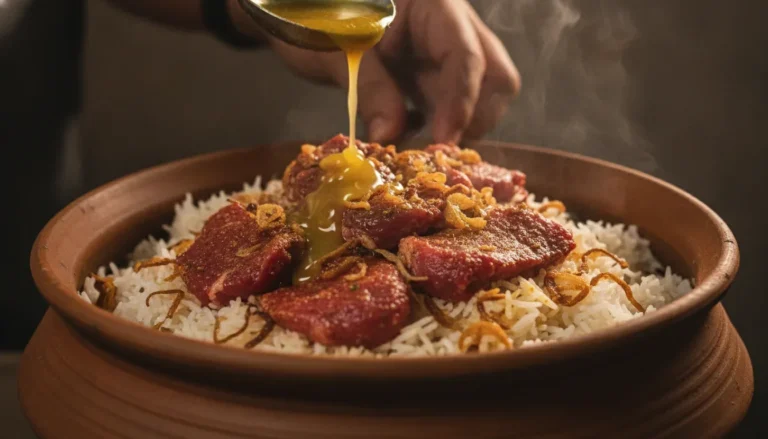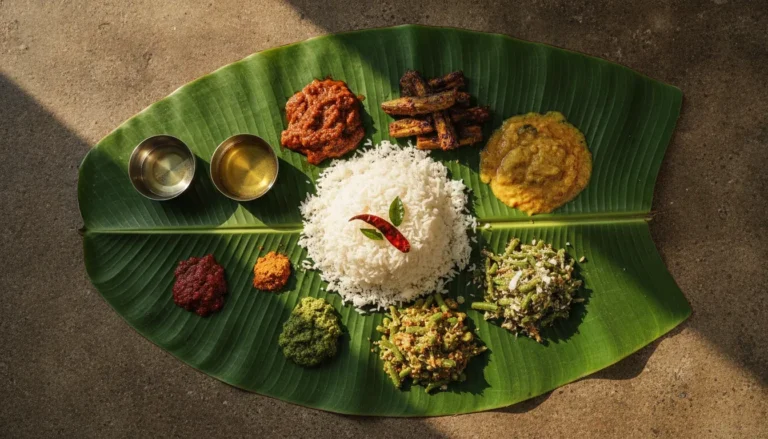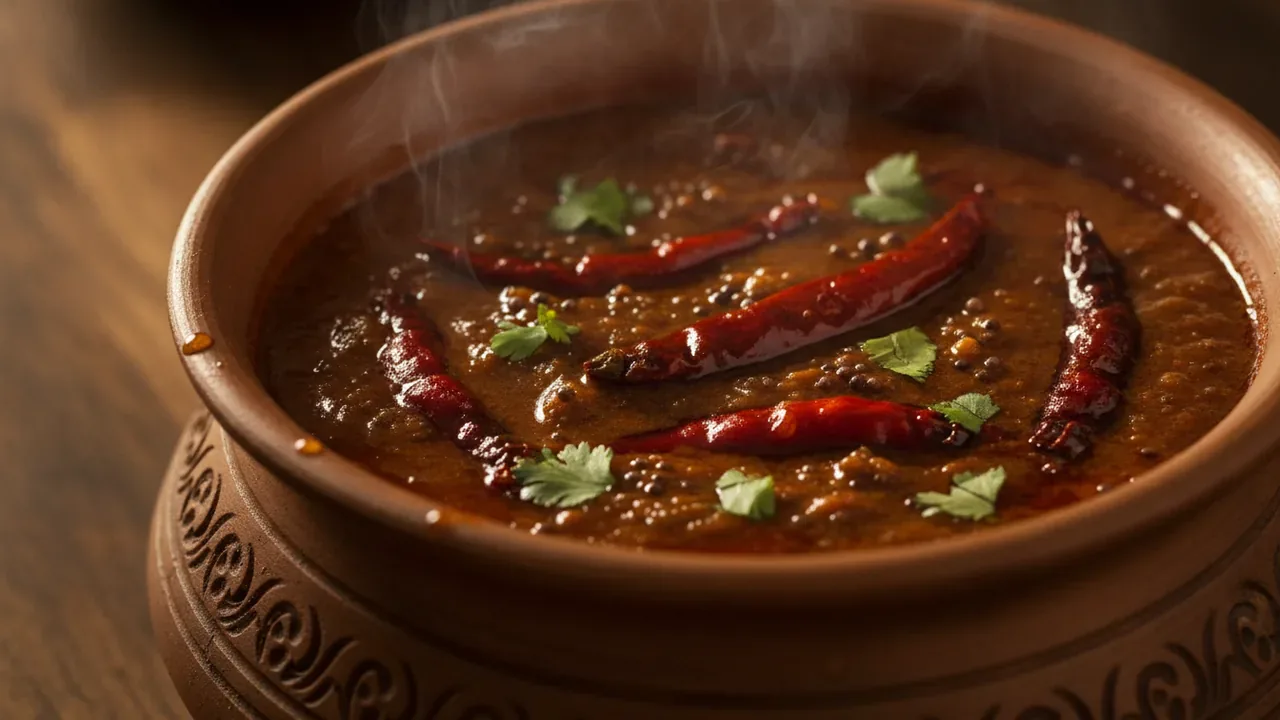
There is a small steel bowl that turns up beside a good biryani, dark and glossy, with a whole green chilli or two floating in it. Most people spoon it over their rice without ever learning its name. That gravy is salan, and more often than not it is mirchi ka salan (green-chilli salan), the nutty, tangy sauce that Hyderabadi kitchens have paired with biryani for generations. It is not raita. It is not a thin curry poured over rice. It has its own logic, its own family of versions, and a texture you will not find anywhere else on the plate. Here is what it actually is, what goes into it, and why it belongs next to your rice.
What is salan?
Salan is a nutty, tangy gravy served alongside biryani, most famously mirchi ka salan (green-chilli salan) from Hyderabad. The word salan is Urdu for gravy or curry. It is built on a ground paste of roasted peanuts, sesame seeds and coconut, loosened with tamarind.
That base is what gives salan its grainy body and its earthy depth, and it is what marks a true salan out from an ordinary curry ladled onto rice.
Table of Contents
Salan isn’t one dish, it’s a family
Start with the word, because it clears up most of the confusion. Salan comes from Urdu, where it simply means gravy or curry. So salan is not the name of one dish. It is a category, a way of building a certain kind of sauce, and mirchi ka salan is only its best-known member.
Once you know that, the menu makes more sense. The Hyderabadi mirchi ka salan you meet beside biryani is thick with the flavour of blistered green chillies. But there are others, each named for the vegetable simmered in the same nutty, tangy base.
- Mirchi ka salan (green-chilli salan): whole mild green chillies, the classic biryani companion.
- Tamatey ka salan (tomato salan): tomatoes cooked down into the peanut base for a rounder, gentler tang.
- Baingan ka salan (brinjal salan): soft brinjal that drinks up the gravy, common at Hyderabadi weddings.
- Pyaz ka salan (onion salan): small onions simmered whole until sweet and jammy.
- Chugur ka salan (tamarind-shoot salan): a seasonal, regional version built on tender tamarind shoots, sharper and more sour.
What holds the family together is the base, not the vegetable. Roasted peanuts, sesame and dry coconut with tamarind do the heavy lifting in every one of them. Swap the chilli for brinjal or onion and the sauce still reads as salan, because the backbone has not changed. This is the part recipe pages tend to skip. They teach you to make one salan without telling you that you have just learned the template for five.
What salan is made of
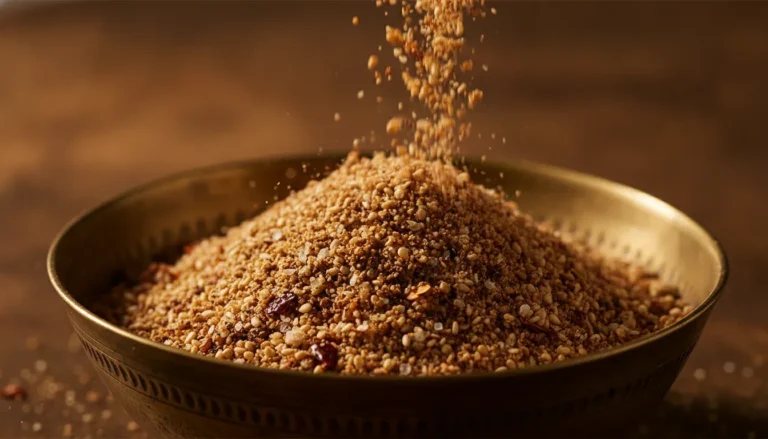
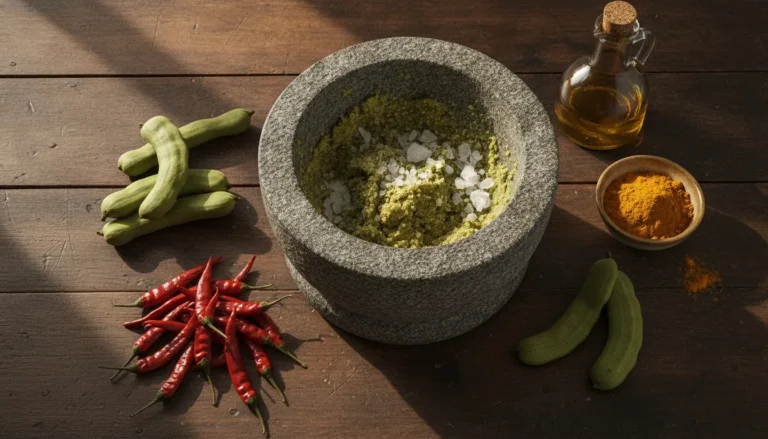
The character of salan lives in a ground paste, and that paste is where the real answer to what salan is made of sits. Three things are dry-roasted and then ground together: peanuts, sesame seeds (til) and dry coconut (copra). Roasting is not optional. It is what turns a bland thickener into something toasted and deep, closer in spirit to a satay sauce than to a north-Indian gravy.
Around that trio sits a familiar Hyderabadi spice set. Tamarind brings the sourness that defines the finish. Cumin and coriander seeds add warmth. Ginger and garlic go in as a paste, turmeric for colour and a faint bitterness, and the tempering carries curry leaves, mustard seeds and often nigella (kalonji) and fenugreek. None of these take over. They frame the peanut-sesame-coconut core rather than fighting it.
Then the vegetable. In mirchi ka salan that means green chillies, and this is where most people guess wrong. The chillies are not the small fiery kind. They are large, mild peppers, Bhavnagri or Bajji chillies, chosen precisely because they carry the shape and grassy flavour of a chilli without setting the dish alight.
Put together, the result is a medium-thick salan gravy with a grainy, nutty body, a tamarind tang running underneath, and a gentle heat that never dominates. It is full-flavoured without being heavy, and it clings to rice rather than pooling around it. That texture, grainy and clinging, is the signature you are tasting when a salan has been made properly.
The mild-chilli surprise
The look of mirchi ka salan sets an expectation it does not keep. A bowl studded with whole green chillies reads as a dare, the sort of thing you approach with a glass of water within reach. Then you taste it and the heat is mild, almost mellow, sitting well behind the nuttiness and the tang.
That is by design. The Bhavnagri and Bajji chillies are large, thick-skinned peppers grown for flavour rather than fire, closer in heat to a banana pepper than to anything that bites. They are blistered whole so their skin softens and their flavour opens, not to load the dish with capsaicin.
The contrast is worth naming, because Andhra cooking has a very different chilli at its heart. The Guntur chilli runs to roughly 30,000–50,000 on the Scoville scale and defines the fierce heat of Andhra food. Salan does the opposite. It borrows the chilli’s shape and green, vegetal taste while leaving the burn out, which is exactly why it works as a foil to a rich biryani instead of a fight with it.
How salan is made, step by step
You do not need to cook salan to understand it, but knowing the order explains why it tastes the way it does. Traditionally it is made in a handi, a wide, flat-bottomed pot, and cooked low and slow. A good salan recipe never rushes the sequence below.
- Dry-roast the base. Peanuts, sesame seeds and dry coconut go into a hot pan, each until fragrant and lightly coloured, then cool and grind to a paste with a little water.
- Temper the aromatics. In hot oil, mustard seeds, cumin, curry leaves and often nigella and fenugreek crackle first, followed by ginger-garlic paste and the dry spices.
- Cook the paste until the oil separates. The ground paste goes in and is stirred patiently over a low flame. When oil beads at the edges, the raw taste has cooked out and the base is ready. This is the step home cooks rush and regret.
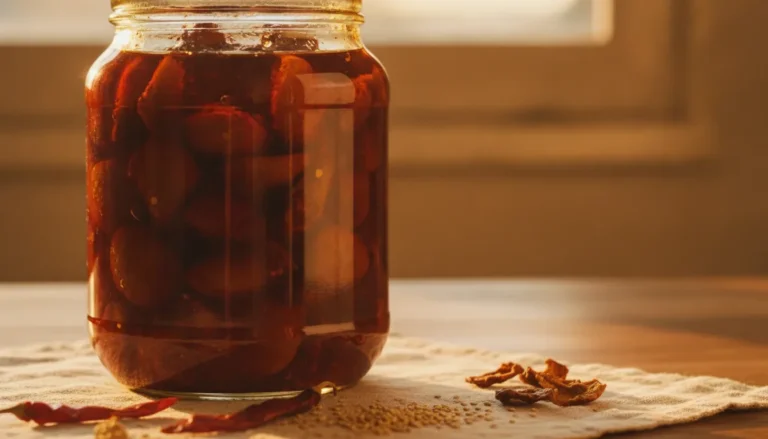
- Loosen with tamarind. Tamarind extract and water thin the paste into a gravy and set the sour backbone.
- Add the chillies and simmer. The whole green chillies, blistered beforehand, go in to soften and release their flavour as the salan reduces to a medium-thick, glossy finish.
Rush any of these and the dish flattens, but the oil-separation step is the one that decides whether a salan tastes cooked-through and round or raw and grainy. Give it time and the sauce turns silky under its grain.
Salan vs curry vs raita
Three things can turn up beside a biryani, and they get muddled constantly. A quick way to keep them straight:
| Salan | Curry | Raita | |
|---|---|---|---|
| What it is | A specific Hyderabadi gravy on a roasted peanut, sesame and coconut base, loosened with tamarind | A broad category of spiced gravy dishes, thin to thick, from across India | A yoghurt-based side, often with cucumber, onion or boondi |
| Temperature | Served warm | Served warm or hot | Served cool |
| Taste | Nutty, tangy, earthy, mildly spiced | Varies widely by region and recipe | Cooling, mild, slightly sour |
| Beside biryani | Adds moisture and tang to each mouthful | Usually eaten as its own dish with rice or bread | Cools and refreshes the palate between bites |
The short version: salan is a type of curry, but a very particular one, and it is not interchangeable with the tomato-onion gravy people picture when they hear the word. Raita sits at the opposite end, cool where salan is warm, soothing where salan is tangy. On a proper Hyderabadi plate you often get both, and they do different jobs. Salan brings the moisture and the sour lift; raita brings the cool.
What to eat salan with
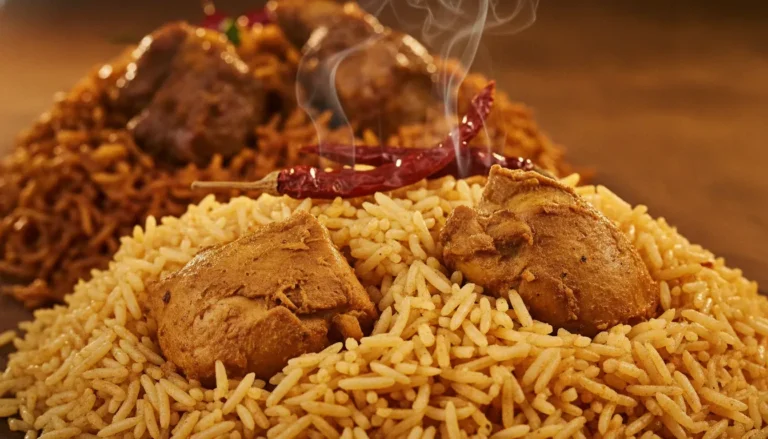
Salan for biryani is where it belongs first, and that is still its natural home. Spoon a biryani salan over a plate of Hyderabadi dum biryani and it does the one thing the biryani cannot do for itself. It adds moisture and a sour, nutty lift to every forkful of dry, spiced rice. The two were designed to be eaten together.
It works just as well beside an Andhra-style biryani, where the gravy’s tang plays against the deeper chilli heat of the rice. Beyond biryani, salan has a natural place with bagara chawal (mildly spiced rice), a plain, fragrant rice that lets the sauce lead, and plain steamed rice does the same job on an ordinary weeknight.
It is not only a rice partner. Torn pieces of soft chapati or roti scoop up salan happily, especially the thicker vegetable versions like baingan or pyaz ka salan. If you have only ever met salan as the small bowl beside a restaurant biryani, it is worth treating it as a dish in its own right, because it can carry a meal further than that bowl lets on.
Salan and the Bengaluru biryani table
In Bengaluru, salan turns up wherever biryani is taken seriously, and that includes the city’s Andhra tables. It is part of the everyday vocabulary of the biryani side, sitting alongside raita and dahi chutney (yoghurt chutney) as one of the things a diner reaches for to round out a plate.
That is the useful way to think about a dish like this. Salan is not a curiosity or a garnish. It is a working part of how a good biryani plate is built: which chilli goes where, how tang balances heat, what a side is actually for. Learn to read the small bowl and you understand the larger meal it was made to sit beside. On an Andhra biryani table, where the rice itself carries real chilli heat, a mild, tangy salan earns its place by doing the balancing the biryani cannot manage alone.
Frequently Asked Questions
What is salan made of?
Salan is built on a ground paste of roasted peanuts, sesame seeds and dry coconut, loosened with tamarind and spiced with cumin, ginger, garlic, turmeric and curry leaves. In mirchi ka salan, mild green chillies are simmered in that nutty, tangy base.
What does the word salan mean?
Salan is an Urdu term for a gravy or curry. It describes a style rather than a single dish, which is why there are several salans: mirchi (chilli), tamatey (tomato), baingan (brinjal) and pyaz (onion) among them.
Is salan the same as curry?
Salan is a type of curry, but not every curry is a salan. The term refers to a specific Hyderabadi style of nutty, tangy gravy built on peanuts, sesame and tamarind, usually served alongside biryani rather than as a standalone main.
What is the difference between salan and raita?
Salan is a warm, spiced gravy; raita is a cool, yoghurt-based side. Both accompany biryani, but salan adds moisture and tang while raita cools the palate. Many biryani plates include both. Our guide to biryani sides compares them in full.
What does salan taste like?
Salan tastes nutty and earthy from the peanut, sesame and coconut base, tangy from tamarind, and gently spiced. Despite its fiery look, mirchi ka salan uses mild, large Bhavnagri or Bajji chillies, so the heat stays moderate rather than sharp.
Nandhini has cooked Andhra food in Bengaluru since 1989, with Mutton Biryani among the signatures a gravy like salan is built to sit beside. A good place to understand where a dish like this fits in the wider biryani spread.