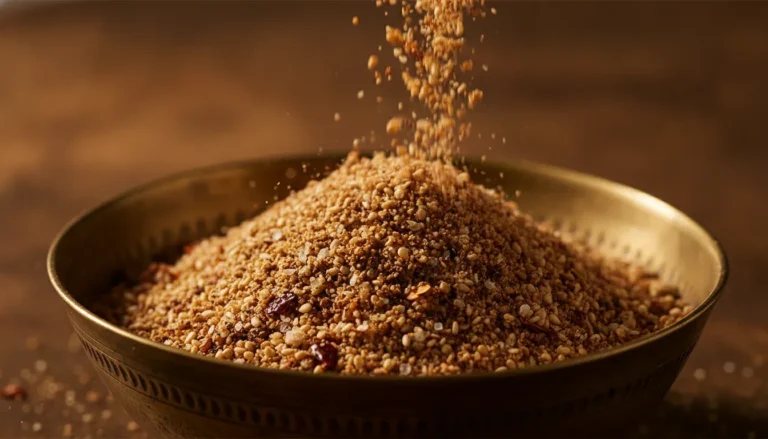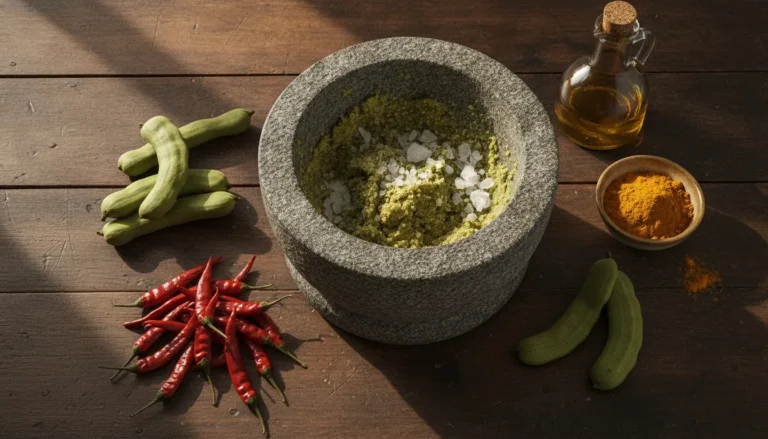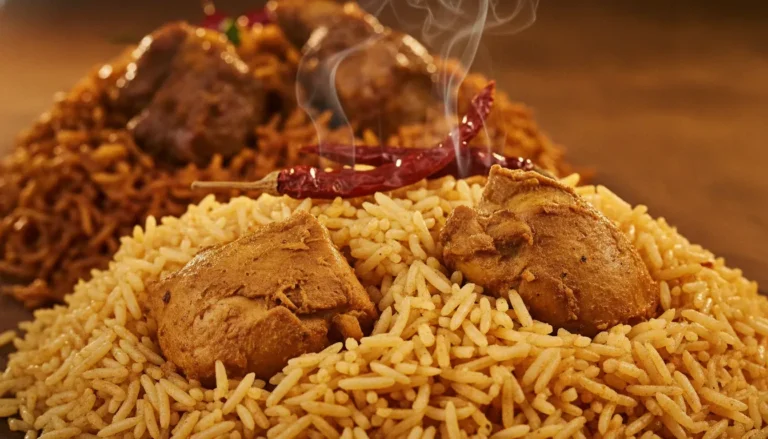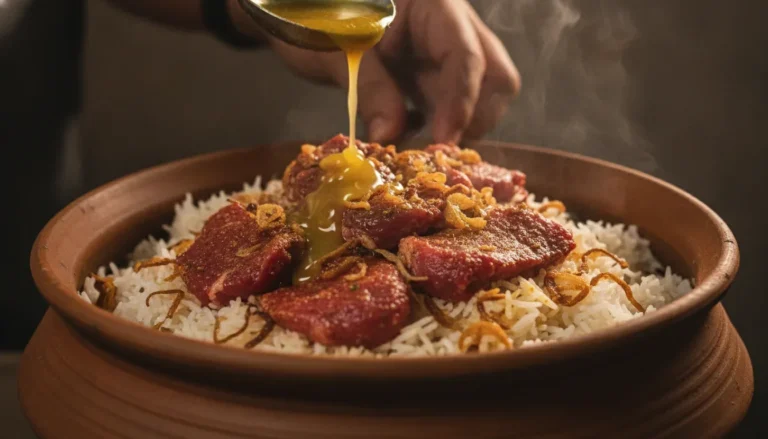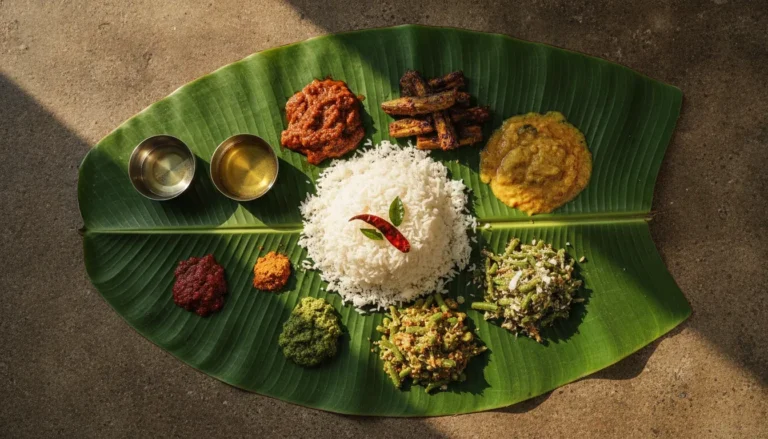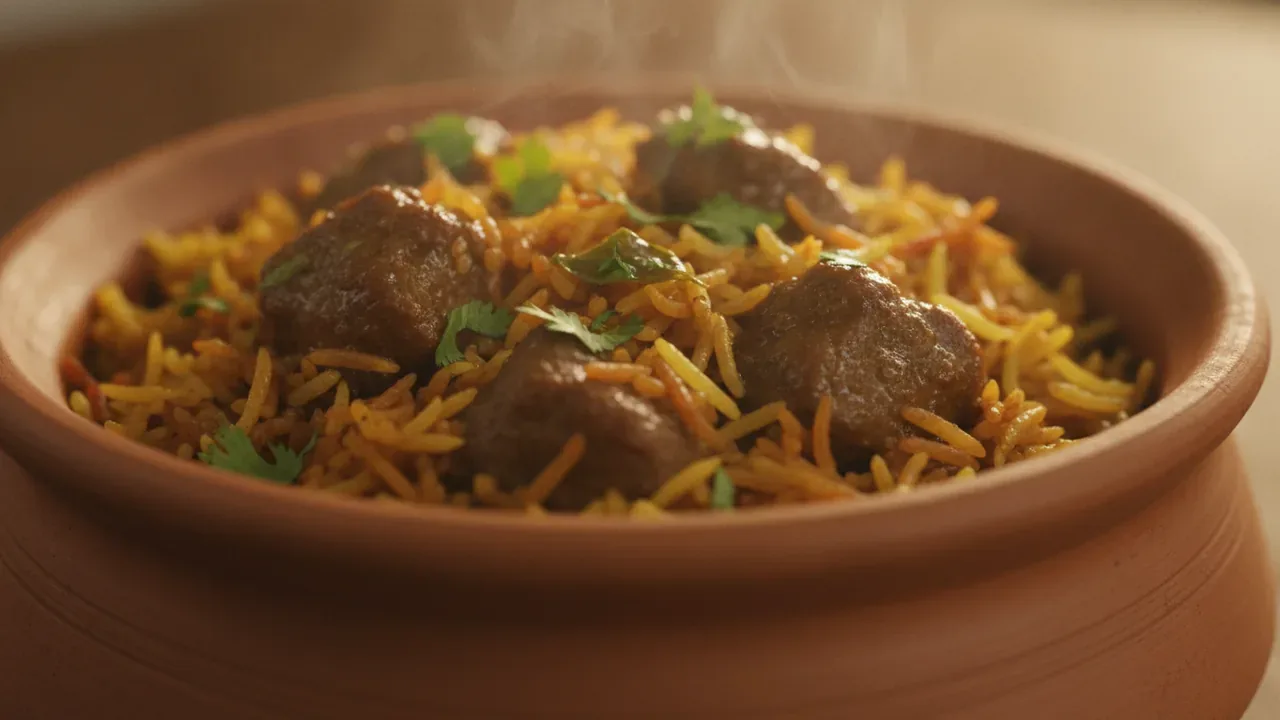
Most biryanis begin with rice and meat. This one begins with a soup. Ulavacharu biryani takes ulavacharu (a slow-simmered horse-gram extract that Coastal Andhra households eat with rice and ghee) and layers it through the biryani instead, so the rice cooks in that dark, tangy broth. The result is a biryani that tastes of the earth rather than only of chilli heat, earthy and sour and deep in a way a standard Andhra biryani is not. If you have seen ulava charu biryani on a menu and wondered what horse gram was doing in your rice, this is the answer, along with where to eat it in Bengaluru.
Table of Contents
What is ulavacharu biryani?
Ulavacharu biryani is an Andhra biryani cooked with ulavacharu, a slow-simmered extract of horse gram (ulavalu). The horse-gram broth gives the rice an earthy, tangy depth that sets it apart from a chilli-forward Andhra biryani. It originates in Coastal Andhra, around Vijayawada.
In English you will sometimes see it called horse gram biryani, but the flavour it is named for comes entirely from that broth.
The bridge: what ulavacharu is
To understand the biryani, start with the broth it is built on. Ulavacharu is a thin, tangy soup made from ulavalu (horse gram), called kulthi ki dal in Hindi and known to botanists as Macrotyloma uniflorum. It is one of the older staples of Coastal Andhra, a hardy legume that grows where softer crops struggle and that Andhra households have long valued as much for its sustenance as its taste. Horse gram is among the more protein-dense pulses grown in India, which is part of why it earned a place in everyday cooking. Simmered slowly, it releases a dark, sour, faintly smoky liquid.
On its own, ulavacharu is comfort food. Poured over hot rice with a spoon of ghee, it is the kind of everyday meal that families in the Krishna and Godavari belt, around Vijayawada, have eaten for generations. The soup carries a natural tang, closer to a rasam than to a dal, and a depth that comes from the long cooking rather than from spice.
Ulavacharu biryani is what happens when that humble soup meets the celebratory dish. Instead of serving the extract alongside plain rice, a cook layers it into the biryani itself, letting the basmati drink up the horse-gram broth as it cooks under dum. The everyday soup becomes the defining flavour of a festive plate. That single move, soup into biryani, is the whole idea, and it is why the dish gets called an Andhra fusion: a rustic Coastal Andhra staple carried into the format usually kept for weddings and feasts. The soup has its own long history, which our dedicated page on ulavacharu covers in full.
Why it tastes the way it does
Taste a spoonful next to a standard Andhra biryani and the difference is immediate. Where a Guntur-chilli biryani hits you with heat first, ulavacharu biryani leads with earth. The horse-gram extract brings a deep, almost nutty savouriness and a clear sour edge, and both of those sit underneath the spice rather than on top of it. Even the look is different: the broth stains the rice a shade darker than the bright, oil-slicked grains of a chilli biryani.
That earthiness is doing real work. Horse gram has a mineral, grounding quality when it is cooked long and slow, and the extract carries that straight into the rice. The tang is the other half of the character. It is not the sharp sourness of tamarind or tomato but something rounder, a fermented-adjacent depth that builds over the length of the cooking. Together they give the biryani a flavour that reads as layered and rustic, closer to a slow-braised dish than to a quick, fiery pulao.
It helps to place it against the Andhra biryani most people know. Andhra biryani takes its identity from Guntur chillies, which run to roughly 30,000–100,000 on the Scoville scale and set the fierce, up-front heat the style is famous for. Ulavacharu biryani is not chasing that heat. Chilli is present but restrained, because the point of the dish is the horse-gram depth, not the burn. You can eat a plate of ulava charu biryani and taste the meat, the rice and the broth distinctly, which is harder to do when heat dominates. That is the trade the dish makes, and it is exactly why people who find chilli-forward biryani one-note keep coming back to this one.
How it’s made
You do not get horse-gram flavour by shortcut, and that is the whole method behind a proper ulava charu biryani in one line. The extract has to be made first. Ulavalu is dry-roasted, boiled until soft, then simmered and strained into the thin, dark ulavacharu that flavours everything downstream. Add horse gram to the pot whole instead and you get texture without the tang. The soup is the point.
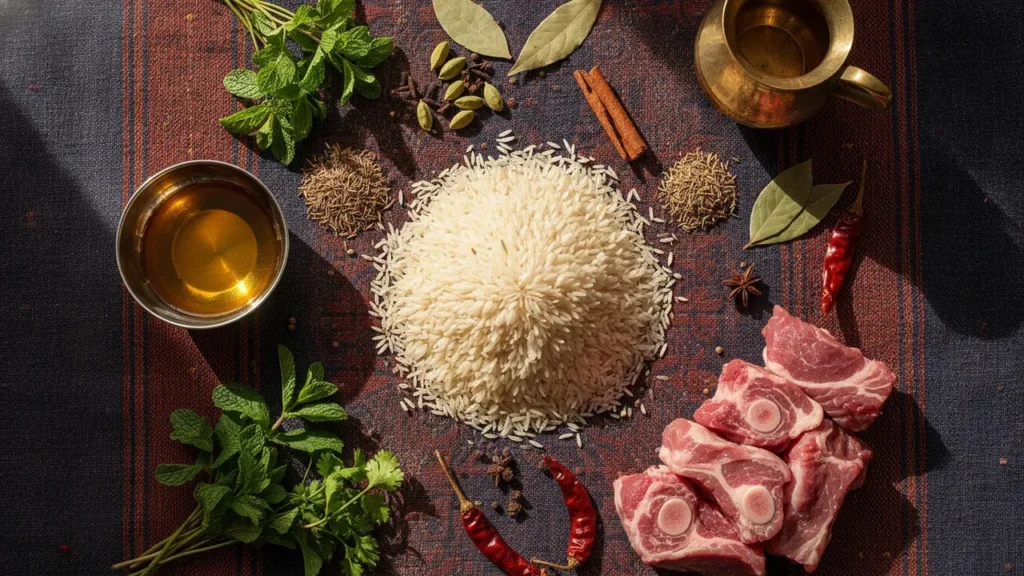
From there the biryani follows familiar Andhra lines. Meat, most often mutton or chicken, is marinated and part-cooked with ginger-garlic, dry red chillies, bay leaves and the usual whole spices. Basmati is boiled to just short of done. Then the layering: rice, meat, fried onions, fresh coriander and mint, and, crucially, a generous pour of the ulavacharu extract worked through so the broth reaches the grains rather than settling at the bottom.
The pot is sealed and finished on dum, a low, slow steam that lets the rice absorb the horse-gram liquid and finish cooking in its own aroma. That slow finish is where the earthy, tangy depth settles into every grain instead of staying a surface note. A quick ulavacharu biryani recipe can get you close, but the flavour that makes the dish worth ordering comes from an unhurried extract and an unhurried dum. Rush either and you get a biryani that is merely brown, not one that tastes of the broth.
Veg, chicken and the family
Like most biryanis, ulavacharu biryani comes in more than one form. Ulavacharu chicken biryani is the version you will meet most often, the horse-gram broth playing especially well against the lighter meat. Mutton versions carry the extra depth of the meat and stand up to the earthiness even better. There is a vegetarian ulavacharu biryani too, built on the same broth with vegetables in place of meat, and because the flavour lives in the extract rather than the protein, the veg version loses less than you might expect.
Set within the wider Andhra biryani family, ulavacharu biryani is the character variant. Where Guntur biryani is about chilli and gongura biryani is about sour leaf, this one is defined by the horse-gram broth. Restaurants that take Andhra biryani seriously tend to list it alongside those other variants, as the earthy, tangy option for a diner who wants depth over heat. It is the one you order when you already know what a chilli biryani tastes like and want something the rice can carry on its own terms.
Where to try ulavacharu biryani in Bengaluru
Here is the question the recipe pages never answer: if you are not making it yourself, where do you actually eat ulavacharu biryani? In Bengaluru, the straightforward answer is an Andhra restaurant that treats it as a real menu item rather than a novelty.
Nandhini serves ulavacharu biryani as one of its Andhra biryani variants, and it sits on the menu beside the more familiar Guntur-style and gongura options. Nandhini has cooked Andhra food in the city since 1989 and now runs 22 company-owned outlets, 20 across Bengaluru and two in Mysuru, so the dish is a standard part of a kitchen that makes Andhra biryani every day. For a searcher typing ulavacharu biryani near me or ulavacharu biryani bangalore, that is the practical answer the dish has been missing online.
A few things worth knowing before you order. Ulavacharu biryani is best eaten fresh, straight from the dum, while the horse-gram broth is still fragrant in the rice. Ask for raita or a glass of buttermilk alongside, which tempers the spice and lets the earthy tang come through. And if the horse-gram flavour lands for you, it is worth trying ulavacharu on its own too, poured over rice, to taste where the biryani gets its character from. The current list of Andhra biryani variants, ulavacharu included, sits on the menu.
The film with the same name
One quick note for anyone searching, because the results get crowded. Ulavacharu Biryani is also the title of a 2014 Telugu film, which is why a search for the dish sometimes surfaces a movie instead. The two are unrelated beyond the name. This page, and this dish, are the food: the Coastal Andhra biryani built on horse-gram broth. If you came looking for the recipe or a place to eat it, you are in the right spot.
Frequently Asked Questions
What is ulavacharu biryani made of?
Ulavacharu biryani is made with basmati rice, meat or vegetables, Andhra spices and, above all, ulavacharu, a slow-cooked extract of horse gram (ulavalu). The horse-gram broth is layered through the rice during cooking, giving the biryani its earthy, tangy character.
What does ulavacharu biryani taste like?
It tastes earthy and hearty with a distinct tang, quite different from a chilli-led Andhra biryani. The horse-gram extract adds a deep, almost nutty savouriness underneath the spice, so the flavour reads as layered and rounded rather than sharply hot.
Where does ulavacharu biryani come from?
Ulavacharu itself is a Coastal Andhra speciality, strongly associated with Vijayawada and the Krishna-Godavari belt, where horse-gram broth is a traditional staple. Ulavacharu biryani carries that regional soup into the biryani format, which is why it is described as an Andhra creation.
What is ulavacharu?
Ulavacharu is a thin, tangy extract or soup made from horse gram (ulavalu, or kulthi ki dal in Hindi), a hardy Andhra legume. It is eaten on its own with rice and ghee, and is the defining ingredient that gives ulavacharu biryani its flavour.
Where can I try ulavacharu biryani in Bengaluru?
Ulavacharu biryani appears on the menu at Nandhini Deluxe, which serves it as one of its Andhra biryani variants across its Bengaluru and Mysuru outlets. It is best eaten fresh, with raita or buttermilk alongside to balance the spice.
If you are in Bengaluru, Nandhini has served Andhra food since 1989 across 22 outlets, ulavacharu biryani among the variants on the menu. Order it fresh, with buttermilk alongside, and taste the soup that started it.