Most Bangalore biryani menus skip this one. Walk into any popular biryani place and you’ll see Hyderabadi, Lucknowi, Andhra chicken, Andhra mutton. The one you almost never see, even at Andhra restaurants, is gongura biryani.
Here’s the short version. Gongura biryani is an Andhra regional biryani in which sorrel leaves – called gongura in Telugu – are cooked into the masala. The leaves give the rice a sharp, sour edge that sits on top of the Guntur chilli heat the cuisine is known for. It comes in chicken, mutton, vegetarian and occasionally prawn forms.
What follows: the dish, how it tastes, how it differs from Hyderabadi, the variants, and where to order it at our outlets. No recipe.
What Gongura Biryani Actually Is
Gongura is a leaf. Botanically its the sorrel leaf (Hibiscus sabdariffa, also known as roselle), and across English-speaking countries it shows up under either name. In Andhra and Telangana it’s simply gongura, and it’s one of those ingredients that defines a regional palate. Some Telugu sources call it Andhra maatha – the mother of Andhra greens – which gives you a sense of how central it is.
If you’ve eaten Andhra food, you’ve almost certainly had gongura before. Gongura pachadi (chutney) on a meals plate. Gongura mamsam (the slow-cooked mutton curry). Pulihora sometimes uses it. The leaf is the connective tissue across most of an Andhra menu, but until it lands in a biryani most people don’t register it as a distinct identity.
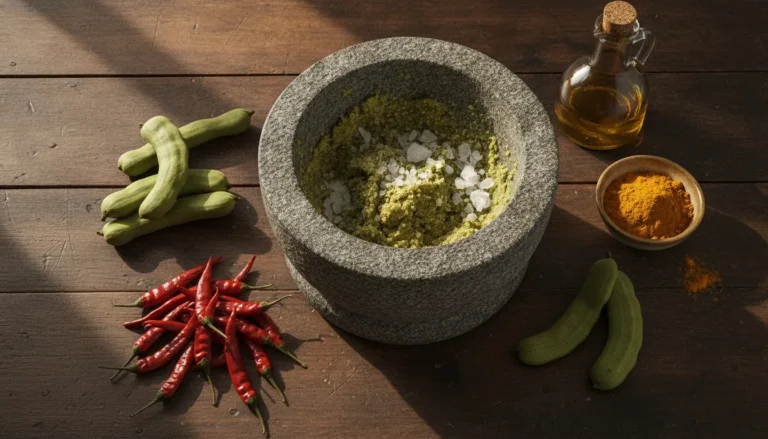
In the biryani, gongura goes in as a paste – sometimes called gongura thokku. The leaves are cooked down with onion, garlic, ginger and chilli until they break into a thick, dark green base. That paste folds into the meat masala before the rice layering. It doesn’t sit on top of the rice; it stays underneath, with the meat, and the rice picks it up second. This matters – it’s why the rice in a gongura biryani reads as flecked rather than coated.
Chicken, mutton, vegetarian and prawn variants all exist. The dish sits alongside ulavacharu biryani and avakaya biryani as part of the Andhra variant family – biryanis that aren’t just “spicier Hyderabadi” but use a regional ingredient as the flavour anchor.
Tang Meets Heat: The Flavour Profile
The dominant note is tang. Sorrel is naturally sour – sharper than tomato, greener than tamarind, slightly fermented if cooked long. When the gongura paste meets the rest of the masala, that sourness threads through every bite of the meat.
Underneath, the heat. The base masala is the same one used for a standard Andhra biryani – Guntur chillies, which run 30,000 to 100,000 on the Scoville scale and definehow gongura balances Andhra heat. Gongura doesn’t lower the chilli; it lifts something different on top of it.
The result is bright and hot at the same time. The sourness cuts the richness of the meat and the ghee, so the dish reads cleaner than its ingredient list suggests. Each bite feels lighter than a Hyderabadi mutton biryani even though it’s carrying more chilli.
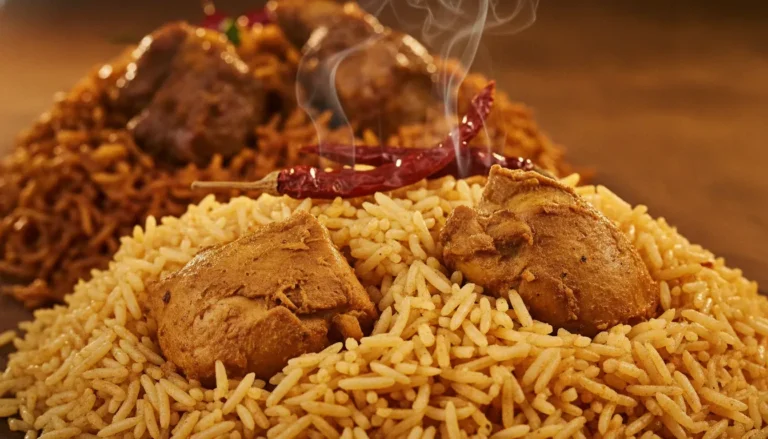
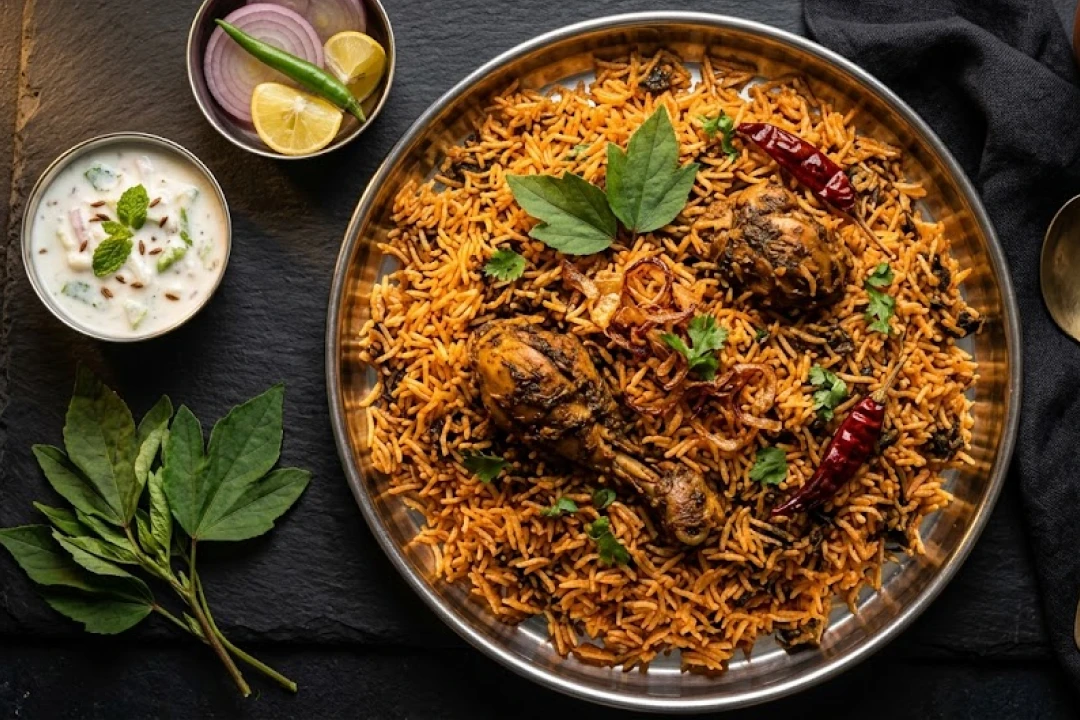
Visually you can spot it on the plate. The rice runs orange-red from the chilli, with green-brown flecks where the gongura sits. It’s drier than a Hyderabadi dum biryani – grains separated, not coated in masala oil. The meat carries most of the gongura. The rice carries most of the colour. Find the meat pieces and you find the dish.
How Gongura Biryani Differs from Hyderabadi
Two different regions, two different cooking methods, two different flavour anchors. Hyderabadi biryani is built on saffron, slow dum cooking, and aromatic restraint – mirchi ka salan on the side, raita to cool. It uses Kashmiri chilli, which runs 1,000 to 2,000 Scoville. The whole dish is a slow reveal.
Gongura biryani is pakki-style – the rice and gravy are cooked separately and folded together at the end, rather than layered raw and steamed under a dum. The chilli is Guntur, the masala is sharper, and the gongura paste does the talking. Curd or onion raita on the side; pickle if you want to push the tang further.
| Element | Hyderabadi Biryani | Gongura Biryani |
| Region | Hyderabad (Telangana) | Coastal Andhra, Rayalaseema, Telangana borderlands |
| Cooking method | Dum (sealed steam, raw rice over meat) | Pakki (rice and gravy cooked separately, then folded) |
| Chilli | Kashmiri (1,000–2,000 SHU) | Guntur (30,000–100,000 SHU) |
| Flavour anchor | Saffron, aromatics | Gongura paste, tang |
| Rice colour | Saffron-golden, partially coated | Orange-red, flecked green-brown |
| Texture | Moister, masala-coated | Drier, grains separated |
| Typical side | Mirchi ka salan, raita | Curd raita, onion, pickle |
If you’re working through how Andhra biryani differs from Hyderabadimore broadly, gongura biryani sits at the far Andhra end of that comparison. Hyderabadi whispers. Gongura biryani says what it is in the first bite.
Chicken, Mutton, Veg and Prawn: The Variants
Gongura biryani isn’t one dish. It’s a method applied to four proteins, and each version reads slightly differently. Knowing which to order first saves a wrong-call dinner.
Gongura Chicken Biryani
The most common variant, and the one to order first. Chicken cooks faster, so the masala doesn’t spend as long with the meat – the gongura tang sits forward, clean and pronounced, without getting buried under fat. Bone-in or boneless both work; bone-in carries more flavour into the rice if the kitchen layers it right. If you’ve never had gongura biryani before, start here.
Gongura Mutton Biryani
Heavier, richer, slower. Mutton takes time, and the long cook lets the gongura settle deeper into the rice rather than staying on top. The mutton fat carries the tang differently – less sharp, more rounded. Bone-in is standard. If you likeAndhra mutton biryani, classic style, the gongura version is a natural next step. It also pairs naturally with gongura in mutton form– same leaf, same protein, completely different dish.
Gongura Veg Biryani
Less common, but it exists. Paneer is the usual swap-in; mixed vegetables work too. Without meat fat to ride on, the sorrel does more of the heavy lifting – the tang reads sharper, the heat reads more direct. Some kitchens compensate by adding extra ghee or cashew paste; we keep it leaner.
Gongura Prawn Biryani (Royyala Biryani)
Coastal Andhra specifically – prawns are local to the region, and royyala biryani has been on coastal home menus for a long time. Rarely seen outside the coast and almost never in Bangalore. Worth knowing about; harder to find on a menu.
Where Gongura Biryani Sits in Andhra Cuisine
Origin: Coastal Andhra and the Rayalaseema region, with strong tradition in the Telangana borderlands as well. Some sources name it specifically as Guntur Gongura Biryani, which reflects how closely Guntur – the chilli capital – sits to the sorrel-growing belt.
The cross-border tradition matters. The Telangana side of the border has been using sorrel in meat dishes for generations, which is why gongura mamsam exists as a curry and gongura biryani exists as a rice dish, both from broadly the same culinary geography. They’re cousins, not competitors. For the wider Andhra biryani guide we map out where each variant comes from – ulavacharu, avakaya, gongura – and how to think about them as a family.
Why most Bangalore Andhra menus skip the dish: sorrel is seasonal. Standardising a biryani that depends on fresh leaf availability is harder than running a plain Andhra chicken biryani off a fixed masala. Restaurants that do carry it are usually doing it because it matters to them, not because it’s easy. That’s why it reads as a speciality.

The Nandhini Gongura Biryani
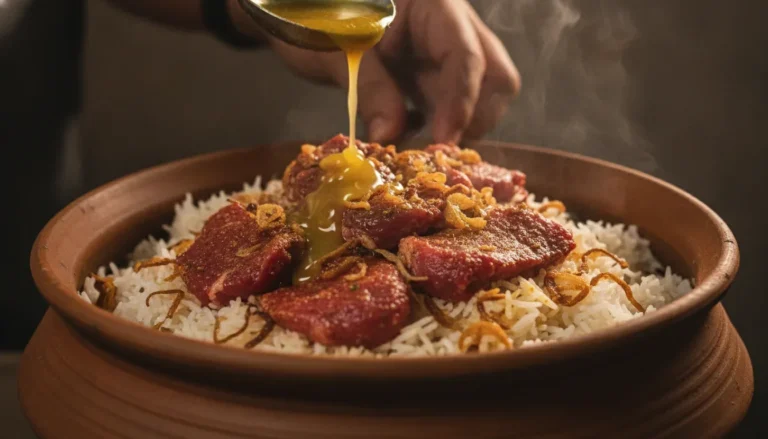
We cook it pakki-style. Rice and gravy go separately; the gongura paste folds in with the meat masala before the layering. The colour the rice picks up comes from the chilli, not the leaf – the gongura stays where the meat is, and you find it in the bite.
Outlets that consistently carry it: St Marks Road, Jayanagar, and Koramangala. Both chicken and mutton are on the menu; the veg form turns up less often and depends on the kitchen’s run that week. Sorrel availability is honest – in lean weeks when fresh leaf is short, we’ll sometimes use a gongura pachadi base instead, which reads slightly milder. The kitchen will tell you which one is on if you ask.
This isn’t a special-occasion dish. It sits on the menu alongside the standard Andhra chicken and mutton biryanis as a regional variant. We carry gongura, ulavacharu and avakaya forms – most Bangalore Andhra kitchens carry one if any. Thirty-seven years of cooking Andhra biryanis is the only reason the variant menu exists at the depth it does.
Frequently Asked Questions
What is gongura biryani?
An Andhra regional biryani in which sorrel leaves (gongura) cook into the masala, giving the rice a tangy edge over the standard Andhra heat. Chicken, mutton, veg and prawn variants exist.
What does gongura biryani taste like?
Tang and heat in the same bite. The sorrel reads sharp and slightly fermented; the Guntur chilli sits underneath. The sourness cuts the richness, so the dish reads cleaner than it sounds.
How is gongura biryani different from Hyderabadi biryani?
Different region, different method, different flavour anchor. Hyderabadi is dum-cooked, saffron-led, aromatic. Gongura biryani is pakki-style, Guntur-chilli-led, and finished with sorrel-leaf paste – tang Hyderabadi biryani does not carry.
Is gongura biryani spicy?
Yes. Guntur chilli runs 30,000 to 100,000 Scoville and forms the base. The gongura paste adds tang on top of that heat, not in place of it.
What is the difference between gongura chicken biryani and gongura mutton biryani?
Chicken: lighter, faster, tang sits forward. Mutton: heavier, slower, the meat fat carries the tang deeper into the rice. Order chicken first time.
Is gongura biryani vegetarian?
A veg form exists with paneer or mixed vegetables, served at some Andhra kitchens. Less common than chicken and mutton. Coastal Andhra also has a prawn version (royyala biryani).
Where can I try gongura biryani in Bangalore?
Most Andhra restaurants in the city skip it. We serve it at St Marks Road, Jayanagar, and Koramangala. Check the current menu when ordering.
In Closing
Gongura biryani is the Andhra biryani most people haven’t tried because most kitchens don’t make it. It earns its place through one thing nothing else on a biryani menu does – tang and heat in the same bite. Once you’ve had it the standard Andhra biryani reads slightly one-note.
You can check the current menu when you’re ready to try it. Order the chicken version first if you’re new to the dish; come back for the mutton once you know what you’re after. The kitchen’s been doing this since 1989.
The leaf does the rest.