Yes, you can eat Andhra food without burning your mouth. The cuisine has a reputation – earned, mostly – but the reputation is also incomplete. Andhra menus span dishes that are gentler than a Karnataka meal all the way to dishes that will, in fact, set your tongue on a 20-minute review. The trick is not avoiding Andhra restaurants. It is knowing which side of the menu you are ordering from.
This guide is the dish-by-dish decoder. If you want the wider strategy – pairing, pacing, what to drink, what to skip – see the broader first-time ordering strategy. This page does one thing that page does not: it names the specific Andhra dishes you can order without anxiety, the dishes worth saving for a later visit, and the exact phrase to use when you want a kitchen to dial the heat down. We have served 10,000 customers a day since 1989, and a fair share of them walk in on a first visit. The list below is what the servers across our outlets have been quietly building for 37 years.
The Spice Spectrum: What You’re Actually Walking Into
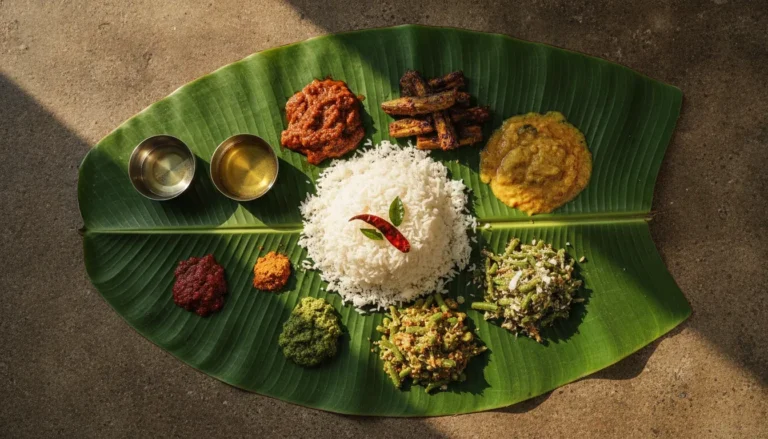
The Andhra menu is not a single heat level. It is a range. At the gentle end sit tomato-based dals, yoghurt rice, stuffed brinjal curries, and most kebabs and breads. At the fiery end sit dry chilli fries, sorrel-leaf mutton, and pickles that come with a one-teaspoon limit. Most of what people fear is concentrated in maybe a quarter of the menu – which means three-quarters of the menu is, in practice, very orderable.
The heat at the top of that range is real. Guntur Sannam chillies sit at 30,000 to 50,000 on the Scoville scale, which is roughly six to ten times hotter than a standard jalapeño, and they are the chilli most Andhra kitchens reach for. So why Andhra food is spicier than most regional cuisines is a fair question with a real answer. The dishes that lean hardest on Guntur powder will, yes, do what their reputation says they will. See Guntur chilli heat explained for the chilli side of the story.
For the rest of this guide, we will use a 1 to 10 scale. Mild sits at 1 to 4 (manageable for almost any palate). Medium sits at 5 to 7 (needs cooling sides, but workable). Hot sits at 8 to 10 (come back for these once the rest feels comfortable). One quick disambiguation before we start: in food writing, the word spicy gets used for three different things – heat from chilli, tang from tamarind, and aroma from whole spices like clove or star anise. This guide is about the burning kind. Tangy and aromatic dishes can read as spicy but do not, in fact, burn.
The Mild Andhra Dishes Most People Don’t Know
Start here. These are the dishes you can order at any Andhra restaurant in Bangalore without scanning for an escape route. The table below is the cheat-sheet. Screenshot it if you want.
| Dish (Telugu / English) | What it is | Heat 1–10 | Why it’s mild |
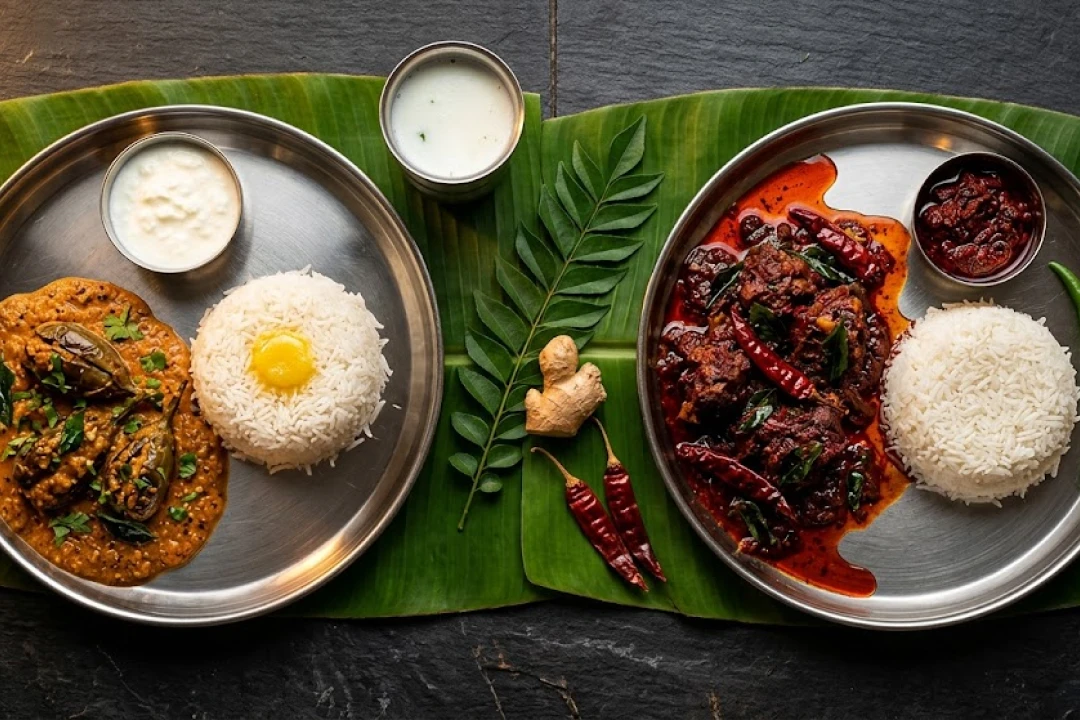
| Gutti vankaya kura (stuffed brinjal curry) | Baby brinjals stuffed with a peanut, sesame and coconut paste, simmered in a tomato-onion gravy | 3 | Coconut and peanut absorb chilli; tomato softens the curry base |
| Tomato pappu (tomato dal) | Toor dal cooked with tomato, garlic and a light tempering | 2 | Pure tomato-dal base, no chilli powder load in the gravy |
| Curd rice with podi | Steamed rice mixed with curd, tempered with mustard and curry leaves, served with a side of podi | 3 (with podi on the side, not mixed in) | Curd neutralises everything; podi added to taste, not by default |
| Pesarattu (green gram dosa) | Whole green gram batter dosa, usually with ginger and a thin chilli paste on the side | 3 | Green gram base is naturally cooling; chilli is a side, not in the batter |
| Pulihora (tamarind rice) | Rice tossed with tamarind, mustard, peanut and curry leaves | 2 (tangy, not hot) | Sour and aromatic, not chilli-led; the heat reads in the nose, not the mouth |
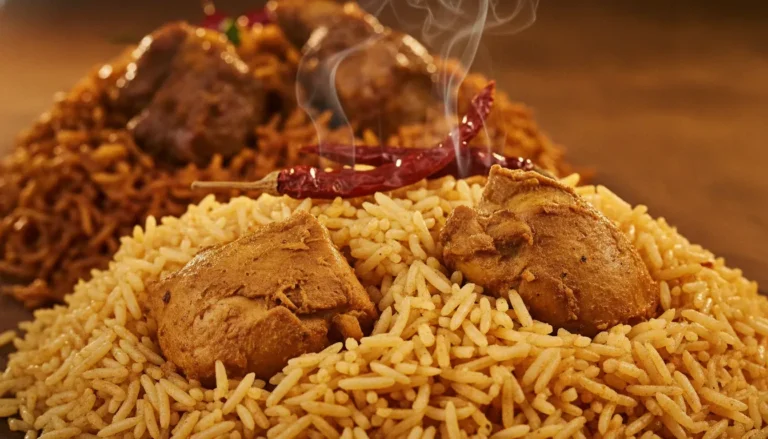
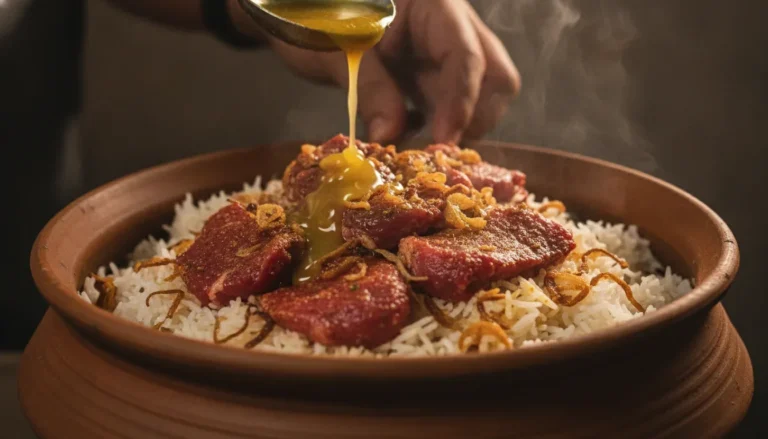
| Chicken biryani (standard spice) | Andhra-style chicken biryani at the restaurant’s default heat | 5 | Medium-hot but balanced by ghee, mint and raita on the side |
| Majjiga charu (buttermilk rasam) | Thin buttermilk soup tempered with ginger and curry leaves | 2 | Buttermilk-led; the warmth is from spice aroma, not chilli |
| Ulava charu (horse gram soup form) | Light horse gram broth served before or with the meal | 3 | The soup is mild; the concentrated paste form is hotter – ask for the broth |
| Sholay or kalmi kebab | Grilled marinated chicken; menu addition at most Andhra restaurants | 4 | Yoghurt-led marinade with whole spice aroma, not chilli powder |
The pattern is simple. Tomato, coconut, peanut, yoghurt and tamarind bases dilute chilli. Dry preparations – fries, dry curries, anything labelled vepudu or fry – concentrate it. If you are reading a new menu and the dish description does not give you a base, look at the cooking method. A curry will almost always be milder than a fry of the same protein.
Tiffin items deserve their own note. Most Andhra tiffin dishes – idli, dosa, pesarattu, upma – sit firmly in the mild range, because they were built for breakfast, not for showing off heat. If you are nervous about a full lunch order, a tiffin meal is a softer first encounter with the cuisine. See Andhra tiffins, most of which are naturally mild for the lighter side of the menu.
Dishes to Save for Visit Three (Not Visit One)
Now the other side of the menu. These are not warnings. They are dishes worth coming back for, once your palate has settled in. Read this list as a future order, not a current one.
| Dish (Telugu / English) | Heat 1–10 | Why to wait |
| Gongura mamsam (sorrel leaf mutton) | 9 | Sorrel concentrates with Guntur powder, so the heat and sourness hit at the same moment. The dish has no buffer; you cannot really order it ‘mild’ |
| Kodi vepudu / Guntur chicken fry | 9 | Dry chilli plus curry leaf, no gravy to dilute. The chilli is the dish, not a seasoning of it |
| Andhra mutton fry | 8 | Slow-cooked mutton in a heavily reduced chilli-and-spice paste. Excellent. Not a first-visit choice |
| Mirchi bajji | 8 | Literally a stuffed chilli, fried. The heat is the entire experience |
| Avakaya (raw mango pickle) | 10 | A teaspoon-sized commitment. The oil and chilli powder are pre-blended and cannot be diluted at the table |
| Naatu kodi pulusu | 8 | Country chicken in a tamarind-chilli broth, Rayalaseema-style. Lean, sour, and pointed |
Pickles deserve a separate note. An Andhra meal almost always arrives with one or two pickles on the side – avakaya, tomato, lemon, gongura. Tomato and lemon pickle are usually approachable at the half-teaspoon scale. Avakaya and gongura pickle are not. If you are mid-meal and want to try one, take the tomato pickle, not the avakaya. See how to pace pickles when you are not used to them for the longer pickle map.
How to Ask the Kitchen for Less Spice (and What Won’t Change)
Most established Andhra restaurants in Bangalore will reduce chilli on request, including ours. The phrase that works is kam masala – Hindi-Urdu shorthand that almost every Bangalore kitchen recognises. Less chilli, please works equally well. Use either before the dish is cooked; mid-meal is too late.
What can be adjusted
- Gravies and curries – chicken curry, mutton curry, fish curry, gutti vankaya kura. The cook can hold back on the chilli powder when assembling the masala
- Biryani masala – the cook can build the masala layer with less Guntur powder. The base biryani will not change, but the heat layer will
- Fries – a chicken fry or fish fry can be made medium instead of standard. It will not become mild, but the difference is real
What cannot be adjusted
- Pickles. They were made in bulk weeks ago. Avakaya is avakaya
- Podi and pre-made spice powders. Same reason
- Signature dishes whose identity is the chilli – kodi vepudu, gongura mamsam, mirchi bajji. Asking for a mild kodi vepudu is asking for a different dish
One more useful move: ask the server to point to milder versions on the menu. At established Andhra restaurants in Bangalore, including ours, the server has had this conversation thousands of times. They know which fish curry runs hotter than the chicken curry on a given day, which biryani is the safer of the two, and which pickle is the one to avoid. It is not a sign of inexperience to ask; it is a sign you know how the restaurant works.
Cooling sides to order alongside, not after
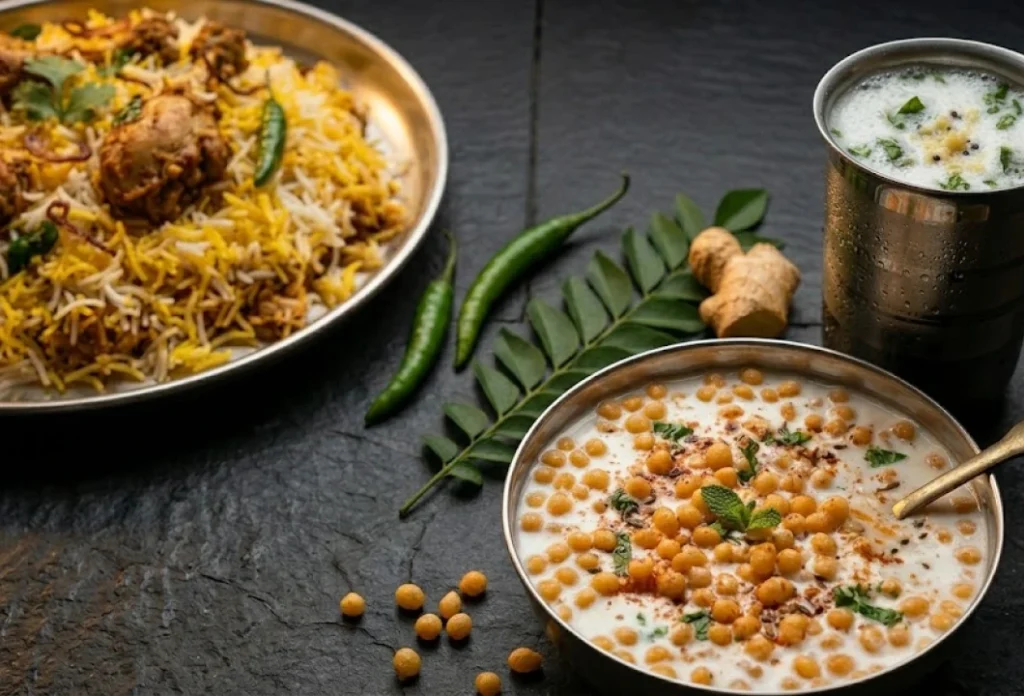
Order these with the meal, not after the heat arrives. Boondi raita, plain curd, buttermilk (majjiga), and a small bowl of ghee for the rice. The fat in dairy dissolves capsaicin, which is the compound that creates the burning sensation. Water does not; it spreads capsaicin around the mouth, which is why a glass of water after a chilli hit makes the heat feel worse for a few seconds before fading.
If a dish does arrive hotter than you wanted and the cooling sides are not enough, how to fix biryani that is too spicy covers the table-side rescue. Extra curd, an additional bowl of rice, and slowing the eating pace down all work.
The Nandhini First-Timer’s Map
Here is what this looks like as an actual order at a Nandhini outlet on a first visit. Chicken biryani at standard spice. Boondi raita. A gutti vankaya kura on the side. A glass of buttermilk to drink. A small bowl of curd rice with the podi on the side – not stirred in – to close the meal. That combination sits between heat levels 3 and 5, has cooling buffers in every direction, and gives you a full sense of what Andhra food actually tastes like. No element of the meal is fighting you.
Kam masala works at our outlets on chicken curry, mutton curry, fish curry, and on the biryani masala layer. Say it before the order is sent to the kitchen. The Jayanagar outlet runs at a slightly quieter midday pace, which is useful if you want a server to walk you through the menu without a queue building behind you. The St. Marks Road flagship sees more non-Telugu first-timers than most outlets, so the team there has the cleanest version of the conversation.
Nandhini has been serving Andhra food in Bangalore since 1989. The city has never been a Telugu-majority one, which means most of our regulars over 37 years have been people who came in unsure of the heat. The list above is not theoretical. It is what works, refined across thousands of table-side conversations, at outlets across Bangalore and Mysuru.
The Beginner’s Order Sequence Across Three Visits
If you plan to keep eating Andhra food, your palate will calibrate faster than you expect. Two or three visits is usually enough to start enjoying dishes that felt unapproachable on day one. Here is a useful progression.
Visit 1 – Pure mild
Chicken biryani at standard spice, gutti vankaya kura, curd, buttermilk, papad. No pickle, or a half-teaspoon of tomato pickle if you are curious. The goal is to learn the flavour shape of Andhra food without the heat doing the talking. You should leave wanting to come back.
Visit 2 – One medium element
Keep most of the Visit 1 order. Add one new dish at standard spice – a fish fry, a chicken fry, or a chicken curry. Try a teaspoon of avakaya pickle, not more. Notice how the curd and buttermilk make a difference; that is your palate adjusting.
Visit 3 – One signature heat dish
Order one of the dishes from the Section 3 list – gongura mamsam, kodi vepudu, or an Andhra mutton fry. Order extra curd alongside. Slow the eating pace down. You will know on the third bite whether you are ready for it, and if not, the buffer dishes are still on the table. By Visit 4, you stop needing the map. For the pickle side of the calibration journey, see how to pace pickles when you are not used to them.
Frequently Asked Questions
Is Andhra food too spicy for beginners?
No – Andhra cuisine has a full mild-to-fiery spectrum. The mistake first-timers make is ordering the wrong dishes, not eating at the wrong restaurant. Start with gutti vankaya kura, tomato pappu, chicken biryani, or curd rice and you will have a comfortable meal.
Which Andhra dishes are not spicy?
The reliably mild dishes are gutti vankaya kura (stuffed brinjal curry), tomato pappu (tomato dal), curd rice with podi, pesarattu (green gram dosa), pulihora (tamarind rice – sour, not hot), chicken biryani at standard spice, and most kebabs and tandoori starters.
Can I ask an Andhra restaurant to make dishes less spicy?
Yes – most established Andhra restaurants will reduce chilli on gravies and fries if you ask before the dish is cooked. Pickles, podi, and pre-made spice powders cannot be modified. The phrase to use is kam masala or less chilli, please.
What Andhra dishes should I avoid on a first visit?
Skip gongura mamsam, gongura chicken, kodi vepudu (Guntur chicken fry), Andhra mutton fry, ulava charu in concentrated form, mirchi bajji, and any pickle stronger than a regular tomato or lemon pickle. These are signature dishes – come back for them once your palate is calibrated.
What drinks help with Andhra spice?
Buttermilk (majjiga), sweet lassi, raita, and curd work because the fat in dairy dissolves capsaicin, the compound that creates the burning sensation. Plain water spreads capsaicin instead of neutralising it, which makes the heat feel worse.
Why is Guntur chilli so spicy?
Guntur Sannam chillies sit at 30,000 to 50,000 on the Scoville scale – roughly six to ten times hotter than a standard jalapeño. They are grown in the dry climate of Guntur district in Andhra Pradesh and concentrate their capsaicin in the seeds and inner ribs.
Is Andhra biryani spicier than Hyderabadi biryani?
Andhra biryani uses more chilli powder and Guntur chillies in the masala layer than Hyderabadi biryani, which leans on aromatic whole spices and saffron. Chicken Andhra biryani at restaurant spice is medium-hot for most first-timers; mutton Andhra biryani runs slightly hotter.
Conclusion
Andhra food has a heat reputation that is, in places, completely earned. It is also incomplete. Three-quarters of the menu is gentler than the reputation suggests, and the dishes that do live up to it are dishes worth working towards, not avoiding. The map is small: mild dishes first, cooling sides every time, kam masala when you need it, and one new heat dish per visit until the calibration takes care of itself. Find your nearest Nandhini outlet, come hungry, come a little curious, and let us walk you through the rest. The biryani is ready when you are.