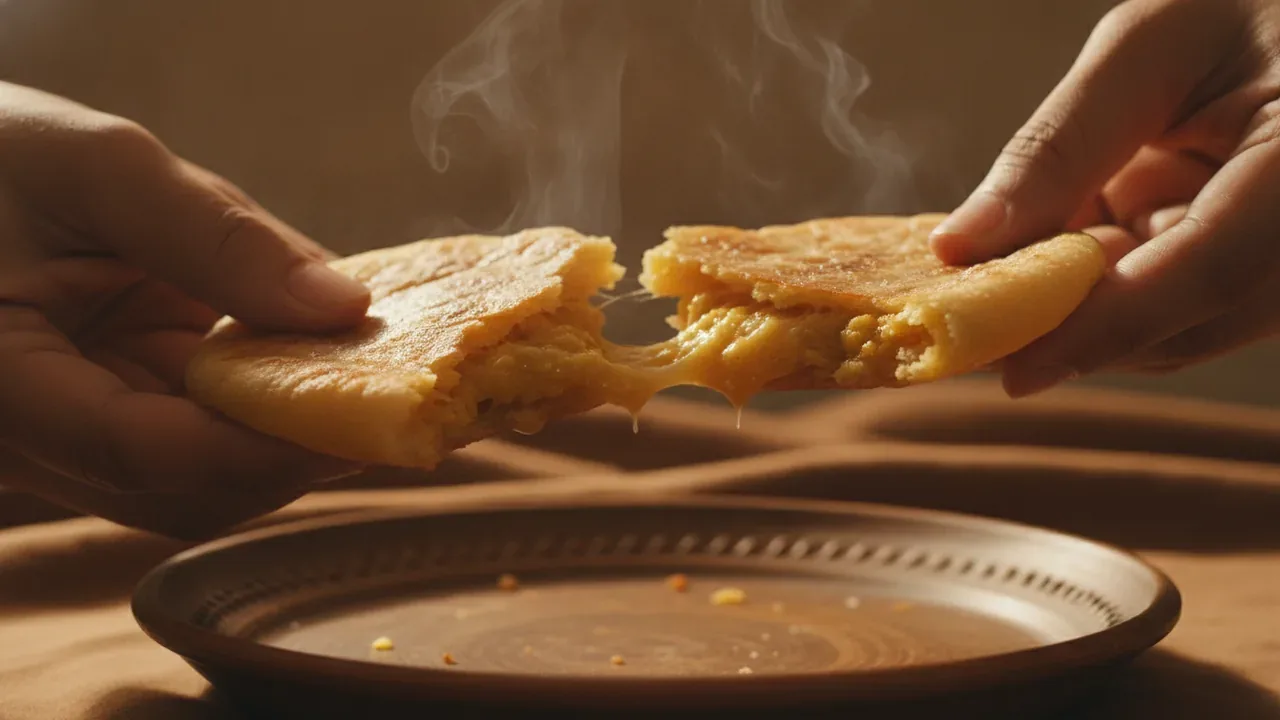
On the morning of Ugadi, before the pachadi is mixed and before anyone touches the new-year mango, most Telugu kitchens are doing the same thing: pressing a ball of jaggery-sweet dal paste into oil-slicked dough and rolling it out thin. Bobbatlu. The sweet flatbread of Andhra Pradesh, griddled until it blisters pale gold, finished with a spoon of ghee and eaten warm, folded in half. Half of India makes something like it under a different name, which is exactly where the confusion starts. This page covers what bobbatlu is, what it is called in Telangana and everywhere else, how the Andhra version differs from its cousins, and how it is made.
Table of Contents
What is bobbatlu?
Bobbatlu is a sweet stuffed flatbread from Andhra Pradesh, made by filling a thin maida dough with poornam, a paste of cooked chana dal, jaggery and cardamom, then griddling it with ghee. It is a festival sweet, made above all for Ugadi and Sankranti, and is known elsewhere as holige, obbattu or puran poli.
Bobbatlu, bakshalu and what it means
In Andhra Pradesh the sweet is bobbatlu, singular bobbattu. Cross into Telangana and the same flatbread becomes bakshalu, also heard as baksham or bhakshalu, from a Sanskrit root meaning food or offering. English has no single word for it; the closest honest description is a sweet stuffed flatbread, or a lentil-and-jaggery flatbread, which is why ‘bobbatlu in English’ is one of the most searched questions about the dish and why the answers online wander so much.
The filling has its own name and has earned it: poornam (also purnam or puran), from the Sanskrit for full or complete. A bobbattu is, quite literally, a bread filled to completion. The dal inside is senagapappu (Bengal gram, chana dal), and it does most of the work.
Bobbatlu, holige, obbattu, puran poli: one sweet, many names
Here is where the internet gets it wrong, repeatedly. Google’s own knowledge panel files bobbatlu under puran poli, and several ranking recipe pages call it a Tamil Nadu dish. Neither is right. Bobbatlu is Telugu; puran poli is the Marathi name for the Maharashtrian version; the Tamil sweet in this family is boli or poli. These are regional expressions of one idea, a dal-and-jaggery stuffed flatbread, and each region has made it its own.
| Name | Language and region | Notes |
| Bobbatlu (bobbattu) | Telugu, Andhra Pradesh | Thin, maida-based, usually made without turmeric |
| Bakshalu (baksham, bhakshalu) | Telugu, Telangana | The same sweet under its Telangana name |
| Holige | Kannada, North Karnataka | Dal and coconut fillings both common |
| Obbattu | Kannada, South Karnataka (incl. Bengaluru) | Hand-stretched paper-thin rather than rolled |
| Puran poli | Marathi, Maharashtra | Wheat dough; puran often spiced with nutmeg or dry ginger |
| Boli / poli | Tamil and Malayalam, Tamil Nadu and Kerala | Often served with payasam (payasaboli) |
| Vedmi | Gujarati, Gujarat | Toor-dal filling is common |
Two clarifications are worth pinning down. Holige and obbattu are both Kannada names for the same sweet: holige dominates in North Karnataka, obbattu in the south, including Bengaluru, where it is the name you will hear at every Ugadi table. And puran poli, the name most of India knows, is the Maharashtrian branch of the family, not the parent of it. The Telugu, Kannada, Marathi, Tamil and Gujarati versions are siblings, each older than anyone can prove; sweets matching this description turn up in old Sanskrit texts, though pinning an origin on any one region overreaches the evidence.
How Andhra bobbatlu differs
Set an Andhra bobbattu next to a Karnataka obbattu and a Maharashtrian puran poli and the family resemblance is obvious. The differences live in the hands.
Andhra bobbatlu is typically rolled from maida rather than wheat, which is what lets it go thin without tearing, and the dough is usually left plain, without the pinch of turmeric that tints many Karnataka versions yellow. The filling stays spare: chana dal, jaggery, cardamom, and very little else. Karnataka’s obbattu is famously hand-stretched instead of rolled, patted out paper-thin on an oiled banana leaf or plastic sheet, and its filling often brings in fresh coconut. Maharashtra’s puran poli goes the other way entirely: a wheat dough, a spicier puran carrying nutmeg, fennel or dry ginger, and a bowl of katachi amti served alongside. One sweet, three temperaments.
There is also a texture standard worth naming, because Telugu cooks judge by it. A good Andhra bobbattu should be thin enough that the dark poornam shows through the pale dough like a shadow, soft enough to fold in half without a crack, and balanced so the jaggery reads warm rather than cloying, with the cardamom arriving a beat after the first bite. Thick, bready, doughy-edged versions are the mark of a rushed dough. The sweet is meant to be delicate; the pleasure is in how little bread stands between you and the filling.
How bobbatlu is made
The method is a two-part discipline: the poornam and the dough. Get both right and the rolling largely takes care of itself.
The poornam first. Chana dal is pressure-cooked until soft but not mushy, then drained thoroughly; wet dal is the most common cause of torn bobbatlu. It is ground with jaggery and cardamom into a thick paste, and some kitchens cook that paste briefly to drive off the last of the moisture. Cooled, it should hold its shape as a ball. A poornam that smears will fight you at the rolling pin.
The dough is the opposite of a chapati dough: loose, slack and swimming in oil. Maida is kneaded soft with a pinch of salt, then rested under a layer of oil for at least an hour, often two or three. That oil-soaked rest is the entire secret of soft bobbatlu. A stiff, under-rested dough gives you a sweet that cracks at the fold and hardens by evening.
To shape, a ball of poornam slightly larger than the ball of dough is wrapped, sealed and rolled gently thin on an oiled surface. It goes onto a medium tawa until pale gold spots appear on both sides, gets a brush of ghee, and is eaten warm. Bobbatlu keep for 2-3 days at room temperature, which is part of why festival batches are made by the dozen.
Two practical notes that recipe cards rarely spell out. First, a day-old bobbattu revives completely with ten seconds on a warm tawa or a short steam over milk; it should never be microwaved hard, which turns the maida leathery. Second, the poornam is a workhorse beyond this one sweet. The same chana-dal-and-jaggery paste fills boorelu, the fried festival dumpling, and kudumulu for Vinayaka Chavithi, so a Telugu cook who has the poornam right has half the festival sweets of the year already in hand.
Types of bobbatlu
The Telugu kitchen rings its own changes on the sweet. The frame is fixed; the filling and the finish move.
- Nethi bobbatlu (ghee bobbatlu). The rich version: griddled in ghee rather than merely finished with it, so the whole flatbread takes on the aroma. The one weddings and festival guests get.
- Kobbari (coconut) filling. Fresh coconut joins or partly replaces the dal, more typical of Karnataka holige and obbattu but made in plenty of Andhra homes too.
- Pesarapappu and kandipappu fillings. Moong dal gives a lighter, paler poornam; toor dal appears further afield, most notably in Gujarati vedmi.
- Sugar versus jaggery. Jaggery is the traditional sweetener and gives the deep caramel note; sugar versions run paler and flatter in flavour, and most Telugu cooks will tell you exactly that.
Bobbatlu on the festival table
Bobbatlu is festival arithmetic: if the calendar says Ugadi, the answer is bobbatlu. It anchors the Telugu new-year meal alongside Ugadi pachadi, and the pairing is pointed. The pachadi holds all six tastes at once, sweet to bitter, a mouthful of the year to come; the bobbattu that follows it is pure, uncomplicated sweetness, the reassurance after the lesson. The sweet returns in January for Makar Sankranti, when Telangana homes make it as bakshalu, and again for Vinayaka Chavithi. Maharashtra rolls its puran poli for Holi. Between them, the family covers most of the festival map of western and southern India.
It is served warm, with ghee melting on top or with warm milk poured over, and in Karnataka and Maharashtra sometimes with a thin holige saaru or katachi amti on the side. It also remains, stubbornly, a homemade sweet. Sweet shops do sell it, and Hyderabad has counters that sell nothing else, but for most Telugu families the making is the ritual: one person rolling, one griddling, the first misshapen bobbattu eaten standing up in the kitchen before it reaches a plate. A festival batch rarely survives the day it was made for.
Bobbatlu in the Andhra food story
Nandhini Deluxe has cooked Andhra food in Bengaluru since January 1989, growing from Minerva Circle into the city’s first Andhra restaurant chain, and part of holding that ground is knowing the whole map of the cuisine, including the corners of it that live at home rather than on a restaurant table. Bobbatlu belongs to that home territory: the Ugadi sweet, the grandmother’s rolling board, the batch counted out before the guests arrive. Understanding Andhra food means understanding dishes like this one, where the festival calendar and the family kitchen meet, and that is the spirit this page is written in.
Frequently Asked Questions
What is bobbatlu made of?
Bobbatlu is made of a soft maida or wheat dough stuffed with poornam: chana dal (Bengal gram) cooked soft, drained, and ground with jaggery and cardamom into a thick paste. The stuffed dough is rolled thin, griddled on a tawa and usually finished with ghee.
What is bobbatlu called in English?
There is no single English word. Bobbatlu is best described as a sweet stuffed flatbread, or a lentil-and-jaggery flatbread. The same family of sweet is called holige and obbattu in Karnataka, puran poli in Maharashtra, boli in Tamil Nadu and Kerala, and vedmi in Gujarat.
What is bobbatlu called in Telangana?
In Telangana the sweet is usually called bakshalu, also heard as baksham or bhakshalu. It is the same chana-dal-and-jaggery stuffed flatbread that Andhra Pradesh calls bobbatlu, made for the same festivals, Sankranti and Ugadi above all, with only household-level differences in technique.
What is the difference between puran poli and bobbatlu?
They are regional versions of one sweet. Puran poli is the Maharashtrian name, usually made with a wheat dough and a puran spiced with nutmeg or dry ginger. Andhra bobbatlu is typically thinner, rolled from maida, usually without turmeric, and keeps its filling to dal, jaggery and cardamom.
Why do bobbatlu break or turn hard?
Breakage usually means the poornam was too wet or the dough too tight; hardness means a stiff, under-rested dough. Drain the cooked dal well, cool the poornam until it holds a ball, and rest a loose, generously oiled dough for at least an hour before rolling.
Nandhini has cooked Andhra food in Bengaluru since 1989, which makes for a useful vantage point on where a sweet like bobbatlu sits in the wider Andhra spread. The festival table makes more sense once you know the whole of it.