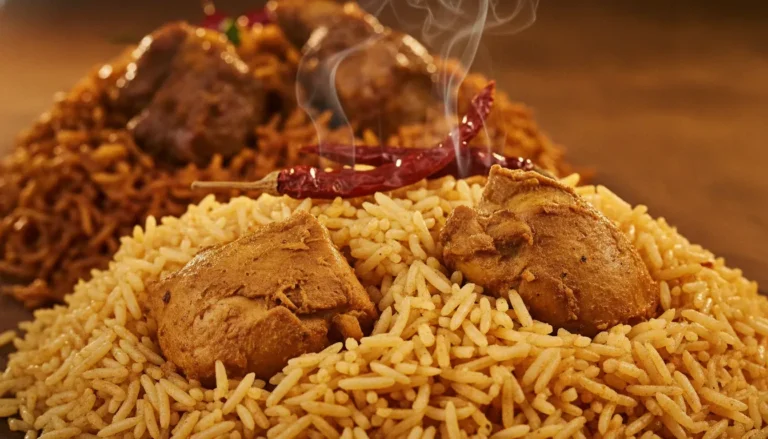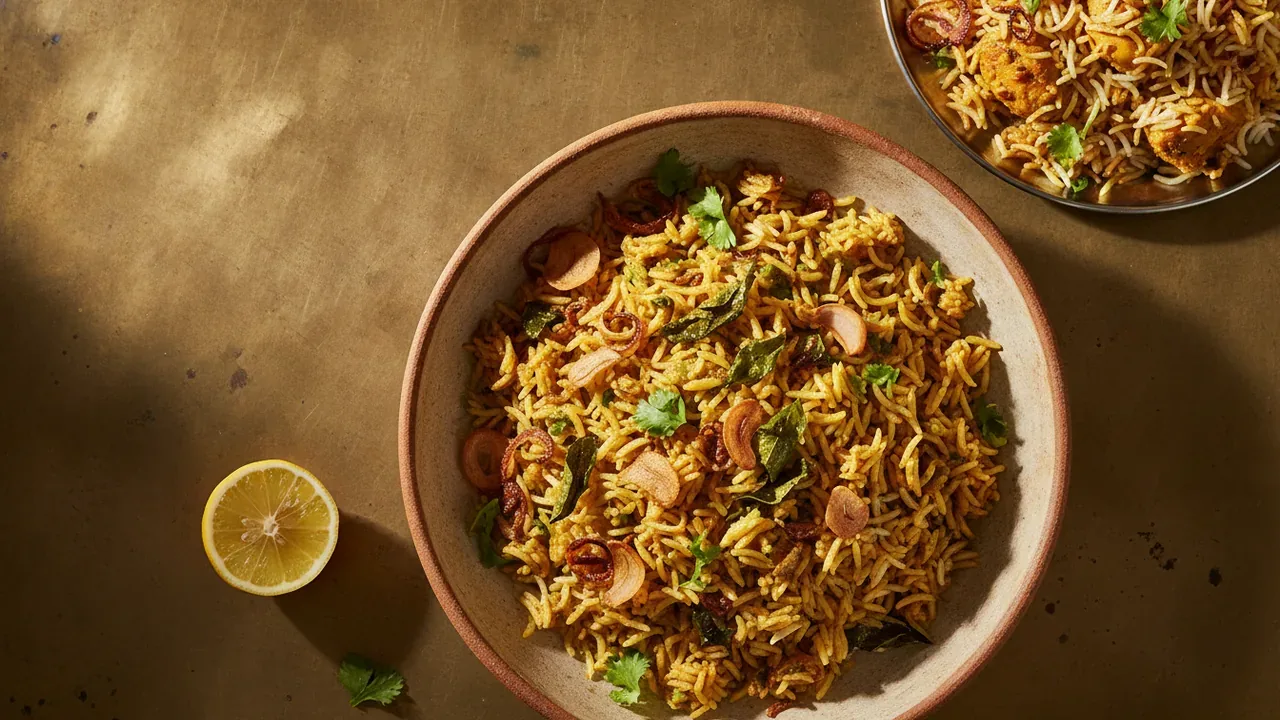
Order a biryani in Vijayawada and the heat arrives before the aroma settles. There is no slow reveal, no saffron perfume that unfolds bite by bite. The green chilli lands first, sharp and immediate, and the rice comes coated in a masala that clings rather than falling away in dry grains. This is a biryani built on a different logic to the one most people picture when they hear the word. It is the biryani of a working river city, and it eats like one: fast, hot and unfussy.
Vijayawada biryani, also called Bezawada biryani, is the spice-forward Coastal-Andhra style built on green chillies and raw garlic rather than a long sealed dum. It runs saucier than most biryanis, with gravy-coated rice, and it leads with fresh-chilli sharpness on the very first bite.
Table of Contents
A Coastal-Andhra style
Vijayawada sits on the banks of the Krishna in coastal Andhra Pradesh, and for most of its history it went by an older name, Bezawada. The biryani carries both names because the city does. Bezawada was the name through the colonial period and into living memory, which is why older recipe cards, menus and family cooks still reach for it first. What the place gives the dish is its character. Coastal Andhra cooks with a heavy hand on fresh green chilli and garlic, works with tamarind, sesame and groundnut oil, and pulls curry leaves straight off the tree, and a biryani made in that pantry was never going to be a delicate, saffron-scented thing.
Within the wider family of Andhra biryanis, Vijayawada holds a specific corner. Guntur biryani leans on dried red chilli and a deeper, slower burn. Nellore has its own register. Rayalaseema runs drier and hotter still. The Vijayawada style biryani is the saucy, green-chilli one, the wettest of the group, the style where the masala stays with the rice instead of drying into it. If you are working through the different types of biryani in India and trying to tell the Andhra styles apart, this is the one defined by moisture and fresh heat rather than by dryness or a long dum.
It is a working-city biryani, sold fast and eaten fast at mess-style counters and roadside kitchens, and that speed shows in how it is cooked. Nobody is sealing a pot with dough for a lunch crowd that turns over inside an hour. The method bends towards the pan, and the flavour follows it there.
Is it just a spicier Hyderabadi?
Here is the confusion most people arrive with. They have eaten Hyderabadi biryani, they know it as the benchmark, and they assume every other South Indian biryani is a variation on it with the spice turned up. So they order a Vijayawada biryani expecting a hotter Hyderabadi and get something that behaves differently on the plate.
It is a fair mistake. Hyderabadi biryani is the one that travelled, the one on every menu from Bengaluru to Birmingham, and it set the template in most people’s heads: fluffy separate grains, a perfumed saffron top, meat cooked slowly under a sealed lid. Vijayawada breaks that template in almost every way that matters. The rice is not separate and dry. The flavour does not build in layers. The heat does not wait.
You can taste the assumption fall apart in real time. The first forkful of a good Vijayawada plate is hotter and wetter than a Hyderabadi ever is, and the spice does not politely announce itself under the saffron. It is already there, green and direct, before you have finished the mouthful.
So no, it is not a spicier Hyderabadi. It is a different method reaching for a different result, and the gap between them is worth understanding before you decide which one you actually want on the table in front of you. Order blind and you might be caught out; order knowing, and you can pick the biryani that suits your appetite for heat.
The green-chilli, saucy character
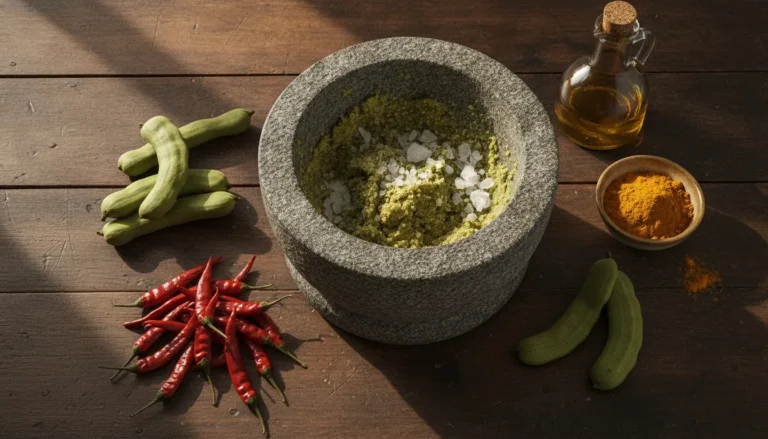
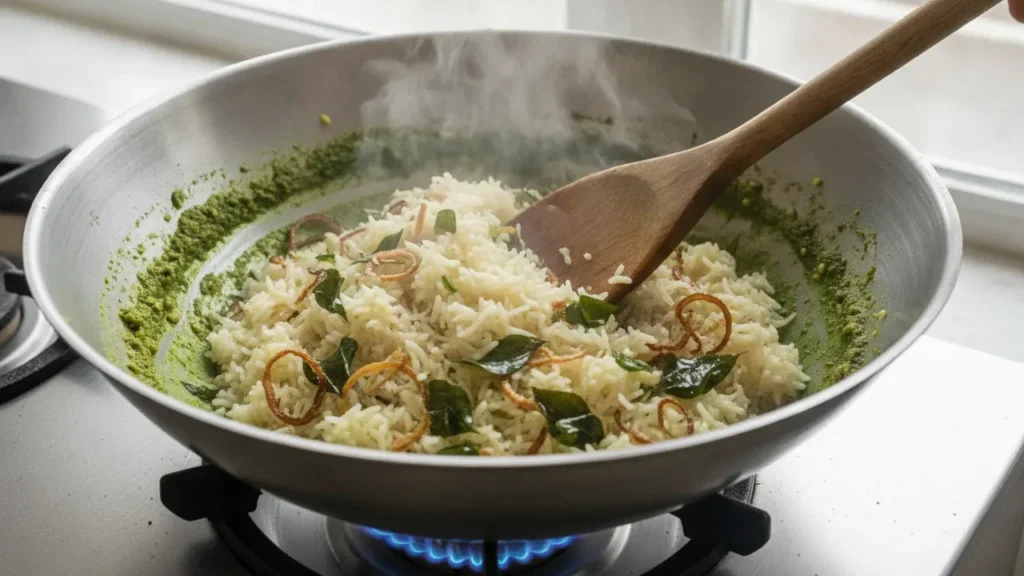
What makes a Vijayawada biryani a Vijayawada biryani starts with the chilli, and specifically with fresh green chilli rather than dried red. That single choice sets the whole flavour. Dried red chilli, the Guntur Sannam kind that runs to 30,000–50,000 SHU, gives a deep, building burn that arrives a beat late and stays. Fresh green chilli is sharper and brighter, a heat that hits the front of the tongue straight away and cuts rather than smoulders. Vijayawada leans on it hard, often ground into a paste with raw garlic and coriander.
The garlic matters more than people expect. It goes in raw and generous, and it gives the dish a pungency you can smell before the plate reaches the table. Curry leaves come in too, torn and fried until they crackle, adding that dark, slightly bitter note that runs through so much coastal cooking. Some kitchens finish with fried peanuts for crunch and a scatter of star anise for warmth underneath the heat.
Then there is the texture, which is where Vijayawada really separates itself. A Vijayawada chicken biryani leans on boneless meat, marinated in lemon and spice, then cooked with the masala in a fry or bhuna rather than sealed away in a long dum. Most biryanis aim for dry, distinct grains. This one does not. The result is a saucier base and rice that arrives gravy-coated and glossy, often an everyday short-grain rather than long basmati, carrying the masala in every mouthful instead of sitting politely beside it. Fried onions go in for sweetness and body, but they are seasoning here, not the headline.
The sauciness is not an accident of a wet pot; it is built. The masala of onion, ginger, garlic and green chilli is fried down until it turns glossy and starts to release its oil, and only then does the rice go in, so the grains take on colour and gravy as they finish cooking together. A squeeze of lemon at the end keeps the heat lively, and a handful of chopped coriander and mint goes over the top. Some cooks stir in a little yoghurt to round the edges, though far less than a Hyderabadi would. Get that frying stage wrong and the whole thing turns either dry or raw-tasting, which is why the versions worth eating come from cooks who have made it a thousand times.
The choice of boneless chicken is deliberate as well. It lets the marinade and masala get right into the meat, and it keeps the eating quick, with no bones to work around, which suits a biryani meant to be put away in a hurry.
Put it together and you get a biryani that is moist, aggressively seasoned and direct. There is no waiting for the flavour to reveal itself. The green chilli, the raw garlic and the fried curry leaves land at once, on the first bite, and they keep landing. On the plate it usually arrives with a thin onion raita and a wedge of lemon, both there to give your palate a half-second of relief before the next mouthful. That is the rhythm of the dish: heat, then a cool note, then heat again.
Vijayawada vs Hyderabadi: the real difference
The clearest way to understand Vijayawada biryani is to set it against the Hyderabadi it is so often mistaken for, on the three points that actually differ.
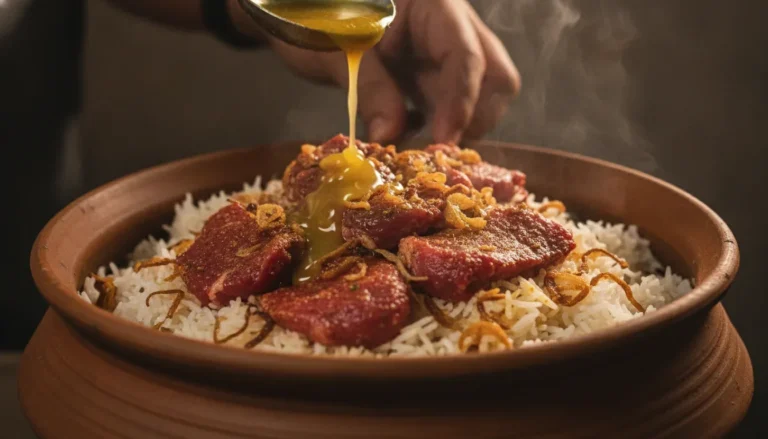
Method first. Hyderabadi biryani is a kacchi dum: raw marinated meat sits at the bottom of a heavy handi, par-cooked rice is layered on top, the lid is sealed with dough, and the whole thing steams in its own trapped heat until the meat cooks through and the rice takes on its flavour. Vijayawada rarely bothers with the seal. It cooks the meat and masala together in a fry or bhuna, then folds the rice through, so the two are married in the pan rather than in a sealed pot. You can hear the difference in the kitchen: the Vijayawada style is fried and tossed and audible, where a dum sits silent under its seal and does its work out of sight.
Heat next, and this is where a lot of writing gets it wrong. Some sources call Vijayawada the milder of the two. It is not. Vijayawada leads with green chilli and Coastal-Andhra spicing, and it hits harder and earlier than Hyderabadi, which softens its heat with saffron and yoghurt and lets the flavour arrive in layers. If Hyderabadi is a slow build, Vijayawada is a first-bite punch.
Rice last. Hyderabadi wants its grains long, fluffy and separate, each one standing apart. Vijayawada wants its rice coated, moist and carrying the gravy. Neither is better; they are after different things.
So which should you order? If you want the biryani as a slow, fragrant, layered thing, Hyderabadi is the one. If you want spice up front and a plate you can taste clearly from the first bite to the last, Vijayawada is built for exactly that.
That is the Vijayawada-specific contrast. The wider question of Andhra biryani vs Hyderabadi biryani, meaning all the Andhra styles set against Hyderabadi dum, is a broader subject, and how Andhra and Hyderabadi biryani differ across the full family is worth reading on its own.
Andhra biryani, the Nandhini way
Nandhini Deluxe has cooked Andhra food in Bengaluru since 1989, and the spice-first instinct behind Vijayawada biryani is the same one that runs through its kitchens. Guntur chillies sit at the centre of the flavour. The Mutton Biryani is one of its signatures, cooked in the Andhra register of heat and depth rather than the softer, saffron-led Hyderabadi one.
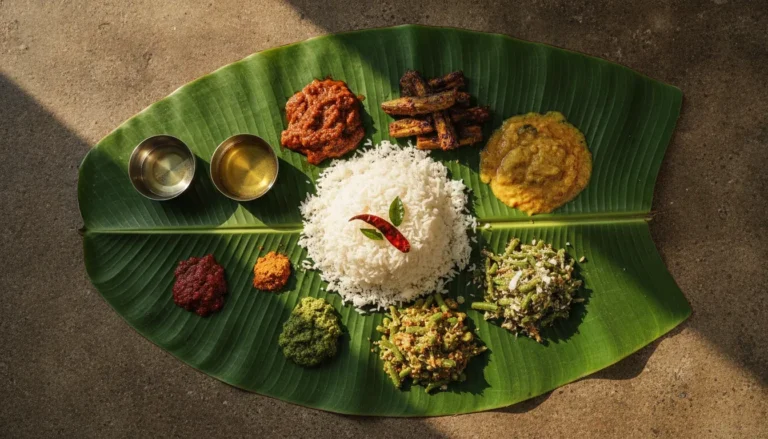
That makes it a useful place to understand where a style like Vijayawada’s sits within the Andhra biryani family, even though a dish under that exact name is its own coastal speciality. Across 22 outlets, 20 in Bengaluru and two in Mysuru, the biryani on the banana leaf comes from the same Coastal-Andhra tradition of fresh heat and generous spicing that gives Vijayawada its character.
If you want to see how Andhra style biryani eats in Bengaluru today, Nandhini’s Andhra biryani guide is the place to start.
Vijayawada vs Hyderabadi at a glance
The short version, side by side:
| Vijayawada biryani | Hyderabadi biryani | |
| Method | Often fry or bhuna; saucier base | Kacchi dum, raw meat sealed under rice |
| Heat register | Green-chilli, first-bite heat | Milder, layered, saffron-forward |
| Rice | Gravy-coated, more direct flavour | Fluffier, more separate |
| Signature notes | Raw garlic, curry leaves, fried peanuts | Saffron, yoghurt, fried onions |
Frequently Asked Questions
What is special about Vijayawada biryani?
Vijayawada biryani is the spice-forward Coastal-Andhra style, built on green chillies and raw garlic rather than a long sealed dum. It is often saucier than other biryanis, with the rice gravy-coated, and it leads with fresh-chilli sharpness on the first bite.
What is Vijayawada style chicken biryani?
It is usually made with boneless chicken marinated in lemon and spices, then cooked with a green-chilli masala, curry leaves and often fried peanuts. The result is a moist, aggressively seasoned biryani rather than the drier, layered Hyderabadi style.
What is the difference between dum biryani and Vijayawada biryani?
Dum biryani seals raw meat and rice together in a covered pot to cook in steam. Vijayawada biryani more often uses a fry or bhuna approach with a saucier base, giving quicker, sharper heat and a moister finish than sealed dum.
Is Vijayawada biryani spicier than Hyderabadi biryani?
Yes. Vijayawada biryani leads with green-chilli heat and Guntur Sannam chillies (around 30,000–50,000 SHU), so it hits harder on the first bite. Hyderabadi biryani is milder and more layered, with saffron and yoghurt softening the spice.
Why is it also called Bezawada biryani?
Bezawada is the older name for the city of Vijayawada in Andhra Pradesh, so Bezawada biryani and Vijayawada biryani refer to the same Coastal-Andhra style. You will see both names used interchangeably in menus and recipes.