Order chicken curry almost anywhere in India and you get something red, tomato-soft and mild enough for a child. Order kodi kura in a Telugu kitchen and the first thing that lands is the chilli, then a roasted, nutty depth no jar of masala can fake. Andhra chicken curry is a different animal, and the gap is wider than the shared name lets on. It is one of the defining dishes in the famous foods of Andhra Pradesh, and the question people actually type is the honest one: is this just chicken curry with more heat, or is it built differently from the ground up? It is built differently. Here is exactly how, and where the traditional version still turns up on a plate.
Table of Contents
What is Andhra chicken curry (kodi kura)?
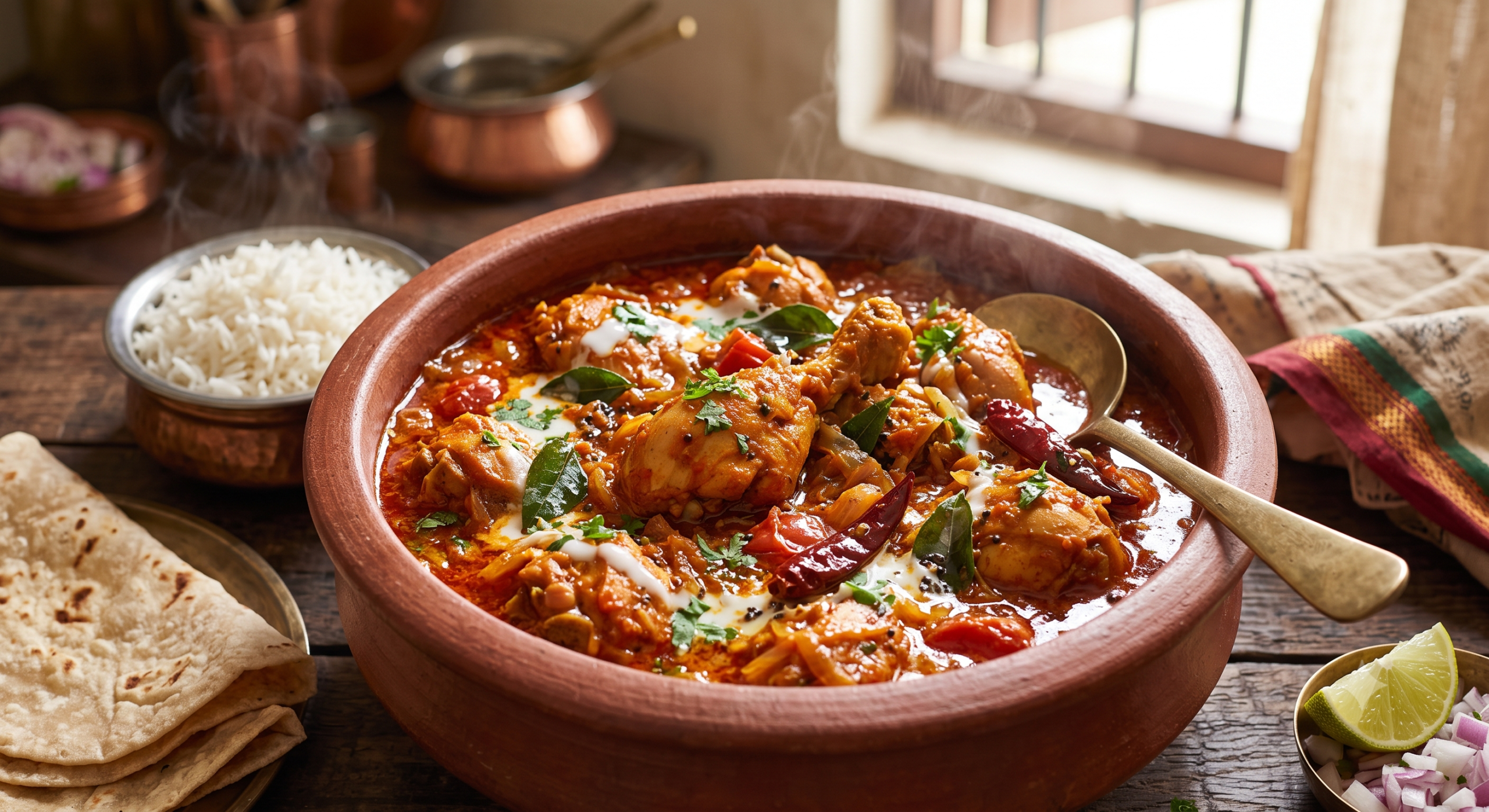
Andhra chicken curry, or kodi kura, is the standard bone-in chicken curry of Andhra Pradesh and Telangana: chicken simmered in a freshly roasted, ground spice powder with Guntur-chilli heat and a poppy-seed body. In Telugu, kodi means chicken and kura means curry or gravy. Traditional versions often skip tomato, souring instead with lemon or tamarind.
What makes it an Andhra curry
Most chicken curries lean on the same shortcut: onion, tomato and a spoon of shop-bought garam masala. Andhra style chicken curry keeps the onion and quietly drops much of the rest.
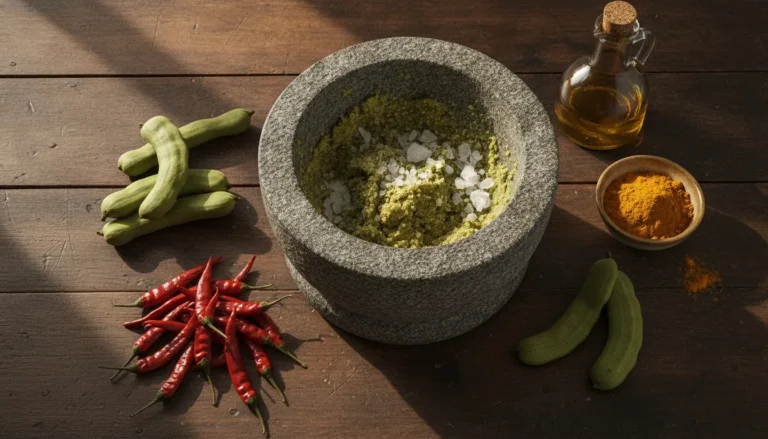
The first thing that sets it apart is the spice powder, and it is made fresh for the pot. Coriander seeds, cumin, a few cloves, cinnamon, dried red chillies and often a handful of poppy seeds (gasagasalu) go into a dry pan, roasted until they darken and turn fragrant, then ground. That roasting is the whole game. It pulls out an oily, nutty aroma you cannot get from a blend that has sat in a packet for six months. Skip it and you have a decent curry. Do it and you have kodi kura.
The heat is deliberate, and it comes from a named chilli. Guntur Sannam chillies, grown a couple of hours inland from the coast, sit around 30,000 to 50,000 on the Scoville scale. They bring colour and a slow-building burn rather than a flat sting. The chillies do more than singe your tongue. They are the backbone the other flavours hang off.
Then there is the tomato, or rather its absence. The older tradition often skips tomato altogether. Instead of that sweetness, a Telugu cook reaches for lemon or a knob of tamarind to sour the gravy. Poppy seeds, sometimes with a little coconut or a few cashews, do the thickening. Curry leaves and ginger-garlic paste round out the base.
None of this is uniform across the region. Coastal Andhra leans on a little coconut and runs slightly gentler; Rayalaseema, further inland, pushes the chilli harder and keeps the gravy tight and dark. The roasted powder is the constant. The heat is the dial.
Put those together and the dish stops being a variation on plain chicken curry. It has its own logic, and once you have tasted the real thing you can pick it out blind.
Types of Andhra chicken dishes
Andhra kitchens do not treat chicken as one dish. They treat it as a category, and the name changes with the technique. If you are working out what to order, this is the map.
- Kodi kura (chicken curry): the gravy version, and the subject of this page. Bone-in chicken in a roasted-spice gravy, loose enough to spoon over rice.
- Kodi vepudu (chicken dry fry): the same bird cooked down until the masala clings and barely any gravy is left. Drier, sharper, eaten more as a side than a main.
- Kodi iguru (semi-dry chicken): the middle path, where the chicken cooks in its own juices with the masala until the sauce turns thick and clinging rather than pourable.
- Natu kodi kura (country-chicken curry): the same curry built around natu kodi, the lean, tougher free-range bird that needs longer on the heat and pays it back in flavour. It earns its own page, and it has one.
- Gongura chicken: chicken cooked with gongura (sorrel leaves), the sour green Andhra cooking is known for. The leaf brings a tang that cuts the richness.
- Guntur chicken: the chilli turned up and named for the district that grows the heat. Order it when you want the burn front and centre.
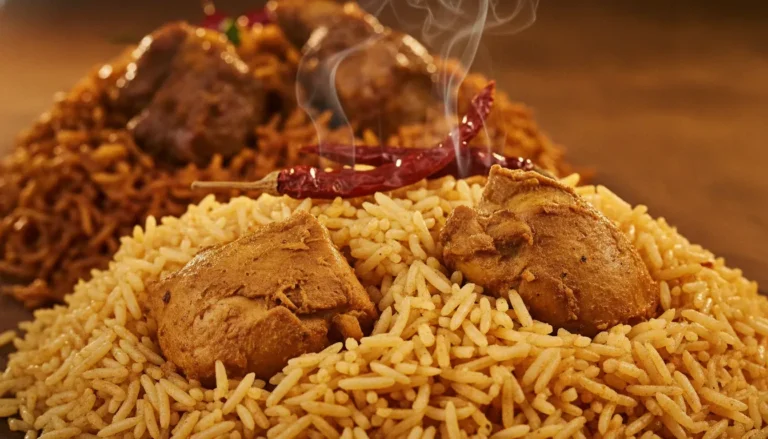
The rice world meets the curry world in andhra kodi pulao, where much of this same spicing goes into a one-pot rice dish rather than a gravy. Different format, same DNA. Knowing the names is half the battle in an Andhra restaurant, where the menu can run to a dozen chicken preparations and the difference between two of them lives entirely in the pan, not the bird.
Andhra chicken curry vs Chettinad and Madras
South India has three chicken curries that outsiders lump together and locals never would. Here is where andhra chicken curry sits against the two it gets compared with most, Chettinad and Madras.
| Andhra (kodi kura) | Chettinad | Madras | |
| Region | Andhra Pradesh and Telangana | Tamil Nadu (Chettinad) | Tamil Nadu (Chennai) |
| Heat source | Guntur chillies, high | Black pepper and chillies | Moderate, the mildest |
| Spice base | Freshly roasted, ground powder | Many whole spices, aniseed | Curry-powder style blend |
| Souring | Lemon or tamarind, often no tomato | Tamarind | Tamarind |
| Body | Poppy seeds, sometimes coconut | Fresh ground coconut | Thinner, sesame-oil finish |
| Signature note | Chilli-forward, nutty, roasted | Peppery and aromatic | Balanced and tangy |
The short version: Chettinad gets its punch from black pepper and a long list of whole spices; Madras is the mildest of the three and leans tangy with tamarind; Andhra kodi kura is the hottest, driven by Guntur chillies and a spice powder roasted fresh rather than tipped from a tin. If a curry arrives fiery, nutty and without the sweet edge tomato brings, you are almost certainly eating the Andhra one.
It helps to set kodi kura against the curry most people know best, the creamy restaurant tikka masala of the North. That dish is built on tomato, cream and a mild, sweet warmth. Kodi kura runs the other way, dry-spiced, sour rather than sweet, and hot by design. Tasting them back to back shows in one bite how far Andhra cooking sits from the northern comfort curry.
What does it taste like, and how hot?
Ask what andhra chicken curry tastes like and the honest answer is: heat first, then everything else.
The heat is real and it is specific. Guntur Sannam, the chilli most Andhra kitchens reach for, measures roughly 30,000 to 50,000 on the Scoville scale, so the burn builds and lingers rather than flashing and fading. Heat on its own would be a blunt instrument, though, and this dish is not blunt. Underneath the chilli runs a nutty, almost creamy depth from ground poppy seeds and any coconut in the pot. Cutting across both is a bright sour note, lemon or tamarind, doing the job tomato does in a northern curry but without the sweetness. Over all of it sits the smell of the roasted spice powder, the first thing you notice when the plate lands.
So the profile, in one line: assertively hot, nutty and rounded in the body, tangy rather than sweet, with a strong roasted-spice aroma. It is a curry that wants rice, or a mound of ragi sangati, to lean against, and a cooling side to sit beside. This is food built to be eaten with your hands off a full plate, not sipped politely from a bowl.
Newcomers often brace for punishment and find, a few bites in, that the roasted masala keeps pulling them back for more. The heat announces the dish. The aroma is what stays with you.
How Andhra chicken curry is made
You do not need a recipe card to understand how kodi kura comes together. You need the four moves that matter. An andhra chicken curry recipe will list the steps; what it rarely explains is why each one earns its place.
It starts with the marinade. Bone-in chicken, kept on the bone for flavour, gets turmeric, salt, chilli powder and a squeeze of lemon, then rests while the real work happens.
That real work is the spice powder. Coriander, cumin, cloves, cinnamon, a few dried chillies and poppy seeds go into a dry pan over a low flame, roasted until they darken and smell toasted, then ground coarse. Grinding it fresh, for this pot, on this day, is what separates a good kodi kura from a forgettable one.
Next comes the base: onions cooked down slowly, a generous spoon of ginger-garlic paste, curry leaves, and the ground powder bloomed in the oil until it smells roasted rather than raw.
Then the chicken goes in, gets coated, and simmers with a little water until it is tender and the gravy has tightened around it. The souring arrives late, from tamarind or lemon rather than tomato.
On the coast, cooks often finish with ground coconut or a splash of coconut milk, which softens the heat and rounds the gravy. Inland, in Rayalaseema, they leave it drier and hotter. Same dish, two accents.
Andhra chicken curry, the restaurant version
Here is the quiet catch with looking kodi kura up online: many restaurant kitchens have drifted from the traditional build, leaning on tomato and cream to make it travel and please a wider table. The roasted-powder, Guntur-led, often tomato-free version is the one worth seeking out, and it is easiest to find where an Andhra kitchen cooks it every day rather than as a special.
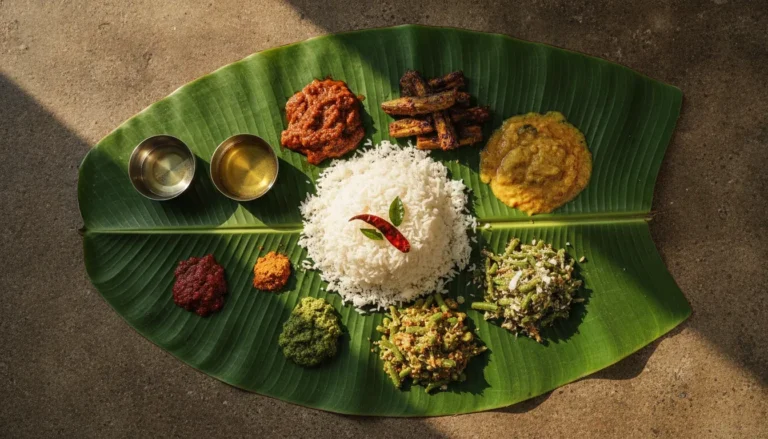
That is the version Nandhini has served in Bengaluru since 1989, when Shri N. Ananda opened the first outlet at Minerva Circle and made Guntur chillies and gongura the spine of the menu. It has grown into a 22-outlet Andhra chain, twenty across Bengaluru and two in Mysuru, cooking for well over ten thousand diners a day, and the kodi kura still arrives the Andhra way: bone-in, chilli-forward, spooned over rice on a banana-leaf bhojanam.
If you are choosing between the chicken dishes on that leaf, the wider Andhra non-veg meals spread is where kodi kura, vepudu and the biryani sit together, and where the difference is easiest to taste in one sitting.
Frequently Asked Auestions
What is Andhra chicken curry (kodi kura)?
Kodi kura is the standard Andhra chicken curry: bone-in chicken simmered in a freshly roasted, ground spice powder with Guntur-chilli heat and a poppy-seed body. In Telugu, kodi means chicken and kura means curry. Traditional versions often skip tomato, souring instead with lemon or tamarind.
What does Andhra chicken curry taste like?
It leads with heat from Guntur chillies, roughly 30,000 to 50,000 on the Scoville scale, then opens into a nutty depth from ground poppy seeds and coconut. A lemon or tamarind tang replaces tomato sweetness, and a roasted-spice aroma runs through the whole dish.
What is the difference between Andhra chicken curry and Chettinad chicken?
Andhra kodi kura leans on Guntur-chilli heat and a freshly roasted spice powder, often without tomato. Chettinad, from Tamil Nadu, uses more whole spices, fresh coconut and a peppery, black-pepper profile. Both are bold, but the spice base and the heat source are different.
Is Andhra chicken curry the same as Madras chicken curry?
No. Madras curry is generally milder, built on tamarind, fenugreek and sesame oil with a pre-mixed curry-powder base. Andhra kodi kura is hotter and drier in its spicing, driven by Guntur chillies and a freshly roasted masala. They come from different regional traditions.
Does traditional Andhra chicken curry use tomato or coconut?
Many traditional Telugu-household versions use neither, souring with lemon or tamarind and thickening with poppy seeds. Coastal Andhra cooks sometimes add ground coconut or coconut milk, which softens the heat. Rayalaseema versions tend to run drier and hotter, with little coconut.
What are the main types of Andhra chicken dishes?
The family covers kodi kura (gravy), kodi vepudu (dry fry), kodi iguru (semi-dry, cooked in its own juices), natu kodi kura (country-chicken version), and spiced variants such as gongura chicken and Guntur chicken. The technique, more than the bird, sets each apart.
If you are in Bengaluru, the kodi kura described here is on the banana leaf at Nandhini across the city. Taste the roasted-spice, Guntur-led version rather than reading about it.