Order “Andhra Kodi Pulao” at a Bengaluru counter and there is a fair chance you will pause, because the plate that turns up looks a lot like biryani and the name sounds as though it should be one. It is not. Kodi pulao is a different dish cooked by a different method, and once you have eaten a good one you stop confusing the two. This page settles what andhra kodi pulao actually is, where it parts ways with biryani, and how to find a proper plate of it in the city. We have cooked Andhra food here since 1989, so the answers come from a kitchen rather than a dictionary. Get the distinction straight and the whole Andhra chicken-rice family opens up, from the everyday version to the country-chicken one people drive out of town for.
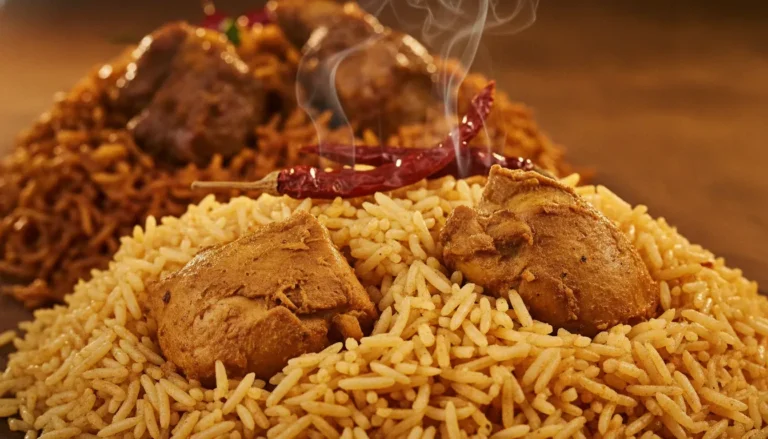
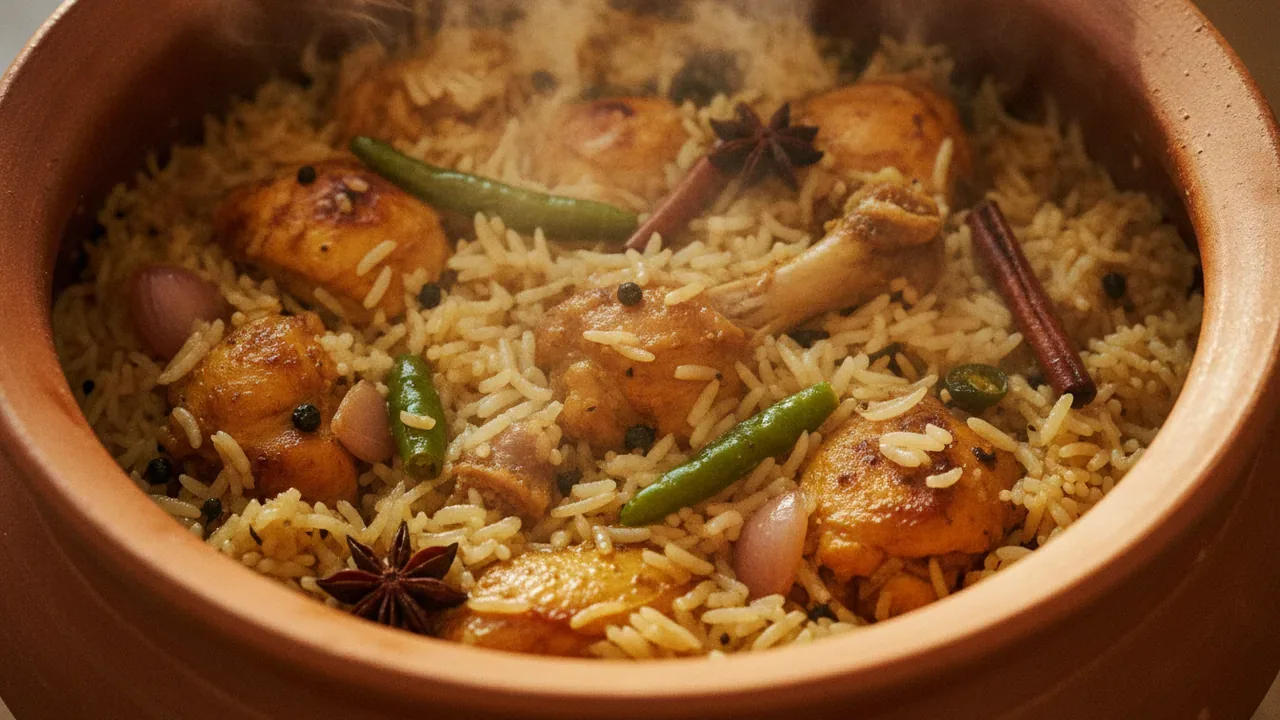
Andhra kodi pulao is a one-pot chicken rice in which basmati and chicken cook together, so the rice takes its flavour straight from the meat’s juices as it steams. It is lighter and less layered than biryani, built on whole spices, shallots and fresh green-chilli heat rather than a separate dum stage.
Table of Contents
What Andhra kodi pulao actually is
In Telugu it is kodi pulav (కోడి పులావ్): kodi is chicken, pulav the one-pot rice. The whole idea sits inside that single pot. Rice and chicken go in together, the rice swells in the chicken’s stock and spice, and it comes out stained the colour of everything it cooked with.
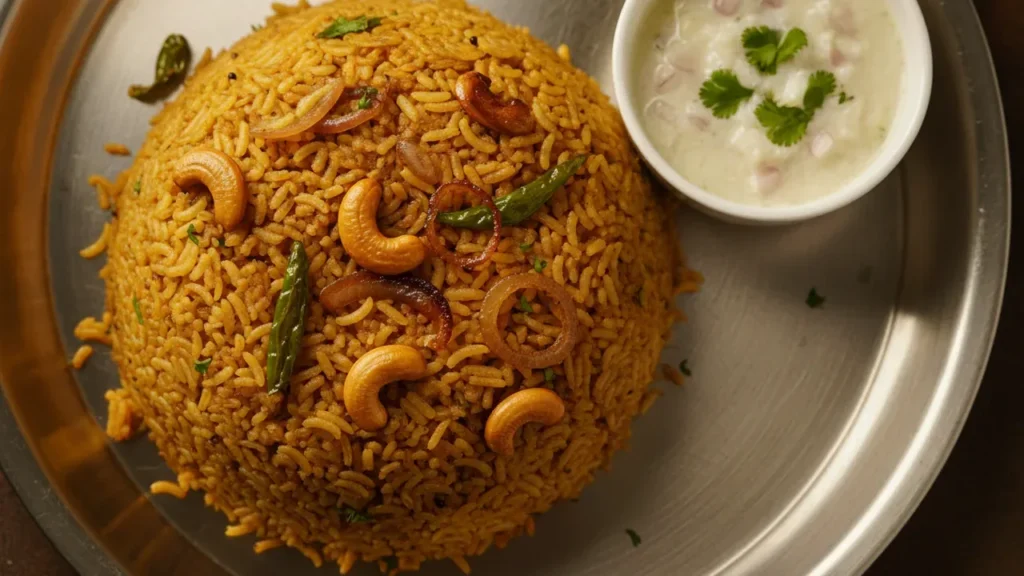
That is the line that sets a pulao apart from most of its rice cousins. The grain is the flavour carrier here, because it drinks the juices as it cooks rather than being dressed after the fact. What you get is moist and a little clingy, the grains soft and slicked instead of dry and standing apart. You eat it and the chicken and the rice taste of one another, not of two things plated side by side. Basmati is the usual grain, long and forgiving, though the point is less the variety than the treatment: it is left to soak up the pot rather than kept proud and dry.
Kodi pulao belongs to the Andhra non-veg table, Coastal Andhra and Rayalaseema both, where a Sunday or a gathering often turns on a pot of chicken and rice cooked this way. It is home food and mess food and restaurant food at once, which is part of why the name travels so far and means slightly different things to different cooks. Strip all of that back and the core holds steady: chicken, rice, whole spice, one pot, cooked together.
Kodi pulao vs biryani: the real difference
This is the question everyone actually types: is kodi pulao just biryani under another name? No. The two are built by different methods, and the method is the whole difference.
Biryani is a layered dish. The rice is par-cooked on its own, the meat is marinated and cooked separately, and the two are then stacked in a sealed pot and finished under dum, the slow trapped steam that lets the layers breathe into each other. Kodi pulao skips all of that. Everything cooks together from the start, in one vessel, so the flavour runs the other way: out of the chicken and into the rice as it swells.
You can taste the consequence. A biryani grain stays dry and separate, each one standing on its own, the spice sitting deep and often carrying saffron and a heavier masala. Pulao is moister, the grains softer and closer together, the heat coming mostly from fresh green chilli, which reads as aromatic rather than fierce. One is a construction. The other is a single simmer.
There is a quick way to tell them apart on the plate, if the name has not already given it away. Lift a forkful: kodi pulao clings and comes up in a soft clump, while biryani grains fall away loose and separate. The pulao sits in one even colour, stained through by the cook, where a biryani is patchier, pale where the rice was and dark where the masala layer sat. Neither is better. They answer different cravings.
At Nandhini the reference point people already know is the dum Mutton Biryani, the layered, sealed, slow-finished style that has anchored the menu for decades. Set a plate of that next to a kodi pulao and the split is obvious in a mouthful. Same family, same region, two techniques that were never the same dish.
Kodi pulao vs biryani at a glance
| Feature | Kodi pulao | Biryani |
|---|---|---|
| Cooking method | One pot, rice and chicken cooked together | Layered, then sealed and finished under dum |
| Rice | Cooks in the chicken’s stock; softer, clingier | Par-cooked separately; kept dry and separate |
| Flavour path | Rice absorbs the chicken’s juices as it steams | Layers meet in the trapped steam under dum |
| Heat source | Fresh green chilli, aromatic and moderate | Red chilli and masala, deeper and more intense |
| Texture | Moist, moderately spiced | Drier grain, more intensely spiced |
| Time and effort | Quicker, one vessel | Longer, several stages |
The restaurant style, and what “raju gari” means
Look up Andhra chicken pulao and one phrase keeps surfacing: raju gari kodi pulao. It is worth knowing what it means. “Raju” is king and “gari” is a respectful possessive, so the phrase reads as “the king’s”, a royal-kitchen framing that has become the popular shorthand for the restaurant and mess style of Andhra chicken pulao. The style is tied to Coastal Andhra, Bhimavaram country in particular.
The markers are consistent wherever it is cooked. Shallots, the small sambar onions, rather than big sliced onions, because they melt sweeter into the rice. Heat from fresh green chilli, not red chilli powder, so the dish stays aromatic and moderately hot rather than dark and searing. A curd marinade to keep the chicken tender. Whole spices tempered in ghee, the usual line-up of bay leaf, cardamom, clove, cinnamon, shah jeera, star anise and mace. Roasted cashews folded through. And, in many versions, a simmer loosened with milk or coconut milk, which rounds the edges and gives the rice its soft, faintly rich finish. Mint and coriander go in at the end. The chicken is often left bone-in, which feeds the pot more flavour as it cooks, and it is the milk or coconut-milk simmer that carries the shallots’ sweetness right through the rice. Get those two right and the rest is seasoning.
The texture that comes of all this is moist, almost sticky, the grains holding together rather than falling apart, which is exactly where it parts from the dry separateness of a biryani. That is the plate most people picture when they order a restaurant-style Andhra kodi pulao, whatever a given menu happens to call it.
How it’s made, in brief
This is a method, not a recipe card, but the shape of the cook tells you why the dish tastes the way it does.
Marinate the chicken first in curd with ginger-garlic, slit green chillies and a little turmeric. Warm ghee in a heavy pot and temper the whole spices until they wake up. In go the shallots, softened slowly, then more ginger-garlic and green chilli. Add the chicken and let it brown and give up its juices, which is the stock the rice will later drink. Now the soaked basmati, folded through, and the measured liquid, water or a milk-loosened stock depending on the style. Season it, bring it up, then drop the heat right down, cover, and leave it undisturbed while the rice takes in everything around it. A short rest at the end, a gentle fork through, and the cashews, mint and coriander fold in last.
The heat, to say it plainly, is fresh green-chilli heat, aromatic and adjustable, not the red-chilli fire people brace for. Cook it hotter or milder to taste. What you do not do is layer it or seal it under dum, because the moment you start doing that you are making a biryani, not a pulao.
Where kodi pulao sits in an Andhra meal
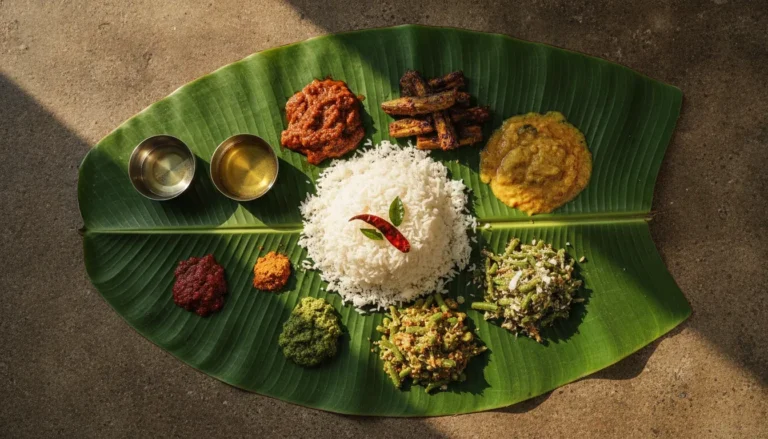
On the plate, kodi pulao rarely travels alone. The standard partner is onion raita, cool curd loosened with chopped onion and a little salt, there to cut the richness and reset the palate between forkfuls. Many tables add a simple chicken curry alongside, so you get the pulao’s soft spice and a sharper, tangier gravy in the same meal. It is weekend and occasion food more than a weekday plate, the sort of thing a family cooks in a big pot for a gathering, which is why restaurant portions of it tend to run generous.
There is also a variant worth ordering the moment you see it: natu kodi pulao, made with country chicken rather than broiler. Natu kodi is leaner, chewier and far gamier, and it throws a deeper, darker stock, so the rice ends up carrying more of that farmyard depth. It takes longer to cook and costs more, and across Rayalaseema and Coastal Andhra it is the version people speak about with real fondness. If a menu lists it, that is the one to try.
Where to eat Andhra kodi pulao in Bengaluru
If you want a proper Andhra chicken pulao in Bengaluru without cooking it yourself, this is home ground for us. Nandhini has served Andhra food in the city since 1989, when Shri N. Ananda opened the first outlet at Minerva Circle. Three generations on, under managing director Dhanush Srinivas, it runs as Bengaluru’s first Andhra restaurant chain: 22 company-owned outlets, 20 across Bengaluru and 2 in Mysuru, feeding more than 10,000 diners a day, with Chennai and Dubai coming soon.
The kitchen is an Andhra non-veg kitchen at heart, built on the Guntur-chilli heat that runs 30,000–50,000 on the Scoville scale, so a chicken pulao here is cooked in its own idiom rather than borrowed from somewhere else. Come for the one-pot pulao, or cross to the dum Mutton Biryani if the layered style is what you are after. One kitchen, both techniques, and the menu will point you to whichever you came for.
Frequently Asked Questions
What is Andhra kodi pulao?
A one-pot Andhra chicken rice in which basmati and chicken cook together, so the rice absorbs the meat’s juices as it steams. It is lighter and less layered than biryani, spiced with whole spices, shallots and fresh green chilli rather than finished under dum.
What is the difference between kodi pulao and biryani?
Kodi pulao cooks in one pot with the rice and chicken together, so the rice drinks the chicken’s juices. Biryani layers separately par-cooked rice over marinated meat and seals it under dum. Pulao is moister and milder; biryani is layered and more intensely spiced.
What is raju gari kodi pulao?
“Raju gari” means “the king’s”, the popular name for the restaurant and mess style of Andhra chicken pulao. It is made with shallots, fresh green chilli, a curd marinade and whole spices, often with roasted cashews and a milk-loosened simmer, giving a soft, moist finish.
Is kodi pulao spicy?
Its heat comes mainly from fresh green chilli rather than red chilli powder, so it is aromatic and moderately hot rather than fiery. The level is easy to adjust up or down, which is why home and restaurant versions vary so much in strength.
Where can I eat Andhra kodi pulao in Bengaluru?
Nandhini, Bengaluru’s first Andhra restaurant chain, serves Andhra non-veg dishes across 22 outlets in Bengaluru and Mysuru. Its kitchen cooks in the Guntur-chilli Andhra idiom, so a chicken pulao there is made in its own regional style. Check the menu for what is on that day.