By November, the gooseberry cart turns up outside the vegetable markets in coastal Andhra, and kitchens start counting jars. Usirikaya pachadi is the winter pickle you make once and eat until spring, a jar of sour green fruit turned deep and savoury under salt and sesame oil. Usirikaya is the Telugu name for the Indian gooseberry, amla, and pachadi covers everything from a year-keeping oil pickle to a chutney ground fresh that morning. Get the salt and the oil right and one batch outlasts the season. Get them wrong and it turns bitter, or grows mould by December. This page is about getting them right.
| In short: Usirikaya pachadi is an Andhra pickle made from usirikaya (Indian gooseberry, or amla), rock salt, Guntur red chilli and sesame oil. The name joins the fruit, usirikaya, with pachadi, the Telugu word for a pickle or relish. It runs from a year-keeping oil pickle to a fresh, same-day yogurt version. |
Table of Contents
What is usirikaya pachadi
Strip away the Telugu and usirikaya pachadi is Indian gooseberry pickle, made the Andhra way. The fruit answers to a lot of names. Usirikaya in Telugu, amla in Hindi, nellikai in Tamil, amalaki in Sanskrit and across Ayurvedic texts, and Phyllanthus emblica to a botanist. Same hard, translucent, punishingly sour fruit in every one. So when someone asks for usirikaya pachadi in english, this is the honest answer: gooseberry pickle, not some special preparation with a mysterious name.
Pachadi itself is a loose word. In coastal Andhra it stretches from a fresh chutney pounded in a stone mortar to a pickle sealed under oil for a year. That range is exactly why one recipe search throws up wildly different dishes, and why the next part matters before you pick up a knife.
Nilava, roti or perugu: which usirikaya pachadi
Most disappointment with usirikaya pachadi comes from making the wrong one. Three preparations share the name and behave nothing alike. One keeps for a year. One keeps for weeks. One is gone by dinner. Decide which you actually want before you shop.
| Type | Telugu name | Texture | Shelf life | Best for |
|---|---|---|---|---|
| Long-keeping oil pickle | Usirikaya nilava pachadi | Soft pieces under oil | Up to a year, room temperature | A winter jar that lasts the season |
| Fresh ground pickle | Usirikaya roti / thokku pachadi | Coarse ground paste | A few weeks, refrigerated | Bright flavour, eaten soon |
| Yogurt relish | Usirikaya perugu pachadi | Grated fruit in curd | Same day | A cooling side with rice |
Nilava pachadi, and nilava means it keeps, is the one people picture when they say andhra gooseberry pickle: gooseberry cooked down in sesame oil with salt and Guntur chilli, sealed under a film of oil, spooned out all through winter. Roti pachadi, also called usirikaya thokku pachadi, is ground fresh, sharper and greener, and lives in the fridge for a few weeks. Perugu pachadi folds grated gooseberry into yogurt for a cooling relish you eat the same day. A close cousin, usiri avakaya or ooragaya, keeps the fruit in larger whole pieces the way a mango avakaya does.
So the decision is simple. Want the jar that survives to Sankranti? Make nilava. Want the flavour at its brightest and you will finish it fast? Make thokku. Have one gooseberry and a bowl of curd? Make perugu. The rest of this page builds the nilava version, because that is the one worth the labour and the one people hunt for by name.
What goes in, and why it matters
A short list of ingredients, but each one earns its place, and the wrong version of any of them changes the jar.
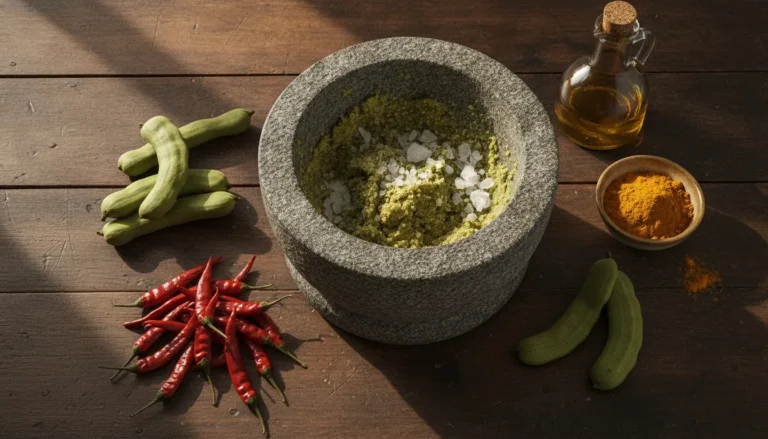
Sesame oil, nuvvula nune, is no default cooking oil here. Its heaviness is what seals the pickle from air, and its nutty depth stands up to the sourness of the fruit. Refined sunflower oil will not hold the same way. Guntur red chilli powder carries the heat, and Guntur heat is specific: those chillies sit around 30,000 to 50,000 on the Scoville scale, several times hotter than a mild Kashmiri chilli, which is why a single spoon of this pickle wakes up a plate of plain rice. Fenugreek, menthulu, toasted and ground, adds the faint bitter edge that keeps the pickle from tasting flat, though too much tips it into real bitterness. Mustard, aavalu, brings the sharp top note. Tamarind, chintapandu, deepens the sourness the gooseberry already carries. Rock salt does the actual preserving, and asafoetida, inguva, with turmeric round it out and help it keep.
This is the same ooragaya craft that stands behind Andhra’s better-known jars. The avakaya (raw-mango pickle) that anchors a Telugu meal and the gongura pachadi (sorrel-leaf chutney) both run on the same logic: sound fruit or leaf, Guntur chilli, sesame oil, salt, and a little patience. Learn usirikaya pachadi and you have more or less learned the grammar of Andhra pickling.
How to make usirikaya nilava pachadi
Here is the nilava method, the year-keeping one. It rewards measuring over guessing, so weigh what you can.
| The ratio for a jar that keeps a year1 kg usirikaya (Indian gooseberry) : 120 g rock salt : 500 ml sesame oil, plus about 150 g Guntur red chilli powder and 50 g toasted fenugreek powder. Hold that salt and oil ratio and the andhra amla pickle keeps at room temperature. Drop below it and you are refrigerating and hoping. |
- Pick firm fruit and dry it fully. Choose hard, heavy winter gooseberries with no soft spots. Wash them, then wipe every one dry and leave them on a cloth until not a drop of water remains. Water is the enemy of this jar.
- Cook briefly to soften, then separate. Steam or boil the gooseberries until the segments loosen, then pull them apart and discard the hard stone. Some cooks skip the water entirely and sun-dry the whole fruit for a day or two instead, which keeps the pieces firmer.
- Dry again. Spread the segments on a clean cloth in direct sun for a few hours until the surface is completely dry. This second sun-cure is what most rushed batches skip.
- Toast and grind the spices. Dry-roast fenugreek and mustard separately until fragrant, cool, and grind to a coarse powder. Take the fenugreek only to a light brown; roast it dark and the whole jar turns bitter.
- Mix the masala. Combine the dry gooseberry pieces with rock salt, Guntur chilli powder, fenugreek, mustard, turmeric and a pinch of asafoetida. Add a spoon of tamarind (chintapandu) paste if you want a deeper sour note. Toss until every piece is coated.
- Add the oil. Heat the sesame oil until it just shimmers, switch off, and let it cool to warm. Temper a spoon of mustard seeds in it if you like, then pour it over the gooseberry mix and fold through.
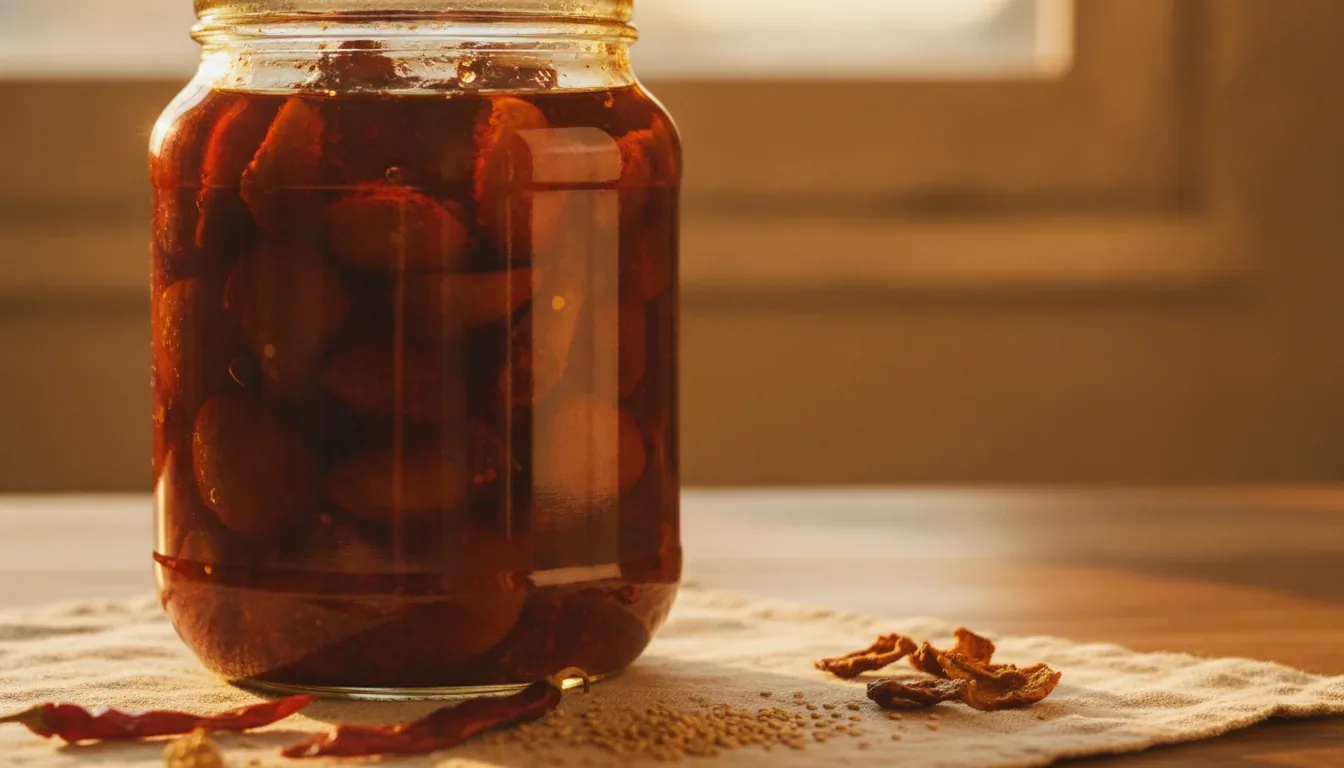
- Pack under oil. Spoon the pickle into a dry, sterilised glass or ceramic jar, pressing out air pockets, and finish with a thin layer of oil floating on top so nothing meets the air.
- Let it mature. Rest the jar in a dry spot, stir gently with a dry spoon every couple of days, and stand it in the sun when you can. It is ready in a week or two and deepens over a month.
Serve it in small spoonfuls with hot rice and ghee, or alongside curd rice, where the sour heat has something cool to land against.
Why usirikaya pachadi turns bitter or spoils
When a batch of usirikaya pachadi fails, it usually fails for one of a few reasons, and every one of them is avoidable.
Moisture is the first culprit. A drop of water on the fruit, inside the jar, or on the spoon you serve with is enough to start mould. This is the whole point of the dry-spoon rule: never dip a wet or used spoon into a keeping pickle. Dry the gooseberries twice, dry the jar, and only ever reach in with a clean dry spoon.
Too little salt is the second. Salt is doing the preserving, not just the seasoning, so cutting it to make the pickle milder quietly shortens its life. Keep to the ratio and let the hot rice soften the salt on the plate instead.
No oil seal is the third. That floating layer of sesame oil is a barrier against air. If pieces poke above the oil they dry out and spoil, so keep the level topped up as you eat down the jar.
Bitterness is its own problem, and it usually comes from the fenugreek. Toasted too dark, menthulu turns genuinely bitter and takes the whole pickle with it. Take it only to light brown and grind it fine.
Weather matters more than people expect. Humidity and rain raise the spoilage risk, which is one more reason the pickle is made in dry winter air rather than a damp monsoon week. If the season is wet, wait for a clear spell before you start.
Is usirikaya pachadi healthy, and when to make it
Usirikaya has a real claim to being good for you. The Indian gooseberry is one of the richest everyday sources of vitamin C, and it carries the antioxidants that made amalaki a fixture of Ayurvedic tonics long before anyone measured them. That is a large part of why the pickle became a winter staple in Andhra homes, eaten when the fruit is in season and colds are going around.
The honest caveat: this is a pickle, not a bowl of fruit. It is salted and oil-rich by design, which is exactly what lets it keep. A spoonful with rice gives you the flavour and a share of the goodness without the salt load of a full portion. Treat it as a side rather than a serving of gooseberry and it earns its place on the plate.
Timing follows the fruit. Gooseberries are firmest and best from roughly November to January, which is also when searches for the usirikaya pachadi recipe peak sharply and when Sankranti brings a round of home pickling. Dry winter air helps the pickle keep, so the season and the method line up. Make it in the cold months and a single jar carries you through to spring.
The Andhra pickle tradition behind the jar
Pickling like this is not a side skill in Andhra cooking. It sits close to the centre of it. A Telugu meal is built around the jar as much as the rice, and a household is quietly judged by how its avakaya and its gongura turn out each year.
Nandhini Deluxe has cooked in that tradition since 1989, when N. Ananda opened the first outlet at Minerva Circle in Bengaluru. The kitchen is built on Guntur chillies and the ooragaya craft that a pickle like usirikaya pachadi belongs to, the same logic of sound fruit, sesame oil, salt and time that runs through avakaya and gongura. That is why the brand can speak about how these jars are made from the inside rather than off a recipe card. The gooseberry pickle sits in the same family of flavours the kitchen has worked with for decades, made the way coastal Andhra has always made it.
Frequently Asked Questions
What is usirikaya pachadi?
Usirikaya pachadi is an Andhra pickle made from usirikaya (Indian gooseberry, or amla), salt, red chilli and sesame oil. Usirikaya is the fruit and pachadi the pickle or relish. Versions run from a year-keeping oil pickle to a chutney ground fresh that day.
What is usirikaya called in English?
Usirikaya is the Indian gooseberry, known as amla in Hindi, nellikai in Tamil and amalaki in Sanskrit and Ayurveda. Its botanical name is Phyllanthus emblica. So usirikaya pachadi simply means Indian gooseberry pickle, made the Andhra way.
Is usirikaya pachadi healthy?
Amla is high in vitamin C and antioxidants, which is why the pickle became a winter staple in Andhra homes. As a preserve it is also salty and oil-rich, so it is eaten in small spoonfuls alongside rice rather than as a portion of fruit.
What is the difference between usirikaya nilava pachadi and roti pachadi?
Nilava pachadi is the long-keeping version: gooseberry cooked in sesame oil with salt and spice, sealed under oil to last months. Roti, or thokku, pachadi is ground fresh and eaten within a few weeks. Perugu pachadi is a quick yogurt relish for the same day.
Why does my usirikaya pachadi turn bitter or spoil?
Bitterness and spoilage usually come from moisture and too little salt. Any water on the fruit, jar or spoon invites mould, and a weak salt ratio shortens shelf life. Dry the gooseberries fully, use dry spoons, and keep a layer of oil floating on top.
How long does usirikaya pachadi last?
Made the nilava way, with fully dried fruit, the correct salt and an oil seal in a clean glass or ceramic jar, it keeps up to a year at room temperature. A fresh ground or yogurt version is not preserved and should be refrigerated and eaten within weeks.
When is the best time to make usirikaya pachadi?
Winter, roughly November to January, when Indian gooseberries are in season and firmest. That is also why searches for the recipe peak sharply in those months. Dry weather helps the pickle keep, since humidity and rain raise the risk of spoilage.
Nandhini’s kitchen has bottled its own Andhra pickles and podis for years, and you can take a jar from our pickle and masala range home. It is the same Guntur-spiced craft that stands behind a jar of usirikaya pachadi.