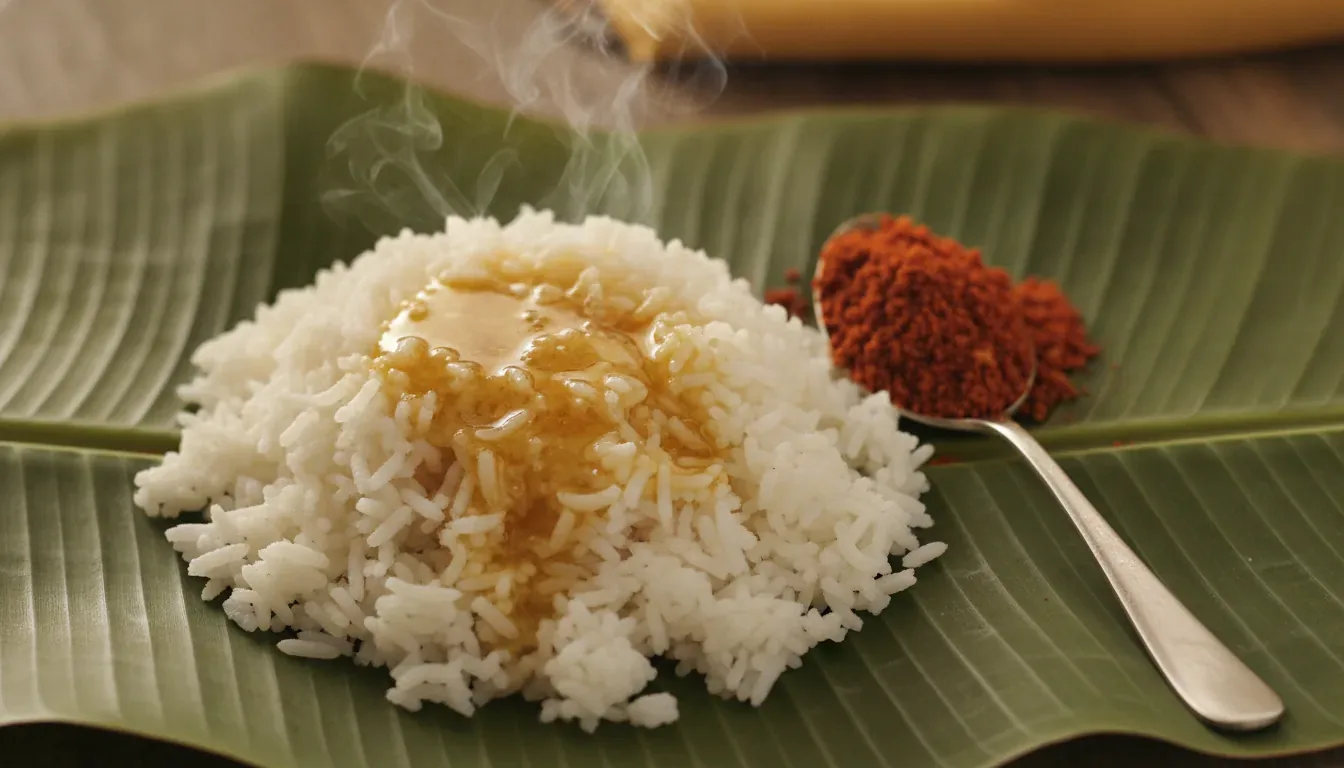
Walk into an Andhra kitchen at lunch and the first thing to reach the plate is not a curry. It is a spoon of dry powder, a pool of ghee, and a fistful of hot rice, mixed by hand until every grain is coated. That powder is podi, and it belongs to the wider tradition of Andhra pickles and podis that runs through every meal.
Andhra podi is not a single recipe. It is a family: kandi, karam, idli, nuvvula, kobbari, palli, and a handful of others, each built on a different base and each carrying a different level of heat. This page maps the family, tells you how they differ, and points you to the deeper guides where they exist.
Table of Contents
What is Andhra podi
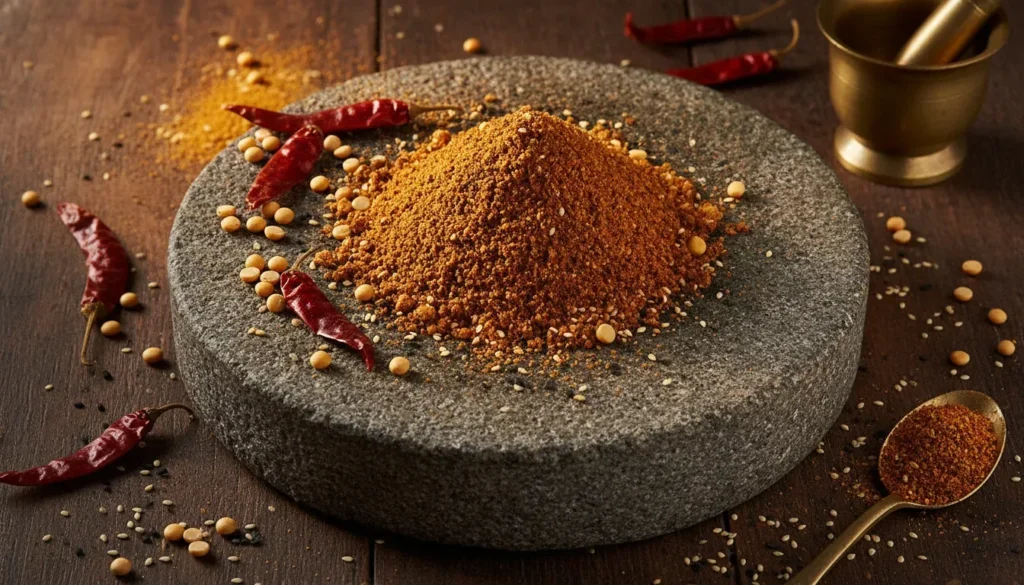
Andhra podi is a family of dry, roasted spice powders from Andhra Pradesh, made by grinding roasted lentils, seeds, or coconut with dried red chillies and salt. It is eaten mixed with hot rice and ghee or sesame oil, or dusted over idli and dosa. Each podi differs by its base ingredient and its heat.
Why one word covers many powders
Here is where people get lost. Ask for podi in Andhra and you could be handed any of six or more powders. The bare word just means something dry and ground, so it needs a prefix before it means anything on a shopping list.
Start with the two that get swapped. Kandi podi (toor dal powder) is the everyday one, ground from roasted toor dal with a little chilli, nutty and only mildly warm. In Tamil kitchens the same idea is called paruppu podi, which is why you will see both names on one jar. Karam podi (chilli-garlic powder) is a different animal. Karam means heat, and this one leads with dried red chilli and garlic, so it burns where kandi soothes.
Then there is gunpowder, the English nickname that confuses everyone. It is not a separate powder. It is what English menus call the fiercer podis, usually kandi, karam, or idli podi, because of the red colour and the kick. Every gunpowder is a podi. Not every podi earns the name.
The Andhra podi family at a glance
If you keep one thing from this page, make it this table. It is the whole family in one view: what each podi is built on, how hot it runs, and what it is meant to be eaten with. The deeper guides are noted where a full page exists.
| Podi | Base | Heat | Eaten with | Deep guide |
|---|---|---|---|---|
| Kandi podi / paruppu podi | Toor dal, chana dal | Medium | Hot rice and ghee | Karam podi and kandi podi guide |
| Karam podi / nalla karam | Dried red chilli, garlic | Hot | Rice, idli, dosa | Karam podi and kandi podi guide |
| Idli podi / milagai podi | Chana and urad dal, chilli | Medium | Idli, dosa | Idli podi guide |
| Nuvvula podi | Sesame seeds | Mild to medium | Rice and ghee | Nuvvula podi guide |
| Kobbari podi | Coconut | Mild | Rice, idli | Overview only |
| Palli podi | Peanuts | Mild to medium | Rice, idli, dosa | Overview only |
| Munagaku podi | Moringa leaf | Mild | Rice | Overview only |
The main Andhra podis, one by one
With the map in front of you, here is each of the main powders in a little more detail, in the order most Andhra families would rank them.
Kandi podi
Kandi podi is the one most Andhra families make first, because it goes with everything. Roasted toor dal and a little chana dal give it a nutty, savoury body; a few dried red chillies keep it warm rather than hot. Salt, cumin, sometimes a clove of garlic, and that is it. This is the podi you mix into the first fistful of rice, the quiet workhorse a meal can start on. Further south, the same powder answers to paruppu podi.
Karam podi
Karam podi is the fierce cousin. Nalla karam and erra karam are regional versions, black and red, but the idea holds: dried red chilli carrying the weight, garlic behind it, roasted dal only to bind the two. With Guntur chillies in the mix, running 30,000 to 50,000 on the Scoville scale, this is the powder that makes people reach for water. A little goes a long way over rice or smeared on a dosa.
Idli podi
Idli podi, called milagai podi in Tamil, is built for tiffin rather than rice. Chana dal and urad dal roasted to gold, dried red chillies, a scatter of curry leaves and hing, ground coarse rather than fine. You do not mix it into rice so much as spoon it onto a plate, pour sesame oil over it, and drag a torn piece of idli or dosa through the paste. Drier, coarser, and made to cling to soft tiffin.
Nuvvula podi
Nuvvula podi (sesame powder) is the earthy one. Sesame seeds roasted until they pop, ground with dried red chilli and a little dal, and it carries a dark, toasted, faintly oily depth the lentil podis do not. Heat sits mild to medium; the sesame does the talking. Spooned into hot rice with ghee, it turns a plain plate rich. In many homes it is also the podi given to new mothers and growing children for the good the seed is said to do.
Kobbari podi
Kobbari podi (coconut powder) is the gentle one, and often the first podi a child is given. Dry coconut roasted and ground with roasted gram, a mild chilli, and salt, it comes out sweet-edged and low on heat. It sits well with plain rice and ghee, and it is forgiving on idli when a spicier podi would be too much. Where karam podi shouts, kobbari podi hums.
Palli podi
Palli podi (peanut powder), sometimes written pallilu podi, is ground roasted peanuts with dried red chilli, garlic, and cumin. It lands somewhere between sweet and savoury, the peanut giving it a rounder, heavier feel than the lentil podis. Mild to medium heat, good over rice, and popular on idli and dosa for the richness it adds. If kandi is the everyday powder, palli is the one people reach for when they want something more filling.
And the rest
Beyond the main six sit the specialists. Munagaku podi (moringa-leaf powder) is a mild, green, faintly bitter powder eaten for health as much as taste. Putnalu podi (roasted-gram powder) is quick and light. Vellulli karam (garlic powder) is all pungency. And kakarakaya podi (bitter-gourd powder) turns a vegetable most people avoid into something you can enjoy over rice. Every household keeps its own shortlist.
How to tell them apart: base, heat, and pairing
Once you know what to look for, telling one podi from another takes three questions.
First, the base. Lentil podis such as kandi and idli taste nutty and savoury. Seed podis such as nuvvula taste toasted and oily. Coconut and peanut podis, kobbari and palli, run sweeter and heavier. The base sets the whole character before a single chilli goes in.
Second, the heat. This is the axis a shopping list hides. Kobbari sits at the mild end, palli and nuvvula in the gentle middle, kandi a step warmer, and karam at the top, especially when it is built on Guntur chilli. Coastal Andhra tends to push the heat harder than Rayalaseema, so the same podi can arrive at very different temperatures depending on whose kitchen ground it.
Third, what it goes with. The rice podis, kandi, nuvvula, and kobbari, are made to be mixed into hot rice with ghee or sesame oil and eaten at the opening of a meal. The tiffin podis, idli and karam, are drier and coarser, made to be scooped up with idli or dosa. Palli happily does both. Place a podi on those three axes and andhra podi for rice stops being a guessing game.
How Andhra homes eat and keep podi
In most Andhra homes the podi course comes first, before the curries and the sambar. Hot rice, a spoon of podi, a generous pour of ghee, mixed by hand into a rough paste and eaten in the first few mouthfuls while the rest of the meal waits its turn. It is comfort and it is habit, the taste people who grew up on it miss most once they leave.
Keeping podi is simple. Because it is dry and roasted, it holds for weeks at room temperature, longer if you are careful. Store it in an airtight jar, keep it away from the stove and the sink, and only ever use a dry spoon, since a single drop of moisture is what turns a good podi stale. Made in a big batch on a Sunday, a jar of kandi or nuvvula podi will see a family through most of a month.
Where these powders sit in an Andhra meal
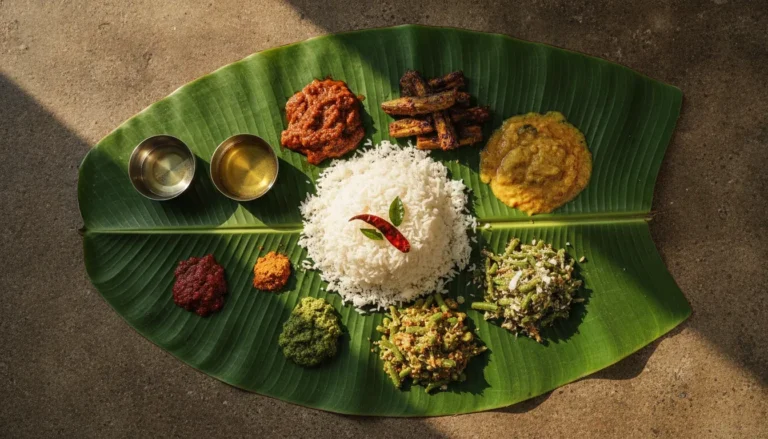
On a full banana-leaf bhojanam, podi is the overture. Before the pappu, the pulusu, and the second round of rice come by, there is that first mound with ghee and a spoon of powder, mixed by hand and eaten in the opening mouthfuls. It is the course that tells your palate an Andhra meal has begun.
Where the podi sits also tells you something about the cook. A gentle kobbari or nuvvula podi opens a milder table; a fistful of karam signals a kitchen that likes its heat. The powder is small, but it sets the register for everything the leaf holds after it.
Frequently Asked Questions
How many types of Andhra podi are there?
There is no fixed number, but most Andhra kitchens keep six to nine. The common set is kandi, karam, idli, nuvvula, kobbari, and palli podi, plus health powders like munagaku. Each uses a different base, from lentils to sesame, coconut, or peanut, with dried red chillies.
What is Andhra podi?
Andhra podi is a dry, roasted spice powder from Andhra Pradesh, ground from lentils, seeds, or coconut with dried red chillies and salt. It is mixed with hot rice and ghee, or sesame oil, and often dusted over idli and dosa as a tiffin accompaniment.
What is the difference between kandi podi and karam podi?
Kandi podi, also called paruppu podi, is built on roasted toor dal, so it tastes nutty and only mildly warm. Karam podi leads with dried red chilli and garlic, so it is far hotter. Kandi is the everyday podi; karam is the fiery gunpowder.
Which Andhra podi goes best with rice, and which with idli?
Kandi, nuvvula, and kobbari podi suit hot rice with ghee, eaten at the start of a meal. Idli podi, made from chilli and lentils, is drier and coarser, meant to be mixed with sesame oil and scooped up with idli or dosa.
Is podi the same as gunpowder?
Gunpowder is the English nickname for the spicier Andhra and Tamil podis, usually kandi, karam, or idli podi, earned by their red colour and heat. It is a nickname, not a separate powder. Every gunpowder is a podi, though not every podi is fiery enough to qualify.
Can you buy Andhra podi ready-made?
Yes. Many Andhra homes still roast and grind their own, but ready-made podis and matching pickle and masala ranges are widely sold, including through Nandhini’s retail line, so the pantry can travel even when the grinding stone stays at home.
Nandhini Deluxe has cooked from this Andhra pantry since 1989, the same Guntur chillies and roasted dal that give these powders their heat and their backbone. If you would rather not roast and grind your own, our pickle and masala range carries the same shelf home.