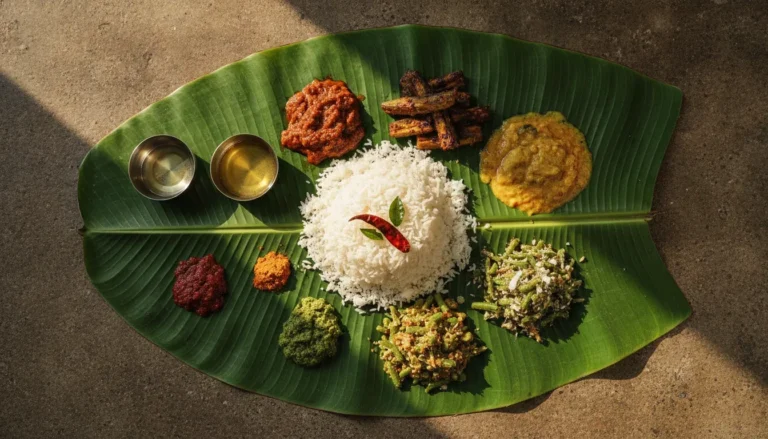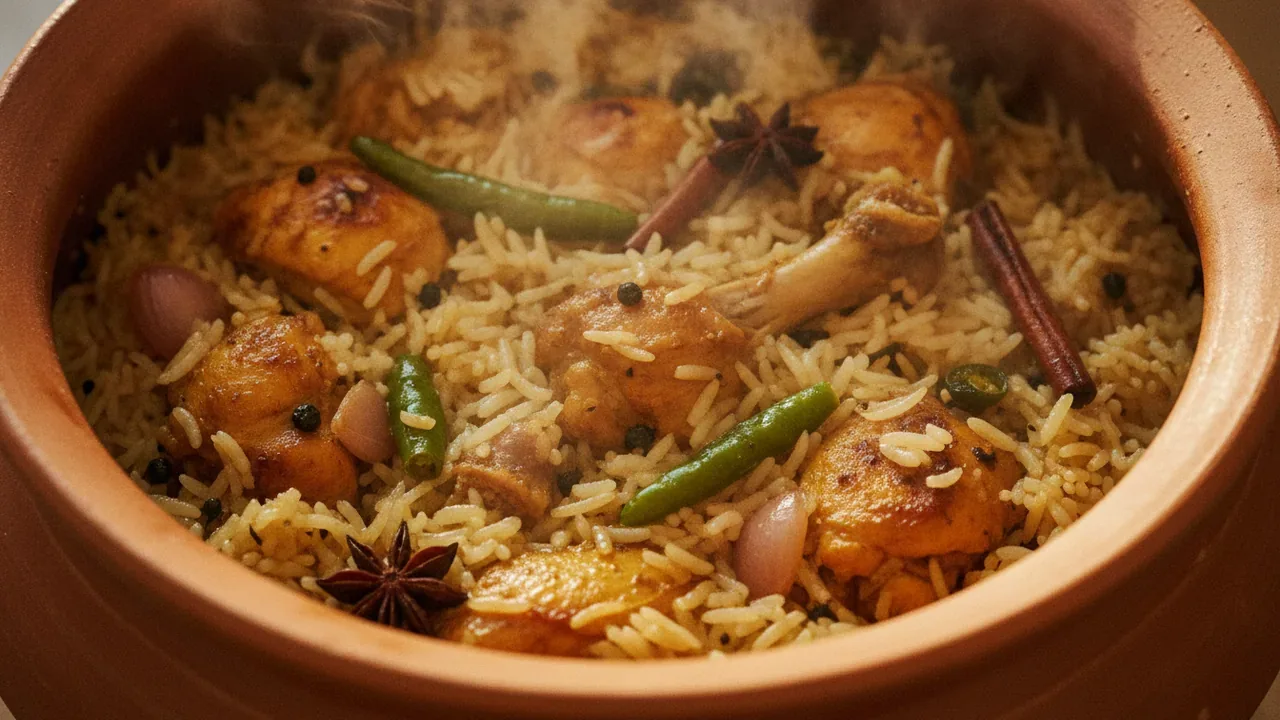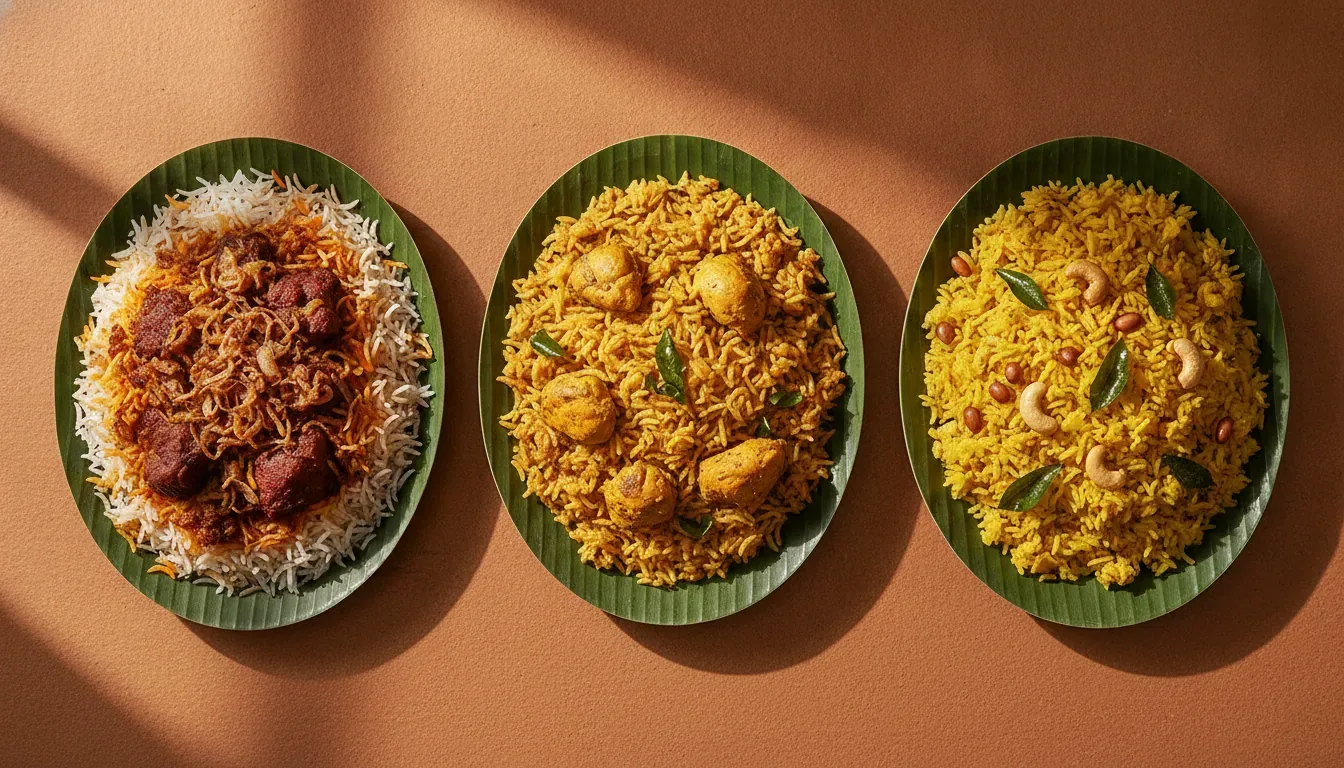
Order a biryani, a pulao and a pulihora at the same table and you get three plates that look like cousins and behave like strangers. Most people rank them on one sliding scale: biryani at the fancy end, pulao in the middle, pulihora as the plain rice you eat when nothing else is going. That ranking is the reason the difference never sticks. Biryani vs pulao is a genuine question about how the rice and the meat are cooked. Pulihora is not even in that argument. Get straight which dish is doing what, and you will not mix them up again.
| Biryani, pulao and pulihora are three different kinds of rice dish. In biryani, rice and spiced meat are cooked separately, then layered and steamed on dum. In pulao, rice and meat cook together in one pot. Pulihora is pre-cooked rice tempered with tamarind, with no meat and no dum. |
Table of Contents
Two are cooking methods, one is a tempered rice
Here is the confusion worth clearing first. People treat biryani, pulao and pulihora as three grades of the same thing, as if pulihora were a biryani with the ambition removed. It is not.
Biryani and pulao sit on one spectrum, and that spectrum is about method. Do you cook the rice and the meat apart and bring them together at the end, or do you cook them together from the start. Dum, layering and absorption are all words for how the rice and the meat end up in one pot.
Pulihora answers a different question. The rice is already cooked and cooled before the dish even begins. What turns it into pulihora is the popu (tempering), a hot tadka of mustard seeds, curry leaves and dried chilli stirred through with tamarind. No meat goes near it. No lid is sealed. Calling it a plainer biryani is like calling a lemon a mild orange: same shelf, different fruit.
Biryani vs pulao vs pulihora: side-by-side
The quickest way to hold all three in your head is to line them up against the same questions. What is it, how is it cooked, what happens to the rice, how hot, is there meat, and when do you eat it.
| Feature | Biryani | Pulao | Pulihora |
|---|---|---|---|
| What it is | Layered meat and rice | One-pot meat and rice | Tempered tamarind rice |
| Cooking method | Rice and meat cooked separately, then layered and sealed for dum | Cooked together in one pot by absorption | Rice cooked first, then tempered |
| Rice | Parboiled, then drained | Cooked in stock by absorption | Any leftover cooked rice |
| Spice | Intense and layered, saffron and mint | Mild and subtle | Sour tempering: mustard, curry leaf, chilli |
| Meat | Yes, central | Optional | None |
| Occasion | Feast | Everyday | Festival and temple prasadam |
| Andhra example | Guntur-chilli mutton biryani | Andhra Kodi Pulao | Pulihora |
Read down any single column and the dish makes sense on its own. Read across any single row and you can see exactly where the three part ways.
Biryani: separate, layered, slow
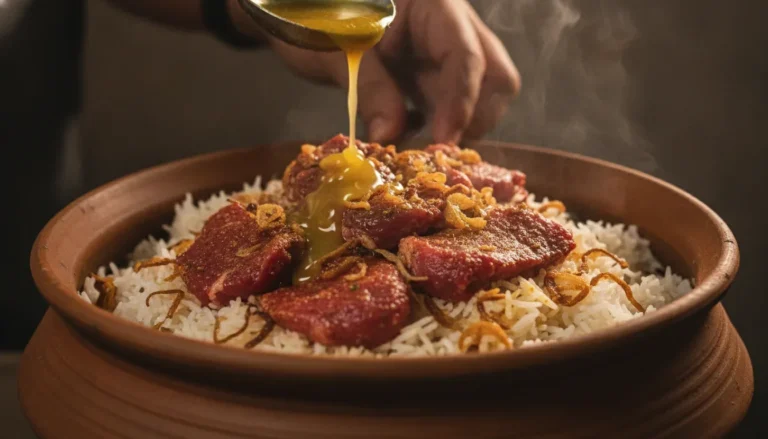
Biryani earns its length. You parboil long-grain rice until it is most of the way there, then drain it, so the grains stay separate and never turn to paste. Separately, you cook a spiced meat, the marinade heavy with chilli, ginger, garlic and whole garam spices. Only then do the two meet, rice and meat layered in one vessel, often with fried onions, saffron-tinted milk and mint pressed between the layers.
The lid goes on and the pot is sealed, sometimes with a rope of dough. That trapped steam is dum, and it is where a biryani becomes a biryani. The rice finishes cooking on the aroma of the meat below it, without ever being stirred into it. In an Andhra kitchen the heat comes from Guntur chillies, which run 30,000–50,000 on the Scoville scale, so an Andhra biryani carries a directness a milder northern version does not. The lineage is Persian and Mughal, and the dish still behaves like feast food, something you make for a crowd on a day that matters.
Pulao: one pot, everyday
Pulao does in one pot what biryani does in two stages. The rice, the meat or vegetables, the whole spices and the stock all go in together, and the rice cooks by absorption, drinking up the liquid and the flavour as it swells. There is no separate meat pot, no layering, no sealed dum in the classic version. The spicing stays lighter and cleaner, because nothing is built in layers.
That is why pulao is weekday food where biryani is occasion food. It is quicker, gentler and easier to get right at home.
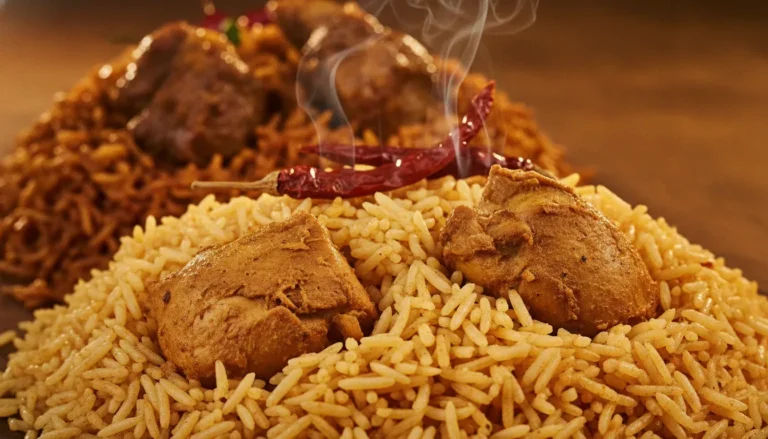
Andhra Kodi Pulao is the worked example worth knowing. Chicken and rice cook together in the one pot, the rice taking on the chicken’s flavour directly, and the result is a pulao and not a biryani: nothing is cooked apart, nothing is layered, nothing is sealed for dum. If a menu calls a one-pot chicken rice a biryani, that is marketing rather than method.
Pulihora: tempered tamarind rice, a different animal
This is the dish the two-way arguments always leave out, and it is the one that resets the whole question. Pulihora (tamarind rice) does not start with raw rice and a plan for meat. It starts with rice that is already cooked, usually the day before, spread out and cooled so the grains stay firm and separate.
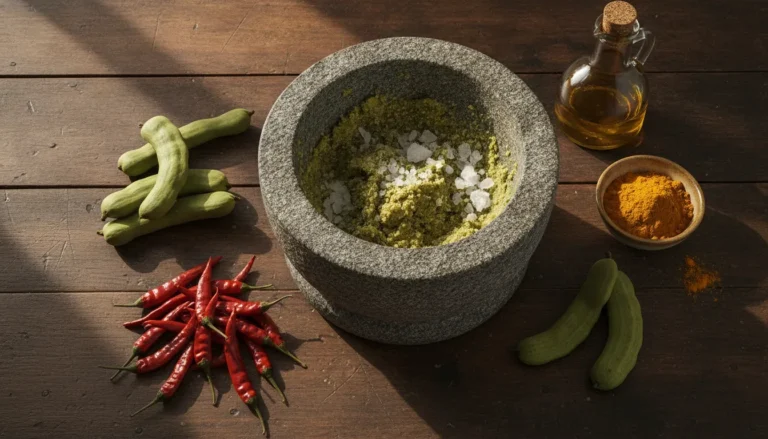
What makes it pulihora is the popu (tempering). Hot oil, mustard seeds that crackle, curry leaves, peanuts, chana and urad dal, dried red chillies, a little turmeric and a pinch of asafoetida, all poured over and folded through. The sour comes from chintapandu (tamarind), or from nimmakaya (lemon) or mamidikaya (raw mango) in the seasonal versions, which is why the same tempered-rice idea runs across the chitranna family.
No meat. No dum. No layering. Nothing about pulihora sits on the biryani-to-pulao line, which is exactly why ranking it as a lesser biryani makes no sense. It belongs to the festival table and to the temple, offered as prasadam, most famously at Tirupati, where sourness and long-keeping matter more than richness. It is tangy, it travels well, and it was never trying to be a biryani.
How to tell them apart in one bite
You do not need to see the kitchen to place a plate. Three cues do the work.
Long, separate grains carrying a rich, layered spice, with meat that tastes cooked-in rather than stirred-through: that is biryani. Rice that is evenly flavoured all the way through, softer and milder, everything tasting of the same pot: that is pulao. Sour, bright, studded with peanuts and curry leaves, no meat in sight: that is pulihora.
One last knot worth untying. You will read that both biryani and pulao are dum dishes. Keep it simple. Biryani is defined by the sealed dum finish over separately cooked, drained rice. Pulao is an absorption dish cooked together, with dum, if it is used at all, light and optional. Pulihora is neither, because its rice was cooked and cooled long before the tempering ever touched it.
The Andhra table has all three
Most of these arguments are fought as North Indian ones, which is how pulihora goes missing. On an Andhra table, all three are ordinary. The biryani is layered and dum-finished, built on Guntur chillies rather than a gentle northern masala. The kodi pulao is the one-pot chicken rice. And pulihora is the tempered tamarind rice that turns up at festivals and in temple kitchens. Same cuisine, three different techniques, no confusion about which is which, because the people cooking them never thought of them as versions of one dish.
Nandhini has cooked Andhra food in Bengaluru since 1989, and its kitchen makes all three the way an Andhra household would: the mutton biryani layered and sealed, the kodi pulao cooked in one pot, the pulihora tempered and soured. If you have only met these dishes as names on a menu, the fastest way to feel the difference is to eat the biryani and the pulao side by side on a banana leaf, where each makes its own case.
Frequently Asked Questions
What is the difference between biryani, pulao and pulihora?
In biryani, spiced meat and parboiled rice are cooked separately, then layered and steamed on dum. In pulao, rice and meat cook together in one pot. Pulihora is different again: pre-cooked rice tempered with tamarind, with no meat and no dum.
Is pulihora a type of biryani?
No. Biryani and pulao are both ways of cooking rice with meat. Pulihora is not on that spectrum: it is cooked rice mixed with a tamarind tempering of mustard seeds, curry leaves, peanuts and chilli, and it usually has no meat.
Is pulao the same as biryani?
No, though both cook rice with meat and spices. Pulao cooks everything together in one pot, so it is milder and quicker. Biryani cooks the rice and meat separately, then layers and seals them for slow dum, giving a richer, more intense result.
Is pulao healthier than biryani?
Pulao is usually lighter: one pot, less oil and fewer rich spices, so it tends to be lower in calories than a layered biryani. Neither is inherently unhealthy, since portion size and how much fat and meat you use matter more than the name.
Is Andhra kodi pulao a biryani or a pulao?
It is a pulao. Andhra kodi pulao cooks the chicken and rice together in one pot, so the rice absorbs the meat’s flavour directly. It is not layered or sealed for dum the way an Andhra biryani is, which keeps it a pulao.