Ask five Andhra cooks for gongura pachadi and you can end up with five different jars. One is a soft, garlicky chutney meant to be finished by Sunday. Another is a dense, oil-slicked pickle that has sat quite happily since last summer. Both are gongura. Both get called pachadi, and both get called pickle, sometimes in the same sentence.
That blur is the whole problem. Gongura pachadi and gongura pickle start from the same sour red leaf, yet they are made differently, keep for very different lengths of time, and sit in different corners of the kitchen. This page separates them, walks through how to make each, and points you to where a good one is bottled.
Getting it straight is not pedantry. It decides how long your jar lasts, how much oil and salt go in, and whether you can make a batch in the monsoon or have to wait for a dry week. Cook the wrong one for the job and it either spoils on you or never keeps at all.
Gongura is red sorrel, also known as roselle (Hibiscus sabdariffa), a leafy green prized in Andhra Pradesh for its sharp natural sourness. It is pulicha keerai in Tamil and ambadi in Marathi. Ground into pachadi or preserved as pickle, gongura carries a tang no tamarind can copy.
Table of Contents
What sets pachadi and pickle apart
Here is the distinction almost every recipe skips. Gongura pachadi, in its everyday sense, is the fresh chutney. You cook the leaves down while they are still moist, grind them soft, and eat the result within a week or two from the fridge. It tastes bright and green, the sourness sitting right at the front.
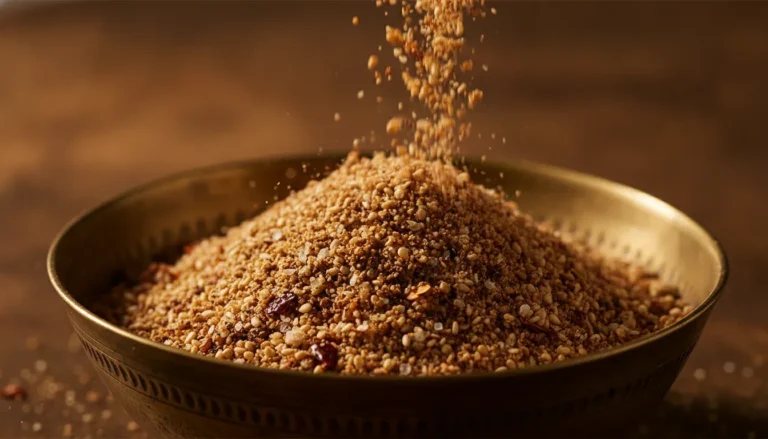
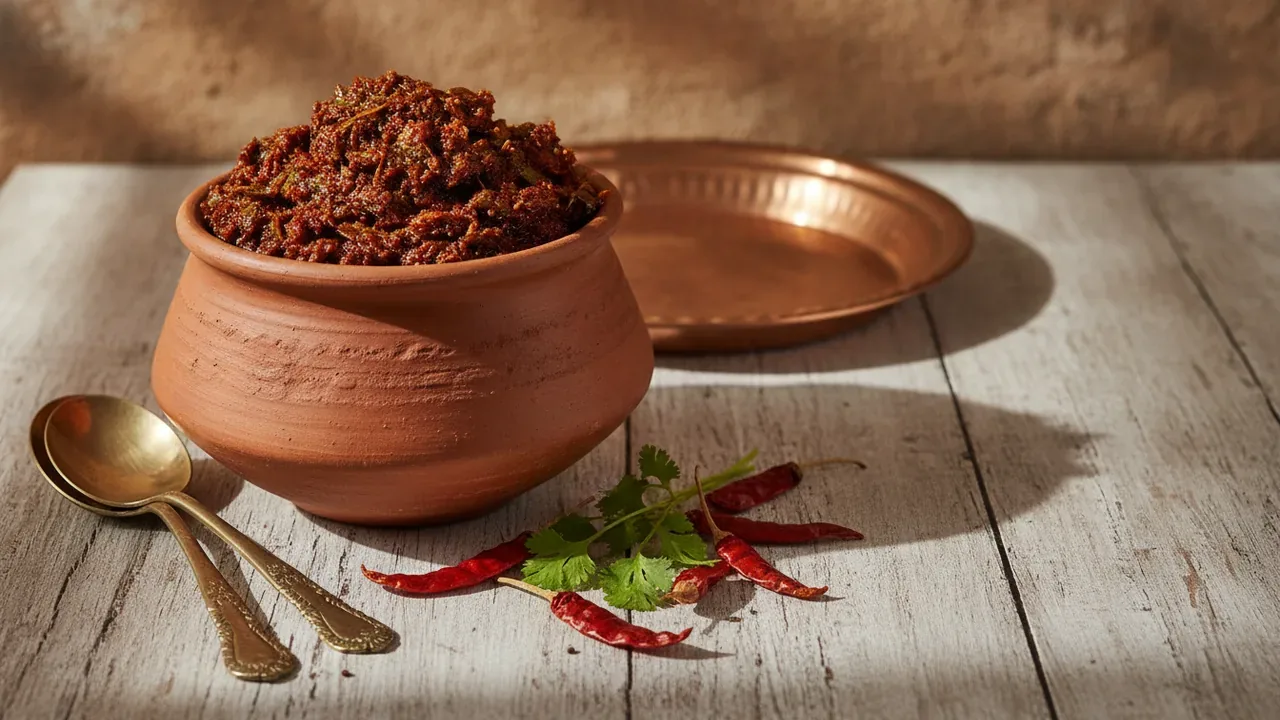
The pickle is a different animal. In Telugu it has its own name, gongura nilava pachadi (the keeping pachadi), sometimes written nilva or niluva. Nilava means stored, and that is the point. The leaves are air-dried first, then cooked in far more oil with a heavier hand of salt. The result is thick, dark and spoonable, and it holds for months rather than days.
The name shifts by region, too. Across Telangana and Andhra you will hear gongura thokku for a thick, pounded pickle, while pachadi usually means the softer, fresher grind. What keeps the pickle safe on a shelf is simple food science. Very little water is left in the leaf, salt pulls out what remains, and a cap of oil keeps air off the surface. Take any one of those away and the jar starts to turn.
On the plate they behave differently as well. Fresh pachadi spreads and melts into hot rice almost at once. The pickle sits up, holds its shape, and releases its oil slowly, which is why a very little goes a long way. Knowing which one you are reaching for changes how much you serve.
So the two words people swap so casually are really two techniques. Same leaf, one built for now and one built to last. Most recipe titles bundle pachadi, pickle and chutney together, which is where the confusion comes from. The table sets them side by side.
| Gongura pachadi | Gongura pickle (nilava pachadi) | |
|---|---|---|
| Form | fresh chutney, ground soft | preserved pickle, coarse and dense |
| Moisture and oil | leaves cooked down moist, modest oil | leaves air-dried first, generous oil |
| Salt | seasoned to taste | salted heavily, for keeping |
| Shelf life | days to about two weeks, refrigerated | several months to a year at room temperature |
| Texture | smooth to lightly coarse | thick, spoonable, oil-sealed |
| Best on | hot rice, curd rice, idli, dosa | hot rice and ghee, travel meals, off-season |
Where the sourness and the heat come from
Gongura earns its place through sourness, not spice. The leaf is naturally acidic, high in malic and oxalic acid, which is why a good pachadi needs no tamarind and no lemon. That tang is the leaf talking, and it is the reason gongura holds its own against heavy meat and dal.
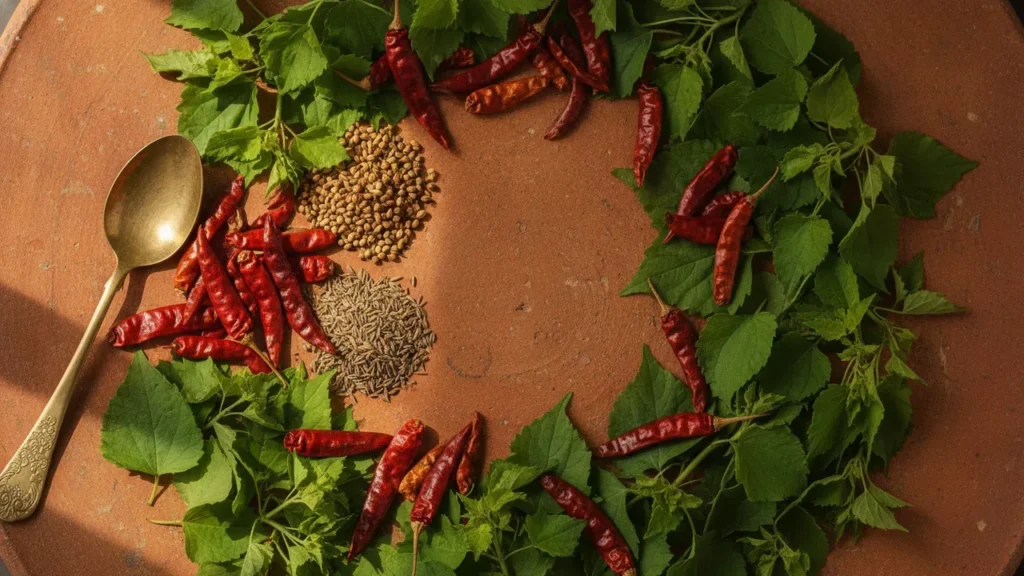
The heat is a separate decision, and in Andhra it usually means Guntur chillies. The Guntur Sannam variety runs about 30,000 to 50,000 on the Scoville scale, hot enough to bite without turning the dish to pure fire. Cooks who want colour more than heat cut in some Byadgi chilli, which is milder and deeply red. Most gongura pickles lean Guntur, because the sour leaf can carry the heat and give back balance.
Underneath sits the usual Andhra backbone: mustard seeds, cumin, and menthulu (fenugreek), the last used sparingly because too much of it turns things bitter. Sesame oil carries all of it. Get the leaf, the chilli and the oil right, and the rest is seasoning.
Sesame oil is not a neutral choice here. Its nutty weight stands up to the sourness and the chilli in a way a lighter oil cannot, and in the pickle it doubles as the seal that keeps the jar safe. Groundnut oil works if that is what the kitchen runs on, but the Andhra default, and the one that tastes right, is gingelly.
The tempering, or popu as it is called in Telugu, is the last flourish and the easiest to rush. Mustard seeds must pop fully rather than only warm through, and the asafoetida goes in off the heat so it does not scorch. It takes thirty seconds, and it is the difference between flat and finished.
Some households add a little tamarind to a pachadi, especially late in the season when the leaves have lost some bite. It is a matter of taste, not rule. Purists leave it out and let the sorrel do the work, and for a pickle meant to keep, extra tamarind only adds the moisture you have worked so hard to remove.
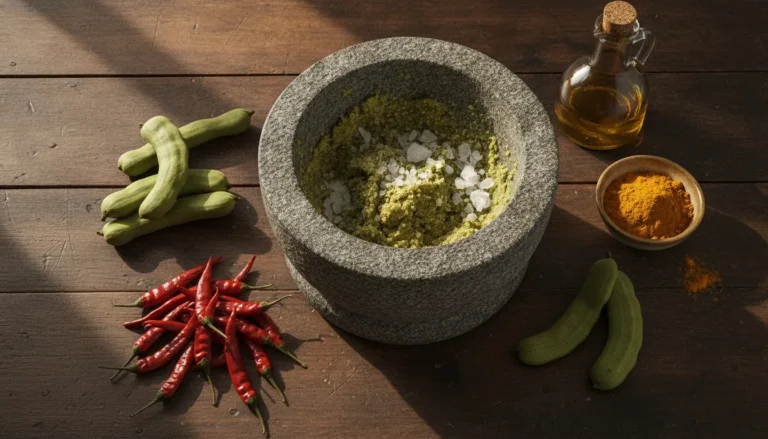
How to make gongura pachadi
This is the version to make when the leaves are fresh and you want to eat within the week. It comes together in under half an hour.
Ingredients
- 4 packed cups gongura (red sorrel) leaves, de-stemmed, from about two bunches
- 8 dry red chillies, Guntur for heat, fewer if you like it mild
- 10 garlic cloves
- 1 tsp cumin
- 1/2 tsp menthulu (fenugreek)
- 1 tsp mustard seeds
- a pinch of inguva (asafoetida)
- 3 tbsp sesame oil
- rock salt to taste
Method
- Wash the leaves well, pull them off the thick stems, and spread them to dry off surface water. Wet leaves make a watery pachadi that turns quickly.
- In a tablespoon of oil, roast the chillies, cumin and fenugreek until they smell nutty and the chillies darken a shade. Lift them out.
- In the same pan, wilt the gongura over medium heat until it collapses and turns a dull olive, about 6 to 8 minutes. That colour change means the raw edge is gone.
- Grind the roasted spices and garlic coarse, add the wilted leaves, and pulse. Stop while it still has texture, because a smooth paste loses the character.
- Heat the last of the oil, splutter the mustard and asafoetida, and pour the tempering over. Fold it through with salt.
- Cool it fully before it goes into a jar. In the fridge, fresh gongura pachadi keeps a week to a fortnight.
A few things save this pachadi. Never add water while grinding, since the wilted leaves carry enough of their own. Taste before you salt, because gongura’s sourness can trick you into over-salting. And if you want it hotter, roast a couple of extra Guntur chillies rather than reaching for chilli powder, which muddies the clean heat.
This makes enough for four or five meals and is at its best in the first few days, while the green is still lively. After that it is still good, only quieter.
How to make gongura pickle, the keeping way
Same leaf, a longer game. The one step that changes everything is drying the leaves before they ever meet the pan. Skip it and you have a pachadi that spoils in a week, whatever the label says.
Ingredients
- 6 packed cups gongura leaves, de-stemmed
- 12 dry red chillies, Guntur
- 1 tbsp fenugreek seeds
- 2 tbsp mustard seeds, split for grinding and tempering
- 1 whole pod of garlic, optional (some leave it out for a longer shelf life)
- 3/4 to 1 cup sesame oil
- rock salt, generous
Method
- Spread the de-stemmed leaves on a clean cloth and air-dry them for a full day, away from direct sun, until they are limp and dry to the touch. No moisture may remain. This is the line between a pickle and a pachadi.
- Dry-roast the chillies, fenugreek and half the mustard, then grind them to a coarse powder.
- In a good amount of sesame oil, saute the dried leaves until they darken and give off a toasted, sour smell.
- Let the leaves cool, then grind them coarse with the spice powder and plenty of salt. The salt is doing preservation work here, so do not go shy.
- Splutter the rest of the mustard in oil, add the garlic if using, and mix through. Pack into a dry, clean jar and top with a thin film of hot oil, cooled, to seal the surface.
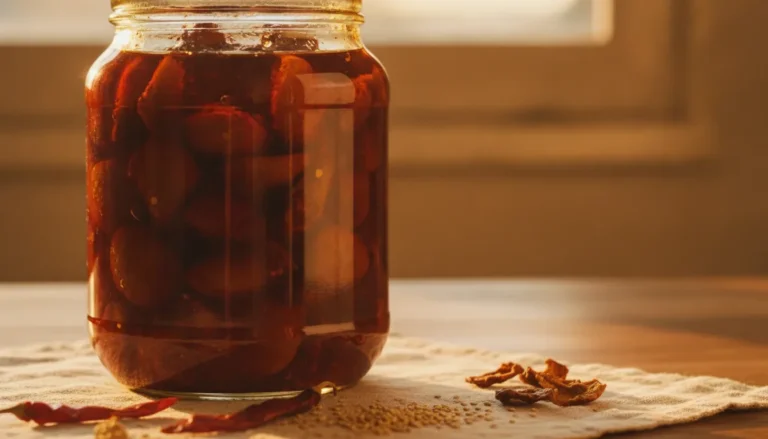
- Reach in with a dry spoon every time. Stored this way, gongura nilava pachadi holds for several months, and often a full year, at room temperature.
If a gongura pickle spoils early, the leaves were almost never dry enough, or a wet spoon carried moisture back in. Both invite mould at the surface. The fixes are the ones the recipe already asks for. Dry the leaves properly, keep the oil topped over the top, and never dip in with anything damp. Garlic is the other variable, adding flavour but shortening the keeping time a little, which is why some cooks leave it out of a batch meant to last the year.
Made right, a jar like this is what people mean by a pickle that outlasts the season. Gongura comes in for only a few months, so a good batch put up in a dry week carries a household through to the next crop.
Is gongura good for you?
Gongura carries real nutrition. The leaves are a good source of iron, vitamin C and folate, along with antioxidant compounds, and the sourness that makes them useful in the kitchen comes from the same acids that give the leaf its character. Eaten as a fresh pachadi with rice, it is a nourishing side.
The pickle asks for more care. To keep for a year it needs a lot of salt and a lot of oil, so it belongs on the plate in a spoonful, not a ladle. Anyone watching their blood pressure is better treating the pickle as an occasional relish than a daily fixture.
One more thing worth knowing: sorrel is high in oxalates. People prone to kidney stones or gout are usually advised to go easy on it. None of this makes gongura unhealthy. It makes it a condiment, best enjoyed the way condiments are, in small, flavour-packed amounts.
For anyone eating a mostly plant-based diet, the fresh pachadi is a quietly useful way to get iron and vitamin C in the same bite, since the vitamin C helps the body take up the iron. The pickle is more treat than tonic, and that is fine. It was never meant to be eaten by the spoonful.
On the plate, and where to find it
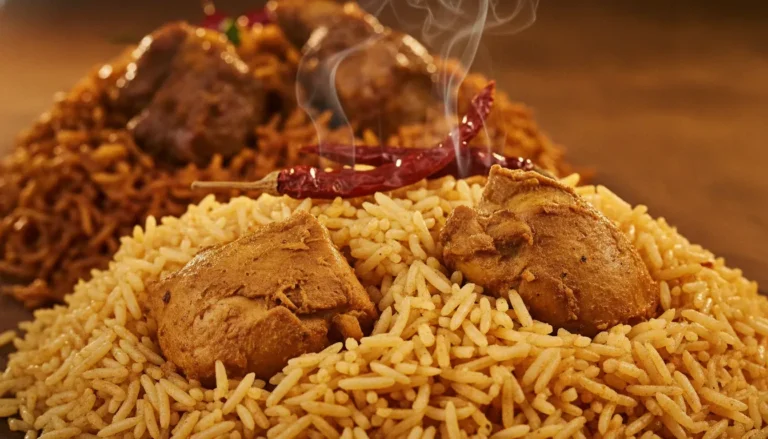
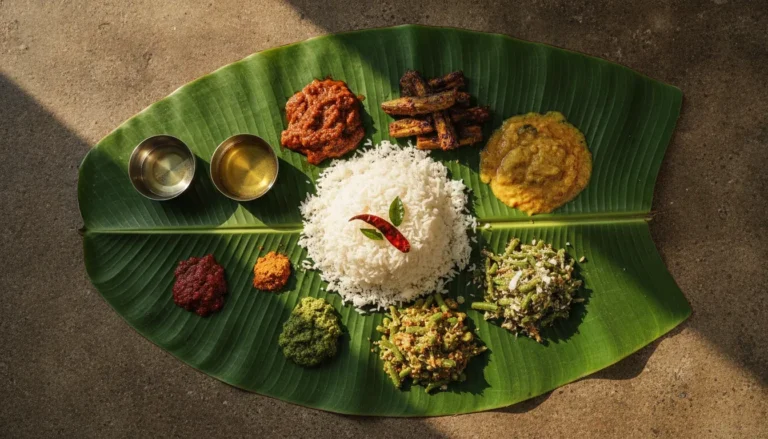
On an Andhra banana-leaf meal, gongura is rarely the loud dish, but it is the one people reach for again. A dab of pachadi or a smear of pickle against hot rice and ghee resets the palate between a rich mutton curry and a bowl of dal. It is the sour note that makes the rest taste right.
In a full Andhra spread it lands between the heavier plates, a small mound you return to rather than finish in one go. That is the role gongura has always played on the table, not the centre of the meal, but the thing that ties it together.
If you would rather buy than dry leaves on your terrace for a day, that is a fair trade. A well-made Andhra pickle from a kitchen that knows the leaf saves you the labour and still tastes of home.
A good jar tells on itself. The colour should be deep and slightly dull rather than bright, a sign the leaves were cooked down properly. There should be a clear layer of oil on top, and the smell should be sour and toasty, not sharp or fermented. If it reads more red than green and smells clean, someone knew what they were doing.
For most kitchens the honest answer is both. Make the fresh pachadi when the leaves are good and you have an evening free, and keep a bottled pickle on hand for the weeks when you do not. One is the taste of a Sunday, the other is insurance against a dull Tuesday.
Nandhini has cooked with gongura in Bengaluru since 1989. The leaf runs right through its Andhra identity, from the banana-leaf meal to the signature gongura mamsam, and the Andhra pickles from World of Nandhini travel home in a jar for the days you want the flavour without the pan.
Frequently Asked Questions
What is the difference between gongura pachadi and gongura pickle?
Gongura pachadi is the fresh chutney form, ground soft and eaten within days to a couple of weeks. Gongura pickle, or nilava pachadi, uses air-dried leaves, more oil and more salt, and keeps for months. Same leaf, two shelf lives.
What is gongura pachadi made of?
Gongura pachadi is made from red sorrel leaves cooked down and ground with dry red chillies, garlic, cumin and a mustard and fenugreek tempering in sesame oil. The leaf’s own sourness means it needs no tamarind. Guntur chillies give the heat.
What is gongura called in English?
Gongura is red sorrel, also called roselle (Hibiscus sabdariffa). It is pulicha keerai in Tamil and ambadi in Marathi. There is no single everyday English word for the pickle, so it is usually described as sorrel-leaf pickle or chutney.
How long does gongura pickle last?
Made the keeping way, with leaves fully air-dried, plenty of oil and salt, and a dry spoon each time, gongura nilava pachadi lasts several months to a year at room temperature. Fresh gongura pachadi is best within a week or two, refrigerated.
Is gongura healthy?
Gongura leaves are rich in iron, vitamin C and folate, with antioxidant compounds. The pickle form, though, carries a lot of salt and oil, so it is best in small amounts. Those prone to kidney stones or gout should be cautious, since sorrel is high in oxalates.
What do you eat gongura pachadi and pickle with?
Both are classic with hot steamed rice and a spoon of ghee or sesame oil. They also sit beside idli, dosa and curd rice, and pair well with an Andhra banana-leaf meal, cutting through richer mutton and dal dishes.