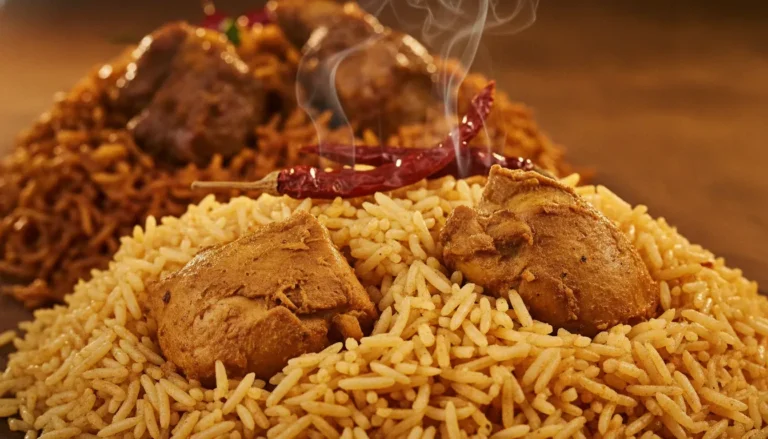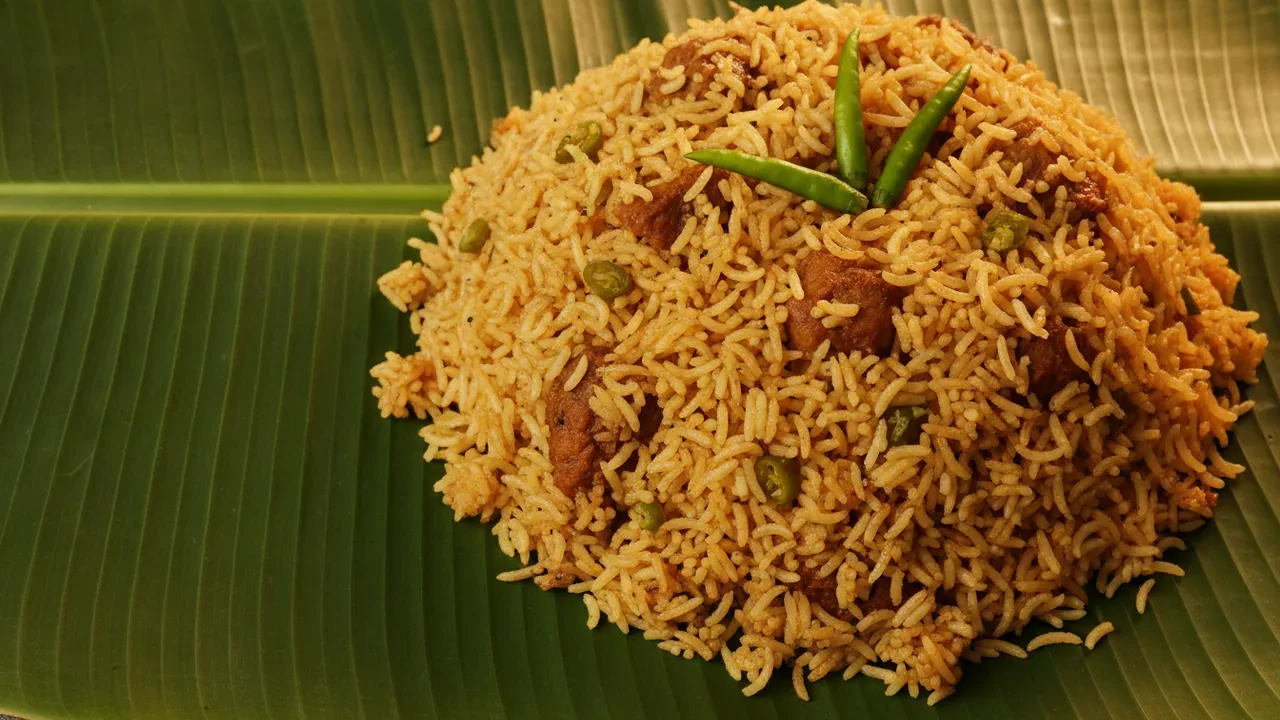
Order a biryani anywhere south of the Deccan and most people picture Hyderabad: long basmati, saffron streaks, a mound of it under a sealed lid. Nellore biryani is not that. Two hundred kilometres up the coast, in the delta town of Nellore, the biryani runs shorter in the grain, drier in the pot and hotter on the tongue, built on green chillies rather than a rich Mughlai gravy. Ask for it by name in coastal Andhra and you might get a clay pot, sealed with dough and cracked open at your table. If Hyderabadi is the only biryani you know, this one is a different animal, and worth meeting on its own terms.
Table of Contents
What Nellore biryani is
Nellore biryani is a coastal-Andhra style from the town of Nellore, drier and hotter than Hyderabadi biryani. It leans on short-grain rice, a green-chilli-led masala and a curd, turmeric and lime marinade, all finished under sealed dum. Many local versions arrive as kunda (pot) biryani, cooked and served in a clay pot.
That is the version most search results blur. Where it gets interesting is why a biryani made two hundred kilometres from Hyderabad ended up so unlike its famous neighbour.
Isn’t this just Hyderabadi biryani?
Here is where the confusion starts. For most people ordering in Bengaluru or Chennai, Andhra biryani and Hyderabadi biryani have quietly merged into one idea: spicy, fragrant, basmati, done. So when a menu says Nellore biryani, the reasonable assumption is that it is the same plate with a different postcode.
It is not. Hyderabadi biryani grew out of the Nizam’s kitchens, a Mughlai lineage of layered basmati and slow dum, mild to medium in most restaurant hands. Nellore’s biryani grew out of a coastal delta town with its own rice, its own chilli habit and its own pot. Among the many types of biryani in India, the coastal-Andhra styles sit on a different branch from the Hyderabadi one, closer in spirit to a home kitchen than a royal one.
Part of the mix-up is geography doing quiet PR. Outside Andhra, a lot of restaurants file every southern biryani under the Hyderabadi banner because the name sells, so the coastal styles rarely get called by their own. Inside the region, nobody confuses them. The gap shows up in four places, and once you have tasted both back to back, you stop mistaking one for the other.
What makes it distinct
Four things separate a proper Nellore biryani from the Hyderabadi plate people expect. Get these right and the rest of the meal falls into line.
The rice
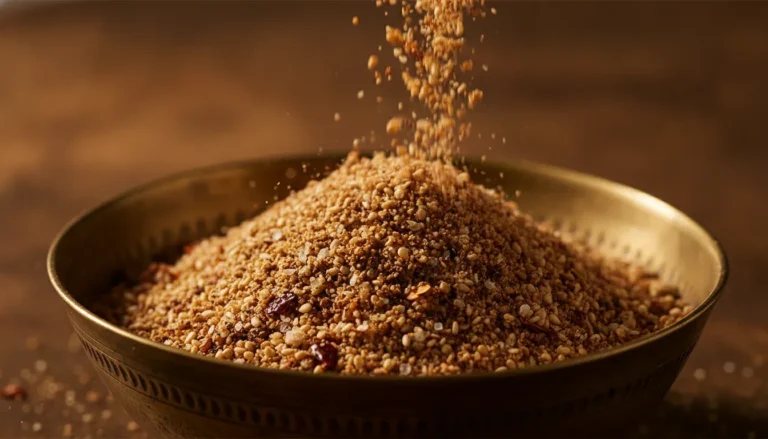
Start with the grain, because this is the argument that never quite settles. The old coastal-Andhra and Tamil-border kitchens built their biryani on seeraga samba (jeera samba), a tiny short-grain rice named for its likeness to a cumin seed. It behaves nothing like basmati. It stays firm and separate under a long dum, drinks in masala rather than sitting apart from it, and skips the long soak basmati needs. Plenty of restaurant kitchens in and around Nellore now reach for basmati instead, which is exactly why the online recipes contradict one another. The honest answer is that both exist: seeraga samba is the traditional grain and the one that gives the biryani its dense, saturated bite, while basmati is the modern shortcut. To taste the version the town is actually known for, seek out the short-grain one.
Drier and hotter
Nellore biryani carries less liquid than Hyderabadi and more heat. The heat is green-chilli-led rather than red-chilli-heavy, so it reads sharp and immediate rather than the slow, smoky warmth of a Guntur biryani, where dried red chillies in the 30,000–50,000 Scoville band do the work. Less water in the pot means the rice finishes drier and the masala clings tighter to every grain, with no pool of gravy waiting at the bottom.
There is a practical reason under the taste, too. Short-grain rice needs less water than basmati to cook through, so a pot built around seeraga samba lands on the drier side almost by default, and the local appetite for concentrated heat pushed it further that way. That dryness is the point, and it is the first thing a Nellore native will flag when handed a wetter, milder plate from somewhere else.
The marinade
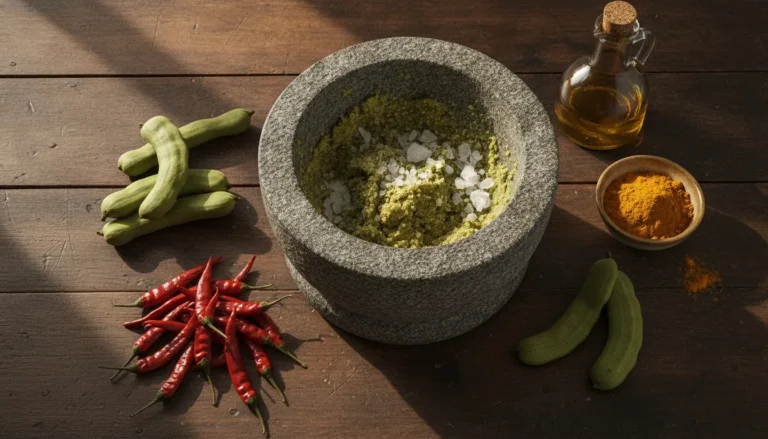
Before any rice touches the pot, the meat sits in thick curd, turmeric and a hard squeeze of lime. The curd tenderises and carries the spice inward, the turmeric colours and steadies the mix, and the lime brings the tang that runs right through a coastal-Andhra biryani. That sourness is part of the signature. Where a Hyderabadi biryani leans aromatic and rich, the Nellore version leans sharp and tangy, and the lime in the marinade is where much of that starts. Some kitchens fold in mint and coriander as well, but the three that decide the character are curd, turmeric and lime.
The pot
Then there is the kunda. In and around Nellore, the biryani is often cooked and served in a kunda (clay pot), sealed at the rim and opened only at the table. Naidu Gari Kunda Biryani built its name on precisely this. The clay holds and evens the heat, and the seal traps the steam so the top layer of rice cooks in the meat’s own vapour. It is a different picture from the wide handi or the catering degh most people associate with biryani, and it is one of the reasons the town’s biryani travels under its own name. Not every Nellore biryani is a kunda biryani, to be fair; plenty is cooked in a large vessel and plated as usual. But the kunda is the version the town is proudest of, and the one worth ordering if you spot it.
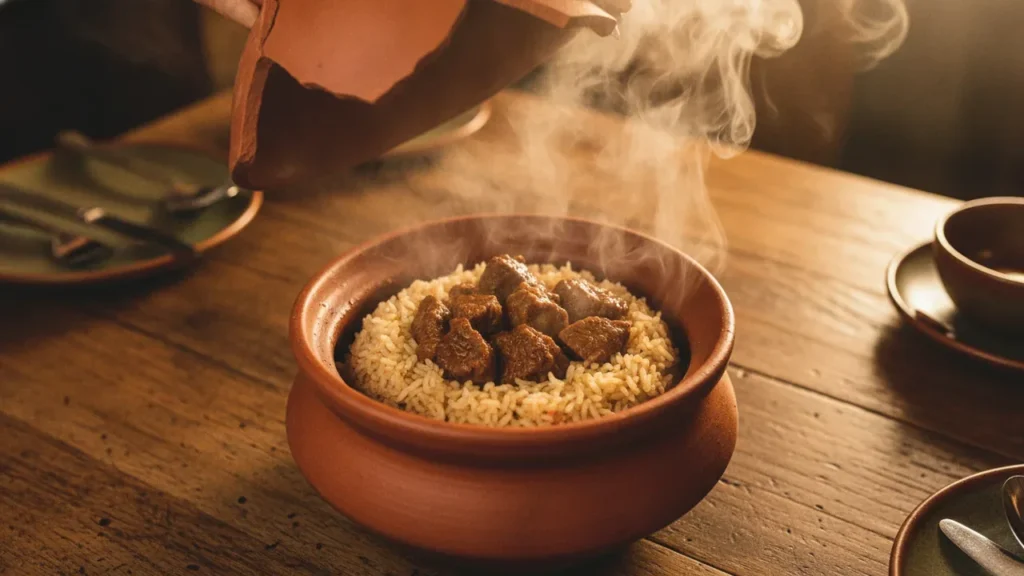
Nellore biryani vs Hyderabadi biryani
Put the two side by side and the differences stop being abstract. This is the comparison most people are really after when they type Nellore biryani into a search bar.
| Feature | Nellore biryani | Hyderabadi biryani |
|---|---|---|
| Rice | Short-grain seeraga samba by tradition, basmati in many restaurants | Long-grain basmati, almost always |
| Heat | Green-chilli-led, sharp and immediate | Milder to medium, red-chilli and whole-spice warmth |
| Moisture | Drier, little added water | Moister, a richer bottom layer |
| Gravy and profile | Tangy and lime-forward, masala clings to the grain | Aromatic, saffron and fried-onion richness |
| Cooking method | Sealed dum, often in a clay kunda pot | Layered kacchi or pakki dum in a handi |
Neither is better. They are two answers to the same question, and Nellore’s answer is the louder, drier one.
Nellore, the biryani town
Nellore, properly Sri Potti Sriramulu Nellore, is a delta town on the Andhra coast where biryani is close to a civic identity. Ask locally and the same kitchen names come round again and again. Hotel Riyaz is the one outsiders hear first, its pot biryani filmed in nearly every food vlog shot in the town. Naidu Gari Kunda Biryani carries the clay-pot tradition. Reshma, Shabbir and Garib turn up in the same breath, each with its own loyalists and its own slightly different plate.
Biryani is not the town’s only claim. Sitting on the Bay of Bengal, Nellore cooks a hard-hitting coastal spread of fish pulusu, prawn fry and chilli-heavy curries, and the biryani grew up in that company, which is part of why it carries more heat and less richness than its inland cousins. Locals argue about biryani places the way other towns argue about cricket teams, and the pot, the rice and the chilli level are all fair game.
None of this is marketing. It is the ordinary texture of a place where biryani is the default weekend meal, and it is why Nellore gets name-checked in any honest list of Andhra biryani styles, alongside Vijayawada biryani on the Krishna delta and the heat-forward Guntur biryani further inland. The town earned its place the slow way, one packed kitchen at a time.
How Nellore biryani is made
You do not need a recipe card to understand how a Nellore biryani comes together. The method matters more than exact grammes, and it explains why the result tastes the way it does.
- Marinate the meat in thick curd, turmeric, lime and green chillies, and give it long enough for the sourness to work in.
- Cook the masala down hard with onions and ginger-garlic paste until it is thick and almost dry, with very little added water.
- Par-boil the rice separately, seeraga samba or basmati, so it stops just short of done.
- Layer the part-cooked rice over the meat and its masala, keeping the whole thing drier than you would for a Hyderabadi pot.
- Seal the pot, traditionally a clay kunda, and finish on a low dum until the steam has cooked the top layer through.
Get the marinade sour enough and the pot dry enough and you have the coastal-Andhra character. Everything after that is the cook’s own hand.
Where to find Andhra biryani in Bengaluru
If reading this has made you want the real thing, the catch is that a proper Nellore kunda biryani is best eaten in Nellore. What travels, and what Bengaluru has in depth, is the wider Andhra biryani tradition it belongs to.
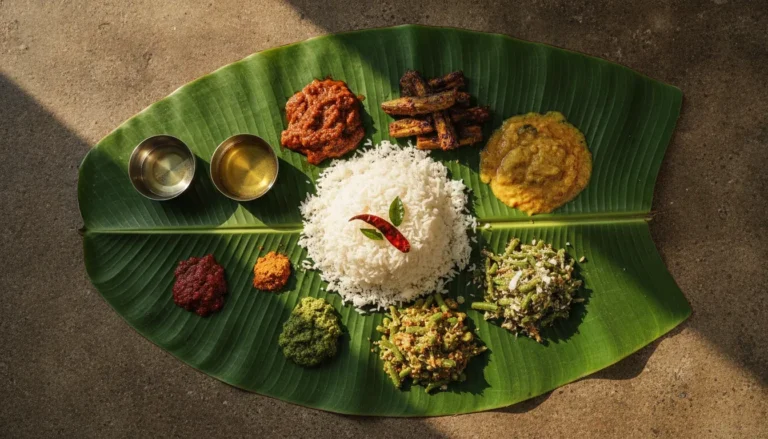
Nandhini Deluxe has cooked Andhra food in Bengaluru since 1989, when Shri N. Ananda opened the first outlet at Minerva Circle. Three generations on, it runs 22 company-owned outlets across Bengaluru and Mysuru, and its signature Mutton Biryani is Andhra biryani in the coastal register: spice-forward, generous, made to be eaten off a banana leaf rather than admired on a plate. The kitchens are not chasing a Nizami idea of biryani. They are cooking the Andhra one.
For where to go and what to order across the city, our Andhra biryani guide breaks it down by outlet. Nandhini has spent more than three decades serving Andhra biryani to Bengaluru, which makes it a fair place to start understanding where a coastal style like Nellore’s sits in the bigger Andhra picture.
Frequently asked questions
What is Nellore-style biryani?
Nellore-style biryani is a coastal-Andhra biryani known for being drier and hotter than Hyderabadi. It is built on short-grain rice, a green-chilli-led masala and a curd, turmeric and lime marinade, then finished under sealed dum. Many Nellore versions are served as pot, or kunda, biryani.
How is Nellore biryani different from Hyderabadi biryani?
Nellore biryani leans drier and sharper, with green-chilli heat and often short-grain seeraga samba rice. Hyderabadi biryani is basmati-based, richer and more aromatic. Nellore also favours a tangier, less watery gravy and a firmer grain that soaks up masala rather than sitting apart from it.
What food is Nellore famous for?
Nellore is best known for its biryani, especially pot (kunda) biryani and the fiery chicken and mutton versions made by long-standing local kitchens like Hotel Riyaz. The coastal-Andhra cooking around the town also runs to spicy fish and prawn dishes.
What rice is used in Nellore biryani?
Traditional and Tamil-border versions often use short-grain seeraga (jeera) samba rice, prized for absorbing masala and staying firm under dum. Many restaurant kitchens now use basmati instead, so the grain varies from one place to the next.
What is Andhra biryani called?
Andhra biryani is not a single dish but a family of regional styles, including Nellore, Guntur, Vijayawada and Rayalaseema biryanis. Each has its own heat level, rice and method within the broader Andhra tradition, which is why no two taste quite alike.