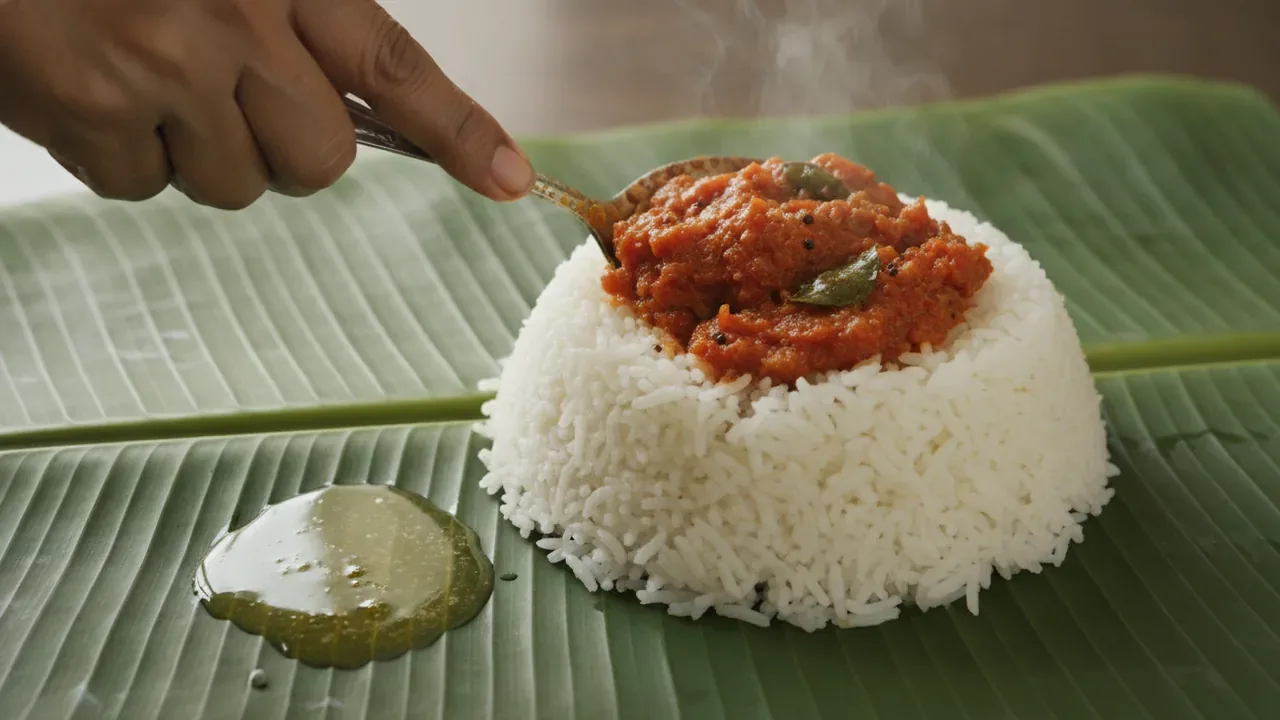
Mix a spoon of tomato pachadi into a mound of hot rice, add a little ghee, and press it through with your fingers. That first bite tells you what kind of cook made it: the tang of tamarind, the slow warmth of Guntur chilli behind it, the nutty edge of roasted dal underneath. This is the fresh Andhra tomato chutney that lands on the banana leaf next to the rice, not the oily pickle built to last a year. Get it right and you barely need anything else on the plate. Get it wrong and it is stewed tomato with chilli. The gap between the two is small, and closing it is the whole point of this page.
Tomato pachadi is an Andhra-style tomato chutney, cooked down with tamarind and Guntur chilli over a base of roasted lentils, then finished with a mustard-and-curry-leaf tempering. Pachadi is the Telugu word for chutney, so the dish is eaten fresh, mostly with hot rice and ghee.
Table of Contents
What tomato pachadi is, and what the name means
The word pachadi is the source of most of the confusion. In Telugu the dish is tomato pachadi (టమాటా పచ్చడి), and while pachadi mainly means chutney, it is stretched to cover some pickles too, which is how one name ends up describing three fairly different things. A fresh chutney eaten the same day, a nilva (nilava) pachadi that keeps a few weeks, and a tomato ooragaya (oil-cured pickle) that keeps for months all answer to versions of the name. Tamil speakers add a layer: thakkali pachadi is the Tamil naming for the tomato version. So when someone says they want tomato pachadi, the first useful question is which of the three they actually mean. The next section sorts that out.
Pachadi, nilva or pickle: which one you want
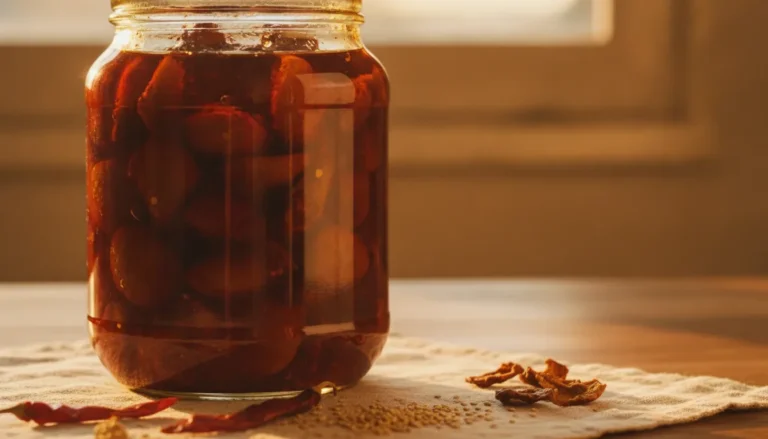
Three dishes, one name, and the real difference is how long each is built to last. The fresh pachadi is a chutney you make and finish within a few days. Nilva pachadi is the traveller’s version, carrying more oil and tamarind so it holds for a few weeks in the fridge. Tomato ooragaya is the true pickle: tomatoes cut and salted, sometimes sun-softened, then sealed under a layer of oil that shuts out air for up to a year, the same oil-sealed logic behind avakaya (mango pickle). More oil and more salt buy more time, and that trade runs straight down the table below.
| Type | What it is | Keeps | Best with |
|---|---|---|---|
| Tomato pachadi (fresh) | Cooked-down tomato chutney, tempered | 3–4 days, refrigerated | Hot rice + ghee, idli, dosa |
| Nilva tomato pachadi | Semi-preserve, more oil and tamarind | 2–4 weeks, refrigerated | Rice, travel meals |
| Tomato ooragaya (pickle) | Oil-cured, sun-softened | Up to a year, oil-sealed | Rice, curd rice (see Andhra ooragaya guide) |
This page is about the first row, the fresh chutney. If what you want is the year-keeping oil pickle, that is a different craft with its own salting and oil-sealing rules; quicker instant tomato pickle versions exist too, but the proper tomato pickle andhra kitchens make belongs in the Andhra ooragaya guide rather than here. The nilva version sits in the middle, and because it shares the everyday tomato pachadi name, it earns a keeping note further down instead of a page of its own.
Andhra style, Kerala style and Brahmin style
One more mix-up, this time across states. In Andhra, tomato pachadi is a spicy tomato chutney. In Kerala, pachadi usually means something else entirely: a yoghurt-based side, cool and mildly spiced, much closer to a raita than to a chutney. Same word, genuinely different dish. If a recipe titled tomato pachadi comes out looking like curd, that is the Kerala reading, not a mistake in the cooking.
Within Andhra there is also the Brahmin-style version, made without onion or garlic. It leans harder on tamarind, roasted dal and the tempering for depth, and many cooks reckon it keeps a shade better for the missing aromatics. Coastal Andhra and Rayalaseema kitchens each nudge the balance of sourness and heat their own way, but the fresh-chutney idea holds across all of them.
How to make Andhra tomato pachadi
Nothing here is difficult. The tayari vidhanam (the making of it) has two hinges: roasting the dals properly for a nutty base, and cooking the tomatoes right down until the rawness is gone. Rush either and you can taste the shortcut in the finished chutney.
Pick your tomatoes with intent. Fully ripe ones give a softer, sweeter pachadi. Semi-ripe tomatoes hold more acidity and structure. Green, unripe tomatoes make pachi tomato pachadi, sharper and firmer, worth trying when tomatoes are cheap and plentiful and you want something that cuts through a heavy meal. This recipe serves four as a side and takes about thirty minutes start to finish.
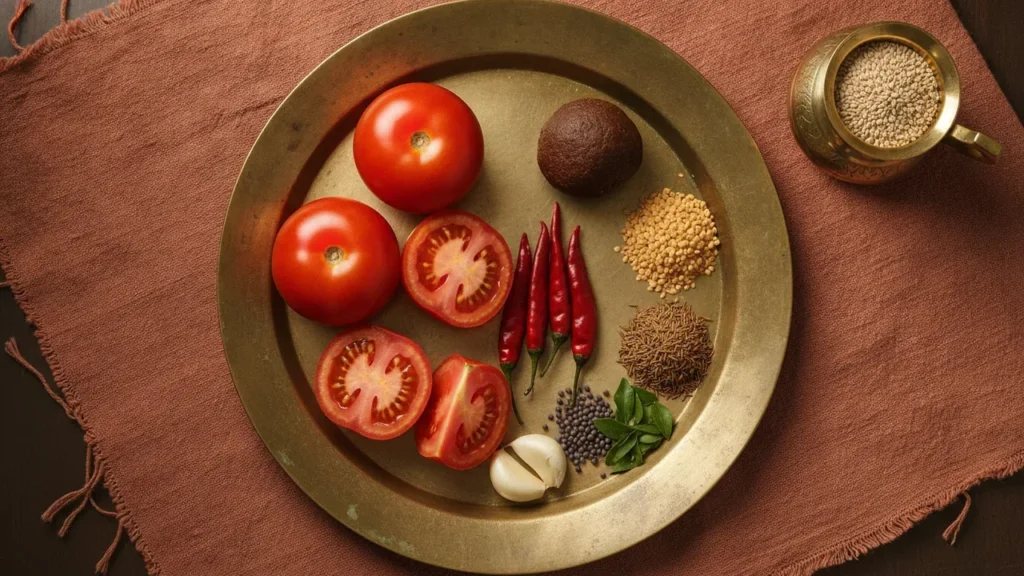
What you need
- Tomato (tamata) – 500g, roughly chopped
- Tamarind (chintapandu) – a lime-sized ball, soaked, or two teaspoons of paste
- Guntur red chilli – 6 to 8, adjusted to taste
- Chana dal (senaga pappu) – one tablespoon
- Urad dal (minapa pappu) – one tablespoon
- Fenugreek (menthulu) – a quarter teaspoon
- Sesame (nuvvulu) – one teaspoon, optional, for body
- Garlic (velluli) – four cloves, optional; leave out for Brahmin style
- Mustard (aavalu) – one teaspoon, for the tempering
- Curry leaves (karivepaku) – one sprig
- Asafoetida (inguva) – a pinch
- Turmeric (pasupu) – a quarter teaspoon, plus oil and salt
How it is made
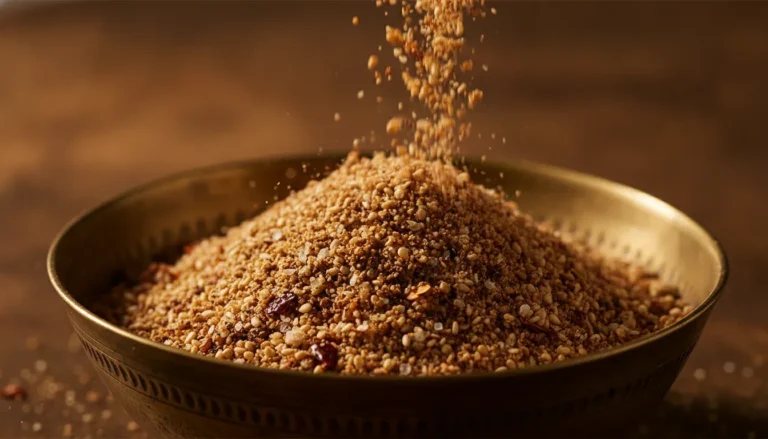
- Roast the dals. Warm a little oil and roast the chana dal, urad dal, fenugreek and the dry Guntur chillies on a low flame until the dals turn deep gold and smell nutty. This base is where the flavour lives. Set it aside to cool.
- Cook the tomatoes down. In the same pan, cook the chopped tomatoes with turmeric and salt until they collapse and the water cooks off, so what is left is thick and jammy rather than watery.
- Add the tamarind. Stir in the soaked tamarind, or the paste, and let it cook a couple of minutes so the sourness melds in instead of sitting on top.
- Grind or mash. Grind the cooled dals and chillies first, then add the cooked tomatoes and grind to the texture you like, coarse for bite or smooth for mixing into rice. The sesame goes in here if you are using it.
- Temper. Heat oil, splutter the mustard, add the curry leaves, asafoetida and garlic if using, and pour the hot tempering over the pachadi. That final sizzle is the popu (tadka), and it is what makes the kitchen smell like an Andhra kitchen.
Stir once, taste for salt and sourness, and leave it ten minutes before eating so the tempering settles in.
How spicy, and the Guntur note
The heat is not incidental; it is the Andhra signature. It comes from the Guntur chilli, which sits at roughly 30,000–50,000 on the Scoville scale, so a pachadi built on six to eight of them carries real warmth rather than a token pinch. Cooking for a mixed table, drop to three or four chillies and deseed a couple; the tamarind and roasted dal still give you a full-flavoured chutney without the burn taking over. Byadgi chillies will redden it more and heat it less if you want depth of colour over kick.
How long tomato pachadi keeps
Fresh tomato pachadi keeps three to four days in the fridge in a clean, airtight jar. Made nilva-style with extra oil, more tamarind and only dry cutlery going in, it holds for a few weeks. The oil-cured ooragaya pickle keeps up to a year.
The rule behind those numbers is plain: oil and salt keep air and moisture out, and wet spoons let them back in. Whichever version you make, a dry spoon every time is what actually decides how long it lasts. For the year-keeping method, with its salting and oil-sealing steps, the ooragaya guide covers it properly.
What to serve tomato pachadi with
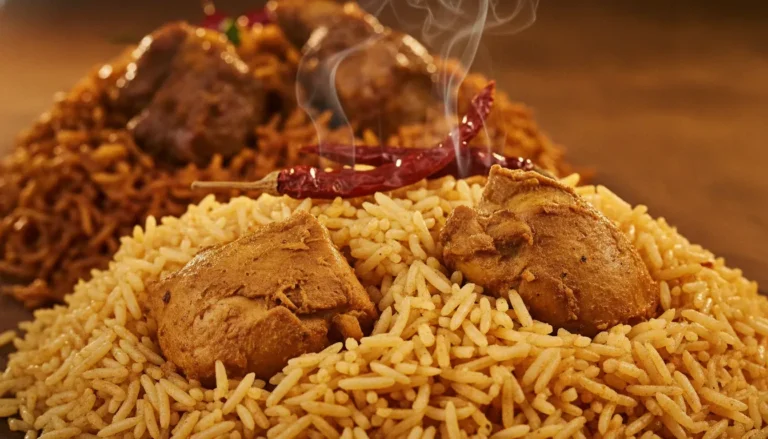
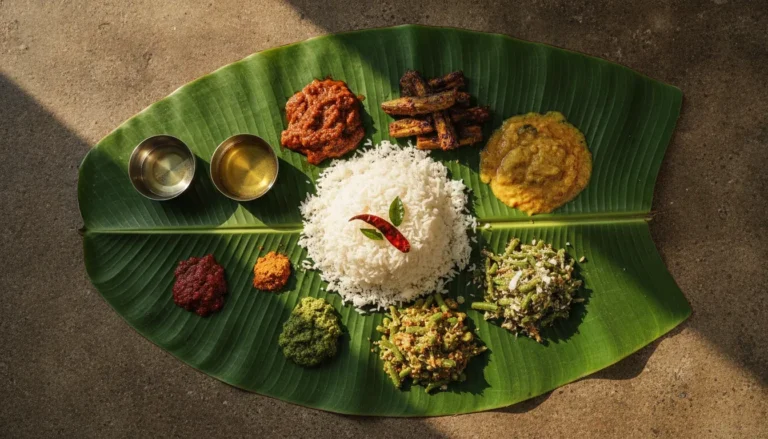
Hot steamed rice and a spoon of ghee first, always. Tomato pachadi for rice is the default in most Andhra households, and mixed through the warm grains it turns a plain plate into a meal on its own. As a tomato chutney for rice it has no real rival on an Andhra table. After that it is generous with breakfast: spread it on idli, dip dosa into it, or eat it alongside pesarattu (green-gram dosa), where the tang cuts the earthiness of the moong. It works with roti and paratha too, though it was never really a north-Indian bread chutney at heart. On a full Andhra bhojanam it takes its place among the other pachadis on the banana leaf, a small heap you keep returning to between mouthfuls.
Where tomato pachadi sits in the Andhra pachadi family
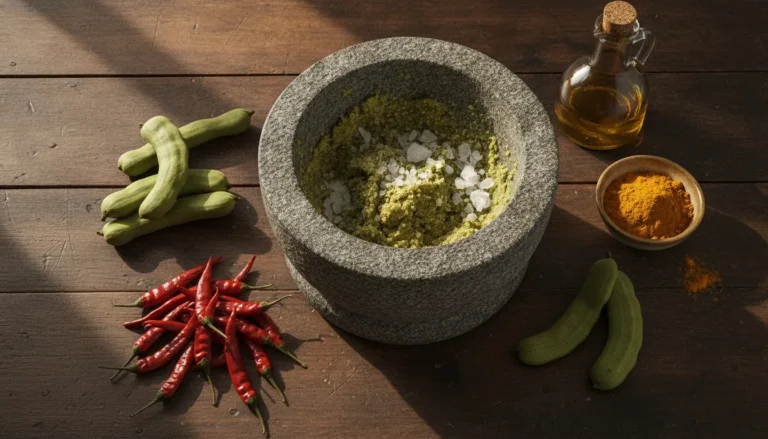
Tomato pachadi is one member of a large family. Andhra cooks make roti pachadi, a whole set of grinding-stone chutneys, from almost anything the season gives them: allam pachadi (ginger) with its sweet-sharp punch, gongura pachadi (sorrel-leaf chutney) with its built-in sourness, beerakaya pachadi (ridge gourd) and dosakaya pachadi (yellow cucumber) among them. Tomato earns its place because it is available all year and pleases nearly everyone. Learn the method here, the roast-grind-temper rhythm, and you hold the template for most of the others. Swap the tomato for gongura or ridge gourd and the bones of the recipe barely move. That is the quiet logic of an Andhra pantry: one technique, many vegetables, a different pachadi on the leaf every day of the week.
Pachadi on the Andhra plate
A pachadi is rarely the star of an Andhra meal, and that is exactly its job. It sits in the corner of the banana leaf and quietly makes everything next to it taste better. At Nandhini, that corner has looked the same since 1989, when the first outlet opened at Minerva Circle: a fresh tomato or gongura pachadi ground that morning, part of the bhojanam laid across the leaf. Three generations on, with 22 outlets across Bengaluru and Mysuru, the pantry it comes from has not changed much. The same Guntur chillies, the same tamarind, the same roasted-dal habit this recipe rests on.
If you would rather keep a jar at home than grind fresh each time, the same kitchen bottles its own Andhra pickles and podis; our pickle and masala range carries that Guntur-and-tamarind character across to your table. Either way, the pachadi is doing what it has always done, making the rest of the plate worth returning to.
Frequently Asked Questions
What is tomato pachadi?
Tomato pachadi is an Andhra-style tomato chutney; pachadi is the Telugu word for chutney. Tomatoes are cooked down with tamarind, Guntur chilli and roasted lentils, then finished with a mustard-and-curry-leaf tempering. It is eaten fresh, mostly with hot rice and ghee.
What is the difference between tomato pachadi and tomato pickle?
Pachadi is the fresh chutney, eaten within a few days. Tomato pickle, or ooragaya, is oil-cured and keeps for months. Nilva pachadi sits between them, a semi-preserve made with more oil and tamarind that holds for a few weeks in the fridge.
How long does tomato pachadi keep?
Fresh tomato pachadi keeps three to four days refrigerated. Made nilva-style with extra oil, tamarind and only dry cutlery, it keeps a few weeks. The oil-cured ooragaya version keeps up to a year. A dry spoon every time makes the real difference.
Is Andhra tomato pachadi the same as Kerala pachadi?
No. Andhra tomato pachadi is a spicy tomato chutney. In Kerala, pachadi usually means a yoghurt-based side, cooler and closer to a raita. They share the name but are genuinely different dishes, which is why the title alone can mislead you.
What do you eat tomato pachadi with?
Classically with hot steamed rice and a spoon of ghee, mixed through by hand. It also pairs well with idli, dosa and pesarattu, and works with roti or paratha. On an Andhra meal it sits among the other pachadis on the banana leaf.