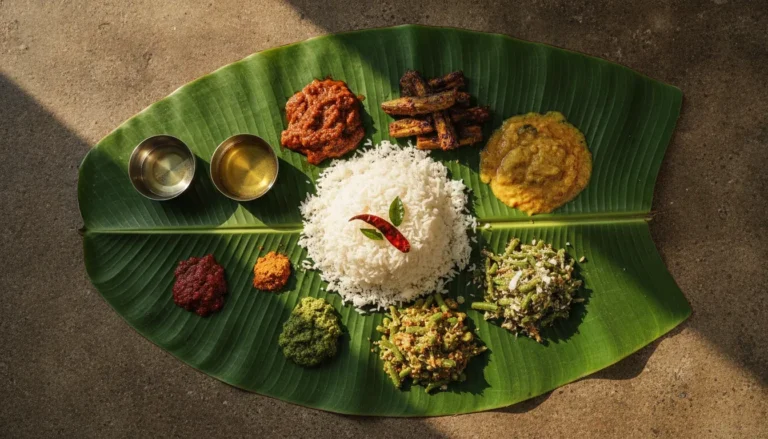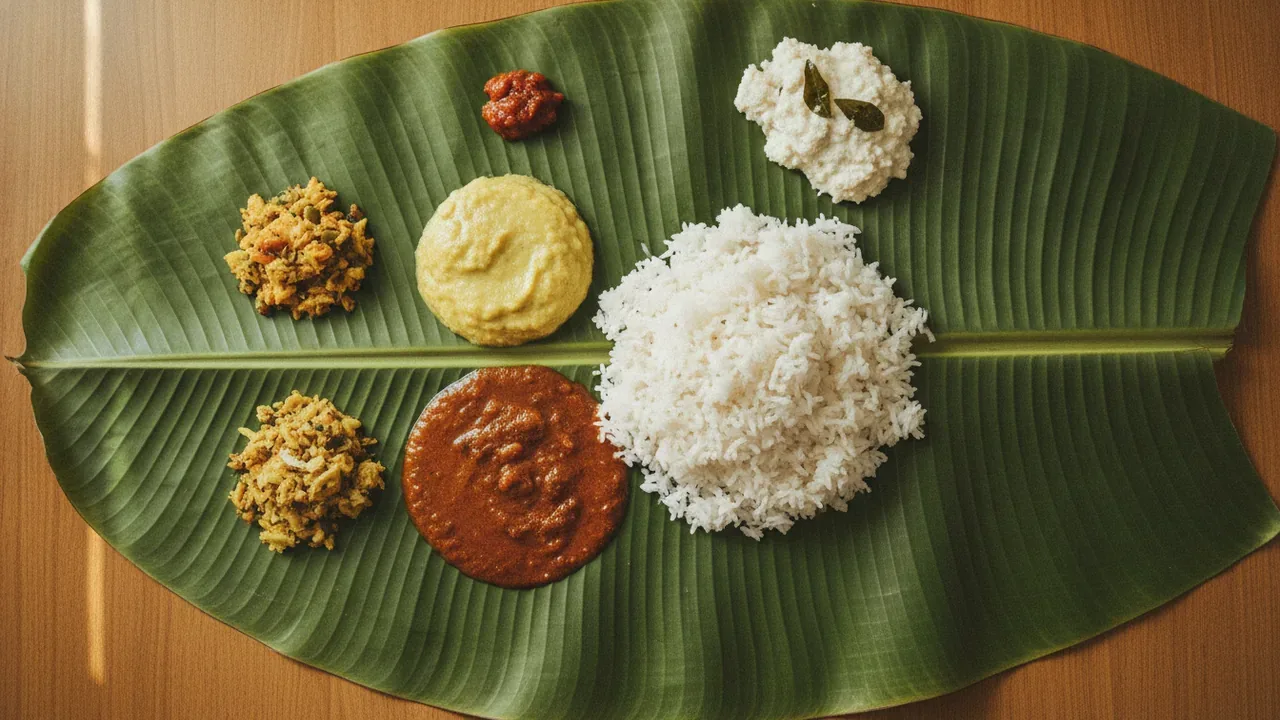
Sit down to a proper Andhra meal and the rice arrives first, a small hill of it on the banana leaf. Then two ladles find their way beside it, one a soft yellow dal, the other a darker, tangy stew that smells of tamarind. That is Pappu and Pulusu, the pair every Telugu household leans on for lunch, day after day. Most pages online explain a single recipe and stop. This one does the opposite. It sorts out what Pappu and Pulusu actually are, how pappu charu sits between them, and why the two hold up the whole plate. Start here, then work outward into the wider spread of famous foods of Andhra Pradesh.
Table of Contents
What pappu and pulusu are
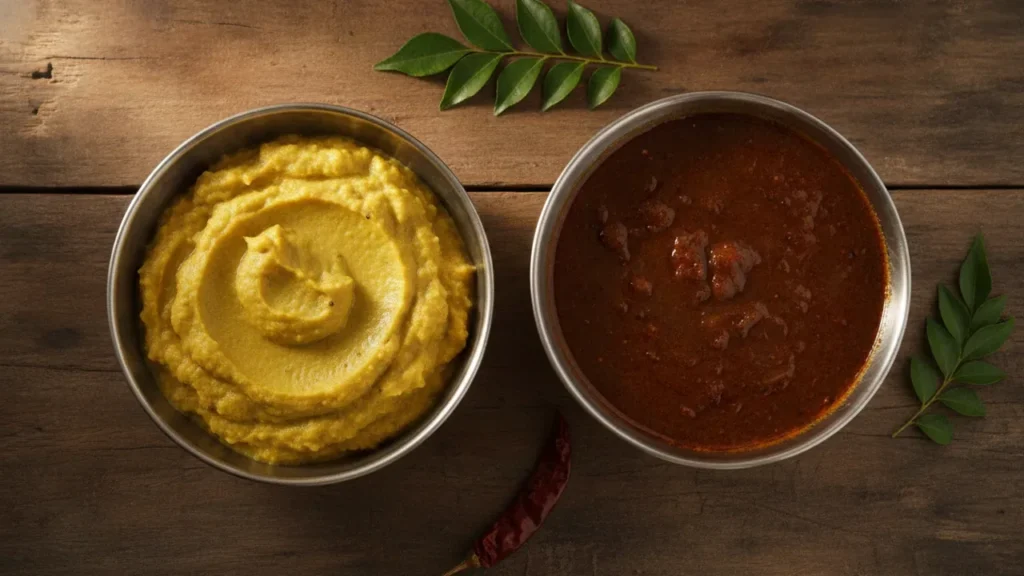
Pappu is the dal family of Andhra cooking: toor dal (kandi pappu) or moong dal cooked soft, sometimes plain, sometimes with a vegetable or greens. Pulusu is the tamarind-stew family, a tangy simmered gravy built on tamarind and jaggery. Pappu charu bridges the two, a thin dal-and-tamarind broth poured over rice.
Both are everyday food, not occasion food. A pappu is what a Telugu kitchen makes when the day is ordinary and the point is a warm, filling plate. A pulusu brings the sour, appetite-opening note that cuts through rice and ghee. Between them sits pappu charu, thin enough to pour and tangy enough to wake the meal up, which is the reason people keep confusing the whole group with sambar. The rest of this page separates them properly: the pappu varieties, the pulusu varieties, and where pappu charu really belongs.
Pappu, pulusu, charu, sambar and rasam, sorted out
Here is where the confusion starts. Order a thin, tangy something with your rice in Bengaluru and it might be pappu charu, it might be sambar, it might be rasam, and the menu rarely tells you which logic it follows. The words overlap because the dishes overlap, so it helps to fix the categories first.
Charu is the umbrella term for a thin, pourable broth eaten over rice. Pappu charu is the version built on dal water and tamarind. Rasam is its close cousin, thinner still and often more peppery, leaning on tamarind and a rasam powder rather than much dal. Sambar is the outlier: thicker, carrying mixed vegetables, and defined by a dedicated sambar powder that neither pappu charu nor rasam uses.
The charu family runs wider than tamarind alone. Ulavacharu is a dark horse-gram charu with its own following, and majjiga charu swaps tamarind for buttermilk to cool the plate down in summer. Both sit in the charu category without being pappu charu, which is why lumping everything under one name loses the plot.
Pappu charu is the bridge. It carries the dal body of a pappu and the tamarind tang of a pulusu in one thin broth, finished with a tempering (popu) of mustard, cumin and curry leaves in ghee. That in-between nature is exactly why searchers keep asking whether it is really just a diluted sambar. It is not, and the next section lays the three side by side.
Pappu charu vs sambar vs rasam
If you remember one thing, make it this. Pappu charu, sambar and rasam differ by base, body and spice blend, not by region. Here is the split.
| Feature | Pappu charu | Sambar | Rasam |
|---|---|---|---|
| Base | Dal water and tamarind | Dal, tamarind and vegetables | Tamarind and tomato, little or no dal |
| Thickness | Thin, pourable | Thick, spoonable | Thinnest, almost drinkable |
| Spice blend | No sambar powder, a simple tempering | Dedicated sambar powder | Rasam powder, heavy on pepper |
| Vegetables | Few or none | Mixed vegetables throughout | Rarely any |
| When eaten | Everyday, early over rice | Everyday, the main gravy over rice | Late in the meal, or when unwell |
Read down the pappu charu column and the pattern is clear. It is the lightest and the least dressed of the three, the one you reach for on an ordinary Tuesday rather than the one you cook to impress.
The pappu family, dish by dish
Pappu is less a single dish than a template. Cook toor dal (kandi pappu) soft, then decide what goes in with it. Change the vegetable or the green and you change the pappu, while the comfort stays the same. These are the ones a Telugu kitchen turns to most.
- Mudda pappu: the plainest of them all, toor dal mashed smooth with nothing but salt, eaten with a spoon of ghee and a squeeze of lemon over the first mound of rice. The quiet opening course.
- Tomato pappu: dal cooked with tomatoes until tangy and a little sweet, the most common weekday pappu and the one most people picture first.
- Dosakaya pappu: made with dosakaya (yellow cucumber), which brings its own gentle sourness, a coastal favourite in the warmer months.
- Palakura pappu: dal with palakura (spinach), soft and mild, the everyday way greens reach a Telugu plate.
- Gongura pappu: toor dal cooked with gongura (sorrel leaves), tart and bracing. Its pickle form is a bigger story that lives on its own, so here it is simply one more dal.
- Pesara pappu: made with moong dal (pesara pappu) rather than toor, lighter on the stomach and common when a milder plate is wanted.
Andhra pappu, as a label, usually means one of these cooked the Andhra way, heavier on the tempering and the green chilli than a Tamil or Kannada dal would be.
The pulusu family, dish by dish
Pulusu works the other way round. Instead of dal, the body is tamarind, loosened with water and balanced with jaggery so the sourness has something to lean on. From there the versions fan out by what you simmer in it.
- Mukkala pulusu: the mixed-vegetable version, chunks of drumstick, brinjal, pumpkin and sweet potato simmered in the tamarind base until they take on the tang. Hearty enough to be the centre of a meal.
- Pachi pulusu: the raw, no-cook one. Tamarind extract, jaggery, salt and a few roasted seasonings whisked together and served cool, sometimes with raw onion. A summer dish, valued for being light when the Andhra heat kills the appetite.
There is a fish version too, chepala pulusu, where the tamarind stew is built around fish rather than vegetables. It is a coastal classic in its own right and belongs with the Andhra prawn and fish curries rather than here.
What ties the family together is that tamarind-and-jaggery spine. Sweet, sour and warm at once, it is the note that makes rice disappear.
How pappu charu comes together
Making pappu charu is closer to assembling than cooking, which is why it lands on so many weeknight tables. The method, in plain terms:
Cook toor dal (kandi pappu) until soft and mash it, then loosen it with plenty of water, far more than you would for a thick pappu. This dal water is the body of the dish.
Soak a small lump of tamarind (chintapandu) in warm water and squeeze out the extract. Add it to the dal water with chopped tomato, slit green chillies, a pinch of turmeric and salt, then simmer until the raw edge of the tamarind cooks off.
Finish with the tempering (popu). Heat ghee or oil, crackle mustard and cumin, add garlic, curry leaves and a dried red chilli, and pour it over. That last sizzle is the whole character of the dish. In Andhra kitchens that dried chilli is often a Guntur chilli, which carries real heat at 30,000 to 50,000 SHU, though pappu charu itself stays gentle.
In summer, many kitchens swap toor for moong dal (pesara pappu), giving pesara pappu charu, which is lighter and quicker to cook. The tamarind stays, only the dal changes. That is the whole pappu charu recipe, such as it is, and none of it needs a special powder, which is the single fact that separates it from sambar.
Why they are the backbone of the meal
Watch how a banana-leaf bhojanam is actually eaten and the reason for the backbone framing becomes obvious. The meal is built in order, not served all at once to be attacked at random.
Rice lands first. The opening bite is often mudda pappu with a spoon of ghee, plain and grounding, a way to settle into the meal. Then comes the pappu or the pulusu, mixed into a second helping of steamed rice, carrying the tang and the salt that make you want the next mouthful. A dry curry follows, something like gutti vankaya (stuffed brinjal) for texture and heat, then a pickle for a sharp accent, and finally perugu annam (curd rice) to cool everything down and close the plate.
Take out the pappu and the pulusu and the sequence collapses. There is nothing to bind the rice, nothing to carry the curry, no everyday middle to the meal. That is why a Telugu household can skip almost anything else on the leaf before it skips these two. For anyone living away from home, this order is the taste of a childhood lunch, which is why diaspora kitchens rebuild it before they attempt anything fancier.
Pappu and pulusu on the Nandhini plate
None of this is theory at Nandhini. Pappu and pulusu are on the plate every day, part of the banana-leaf bhojanam served across 22 outlets in Bengaluru and Mysuru since 1989. The dal changes with the season, the pulusu shifts with what the vegetables allow, and the tempering is done the Andhra way, generous with garlic and curry leaves.
That daily repetition is where the knowledge sits. Building the same plate for thousands of diners, lunch after lunch, teaches you what a pappu should feel like on rice and how much tamarind a pulusu can carry before it tips. It is first-hand cooking, not commentary.
If you want the full everyday spread rather than one dish, the Andhra veg meals bring the pappu, the pulusu, the curry and the rice together the way they are meant to be eaten.
Frequently Asked Questions
What is the difference between pappu and pulusu?
Pappu is the dal family: lentils cooked soft, sometimes with a vegetable or greens. Pulusu is the tamarind-stew family, a tangy simmered gravy built on tamarind and jaggery. Pappu charu bridges the two, a thin dal-and-tamarind broth eaten with rice.
What is the difference between pappu charu and sambar?
Pappu charu is thinner and made without sambar powder, using dal water, tamarind and a simple tempering, usually with few vegetables. Sambar is thicker, carries mixed vegetables and depends on a dedicated sambar spice blend. Pappu charu is the everyday, lighter option.
What is pappu charu called in English?
Pappu charu is usually translated as Andhra lentil soup or dal rasam. Pappu means dal and charu means a thin, rasam-like broth, so the name describes a light, tangy lentil broth eaten with steamed rice.
What region is pappu charu from?
Pappu charu comes from the Telugu-speaking regions, Andhra Pradesh and Telangana. It is everyday home cooking across both states, with small differences in tempering and dal choice between Andhra and Telangana kitchens.
What is pappu charu made of?
Toor dal or moong dal, cooked soft and loosened with water, simmered with tamarind extract, tomatoes, green chillies and turmeric, then finished with a tempering of mustard, cumin, garlic, curry leaves and dried red chilli in ghee or oil.
What is pachi pulusu?
Pachi pulusu is a raw, no-cook pulusu: tamarind extract balanced with jaggery, salt, roasted or raw seasonings and sometimes onion, served cool. It is a summer dish, valued for being light on the stomach in Andhra heat.