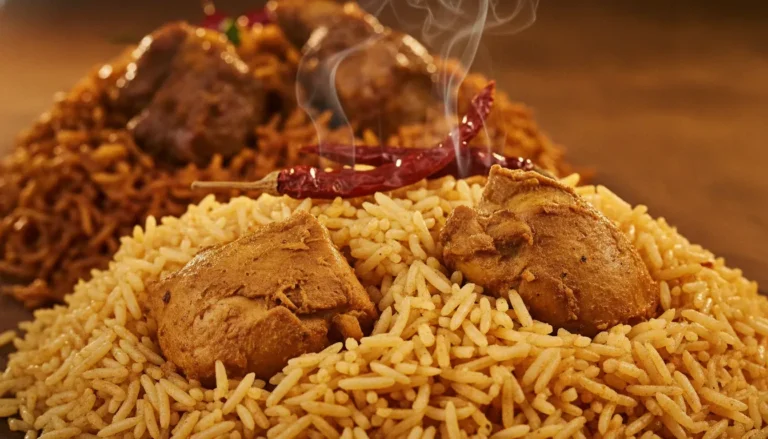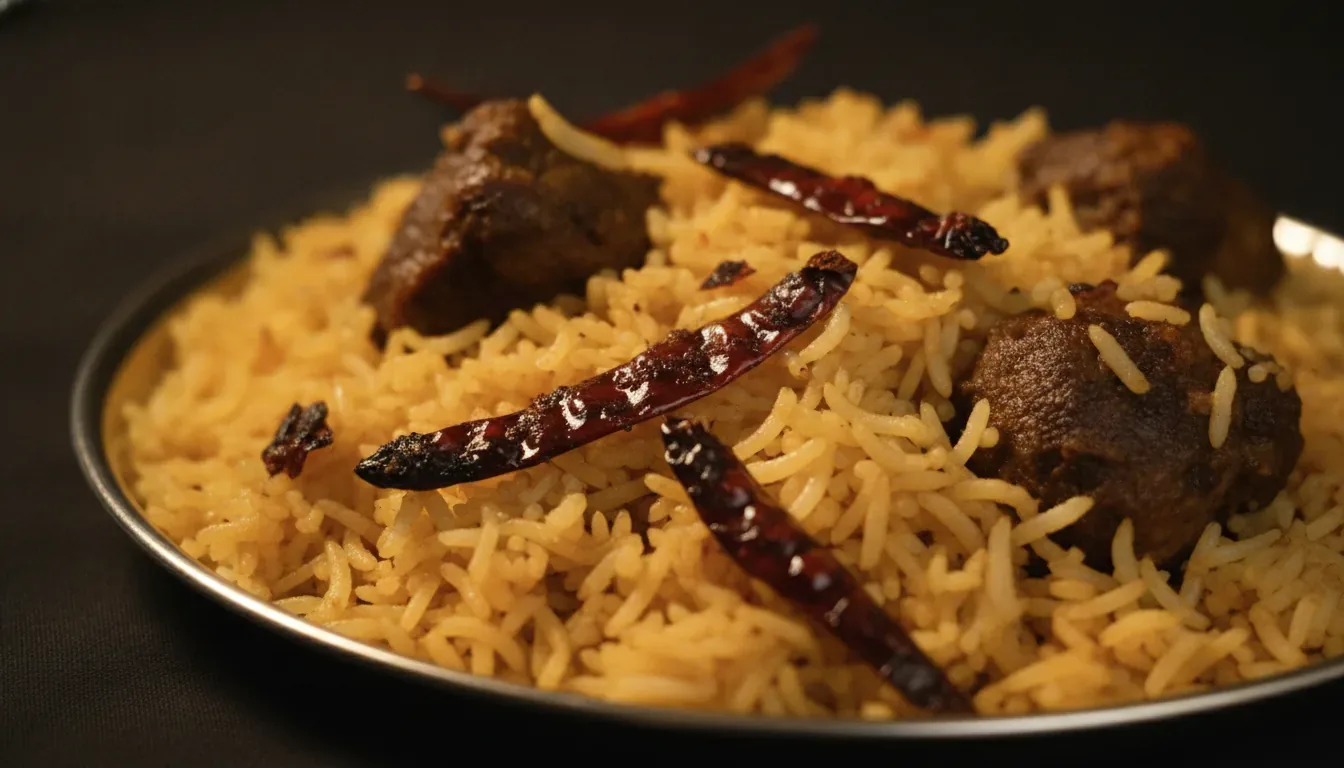
Rayalaseema biryani does not look like the biryani most people picture. Order one in Kadapa and you will not get the moist, saffron-streaked mound that Hyderabad made famous. It arrives drier, darker and hotter, cooked in oil rather than ghee, the rice loose and the chilli doing the loudest talking. This is the biryani of the interior chilli belt of Andhra Pradesh, built for a working appetite rather than a banquet table. If you have come to work out why the Rayalaseema style tastes so unlike every other biryani in India, the short answer is heat, oil and restraint. Here is the longer one.
What is Rayalaseema biryani?
| In shortRayalaseema biryani is the dry, fiery biryani of the chilli belt of interior Andhra Pradesh. Cooked in refined oil rather than ghee, with dry-roasted Guntur chillies worked into the masala and a shorter-grain rice, it carries little gravy: a heat-forward, mess-style biryani built around mutton or natu kodi (country chicken). |
Table of Contents
Why it’s dry, not moist
Most people meet biryani through the Hyderabadi template: long-grain basmati, ghee, a moist layered dum, saffron and browned onions. Rayalaseema biryani grew up on a different logic. The interior districts of Andhra are hot, dry and historically less flush than the old Nizam kitchens, and the food carries that history in it. Ghee gave way to refined oil, which costs less and stands up to fierce heat. The gravy got cooked right down instead of left to pool, so the rice stays separate and the meat holds the flavour without a wet base sitting underneath.
There is a palate at work here too. Rayalaseema eats hot, and it eats to fill an appetite rather than to impress a table. A drier biryani travels better, keeps longer across a working day, and lets the chilli land straight on the tongue instead of being softened by fat and moisture. Cook the same rice moist and rich and you blunt the very thing this food is about. So the dryness is not a shortcut or a sign of a lesser kitchen. It is the design.
That is why a first-timer who expects the familiar moist mound and gets a leaner, oil-slicked, fiercely hot plate has not been short-changed. They have been handed a different dish answering a different question. Where Hyderabadi asks how fragrant and how tender a biryani can be, Rayalaseema asks a blunter one: how hot and how filling can a single plate get.
The dry-roasted Guntur chilli method
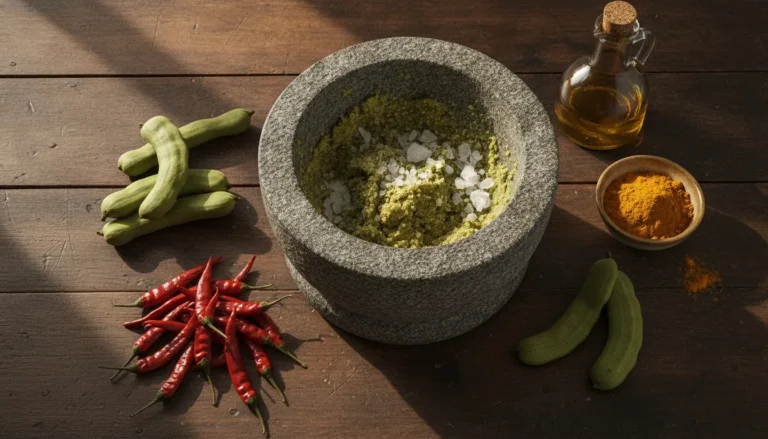
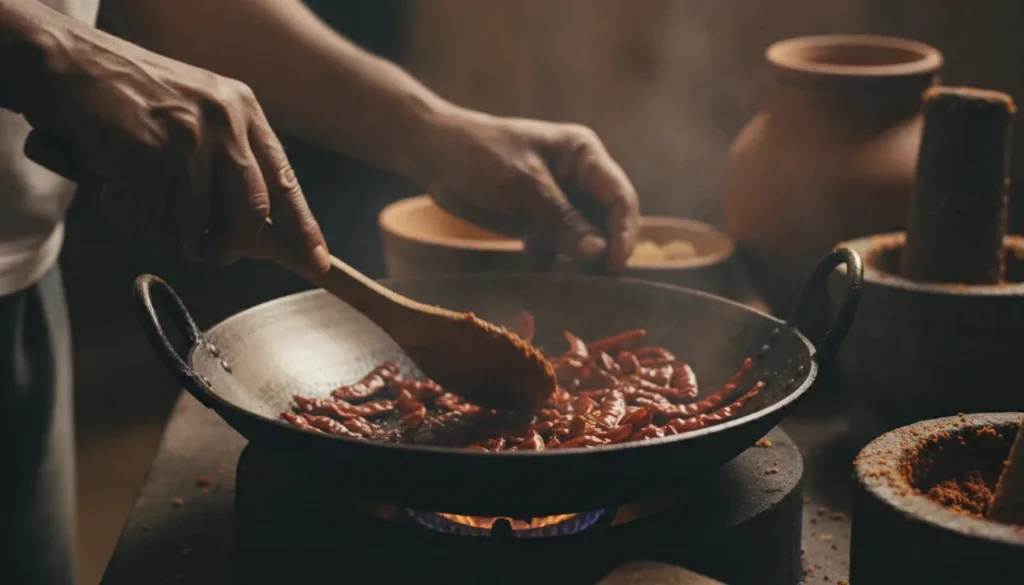
Here is the detail most pages skip. In the Rayalaseema style, the Guntur chilli is not stirred in as a spoon of ready red powder. It is dry-roasted, whole or in flakes, on a hot tawa until it darkens and turns brittle, then ground into the masala. That one step is what separates this biryani from something that is merely spicy.
Dry-roasting does two jobs at once. It drives off moisture, so the ground chilli hits harder by weight, and it draws out a low, smoky note under the heat that raw powder never gives you. Guntur chillies already sit at roughly 30,000–50,000 on the Scoville scale, so the base heat is high before anything else happens. Roasting concentrates it and takes the raw, throat-catching edge off, so the finish builds and warms instead of simply stinging. That is the difference here: heat you can taste your way through.
The rice matters as much as the chilli. Rayalaseema cooks tend to reach for a shorter-grain rice in the seeraga samba (jeeraka samba) family rather than long basmati. Shorter grains keep their shape through a drier cook and drink up the oil and masala instead of staying fluffy and aloof, which suits a biryani meant to carry heat in every mouthful. The protein follows the land. Mutton is the flagship, and natu kodi (country chicken) runs it close, both tough and flavourful enough to stand up to the chilli rather than vanish under it. Put the parts together and the biryani is defined by technique rather than chilli quantity alone: roasted, ground, oil-carried heat, riding rice chosen to hold it.
How Rayalaseema style differs
Line the regional styles up side by side and the differences stop being vague. Each Andhra biryani answers to its own place, and Rayalaseema sits firmly at the dry, fiery end of the range.
| Style | Rice | Fat | Gravy | Heat | Signature protein |
|---|---|---|---|---|---|
| Rayalaseema | Shorter-grain (seeraga samba) | Refined oil | Dry, minimal | High, dry-roasted Guntur chilli | Mutton / natu kodi |
| Hyderabadi | Long-grain basmati | Ghee | Moist, layered dum | Moderate, aromatic | Mutton (kacchi dum) |
| Guntur | Short to medium grain | Oil | Semi-dry, fiery | Very high, Guntur chilli | Chicken / mutton |
| Nellore | Shorter-grain | Oil and ghee | Moist, often with salan | Medium to high | Mutton / prawns |
Read across and the pattern is clear. Hyderabadi is the aromatic, moist benchmark, built on basmati, ghee and a slow layered dum. Guntur biryani shares the Rayalaseema chilli obsession but tends to run semi-dry and city-fierce rather than fully mess-style. Nellore, coastal and rice-country, leans moist and often comes with a saucy pulusu or salan on the side that Rayalaseema pointedly does without.
What marks Rayalaseema out is the combination, not any single trait. Plenty of biryanis run hot; far fewer are hot, dry and oil-carried all at once, with the chilli roasted rather than merely tipped in. That is the signature. If you have eaten a Guntur biryani or a Nellore one, you already have two useful reference points: Rayalaseema is drier than both, and it lets the roasted Guntur chilli lead from the front.
Where it comes from: the Rayalaseema belt
Rayalaseema means the region of stones, the arid southern interior of Andhra Pradesh made up of Kadapa (Cuddapah), Kurnool, Anantapur and Chittoor. This is the part of the state that grows and sun-dries the chillies the rest of India then cooks with, so a chilli-forward kitchen here is less a choice than an inheritance. The land runs hot and dry, the palate followed suit, and the biryani took on the character of the place it was cooked in.
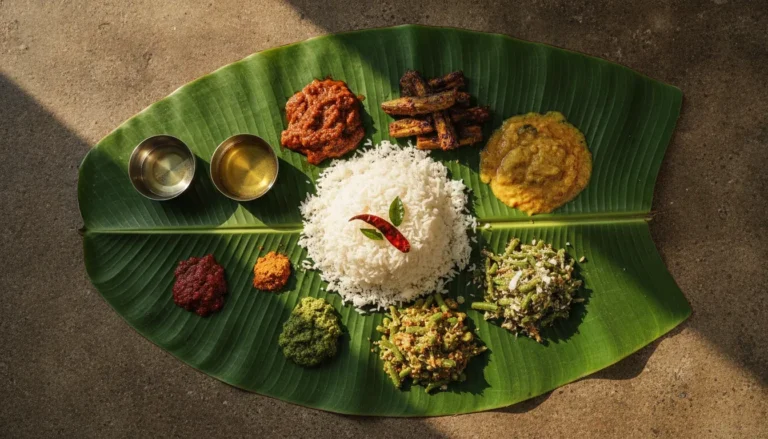
Kadapa in particular carries a dum-biryani lineage worth knowing. The town of Chennur, near Kadapa, is known locally for a dum biryani cooked in exactly this drier, oilier register, and it is one of the reasons the Rayalaseema style has a settled identity rather than being a loose label slapped on anything spicy. Around the biryani sits a wider food culture, sometimes called Rayalaseema ruchulu, that runs on natu kodi, ragi staples and chilli heat worn without apology.
None of this began as polished restaurant cooking. It is home food, roadside food, mess-hall food, portioned for people doing hard work in a hard climate. That origin explains the build of the biryani better than any recipe card can. It is filling because it had to be, it keeps because it needed to, and it is hot enough to wake up a tired appetite at the end of a long day in the sun.
Andhra biryani, done the Guntur-chilli way
Understanding a regional style on paper is one thing. Finding it cooked with real chilli literacy is another. Nandhini has cooked Andhra food in Bengaluru since 1989, and Guntur-chilli heat is the axis the whole kitchen turns on. That is the same chilli, dry-roasted and balanced the same way, that gives the Rayalaseema style its bite.
Nandhini does not put a plate branded Rayalaseema biryani on its menu. What it does carry, from working with Guntur chillies every single day, is an understanding of how Andhra biryani heat is built and held in check, whichever regional style you happen to be chasing. For how that heat actually lands on a plate in Bengaluru, Nandhini’s Andhra biryani is a fair place to start looking.
Rayalaseema biryani at a glance
The style in six quick markers:
- Dry, not moist: cooked right down so the rice stays loose and the gravy is minimal.
- Oil, not ghee: refined oil in place of the ghee that defines Hyderabadi.
- Dry-roasted Guntur chilli, not plain powder: roasted then ground, for concentrated, smoky heat.
- Shorter-grain rice, not basmati: seeraga samba style grains that soak up the masala.
- Mutton or natu kodi: proteins with enough character to stand up to the chilli.
- Mess-style and built for appetite: filling, keeping, and unapologetically hot.
Frequently asked questions
What is Rayalaseema biryani?
Rayalaseema biryani is the dry, fiery biryani of interior Andhra Pradesh. It uses refined oil instead of ghee, dry-roasted Guntur chillies in the masala and a shorter-grain rice, carrying very little gravy. It is a heat-forward, mess-style biryani built around mutton or natu kodi (country chicken).
How is Rayalaseema biryani different from Hyderabadi biryani?
Hyderabadi biryani is moist, layered kacchi dum cooked in ghee with long-grain basmati. Rayalaseema style is drier and oilier, uses shorter-grain rice, and leans on dry-roasted Guntur chilli heat rather than aromatic richness. One is fragrant and moist, the other lean and fiery.
What makes Rayalaseema biryani so spicy?
The heat comes from Guntur chillies, roughly 30,000–50,000 on the Scoville scale, dry-roasted into the masala rather than added as plain powder. Dry-roasting deepens the heat with a smoky note, giving the biryani its characteristic fiery, warming finish.
Is Rayalaseema biryani dry or gravy-based?
It is a dry style. Where Hyderabadi and Nellore biryanis are served moist or with a saucy salan, Rayalaseema biryani is cooked down so the rice and meat carry the flavour with minimal gravy, reflecting its practical, appetite-first mess-style origins.
What is Rayalaseema cuisine known for?
Rayalaseema cuisine, from Andhra’s interior districts of Kadapa, Kurnool, Anantapur and Chittoor, is known for its bold chilli heat, oil-forward cooking and dishes such as natu kodi (country chicken), ragi staples and the dry, fiery style of biryani described here.
Nandhini’s kitchen runs on the same Guntur chilli that gives this style its bite. That makes it a fair guide to how Andhra biryani heat works, even where the exact regional plate is not on the menu.