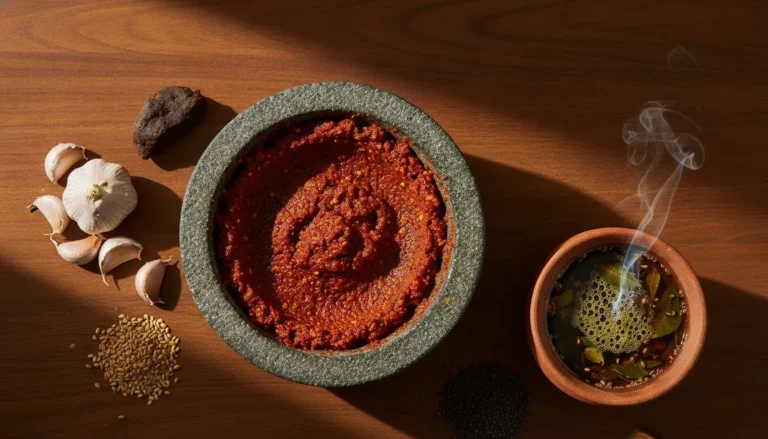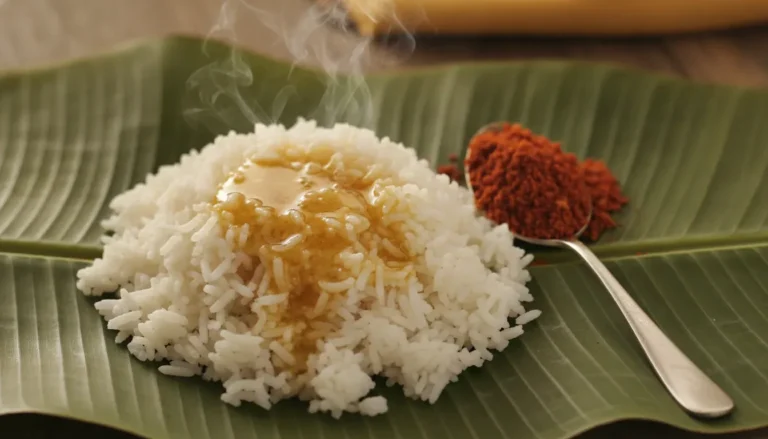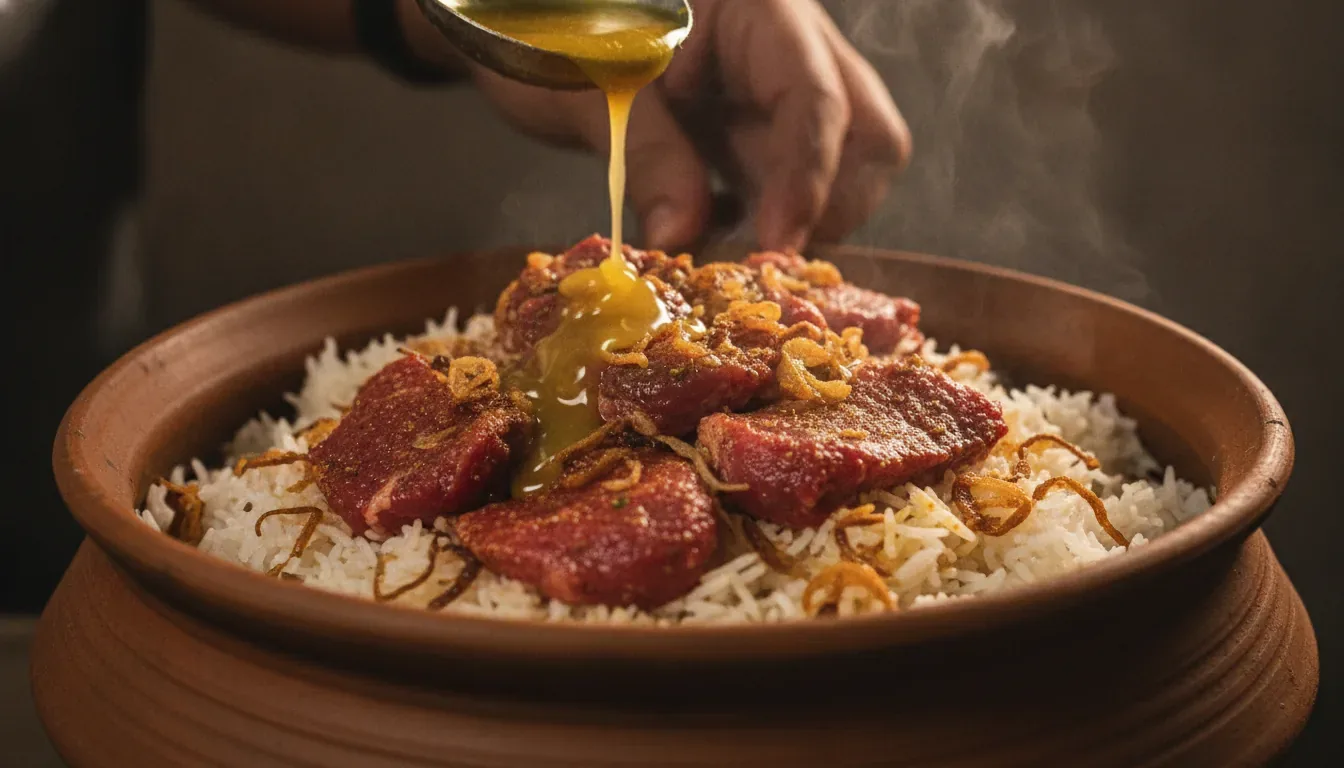
Order a biryani anywhere and someone will eventually tell you theirs is ‘proper dum’. Someone else will swear kacchi is the only real biryani. A third will name-drop pakki like it settles the argument. The truth is quieter and more useful: kacchi biryani and pakki biryani are not two rivals fighting over the same crown, and neither one competes with dum. Two of those three words describe the meat. The third describes the cooking. Once that clicks, the whole biryani world stops being a shouting match and starts making sense. Here is the distinction, laid out the way a kitchen actually thinks about it.
Kacchi and pakki are not separate from dum. They describe the state of the meat going in. In kacchi biryani, raw marinated meat is sealed and slow-cooked with the rice on dum. In pakki biryani, the meat is cooked first, then layered and briefly finished on dum.
Table of Contents
What “dum” actually is (and why both methods are dum)
The confusion starts with a category error. People line up kacchi, pakki and dum as if you have to pick one. You do not. Dum is a cooking method, from the Persian for breath or steam. You seal a heavy pot, usually with a rope of dough pressed around the rim, called purdah (dough seal), so no steam escapes. Then you cook low and slow, and the trapped steam does the work. That is dum. It says nothing about the meat.
Kacchi and pakki describe only the meat, and specifically its state when it enters that sealed pot: raw, or already cooked. Both are then finished on dum. So the honest answer to the kacchi vs dum biryani question is no. Kacchi is one kind of dum biryani, and pakki is the other. For what dum actually does inside the pot, the dum method has its own explainer worth reading.
Kacchi vs pakki biryani: side-by-side
Strip away the folklore and the kacchi biryani vs pakki biryani difference comes down to one decision: is the meat cooked before it meets the rice, or not. That single choice sets the rice, the risk, the timing and the flavour. The table below is the whole argument in one screen.
| Feature | Kacchi | Pakki |
| Meat going in | Raw, marinated in yoghurt and spices | Cooked first into a gravy |
| Rice | Part-soaked, part-cooked | Boiled most of the way |
| What dum does | Cooks the raw meat through | Melds already-cooked layers (20–30 min) |
| Skill and risk | High; timing is unforgiving | Lower; more forgiving |
| Taste | Deep, meat-infused | Smooth, gravy-forward |
| Classic examples | Hyderabadi | Lucknowi, Kolkata |
| Andhra biryani | Rarely | Yes, gravy-first |
Read across any single row and the split is plain. Kacchi asks the pot to do more and rewards you when the timing lands. Pakki asks less of the pot and pays you back in consistency, which is why most restaurant kitchens lean that way.
Kacchi: raw meat, one pot, all the risk
So what is kacchi biryani, done properly. You marinate raw meat, usually mutton, in yoghurt with ginger, garlic, green chilli and a raw spice blend, and you leave it for hours so the acid in the yoghurt starts to tenderise the fibres. No cooking yet. The marinated meat goes straight into the pot, and part-soaked rice, boiled only to the halfway point, is layered on top. Fried onions (birista), mint, a little warm ghee, sometimes saffron loosened in milk, then the lid and the dough seal.
From there it is a single, unbroken cook on a low flame. This is the whole gamble of how kacchi biryani is made. The raw meat and the rice have to finish at the same moment, in the same sealed pot, with no way to check without breaking the seal and losing the steam. Too little heat or too little time and the mutton comes out tough, or worse, underdone. Too much and the rice below turns to paste while the top stays chalky. Get it right and the meat cooks in its own juices, and those juices climb through the rice as steam. That is the flavour no other method quite reaches. The unforgiving margin is exactly why kacchi has its reputation, and why plenty of cooks respect it from a safe distance.
Pakki: cook the meat first, then layer
Pakki takes the risk out by splitting the job in two. First you cook the meat all the way through, into a proper masala or gravy, seasoned and reduced until it tastes finished on its own. Separately, you boil the rice until it is almost done. Only then do the two meet: gravy at the base, rice layered over, a scatter of birista and mint, and a short spell on dum, roughly 20–30 minutes, just long enough for the two cooked components to trade flavour and settle.
Because both halves are already cooked, pakki biryani is far more forgiving. You can taste the gravy and correct the salt before it ever touches the rice. Nothing is left to a blind gamble under a sealed lid. That is pakki style biryani in a nutshell: controlled, repeatable, and kind to a busy kitchen turning out the same dish a hundred times a night. The gravy also does more of the talking, which is why a rich, spiced masala matters so much in this style, and why the accompanying salan (thin spiced side gravy) so often shares its DNA. If consistency is what you are after, pakki is the method that gives it to you.
Same pot, different flavour
Ask why the two taste different and the answer is not seasoning, it is sequence. In kacchi, the raw meat releases its juices for the first time inside the sealed pot, and those juices have nowhere to go but up into the rice. Every grain drinks the same concentrated meatiness. The result is deep and slightly primal, a single strong note running top to bottom, with the odd pocket of intensity where the marinade pooled.
Pakki spreads the flavour more evenly. The gravy is already built and balanced before it meets the rice, so what you get is smoother and rounder, gravy-forward rather than meat-forward, and steady from the first spoon to the last. Neither wins the kacchi vs pakki taste question outright. Kacchi trades evenness for depth. Pakki trades depth for reliability and reach. Which one you prefer usually says more about whether you chase peak moments or a dependable plate.
Kacchi or pakki? A biryani-by-biryani map
Here is where a lot of online guides slip, so it is worth being exact. The method is not the same across regions, and mislabelling the famous ones causes half the confusion in the first place.
Is Hyderabadi biryani kacchi or pakki? Kacchi, and it is the archetype. The classic Hyderabadi dum biryani is the reference point for the whole raw-meat method, the pot every other kacchi is measured against. Any guide that files Hyderabadi under pakki has it backwards.
The wider map, style by style:
- Hyderabadi biryani: kacchi. The definitive raw-meat, sealed-pot style.
- Lucknowi (Awadhi) biryani: pakki. Meat cooked in a delicate yakhni (spiced stock), layered, gently finished.
- Kolkata biryani: pakki. Cooked meat and potato, subtle and light on spice.
- Andhra, Guntur and Vijayawada biryani: pakki-leaning. A fiery gravy built first, then layered with rice.
- Bangladeshi and Pakistani biryani: kacchi tradition, close to the Hyderabadi lineage.
And Andhra biryani, kacchi or pakki? Pakki, clearly. The Andhra style is built gravy-first, around Guntur chillies that carry serious heat (Guntur Sannam runs roughly 30,000–50,000 on the Scoville scale, several times hotter than a jalapeno), so the masala is cooked and balanced before the rice ever arrives. It sits in the same pakki family as Lucknowi, but where Lucknowi whispers, Andhra speaks up. This is also the point where a regional method shades into a genuine local identity, which is where the next section picks up.
The Andhra answer
Put Andhra biryani on the kacchi to pakki map and it lands firmly on the pakki side, but with a character all its own. The build starts with the gravy: mutton or chicken simmered with a Guntur-chilli masala until it is deep red and openly hot, the heat sitting on top of the spice rather than hiding behind it. Rice, boiled most of the way, goes over the top. A short dum brings the two together. What you taste is not the gentle, saffron-scented restraint of the north but a gravy-first plate with the chilli doing the leading.
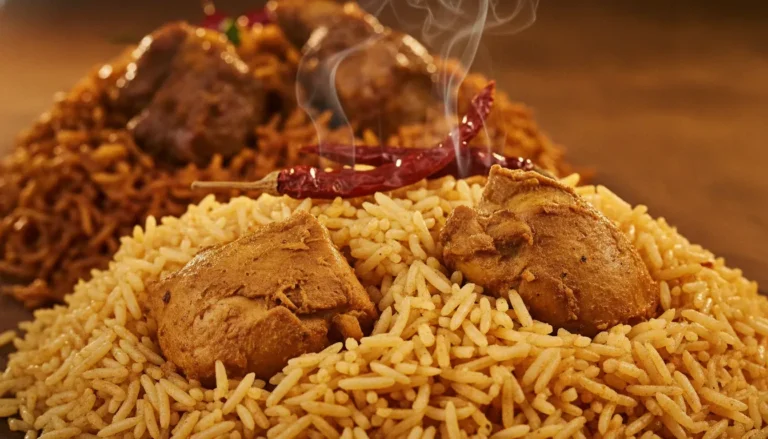
This is the decision a kitchen like Nandhini makes every single service. As an Andhra restaurant that has cooked this food in Bengaluru since 1989, its Mutton Biryani follows the pakki logic exactly: the Guntur-chilli gravy built and tasted first, then layered with rice and finished on dum. It is a working example of where the Andhra style sits, cooked to order rather than described from the outside. If you want to see how that reads on a plate against the city’s other options, the local biryani round-up is the place to look.
If you’re making it at home
If you are cooking biryani at home and wondering, in practical terms, kacchi vs pakki which is better to attempt, the honest steer is to start with pakki. You can cook the gravy, taste it, fix it, and boil the rice separately, so nothing rides on a single blind cook. Get comfortable with the layering and the dum timing on the forgiving method first. Once the muscle memory is there, and once you trust your flame and your pot, move up to kacchi and chase that deeper flavour. Plenty of confident home cooks stay happily on pakki for life and eat very well. Kacchi is the summit, not the entry point, and there is no shame in taking the climb slowly.
Frequently Asked Questions
What is the difference between kacchi and pakki biryani?
In kacchi biryani, raw marinated meat is sealed and slow-cooked together with the rice on dum. In pakki biryani, the meat is cooked into a gravy first, then layered with parboiled rice and briefly finished on dum. Both are dum biryani.
Is kacchi biryani the same as dum biryani?
No, but they are not rivals. Dum is the sealed-pot cooking stage. Kacchi describes the meat going in raw. Kacchi biryani is one type of dum biryani, and pakki biryani is the other, so the kacchi vs dum biryani framing is a false split.
How is kacchi biryani made?
Meat is marinated in yoghurt and raw spices, laid under part-soaked rice, and the pot is sealed with dough. Everything cooks together on a low flame, so the meat’s juices flavour the rice as it steams. The timing is unforgiving, which is what makes it hard.
Which is better, kacchi or pakki biryani?
Neither is better; they aim at different things. Kacchi gives a deeper, meat-infused flavour but demands skill and precise timing. Pakki is smoother, gravy-forward and more consistent, which is why many restaurants prefer it. Home cooks usually start with pakki and work up.
Is Andhra biryani kacchi or pakki?
Andhra biryani leans pakki. A fiery Guntur-chilli gravy is cooked first, then layered with rice and finished on dum. That gravy-first build, heavy on Guntur heat, is part of what separates the Andhra style from the classic kacchi Hyderabadi pot.
Nandhini has cooked Andhra biryani the pakki way since 1989: a Guntur-chilli gravy built and tasted first, then layered with rice and finished on dum. If you are in Bengaluru or Mysuru, the Mutton Biryani is on the pass and worth the trip.