Most chillies are picked green and firm. This one is left alone. On an Andhra farm a share of the crop stays on the plant through the last weeks of the season, until the pods flush deep red and soften on the stem. That ripe chilli is pandu mirapakaya, and it almost never reaches the table as a chilli. It is harvested and ground, usually within a day or two, into one of the fiercest pickles the Andhra pickles and podis tradition makes. Here is what it actually is, how hot it runs, and how the pickle is built to keep.
What is pandu mirapakaya?
| Pandu mirapakaya is the ripe red chilli of Andhra Pradesh, a green chilli left on the plant to mature and turn red. In English it is simply the ripe red chilli. Fruitier and less sharp than a sun-dried chilli, it is rarely eaten raw and is ground with chintapandu (tamarind), menthulu (fenugreek) and uppu (salt) into a fiery pickle, or pachadi. |
You will meet it under several names. In many Rayalaseema and Coastal Andhra kitchens the pickle is called korivi karam, a term that points at red-chilli heat itself. Elsewhere it is pandu mirchi pachadi, pandu mirapakaya thokku, or pandu mirapakaya ooragaya. They all describe the same thing, the ripe-red-chilli-and-tamarind preparation, ground coarse or smooth depending on the house. Strip the aliases away and one ingredient is doing the work: the chilli that was allowed to finish ripening before anyone touched it.
Table of Contents
Ripe does not mean hotter
There is a fair assumption that a red chilli must be hotter than a green one. With pandu mirapakaya it runs the other way. Left to ripen on the plant, the chilli builds sugars and softens, turning fruitier and rounder as the raw green bite drops off. Set against the sun-dried Guntur Sannam chilli that carries most Andhra cooking, around 35,000 SHU on the Scoville scale, the fresh ripe pod reads milder, not fiercer. The Teja chilli, hotter and thinner-skinned, sits well above both. What ripening does add is colour, the deep even red that graders measure as ASTA colour value, and that gives the finished pickle its dark shine.
So why does the pickle burn? Volume and concentration. A jar of pandu mirapakaya pachadi packs a lot of chilli into a little pickle, cut with tamarind and salt that sharpen every mouthful. The heat you feel is the quantity talking, not a chilli that out-scores its dried cousin. That distinction matters if you are buying: a pickle described as fiery is telling you about the ratio in the jar, not about a chilli hotter than the one already in your masala tin.
Fresh pachadi vs niluva (year-long) pickle
Here is the fork every cook reaches, and the one recipe pages skip past. You can make pandu mirapakaya two ways, and they are not the same pickle.
The first is a fresh pachadi. Moderate salt, a light finish of oil, no sun-drying. It is bright, punchy, and meant to be eaten inside a few weeks. Kept in the fridge it holds around three months, after which the colour dulls and the oil can turn. This is the pickle you make when the ripe chillies have just come in and you want them on rice by the weekend.
The second is a niluva pachadi, the year-keeping version, and it is built like a preserve. The chillies are often sun-dried first to draw out moisture. The salt goes up, because salt is the preservative doing the real work. Then the pickle is finished with enough heated and cooled nuvvula nune (sesame oil) to seal the surface, keeping air and damp off the paste. Sealed and stored cool, a niluva batch holds six to twelve months at room temperature. The trade is flavour for time, saltier and firmer than the fresh version, made to last a full season rather than to taste its best on day one. Both moves, the sun and the oil seal, are the standard Andhra ooragaya method applied to a single chilli.
| Type | Salt & oil | Sun-drying | Shelf life | Best for |
|---|---|---|---|---|
| Fresh pachadi | Moderate salt, light oil | None | About 3 months, fridge | Eating now, within weeks |
| Niluva pachadi | High salt, oil-sealed | Yes, chillies sun-dried | 6–12 months, room temperature | Storing through the year |
Which should you make? If you have a kilo of ripe chillies and a fridge, make the fresh pachadi and enjoy it while it is bright. If you want the taste of the harvest still in the jar next April, commit to the niluva method: more salt, the sun, the oil seal, and the patience to let it keep.
How pandu mirapakaya pachadi is made
For a small niluva batch, roughly one kilogram of ripe chillies, you will gather:
- Pandu mirapakaya (ripe red chillies), stalks removed, wiped bone dry
- Chintapandu (tamarind), a generous fistful, seeds out
- Menthulu (fenugreek), dry-roasted and ground
- Avalu (mustard), some ground into the paste, some kept whole for the popu
- Vellulli (garlic), peeled cloves
- Uppu (rock salt), measured against the weight of the chillies for a keeping pickle
- Pasupu (turmeric) and inguva (asafoetida)
- Nuvvula nune (sesame oil) for the seal
- Jeela karra (cumin) and karivepaku (curry leaves) for the popu (tempering)
- Wipe the chillies bone dry. Any water left on them is where a pickle goes off, so this step is not optional. For a niluva batch, sun them a day or two first.
- Dry-roast the menthulu until it darkens and smells nutty, then grind it fine and keep it aside.
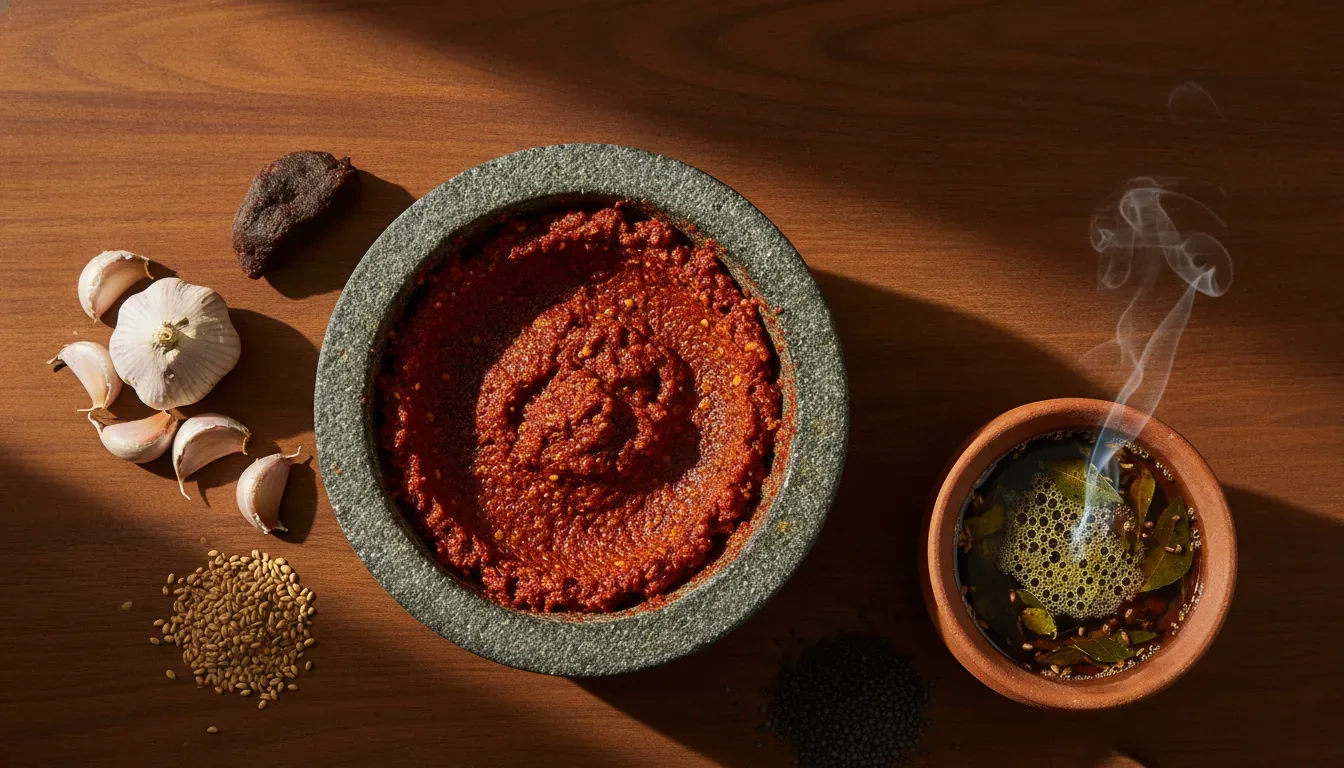
- Grind the chillies with the chintapandu, garlic and salt into a coarse paste. Coarse, not smooth, you want texture in a red-chilli pickle.
- Fold in the ground menthulu, pasupu and a pinch of inguva. Taste for salt: it should read a shade too salty on its own, which is correct for a pickle that has to keep.
- Heat the nuvvula nune, drop in the avalu, jeela karra and karivepaku, and let them crackle. This popu is where most of the aroma comes from.
- Pour the hot then cooled oil over the paste and stir it through, leaving a film of oil sitting on top to seal it. Jar it clean and dry, and let it settle a few days before you open it.
Tomato and gongura versions
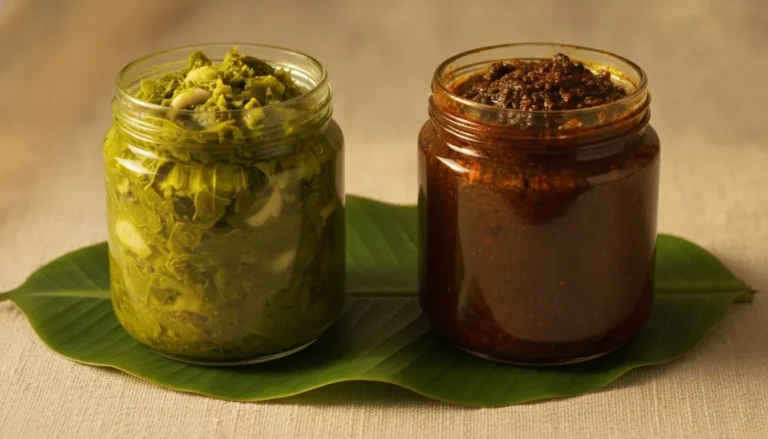
The ripe chilli rarely works alone for long. Two variations show up in most Andhra kitchens. A tomato pandu mirapakaya pachadi cuts the chilli with cooked, reduced tomato, which softens the heat and lends a sweet-sour body, giving a pickle that sits closer to a chutney and suits idli and dosa better than the hard niluva version. The other pairs the ripe chilli with gongura (sorrel leaf), the sour green Andhra cooking leans on, folding its tang into the chilli paste for a sharper, greener pickle. If you already keep a gongura pickle in the house, the ripe chilli is a natural partner, and the two are often made in the same week when both come into season.
How to eat it, and make it last
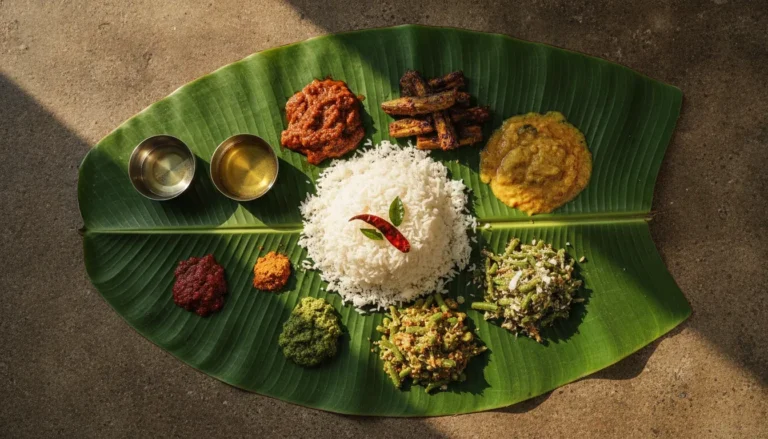
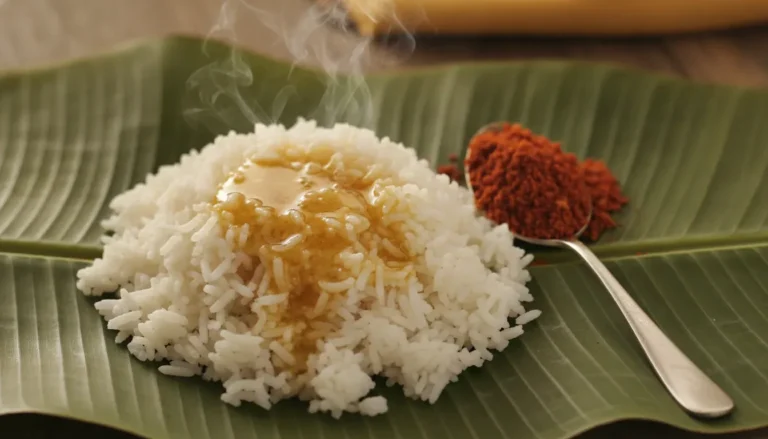
The classic plate is the plainest one. A spoon of pandu mirapakaya pachadi on hot annam (steamed rice), a little ghee or a thread of gingelly oil stirred through, and nothing else needed. The fat carries the heat and stops it scorching; eaten dry, straight off the spoon, it will catch the back of your throat. From there it works on idli and dosa, alongside curd rice to cool it down, and next to a plain pappu (lentils) when the meal wants a lift.
On keeping it, dryness is everything. Use a dry spoon every single time, never a wet one, and keep the surface under a film of oil. A fresh pachadi wants the fridge and about three months. A properly salted, oil-sealed niluva batch keeps six to twelve months in a cool cupboard. If the oil layer ever drops below the paste, top it up with a little heated and cooled sesame oil, and the pickle will ride out the rest of its season.
Where Nandhini fits
Pandu mirapakaya sits on the same chilli that runs through everything Nandhini cooks. The Guntur chilli, in its ripe and its dried forms, is the backbone of Andhra pickling, and it is the backbone of the Nandhini kitchen too, the reason a red-chilli pickle reads as native ground here rather than a novelty. Beyond the dining room, Nandhini bottles its own pickle and masala range built on that same Guntur foundation, so a jar of Andhra heat can travel home with you. To understand where a fiery ripe-chilli pickle sits in the wider Andhra spread, it helps to taste it next to the pickles and podis that share its base.
Pandu mirapakaya at a glance
- English name: ripe red chilli (a green chilli ripened on the plant)
- Heat: milder than dried Guntur Sannam (around 35,000 SHU) as a chilli; fiery as a pickle, from quantity and salt
- Season: winter and harvest; ripe chillies peak roughly December to March
- Key ingredients: ripe red chilli, tamarind, fenugreek, mustard, garlic, rock salt, sesame oil
- Shelf life: about 3 months fresh in the fridge; 6–12 months as an oil-sealed niluva pickle
Frequently Asked Questions
What is pandu mirchi called in English?
Pandu mirchi, or pandu mirapakaya, is simply the ripe red chilli, a green chilli left on the plant to mature and turn red. It is fruitier and less sharp than a sun-dried red chilli, and is used mainly to make Andhra’s red chilli pickle.
How spicy is pandu mirapakaya?
It reads as fiery in pickle form, but the ripe chilli itself is milder and sweeter than the sun-dried Guntur Sannam chilli, around 35,000 SHU. The burn comes from quantity and the salt-and-tamarind base, not from the chilli being hotter than its dried form.
Can pandu mirchi be eaten raw?
It rarely is. The ripe red chilli bruises and spoils quickly unless it is sun-dried or refrigerated, so Andhra kitchens grind it with tamarind, fenugreek, salt and oil into a pickle almost immediately after harvest, rather than eating it fresh.
What is the difference between fresh and niluva pandu mirapakaya pachadi?
A fresh pachadi uses moderate salt and light oil and keeps about three months in the fridge. A niluva, or year-keeping, pickle uses more salt, sun-dried chillies and an oil seal, so it holds for six to twelve months at room temperature.
What is korivi karam?
Korivi karam is another name for pandu mirapakaya pachadi, the Andhra red chilli pickle. You will also see it called pandu mirchi pachadi, pandu mirapakaya thokku or pandu mirapakaya ooragaya. All describe the same ripe-red-chilli-and-tamarind preparation.